

Antique Box Mirror
An antique box mirror combines a swing glass with a fitted base for jewellery and cosmetics, giving dressing tables a practical focal point.
Antique Box Mirror
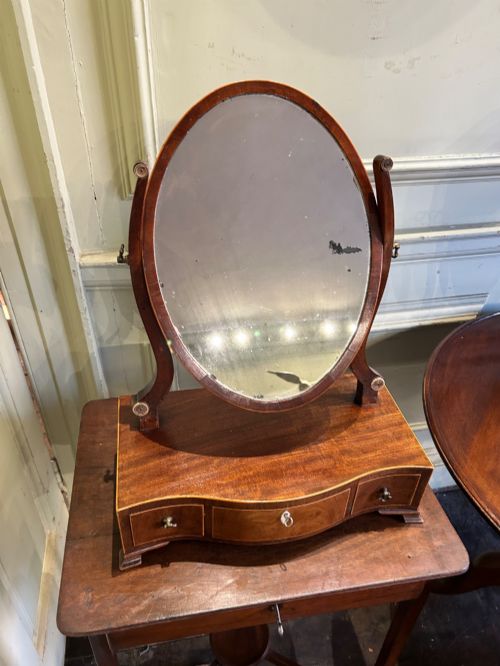
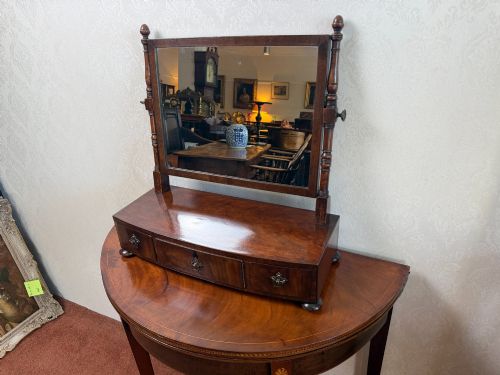
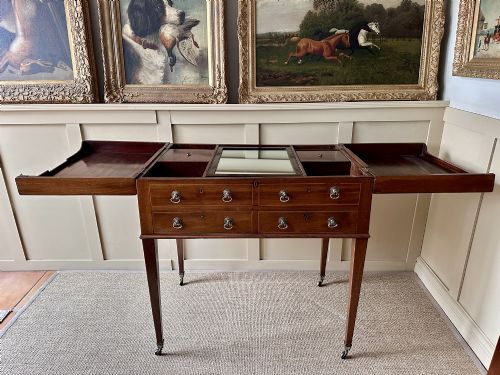
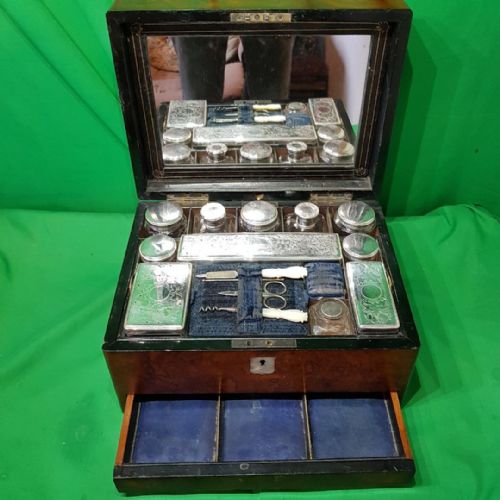
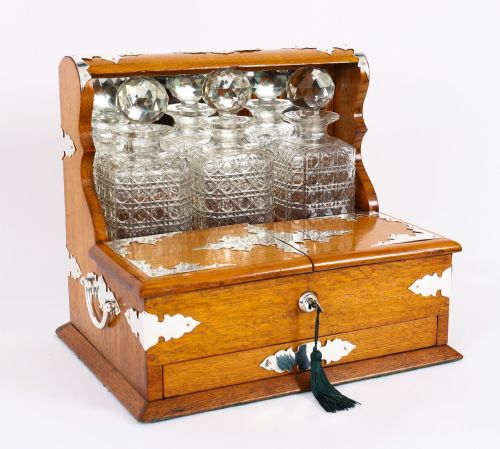
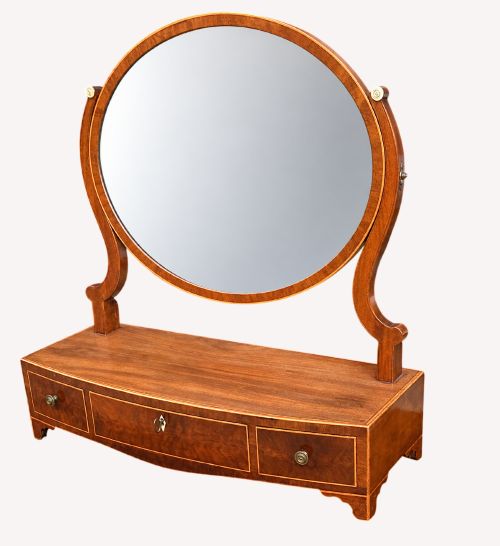
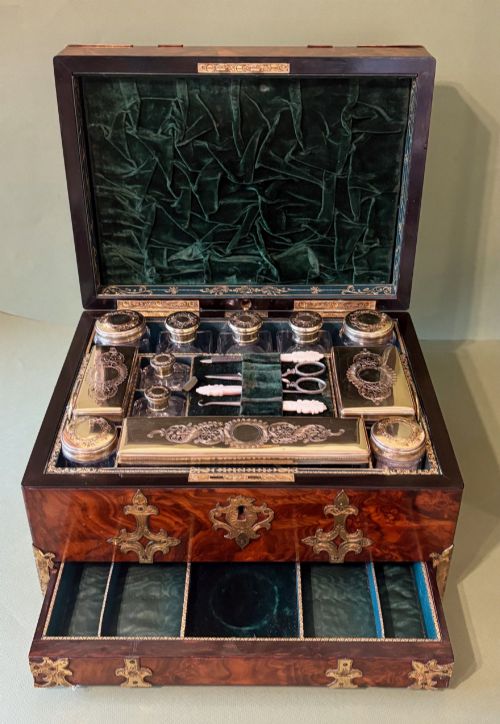
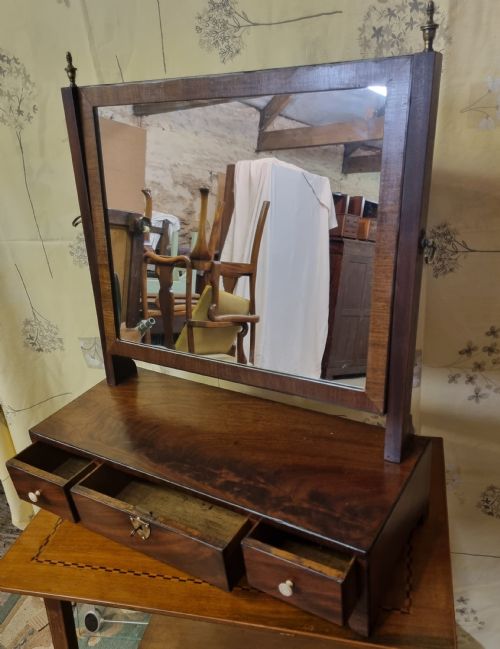
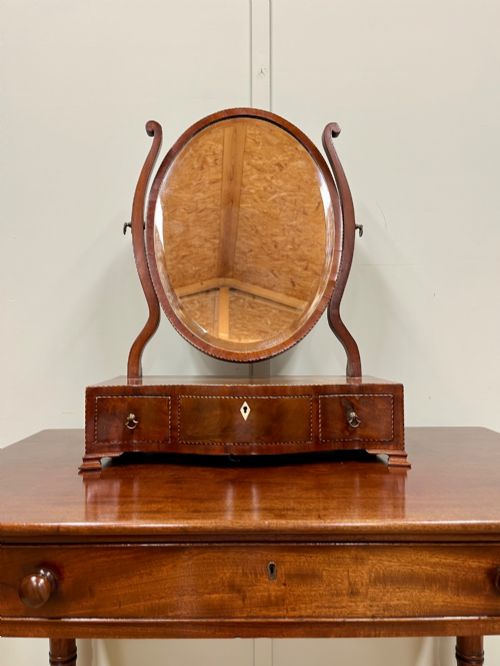
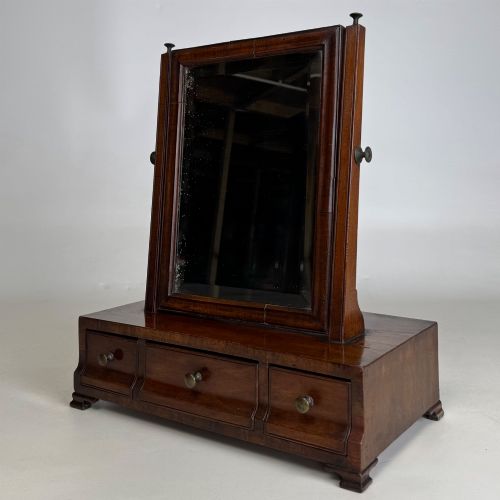
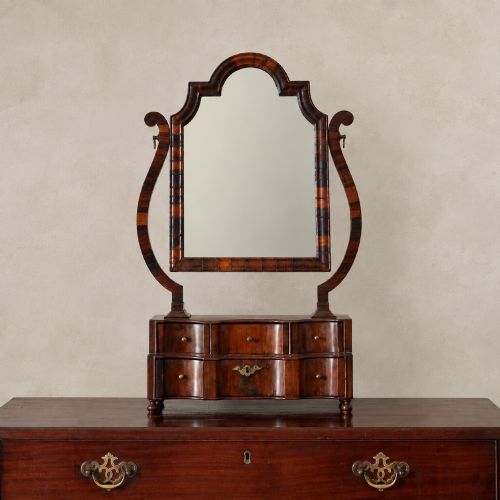
An antique box mirror serves as a dressing table or toilet mirror, featuring a pivoting glass mounted above a small storage base. The base typically contains drawers or compartments designed for small valuables, jewellery, and cosmetics. These pieces date across the eighteenth and nineteenth centuries, spanning Georgian and Queen Anne styles.
The pieces on this page concentrate heavily on eighteenth-century examples, particularly from the Georgian period. Most items appear as dressing table mirrors or toilet mirrors, utilising traditional formats with rectangular swing frames. Walnut and mahogany dominate the current selection, reflecting the preferred cabinet timbers of the era.
Materials and construction
Cabinet makers constructed these mirrors using solid and veneered timbers such as walnut, mahogany, laburnum, and giltwood. Workshops often applied finely grained veneers over secondary wood carcases, using crossbanding and stringing to outline the drawer fronts of the base box. Brass fixtures including swing screw handles, small knobs, and bracket feet provide structural and decorative detail.
The glass plates are held within rebated wooden frames supported by upright arms, allowing the mirror plate to tilt to the desired angle. Joinery methods in the base box typically include dovetail joints for the small drawers, ensuring durability for daily use on a dressing chest or table.
Antique Box Mirror Retail Price Guide 2026
Typical asking prices for box mirror among the pieces listed under this phrase on Sellingantiques today, from the lower quarter to the upper quarter. They describe what is for sale here now, not the wider market.
Distinctions in quality
Quality rests in the choice of timber and the crispness of the cabinet work. Finer examples display highly figured walnut or richly toned mahogany, sometimes accented with contrasting stringing or laburnum oyster veneers.
Proportion and hardware dictate the visual success of the piece. Superior mirrors maintain balanced dimensions between the swing frame and the lower box, retaining original brass fittings and silvered mirror glass.
The Antique Box Mirror Glossary
- Toilet mirror
- A small mirror designed to stand on a dressing table or chest, usually incorporating a compartmented base for personal items.
- Swing frame
- A mirror plate mounted on pivots between two upright posts, allowing the glass to tilt forward or backward.
- Bracket foot
- A simple structural foot extending from the base corners of the box, often shaped in an ogee or bracket profile.
- Crossbanding
- A strip of veneer laid across the grain of the primary panel to create a decorative border around drawer fronts.
- Oyster veneer
- Circular or oval slices cut across small branches to create distinctive concentric growth ring patterns on the surface.
Antique Box Mirror: Frequently Asked Questions
Where should I place a box mirror?
These mirrors sit comfortably on top of dressing tables, chests of drawers, or low sideboards in bedrooms and hallways.
Their compact footprints require minimal surface space while providing both a functional glass and concealed storage.
How do I care for the wood and glass?
Dust the timber surfaces regularly with a dry cloth and avoid commercial silicone polishes that can damage historic finishes.
Clean the mirror plate gently with a damp cloth, taking care not to let moisture seep behind the edges of the glass.
Are the mirror plates original?
Many eighteenth and nineteenth-century mirrors retain their original glass, which may show light foxing, minor speckling, or slight distortion.
Replacement glass appears in some pieces where the original plate suffered breakage over decades of daily use.
What is the difference between walnut and mahogany models?
Walnut models frequently date to the earlier Queen Anne and early Georgian periods, exhibiting warm brown tones and subtle grain patterns.
Mahogany versions tend to appear from the mid-eighteenth century onward, offering a deeper reddish hue and robust cabinet construction.