
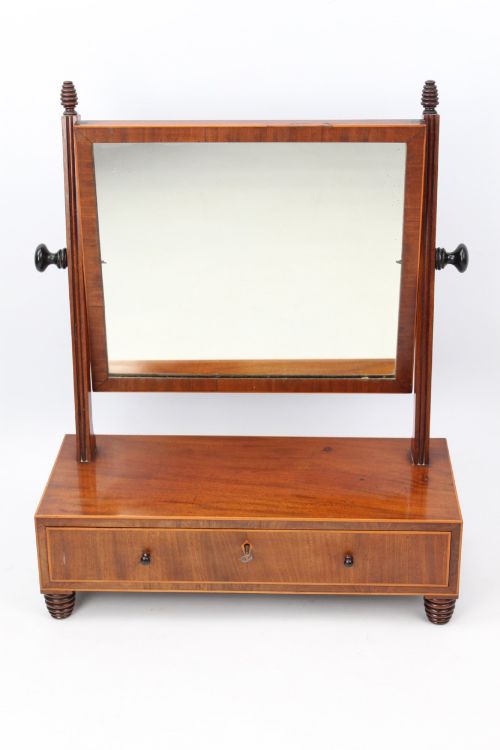
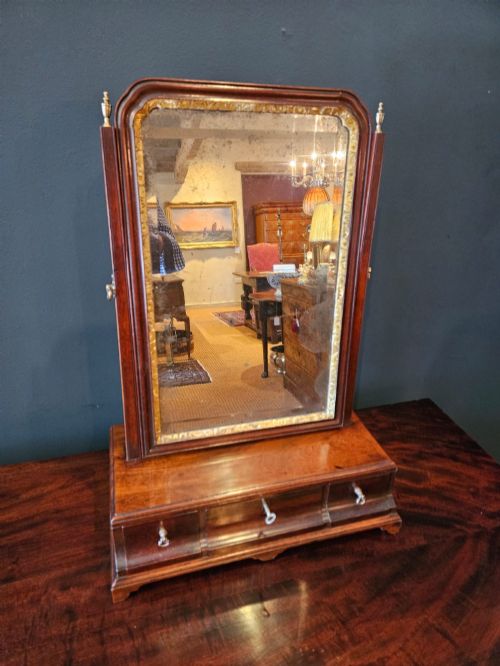
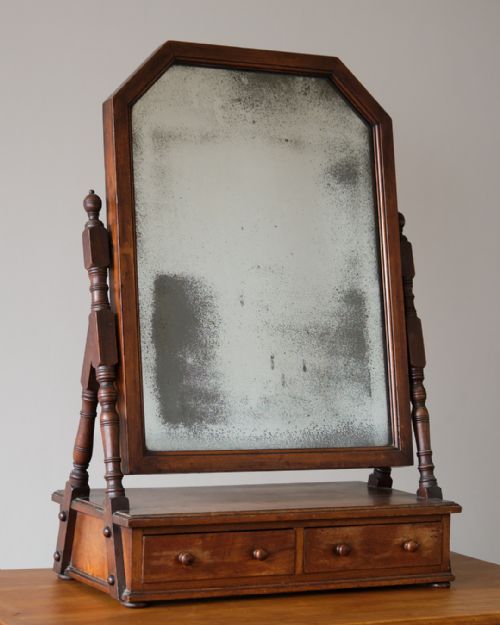
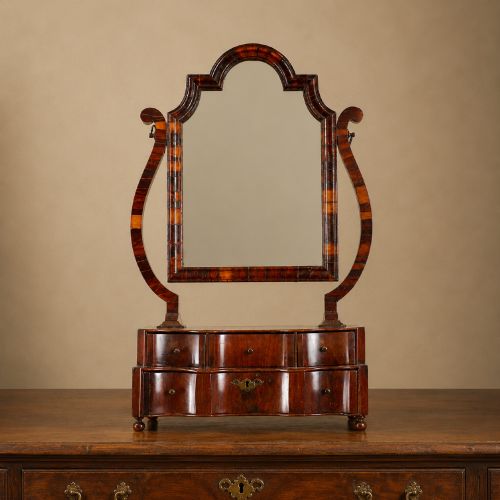


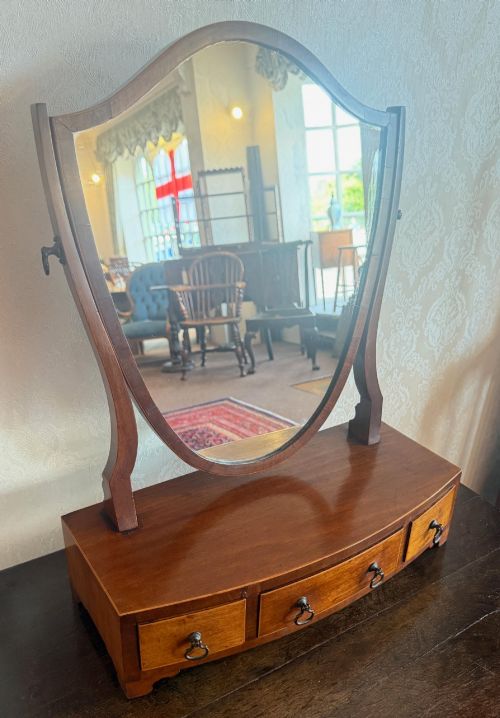
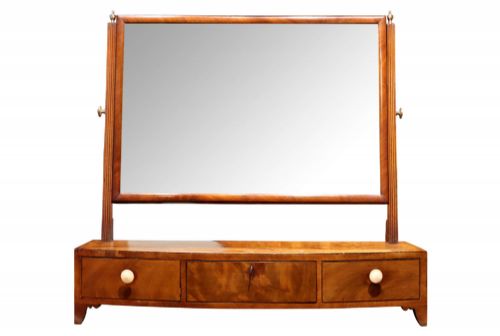
Tabletop Mirror with Drawers
A tabletop mirror with drawers brings together practical reflection and small-scale storage, offering a tidy piece of furniture for the dressing table.

Tabletop Mirror with Drawers
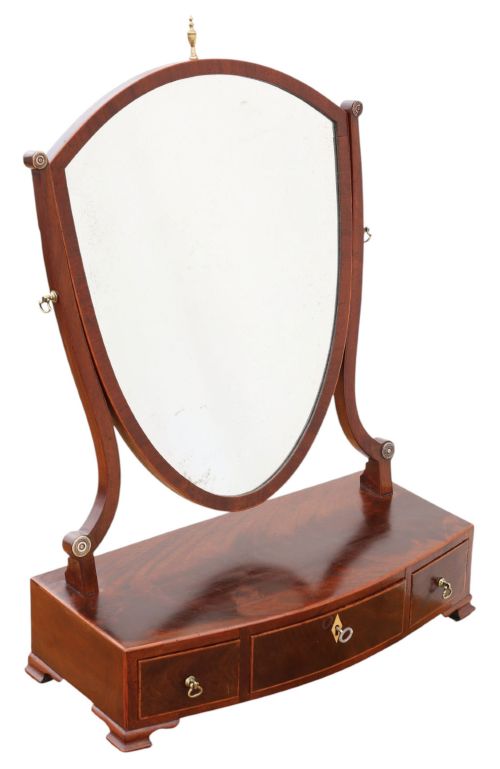
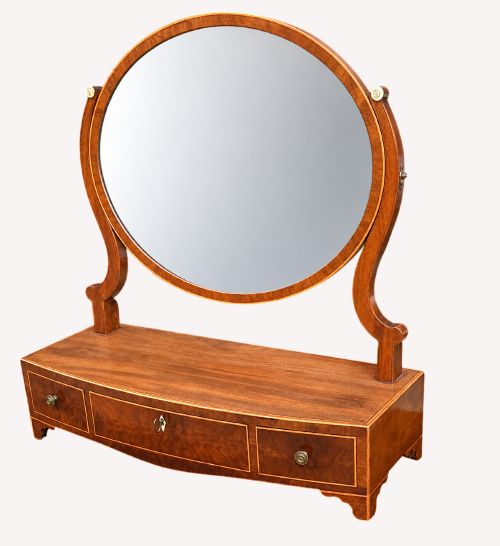
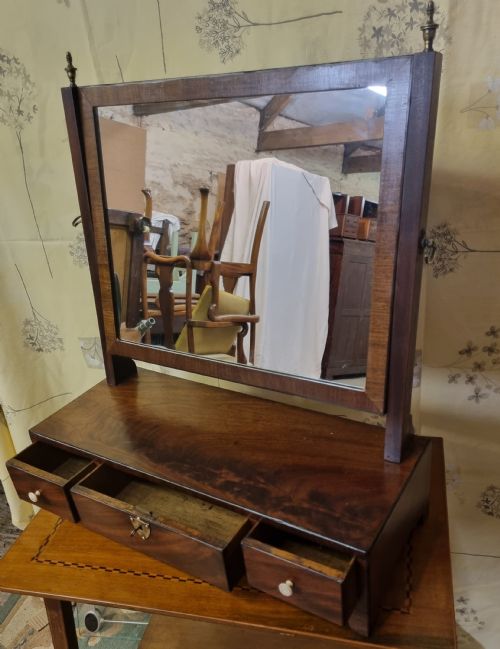
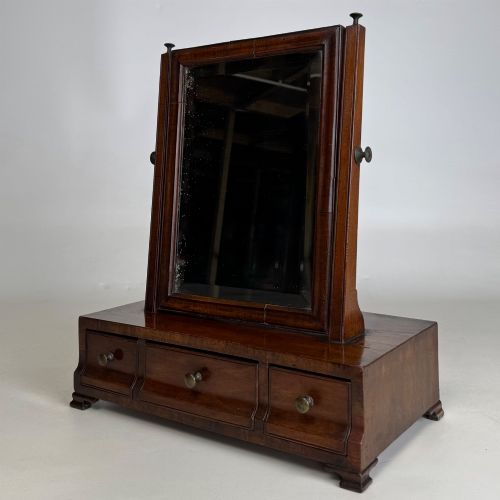
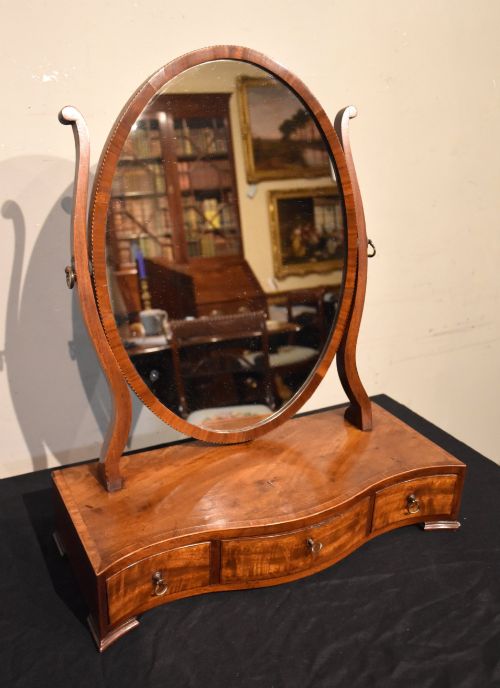
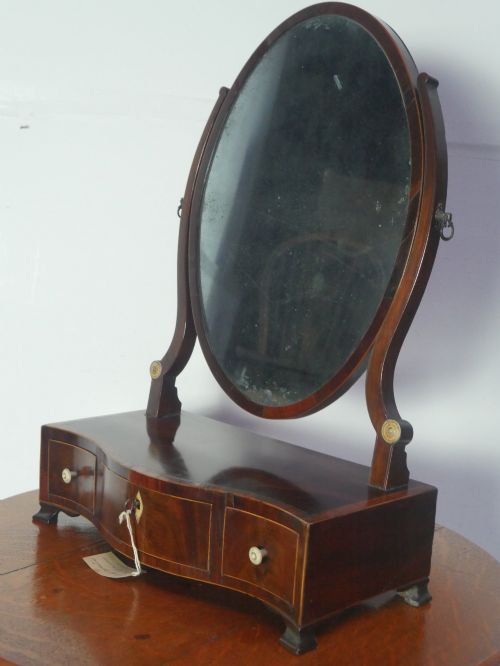
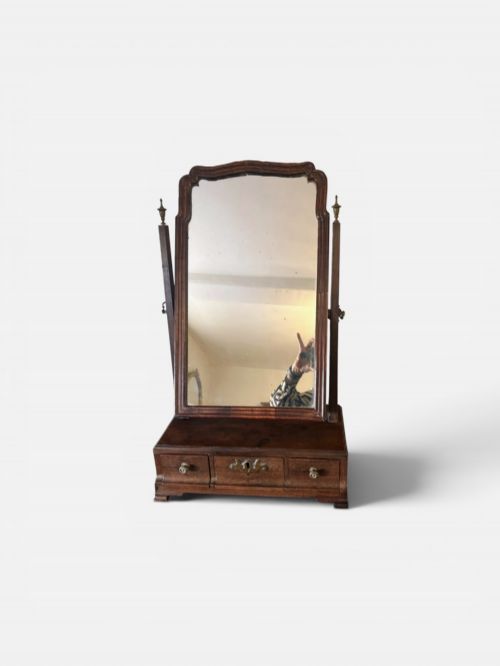
A tabletop mirror with drawers combines a swinging mirror plate with a base containing one or more small storage compartments. These pieces appear most frequently in 18th century and 19th century iterations, spanning Georgian, Regency and Victorian periods.
Makers produced these mirrors in various woods such as mahogany, walnut and satinwood, occasionally incorporating marquetry inlay or shield shapes. The proportions range from compact desk models to larger swinging mirror plates.
Materials and construction
Cabinet makers utilised dense hardwoods like mahogany and walnut for the foundational frames and drawer boxes, often selecting figured veneers or burr maple for visual depth. Secondary woods provide structural support within the drawer interiors.
Glass plates are held within adjustable swing frames connected to upright arms, allowing the user to tilt the reflection angle. Brass brackets, knobs and bone escutcheons frequently accent the woodwork.
Tabletop Mirror with Drawers Retail Price Guide 2026
Typical asking prices for tabletop mirror with drawers among the pieces listed under this phrase on Sellingantiques today, from the lower quarter to the upper quarter. They describe what is for sale here now, not the wider market.
The listings here span the 18th century, Georgian, Regency, 19th century, and Victorian periods in woods including mahogany, walnut, satinwood and birch.
Quality and proportion
The standard of timber selection and veneer matching defines the visual impact of the base and frame. Pieces featuring figured walnut, satinwood or intricate marquetry inlay demonstrate greater attention to detail by the maker.
Proportion and stability determine the mechanical success of the piece, as the weight of the mirror frame must balance securely against the drawer base. Fine joinery in the drawer construction and original brass hardware elevate the standing of the work.
The Tabletop Mirror with Drawers Glossary
- Swing mirror
- A glass plate mounted on pivots between two upright posts that allows the angle of reflection to tilt. This mechanism is central to dressing and toilet mirrors.
- Toilet mirror
- A historical term for a tabletop mirror designed for grooming and ablutions, typically fitted with a small box base containing drawers.
- Shield mirror
- A mirror plate cut into the contour of a heraldic shield, popular in Georgian designs. The wooden frame follows this curved outline.
- Marquetry
- The art of applying decorative veneer pieces in wood to form intricate patterns or pictures. Dutch marquetry examples often feature floral motifs.
- Escutcheon
- A protective plate surrounding a keyhole on a drawer front, frequently rendered in bone or brass.
Tabletop Mirror with Drawers: Frequently Asked Questions
What is a tabletop mirror with drawers?
A tabletop mirror with drawers is a portable grooming glass mounted on a small cabinet base containing one or more drawers. These pieces sit on top of a larger table or chest of drawers.
They were designed for personal grooming and storing small items like jewellery, pins and cosmetics. The mirror plate swings on pivots to adjust the angle.
How do I date a dressing mirror?
Dating relies on observing the timber species, construction methods of the drawers, and overall style period. Georgian and 18th century examples often feature mahogany or walnut with hand-cut dovetails.
Later Victorian and 19th century pieces introduce different hardware, machine-sawn elements and distinct veneer choices. Comparing the framing style to known period characteristics narrows down the origin.
Where should I place a toilet mirror?
These mirrors suit dressing tables, chests of drawers, or sturdy console surfaces in a bedroom or dressing room. They require a stable surface that matches their depth and weight.
Ensure the placement allows enough clearance for the swing frame to tilt without hitting surrounding wall decor or items on the surface.
What is the difference between a toilet mirror and a dressing mirror?
In historical terms, toilet mirrors and dressing mirrors refer to the same functional form used for personal grooming. Both describe a tabletop glass paired with a drawer base.
Manufacturers and cataloguers use the terms interchangeably across the 18th and 19th centuries. The physical distinction depends more on the specific size and drawer configuration than the name.