




Regency Toilet Glass
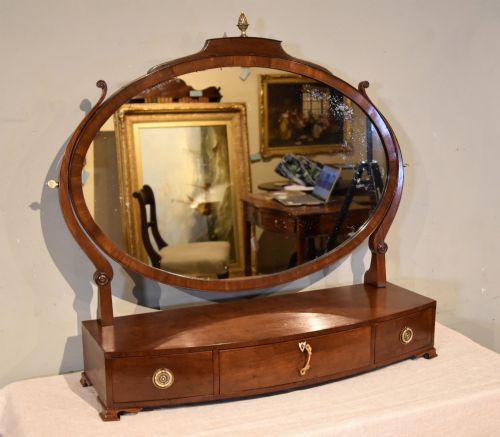
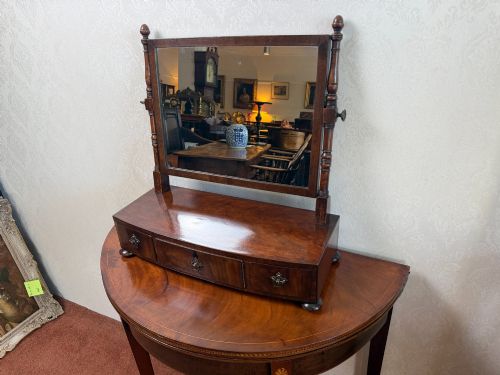
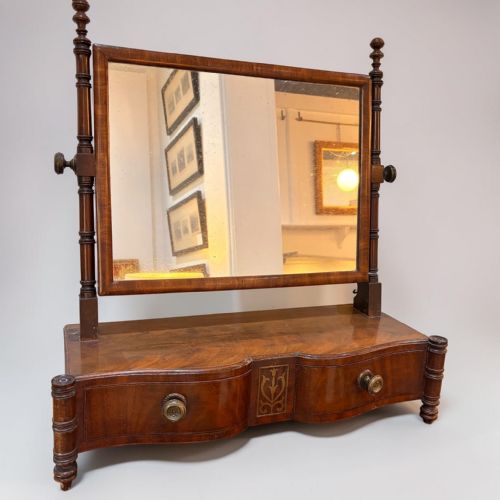
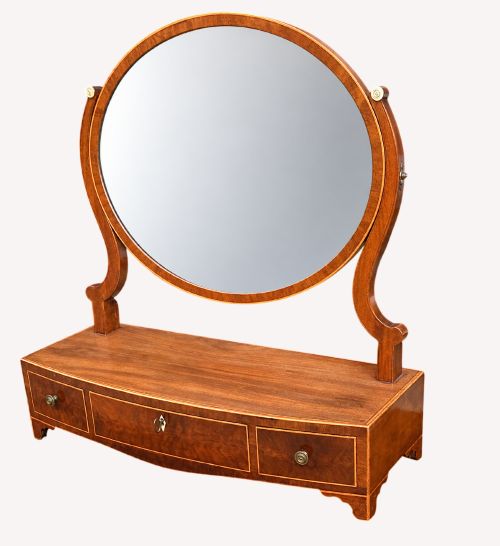
A regency toilet glass sits on a dressing table or chest, offering a clear reflection framed in fine timber.
Regency Toilet Glass
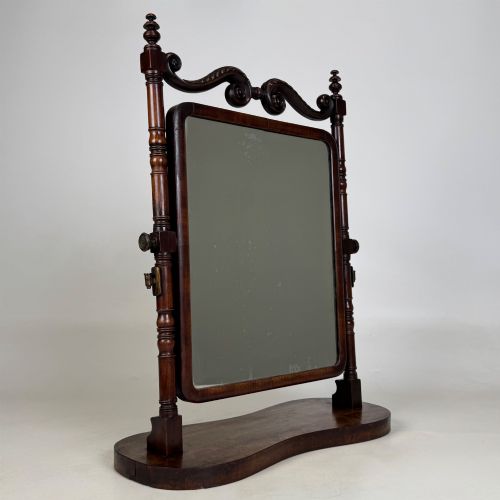
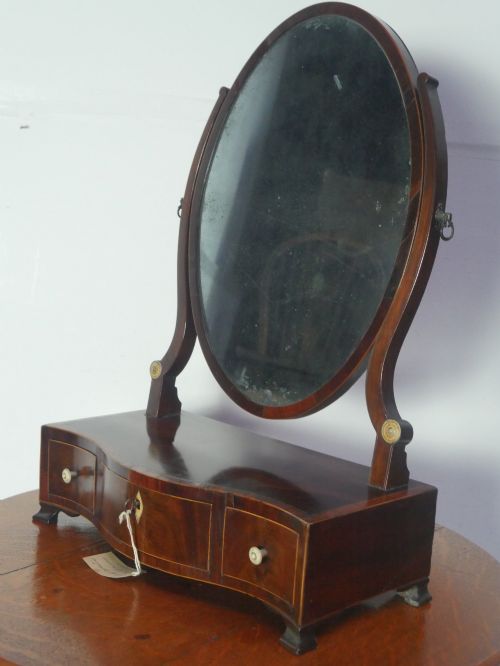
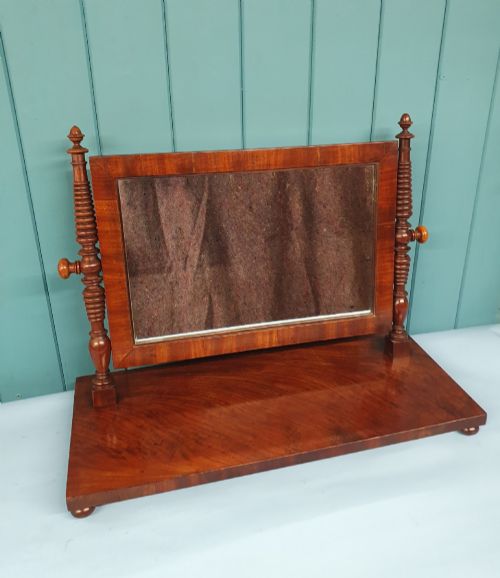
When you search for a regency toilet glass, you encounter movable dressing mirrors designed to sit upon a larger surface. These pieces span the Georgian, Regency, and Victorian eras, often taking the form of a swing or swivel mirror mounted on upright supports.
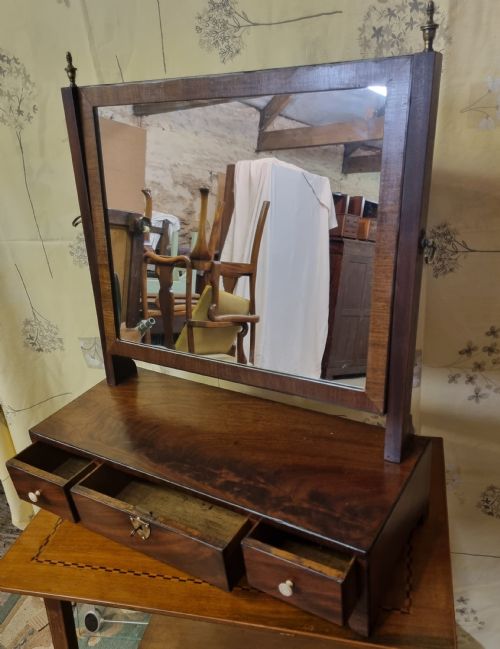
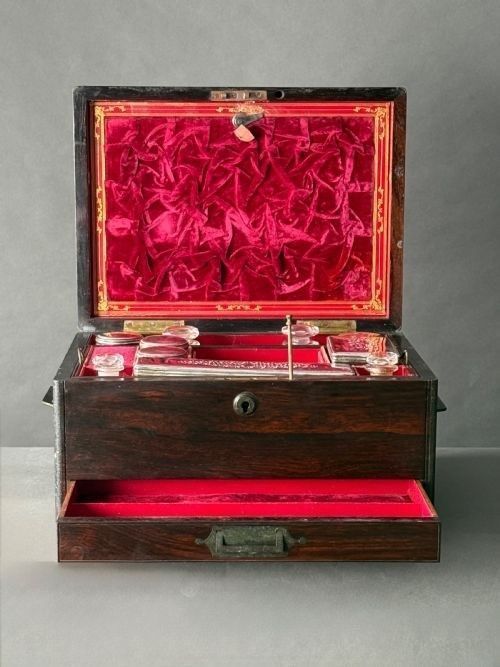
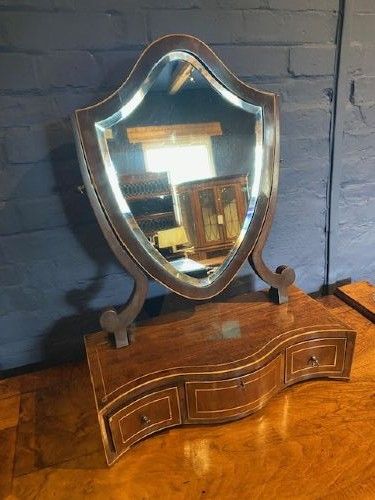
The most common version met on this page is the mahogany dressing table mirror, frequently featuring a box base with small drawers. Variations include larger cheval mirrors, compact hand mirrors, and fitted vanity boxes equipped with mirror plates.
Originating largely in the nineteenth century, these objects served domestic grooming needs before fitted bathroom mirrors became standard. Cabinetmakers built them to complement bedroom furniture, utilising timber frames that matched the prevailing style of the room.
Quality variations
The standard of a toilet glass depends heavily on the selection of timber grain and the crispness of the secondary veneers. Finely figured mahogany and subtle ebony inlay distinguish superior workshop output from plain utility pieces.
Construction details also separate the tiers of craftsmanship, visible in the weight of the cast brass mounts and the smooth articulation of the swivel mechanism. Original mirror plates retained within well-proportioned, heavy frames indicate higher original cost and careful survival.
Regency Toilet Glass Retail Price Guide 2026
Typical asking prices for regency toilet glass among the pieces listed under this phrase on Sellingantiques today, from the lower quarter to the upper quarter. They describe what is for sale here now, not the wider market.
Listings show timber choices spanning mahogany, rosewood, kingwood, and satinwood across the nineteenth century.
Gillow
The Regency Toilet Glass Glossary
- Swing mirror
- A glass plate mounted on pivots between two upright posts, allowing the user to tilt the angle of reflection. This form sits upon a table or a dedicated box base.
- Cheval mirror
- A full-length freestanding dressing glass supported on four legs or a heavy frame. The term derives from the French word for horse.
- Bow front
- A convex curved front contour typical of certain drawer bases beneath the mirror plate. This shape required skilled curving of the timber veneers.
- Toilet glass
- A period term for a dressing table mirror used during personal grooming. These items were placed on top of washstands or dressing chests.
- Stringing
- Thin lines of contrasting wood inlay used to decorate the edges of drawers and frames. Cabinetmakers inlaid these strips into grooves cut into the primary timber.
Regency Toilet Glass: Frequently Asked Questions
What is a toilet glass?
A toilet glass is a portable mirror designed to sit on a dressing table or chest of drawers. It allows a person to adjust their reflection during daily grooming.
Most examples feature a pivoting glass plate held within a wooden frame, often mounted on a small box fitted with drawers for trinkets.
Where should I place one?
These mirrors suit placement on top of a sturdy chest of drawers, a sideboard, or a dedicated dressing table. Their proportions allow them to anchor a bedroom or hallway surface effectively.
Ensure the supporting furniture matches the depth of the mirror base to maintain stability and balance.
Can the mirror be tilted?
Most swing mirrors use side screws or pivot pins that let you adjust the angle of the glass. This mechanism allows users of different heights to see themselves clearly.
Over time, the original brass fixings may loosen or tighten, requiring careful adjustment to hold the preferred angle.