
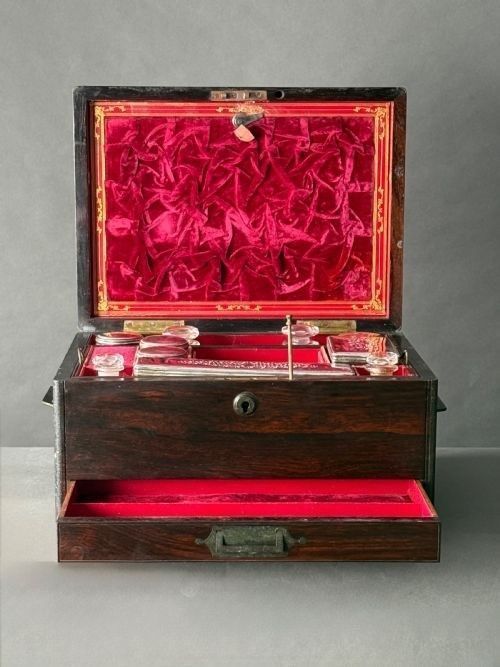
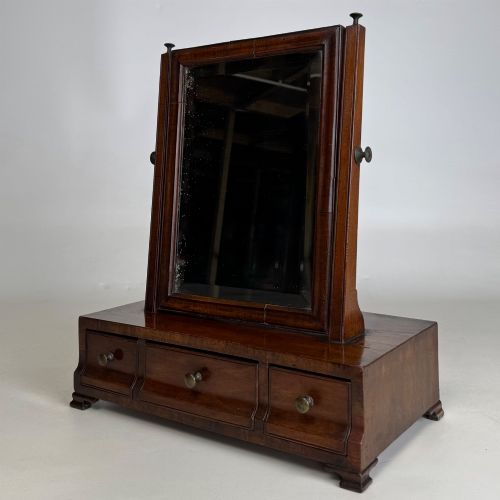
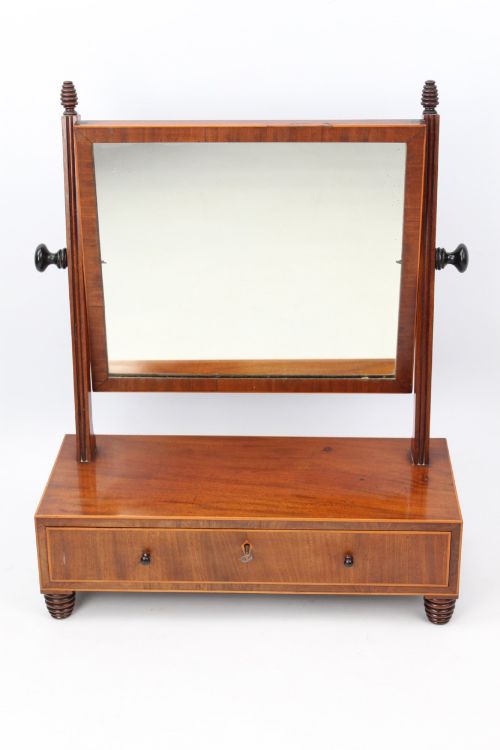
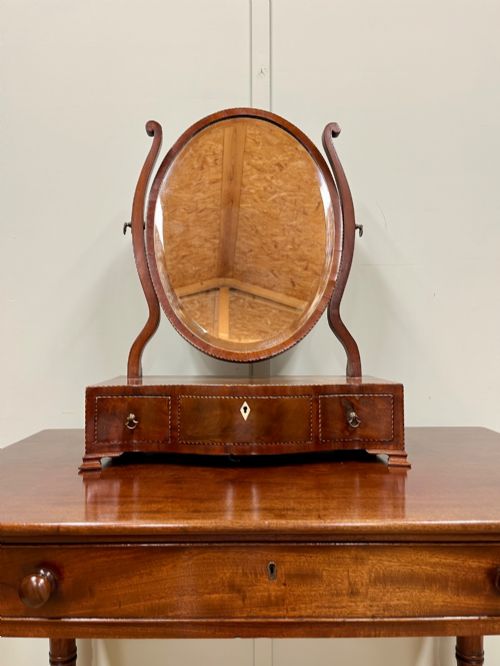
Georgian Dressing Glass
A georgian dressing glass sits low on chest or table, catching the morning light to steady a shave or pin a cravat.
Identifying georgian dressing glass pieces
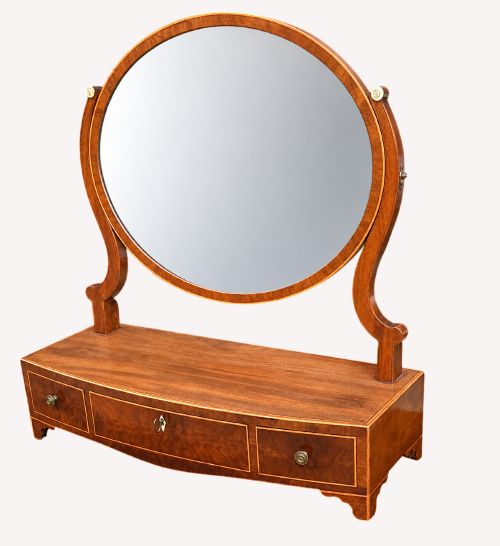
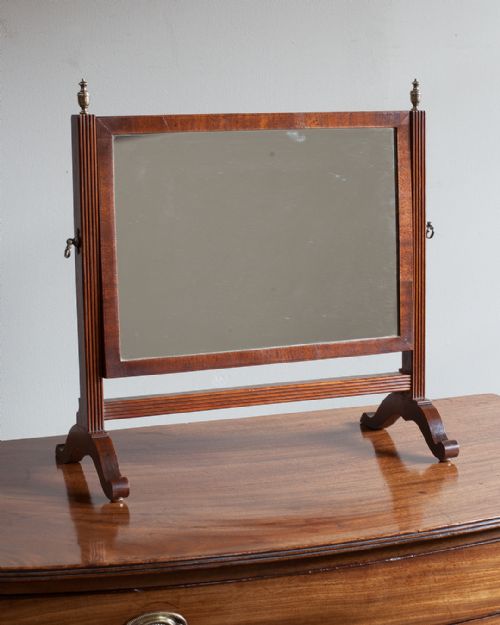
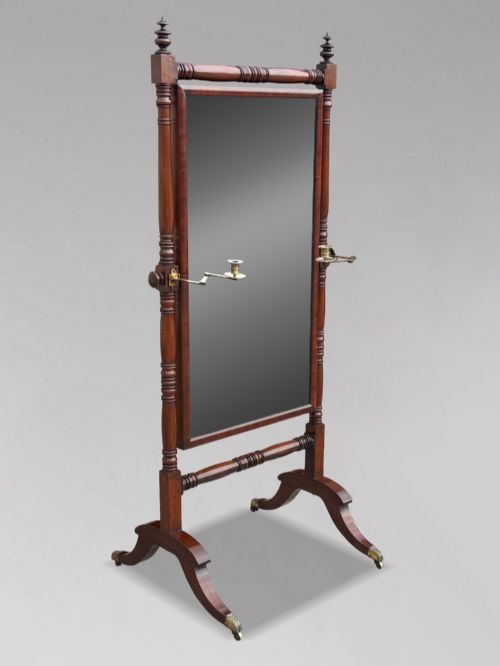
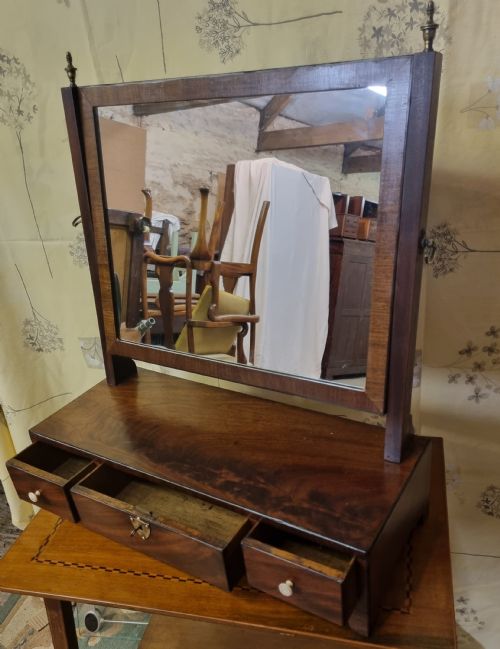
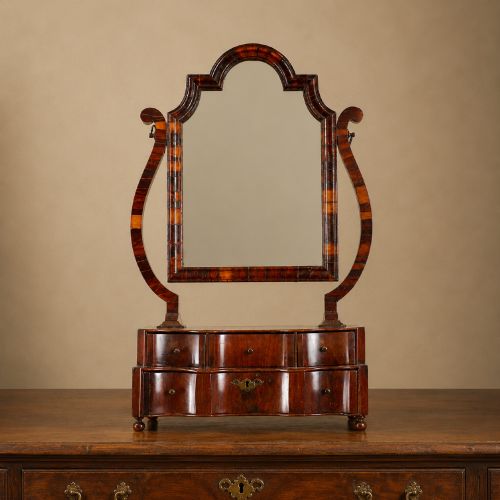
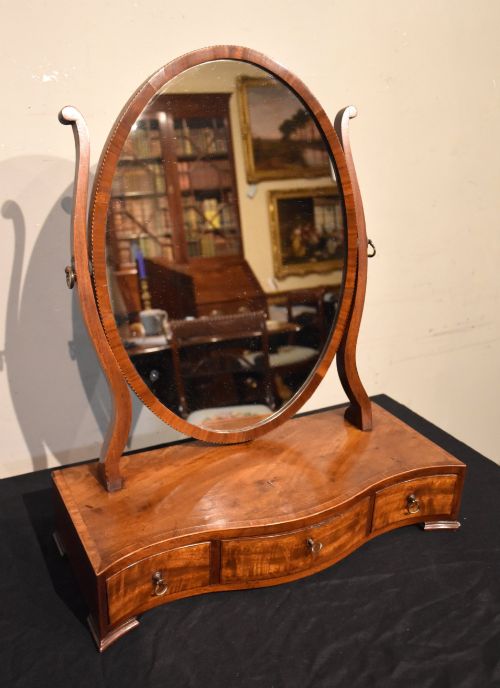
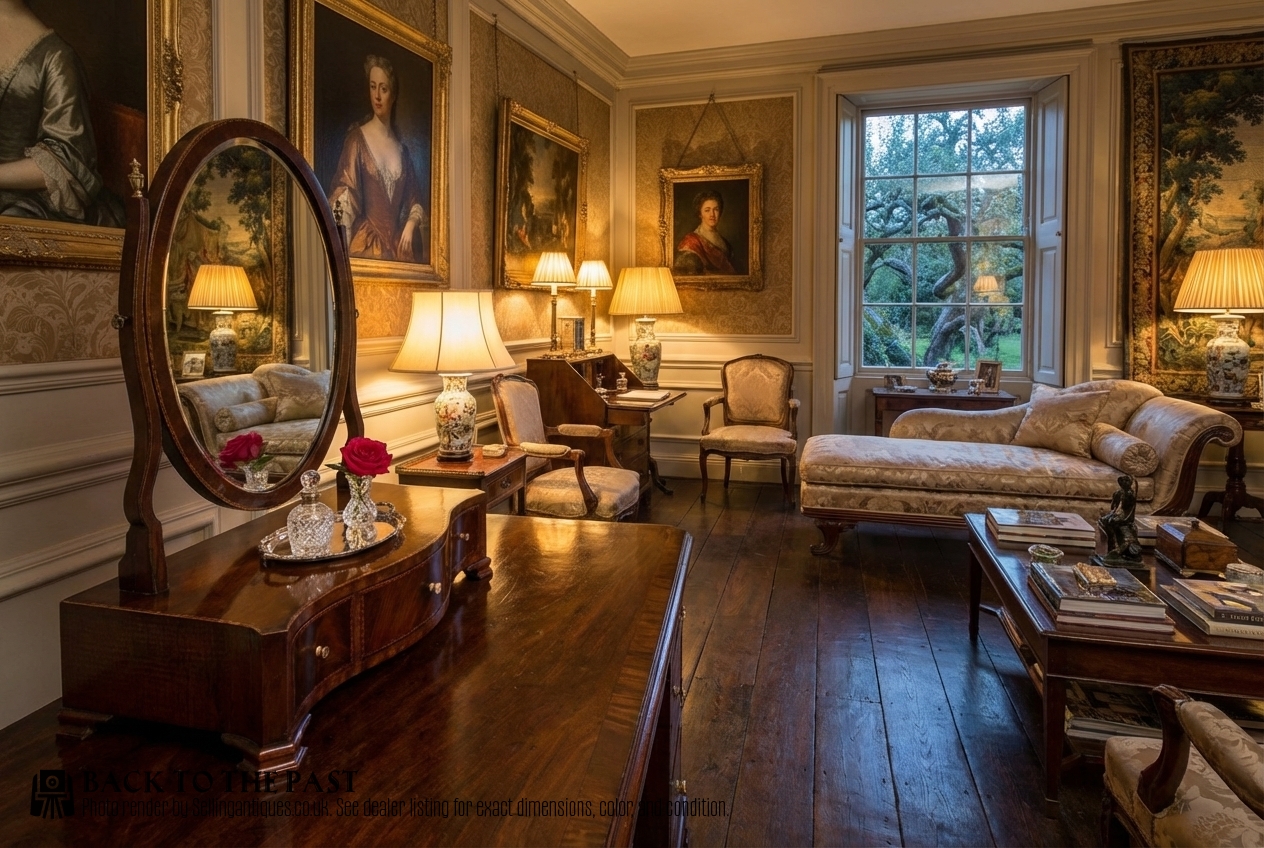
A georgian dressing glass is a compact mirror designed to sit atop a chest of drawers, dressing table or sideboard. These pieces combine a pivoting mirror frame supported by upright arms with a small base fitted with functional drawers.
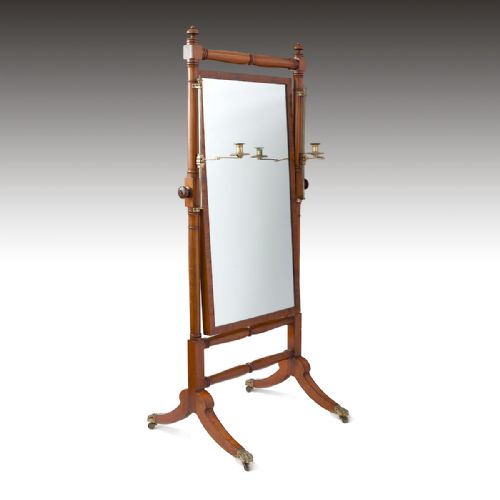
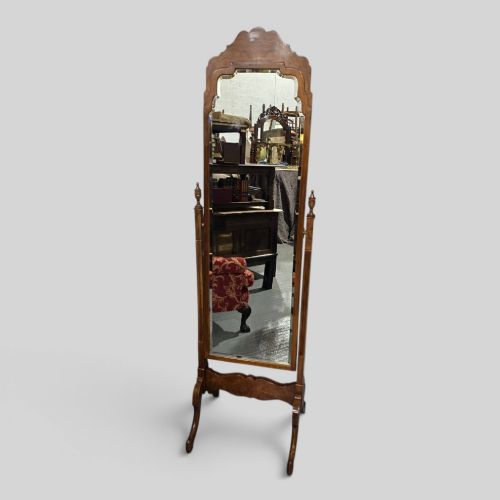
The versions most commonly met on this page span the George II, George III and Regency periods, rendered primarily in rich timber forms. Smaller table models sit alongside larger floor-standing cheval mirrors designed for full-length viewing.
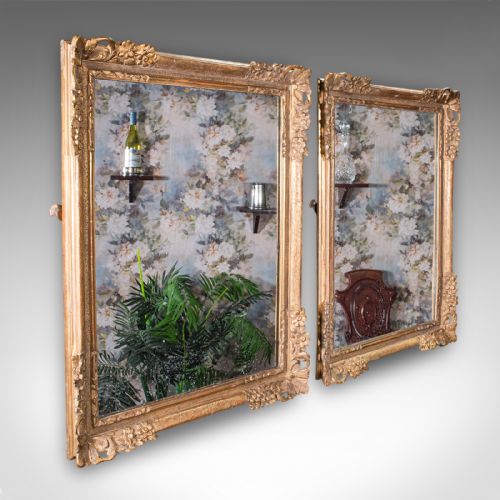
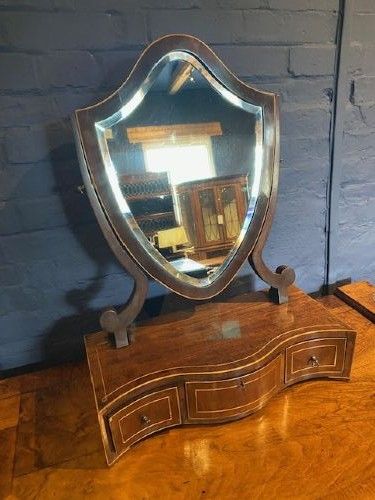
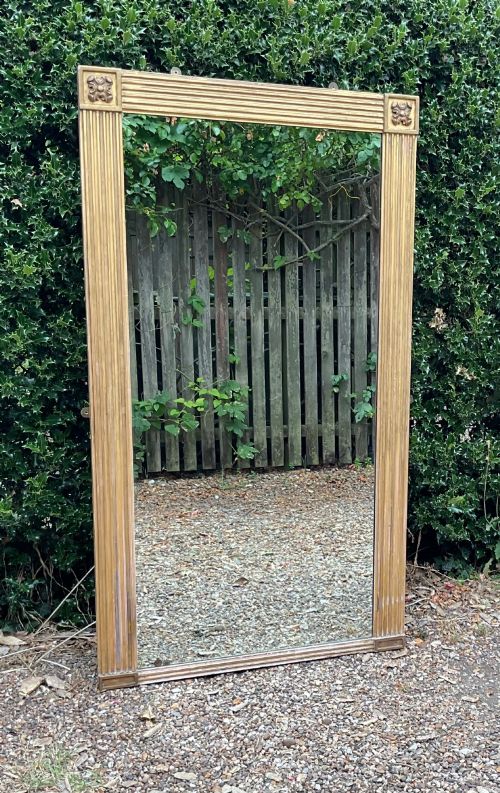
Makers shaped these mirrors as oval, rectangular or serpentine plates held securely within wooden surrounds. The overall form balances utility with proportion, anchoring a bedroom or dressing room interior.
Materials and construction methods
Cabinetmakers built these frames using dense timber stocks such as mahogany and walnut, occasionally enriched with boxwood inlay or fine marquetry. Brass fittings, including decorative swing-arm screws, knobs and escutcheons, secure the moving frame to its upright supports.
Mirror plates utilise traditional silvering techniques behind glass, held within bevelled or plain wooden rebates. Small drawer linings often incorporate oak, joined meticulously by hand to house cosmetics, pins and personal trinkets.
Retail Price Guide 2026
Typical UK retail prices for georgian dressing glass, calculated from the Sellingantiques database of over a million retail prices indexed since 2003. This retail price guide relies exclusively on Sellingantiques data; no external sources or auction records are used, so the figures do not describe the wider market.
Oak-lined drawers hidden beneath the glass kept secret powders and pins safe from clumsy morning fingers.
Distinguishing quality and craftsmanship
Quality rests in the harmony of proportions, the crispness of timber figures and the subtlety of secondary woods. Superior examples display thoughtful grain matching across the drawer fronts and finely turned support arms that avoid heaviness.
The distinction between standard workshop output and top-tier cabinet work lies in the execution of details like serpentine shaping, delicate boxwood stringing and original brass hardware. Better preserved mirror plates and intact secondary drawer linings elevate a piece's integrity.
The Georgian Dressing Glass Glossary
- Dressing glass
- A portable mirror with a base containing small drawers, designed for placement on a table.
- Cheval mirror
- A full-length swing mirror supported on a vertical floor-standing frame.
- Serpentine
- A gently undulating curved line often seen on the front edges of drawers and mirror bases.
- Marquetry
- Decorative veneer work arranged in complex patterns using various coloured woods.
- Rebate
- A recessed channel or groove cut into an edge to receive the mirror plate.
Frequently Asked Questions
What is a dressing glass used for?
These mirrors provided a dedicated space for personal grooming, hair styling and applying cosmetics before electric lighting was common.
The small drawers beneath the glass served to secure jewellery, hairpins, razors and small personal items close at hand.
Where should I place a dressing glass?
A table model sits comfortably atop a chest of drawers, sideboard or kneehole dressing table in a bedroom or hallway.
Ensure the surface is stable and positioned near natural light to make the pivoting mirror functional.
How do I date a Georgian mirror?
Dating relies on observing timber choices, bracket feet styles, brass hardware designs and cabinetmaking techniques.
Earlier George II pieces often feature walnut, while later George III and Regency versions favour mahogany, occasional marquetry and crisper geometric lines.
Are swing mirrors adjustable?
Most table-top and floor-standing models use brass side screws or pivot pins to tilt the glass angle.
This mechanism allows the user to adjust the reflection height and angle easily while seated or standing.