



Walnut Swing Mirror
A walnut swing mirror sits upon a chest or table to catch the light, offering a tilting plate framed in timber.
Walnut Swing Mirror
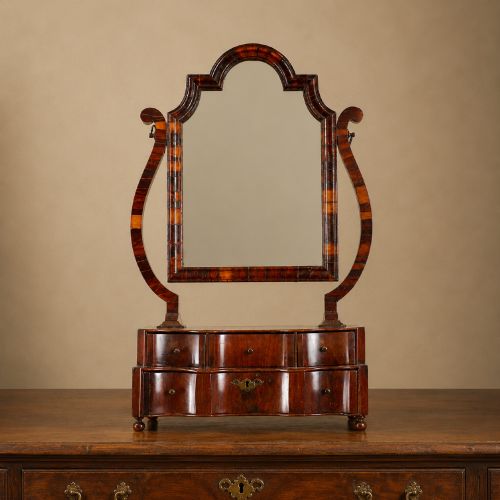
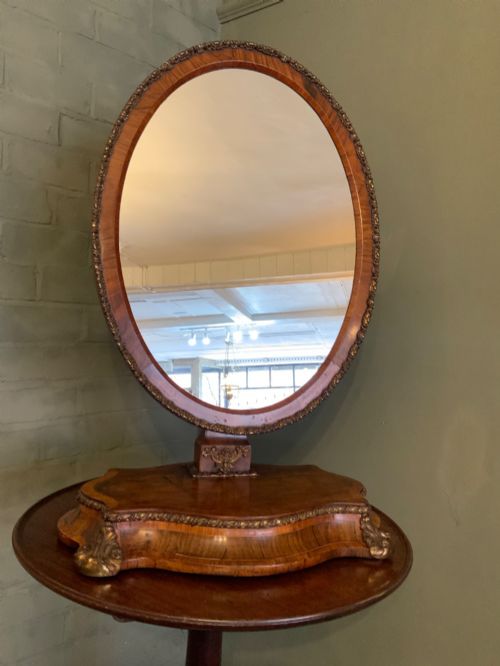
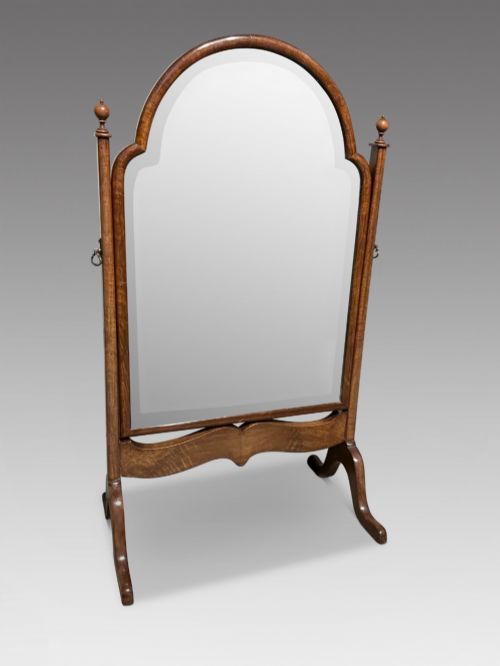
When you search for a walnut swing mirror, you encounter pieces designed for dressing and grooming, spanning periods from the eighteenth century to the twentieth century. These objects function as tabletop accessories or freestanding cheval glasses, often incorporating small drawers beneath the frame.
The versions most frequently found on this page date from the Georgian era and the Victorian period, reflecting styles such as Queen Anne and George II. Makers fashioned these mirrors to sit securely on dressing tables, using pivoting brass screws to adjust the angle of the glass plate.
How they were made
Craftsmen built the frames using solid walnut, burr walnut, or marquetry veneers applied to secondary timbers, frequently incorporating secondary woods like laburnum or maple for contrast. Timber selection dictated the grain pattern, leading artisans to choose highly figured veneers for the main display surfaces.
Makers set the mirror glass into rebated wooden frames and suspended them between upright arms fixed to a box base or dressing chest. Brass brackets, plates, and screw fittings provided the pivot mechanism, allowing the glass to tilt smoothly.
Walnut Swing Mirror Retail Price Guide 2026
Typical asking prices for walnut swing mirror among the pieces listed under this phrase on Sellingantiques today, from the lower quarter to the upper quarter. They describe what is for sale here now, not the wider market.
Some miniature box mirrors include secret compartments hidden behind the drawer interiors for storing small valuables.
What varies in quality
The depth of figure in the walnut veneer and the subtlety of crossbanding distinguish finer examples from plain utilitarian pieces. Superior construction shows in the dovetail joints of the base drawers and the delicacy of the moulding profiles around the glass plate.
The proportion between the mirror frame and its supporting base dictates the visual balance of the piece. Well-judged scaling and original brass hardware elevate an example from a simple domestic accessory to a refined piece of cabinet work.
James Jenkins The Strand London
The Walnut Swing Mirror Glossary
- Toilet mirror
- A small mirror designed to stand on a dressing table or chest, typically featuring a small box base with drawers.
- Cheval mirror
- A full-length swing mirror supported by a freestanding frame with four legs.
- Burr walnut
- Timber taken from the growth excrescence of a walnut tree, yielding a swirling and highly decorative grain pattern.
- Marquetry
- Inlaid patterns of wood veneer forming decorative motifs such as floral designs or geometric arrangements across the surface.
- Crossbanding
- A border of veneer laid across the grain direction of the main panel to frame the edges.
Walnut Swing Mirror: Frequently Asked Questions
What is a walnut swing mirror?
A walnut swing mirror is a tabletop or freestanding dressing glass set within a pivoting frame, designed for personal grooming.
These pieces usually incorporate a small box base containing one or more drawers beneath the adjustable glass plate.
How do I date a walnut mirror?
Dating relies on observing construction methods, timber choices, and hardware styles across different eras such as the Georgian and Victorian periods.
Early eighteenth-century examples often feature box bases with bracket feet and walnut veneers, while later Victorian pieces utilise heavier proportions and burr walnut.
Where should I place a toilet mirror?
These mirrors suit placement on top of a low chest of drawers, a dedicated dressing table, or a sideboard.
Their compact footprints allow them to function effectively in bedrooms and hallways alike.
What is a bureau fitment mirror?
A bureau fitment mirror incorporates a small writing slope or stationery compartments integrated into the base section.
This hybrid form combines the functions of a desk and a dressing mirror in a single compact unit.