

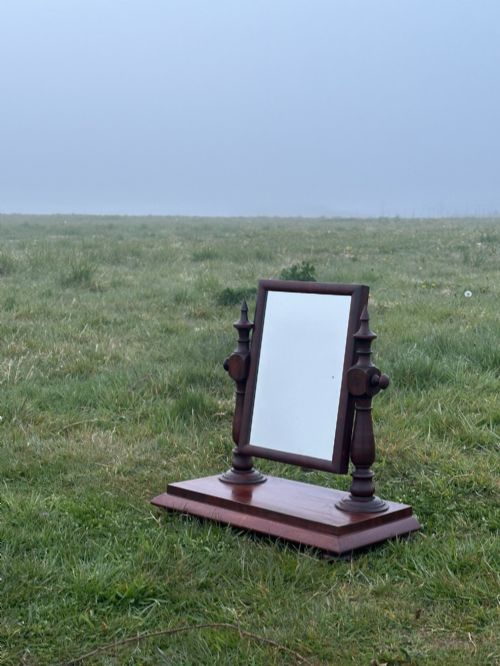


Vintage Mahogany Swing Glass
These vintage mahogany swing glass pieces are traditional table and floor mirrors that bring adjustable reflection and rich timber grain to period rooms.
Vintage Mahogany Swing Glass
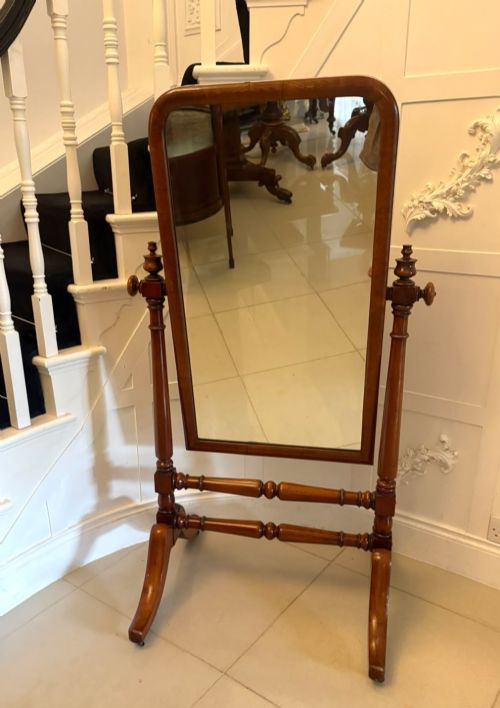
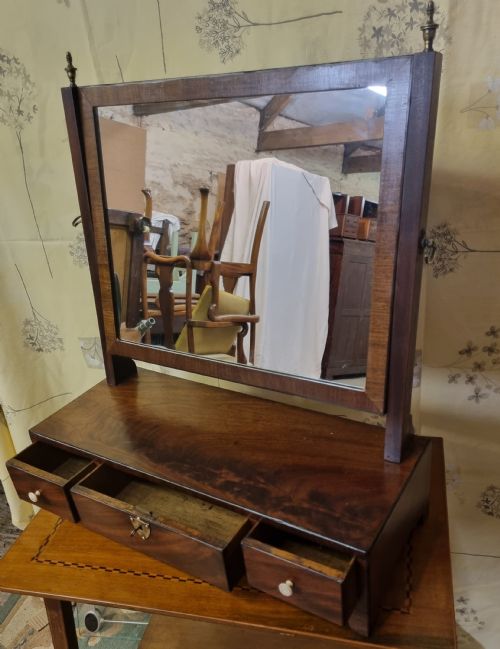
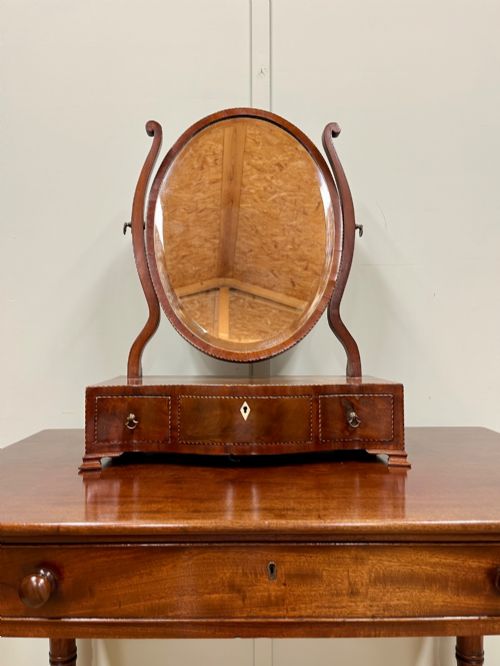
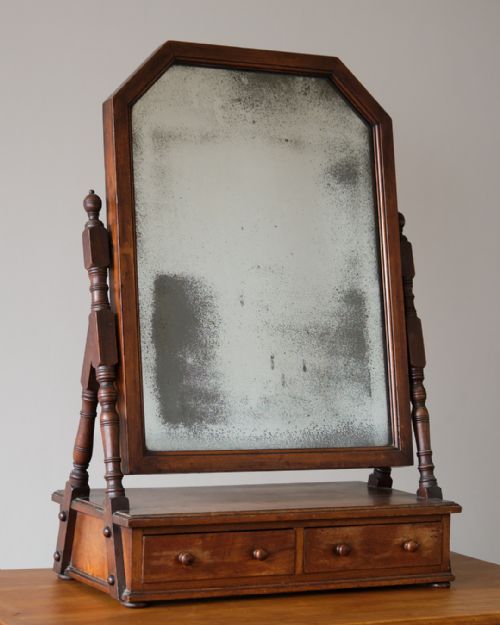
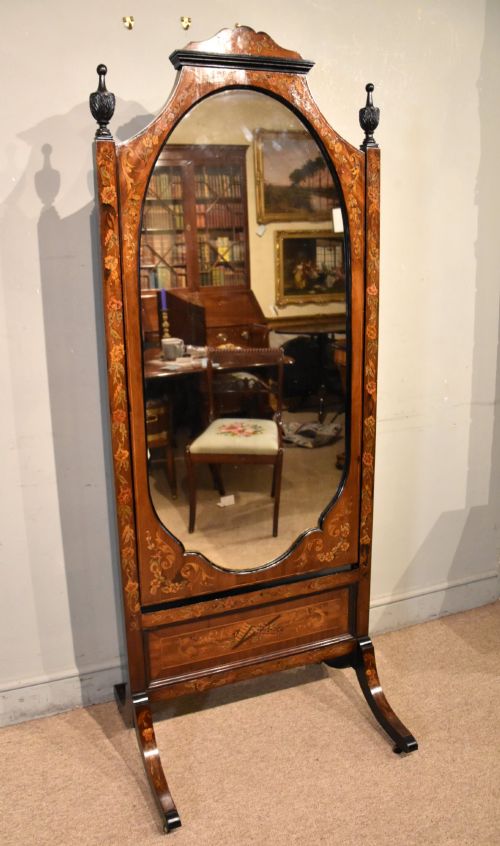
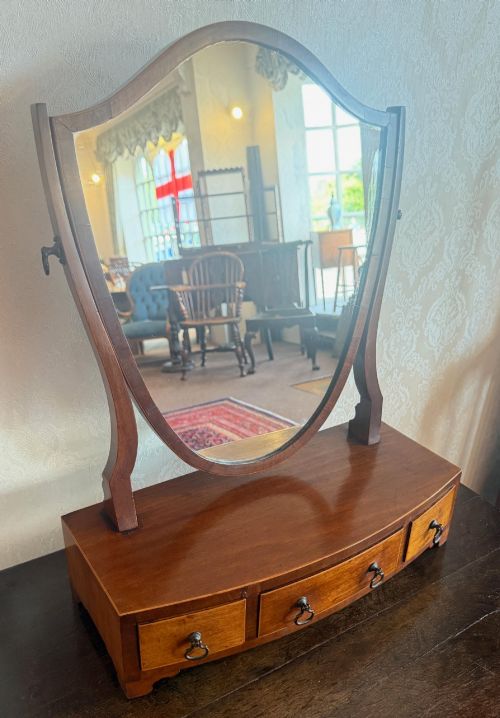
When you search for vintage mahogany swing glass, you are looking at dressing table mirrors, toilet mirrors, and larger freestanding cheval mirrors designed for bedrooms and dressing rooms. The selection on this page relies heavily on 18th-century, Georgian, Regency, and Victorian periods, with forms ranging from compact tabletop items with small storage drawers to full-length pivoting plates.
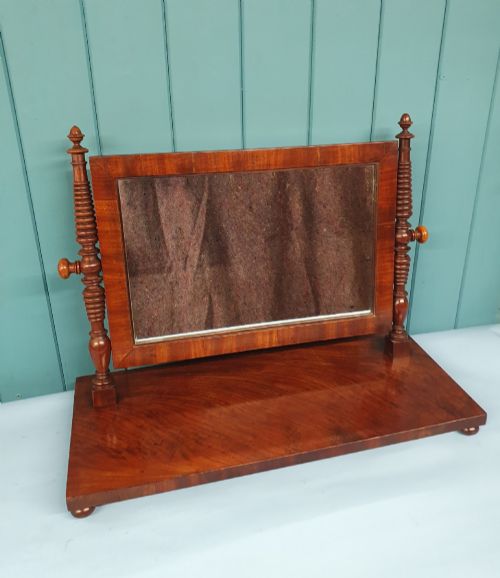
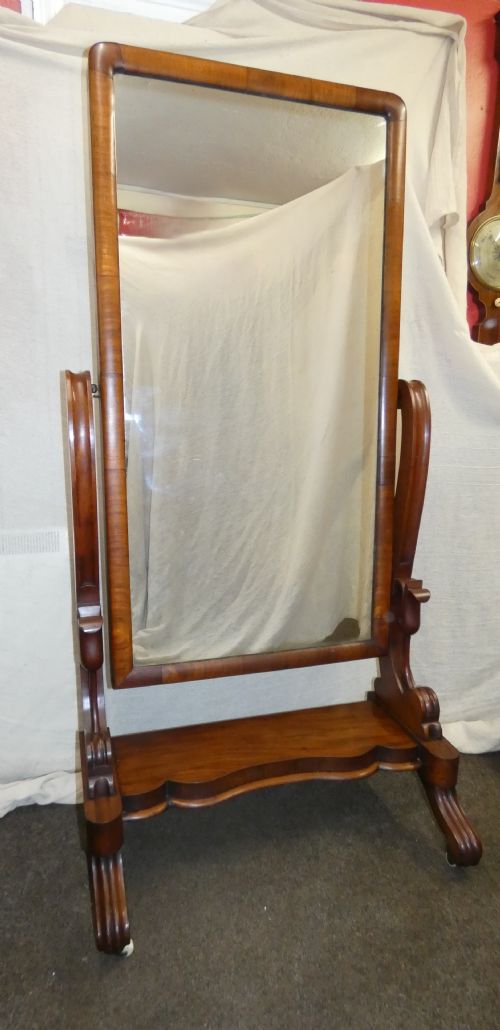
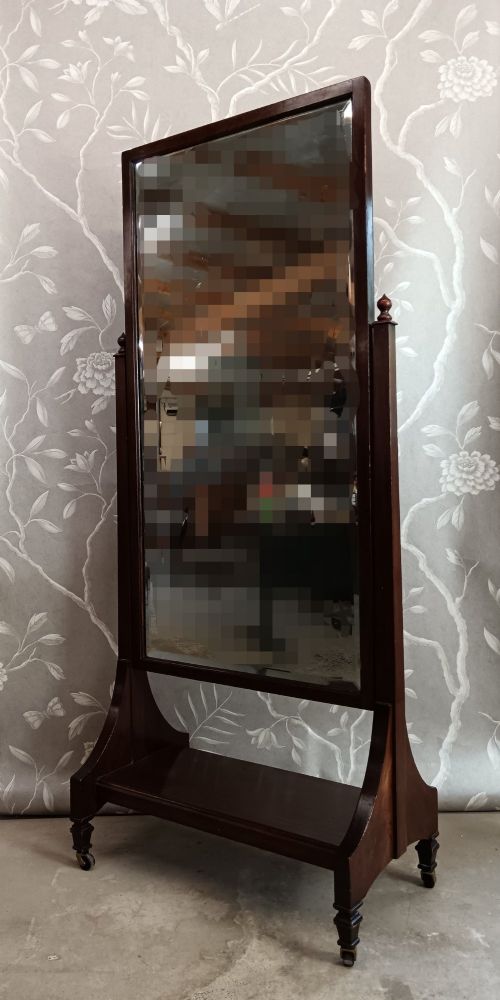
The most common formats you will meet here are tabletop dressing mirrors fitted to small box bases and tall floor-standing cheval mirrors supported by vertical side posts. These objects reflect the changing domestic habits of Georgian and Victorian households, where personal grooming required adjustable angles of light and reflection.
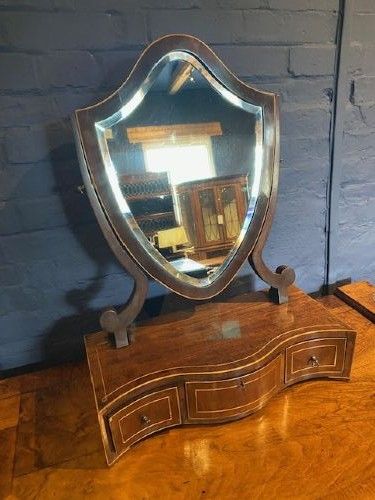
Makers and regional workshops in places like Scotland produced distinct variations, including bow-fronted and serpentine shapes. Whether built as a simple swing mirror or a grand cheval glass, each piece uses a pivoting frame supported by uprights.
Materials and construction methods
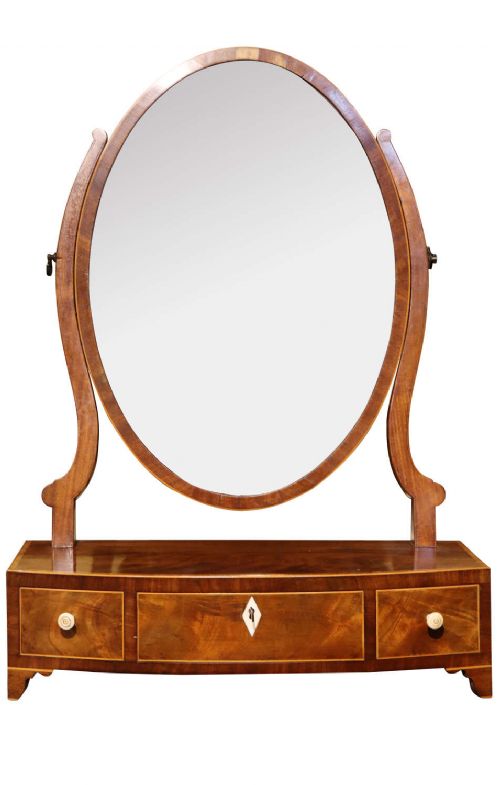
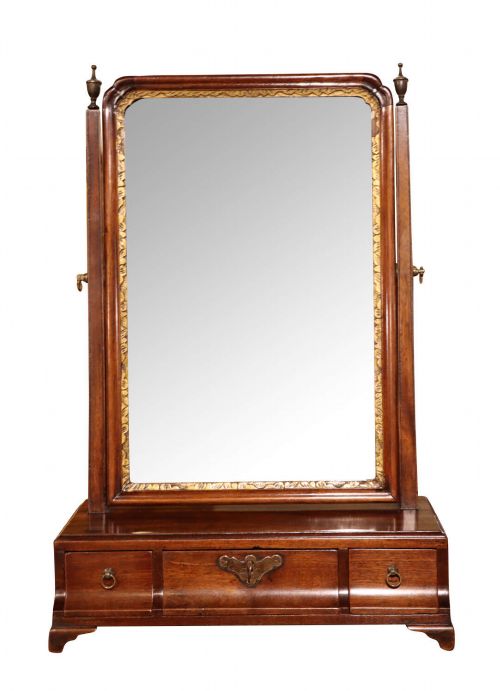
Cabinet makers constructed these frames primarily using solid and veneered mahogany, frequently enhanced by crossbanding, bone inlay, and flame mahogany figures. Supporting elements often include brass pivots, candle holders, and gilded wood details, whilst structural carcasses occasionally incorporate secondary timbers.
The mirror plates themselves consist of traditional glass and mirror glass held within adjustable swing frames. Floor-standing cheval mirrors and tabletop toilet mirrors rely on precise brass side screws or pivot pins to hold the heavy glass frame at the chosen angle.
Listings feature mahogany, glass, brass, mirror glass, bone, and giltwood across 18th-century, Georgian, Regency, and Victorian periods.
Assessing quality in swing glass mirrors
Quality in these pieces depends upon the selection of timber grain, such as the richness of flame mahogany and the precision of crossbanding. Superior examples display refined proportions, delicate scrolling supports, and well-executed box bases featuring functioning drawers with original pulls.
The integrity of the pivoting mechanism and the clarity of the mirror plate separate ordinary utility items from finer workshop productions. Heavy brass mounts, articulate candle arms, and unwarped frames denote higher-grade cabinet making across Georgian and Victorian periods.
Heal & Sons·Gillows
The Vintage Mahogany Swing Glass Glossary
- Cheval mirror
- A full-height floor-standing mirror that swings within a vertical frame. This large format allows a person to view their entire outfit.
- Toilet mirror
- A smaller tabletop mirror designed to sit upon a dressing chest or table. These often incorporate small drawers in the base for trinkets.
- Crossbanding
- A border of veneer laid with the wood grain running perpendicular to the main panel. This decorative technique frames the central mahogany grain.
- Serpentine
- A curved shape featuring a convex centre flanked by concave ends. It adds dynamic movement to the front of a mirror base.
- Parcel-gilt
- Partially gilded woodwork where gold leaf highlights specific carved details. This finish contrasts warmly against dark mahogany timber.
Vintage Mahogany Swing Glass: Frequently Asked Questions
What is a cheval mirror?
A cheval mirror is a large, freestanding dressing glass that hangs on pivots within a vertical wooden frame. This allows the user to tilt the entire plate to check full-length attire.
First appearing in the late 18th century, these floor-standing pieces became essential bedroom furniture throughout the Regency and Victorian eras.
How do you date a mahogany swing mirror?
Dating relies on observing construction details, timber selection, and furniture styles characteristic of periods like Georgian, Regency, or Victorian. Earlier 18th-century pieces often feature simpler box bases with ogee feet, while Victorian examples incorporate heavier proportions and occasionally marble tops.
Examining the type of brass hardware, drawer dovetails, and mirror glass thickness also helps establish the approximate age of the workshop production.
What is the difference between a toilet mirror and a dressing mirror?
In historical terms, a toilet mirror specifically refers to a smaller tabletop glass designed to sit on a dressing surface, often containing small drawers. A dressing mirror is a broader term that can include both these tabletop versions and large floor-standing cheval mirrors.
Both forms utilise the swing mechanism to adjust the angle of reflection during grooming.
Where should I place a swing mirror at home?
These mirrors suit dressing tables, chest of tops, or bedroom corners where floor space allows a freestanding cheval frame to stand clear. Placing them near a natural light source helps maximise their reflective function in a room.
Ensure the supporting surface is level for tabletop versions so the base remains stable when adjusting the glass angle.