



Georgian Shaving Mirror
A georgian shaving mirror is a compact tabletop glass built for the dressing routine, prized for its adjustable frame and fine timber construction.
Georgian Shaving Mirror
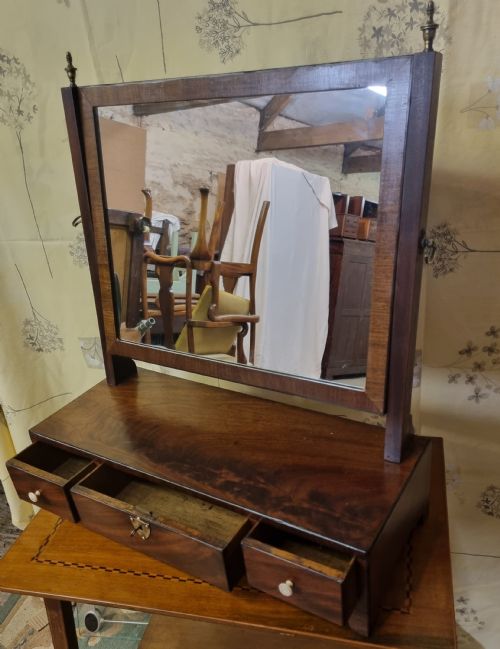
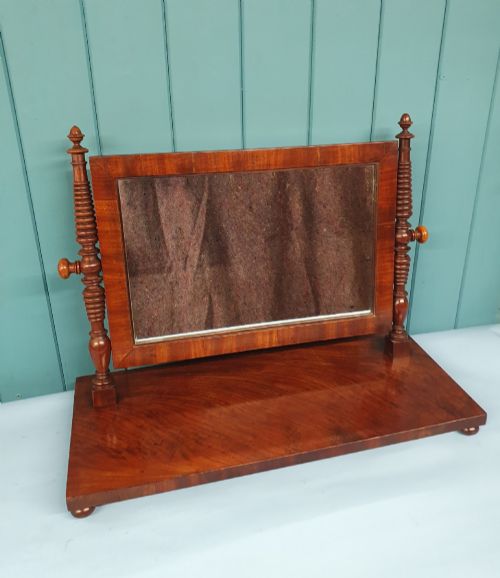
When you search for a georgian shaving mirror, you encounter pieces designed for personal grooming that sit upon a table, chest, or washstand. These objects typically comprise a tilting mirror plate held within upright arms, mounted above a small box base fitted with drawers.
The versions you are most likely to meet on this page span the georgian period, alongside later 19th-century interpretations and Victorian campaign pieces. Forms range from simple rectangular toilet mirrors to serpentine shapes and portable campaign kits intended for travel.
Makers constructed these mirrors to serve as functional items for the gentleman or gentlewoman's morning toilet, combining practical storage with adjustable glass angles. Their survival reflects the enduring utility and craftsmanship of domestic furniture from the 18th century and beyond.
Materials and Construction
Cabinetmakers built these mirrors primarily using dense hardwoods such as mahogany and walnut, occasionally incorporating satinwood for decorative contrast. These timbers were selected for their rich grain and structural stability in domestic settings.
Georgian Shaving Mirror Retail Price Guide 2026
Typical asking prices for georgian shaving mirror among the pieces listed under this phrase on Sellingantiques today, from the lower quarter to the upper quarter. They describe what is for sale here now, not the wider market.
The selection here spans mahogany, walnut, and satinwood, paired with brass fittings and glass across georgian and 19th-century periods.
Assessing Quality and Character
Quality in these mirrors rests upon the proportion of the frame, the selection of figured timber veneers, and the finesse of the joinery on the box base. Finer examples display thoughtful integration of drawers with tight joints and original brass fittings.
The sophistication of the outline further distinguishes the range, moving from plain rectangular plates to serpentine fronts and specialised skeleton frames. Preservation of the original mirror glass and authentic surface patination elevates an example above standard domestic production.
The Georgian Shaving Mirror Glossary
- Toilet mirror
- A small mirror designed to sit on a dressing table or chest of drawers during the 18th and 19th centuries. These pieces often incorporated small drawers in the base for storing personal items.
- Campaign mirror
- A portable mirror made for travel, frequently fitted into a compact box or kit with folding or dismantling elements. These items were built to withstand movement while retaining domestic refinement.
- Serpentine
- A curved shape curving outward at the centre and inward at the sides, frequently seen on the box bases of finer dressing mirrors. This outline required advanced woodworking skill to execute cleanly.
- Skeleton mirror
- A form featuring an open frame or slender upright supports rather than a solid box base, offering a lighter visual appearance. Such examples represent a distinct variation within standard tabletop mirrors.
Georgian Shaving Mirror: Frequently Asked Questions
What is a georgian shaving mirror used for?
These mirrors were utilised for daily grooming tasks such as shaving and applying cosmetics, positioned on top of a table or washstand.
The adjustable frame allowed the user to tilt the glass to the desired angle for optimal lighting and reflection.
How do campaign mirrors differ from standard ones?
Campaign versions were specifically engineered for portability during travel, often housed within compact box kits designed to pack away securely.
They feature robust construction and specialised hardware to withstand movement without sacrificing daily utility.
What woods were used for these mirrors?
Cabinetmakers primarily employed dense hardwoods like mahogany and walnut for their strength and rich grain patterns.
Satinwood also appears on select examples, providing lighter contrasting tones across the surface and drawer fronts.