
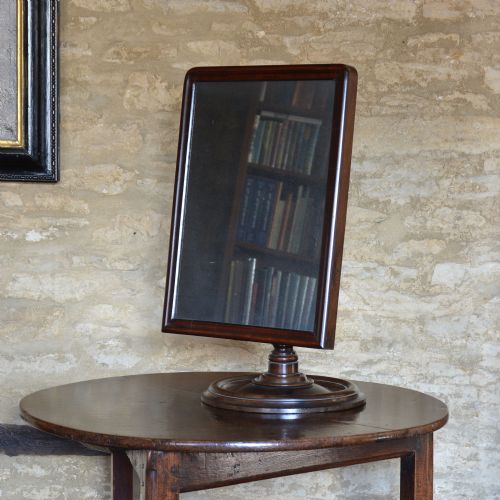
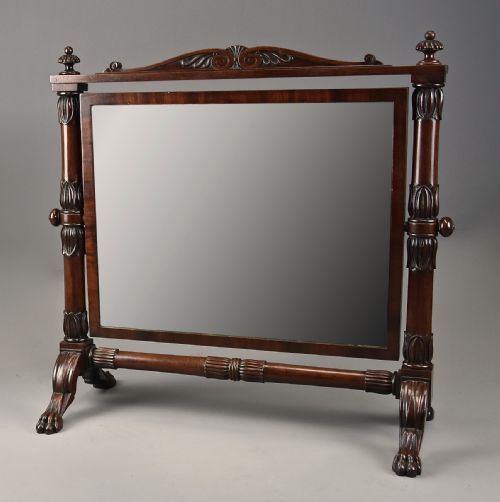
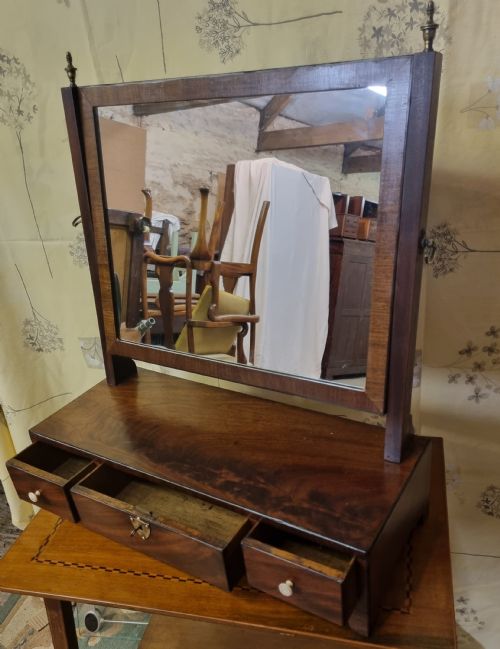
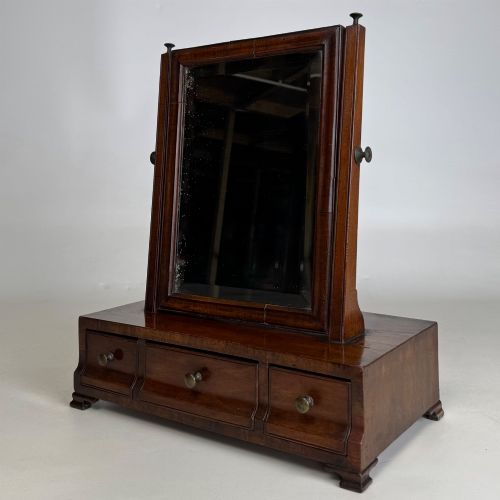
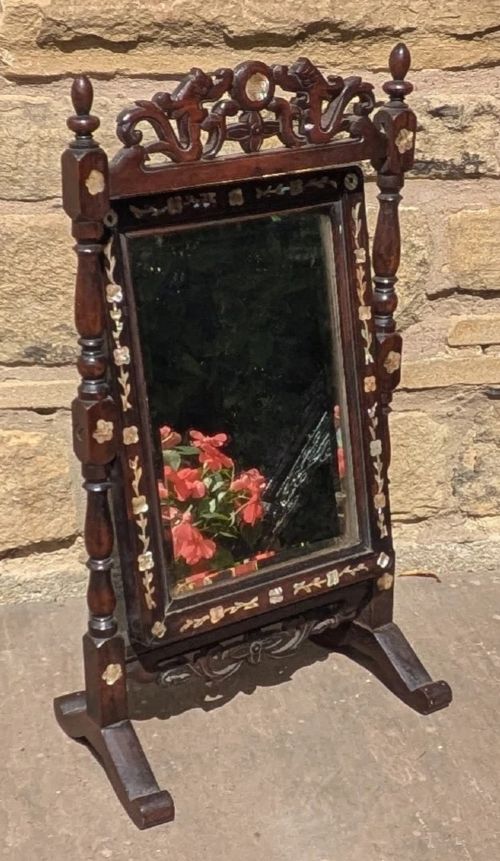
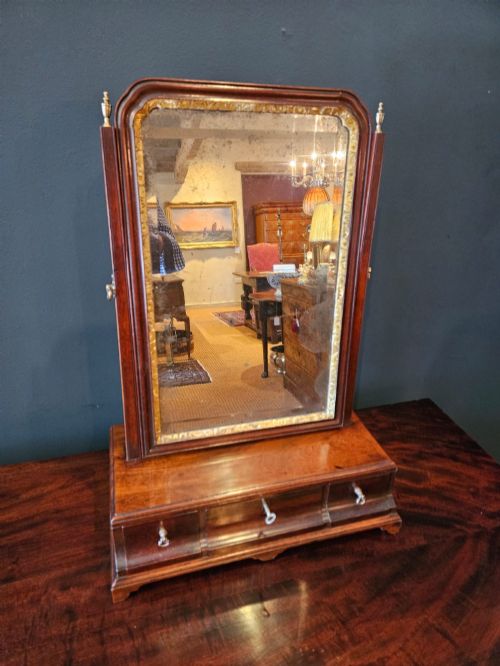
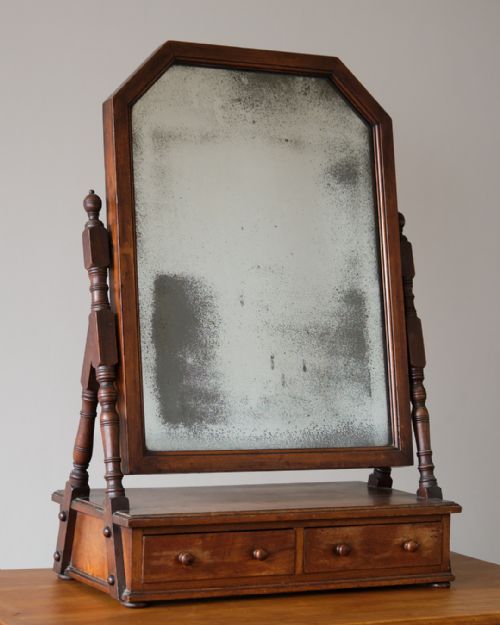
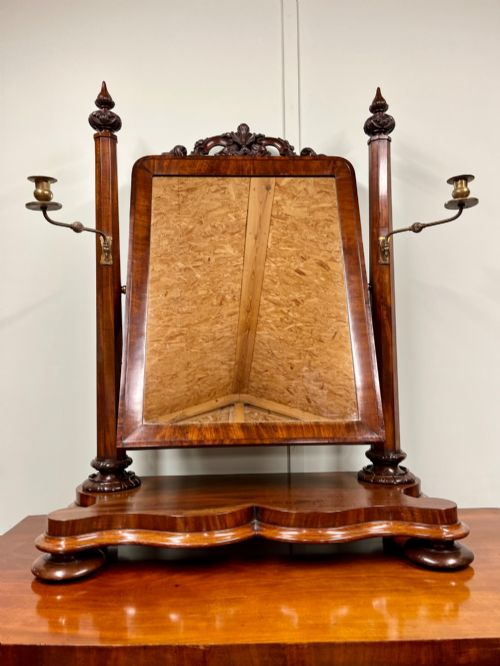
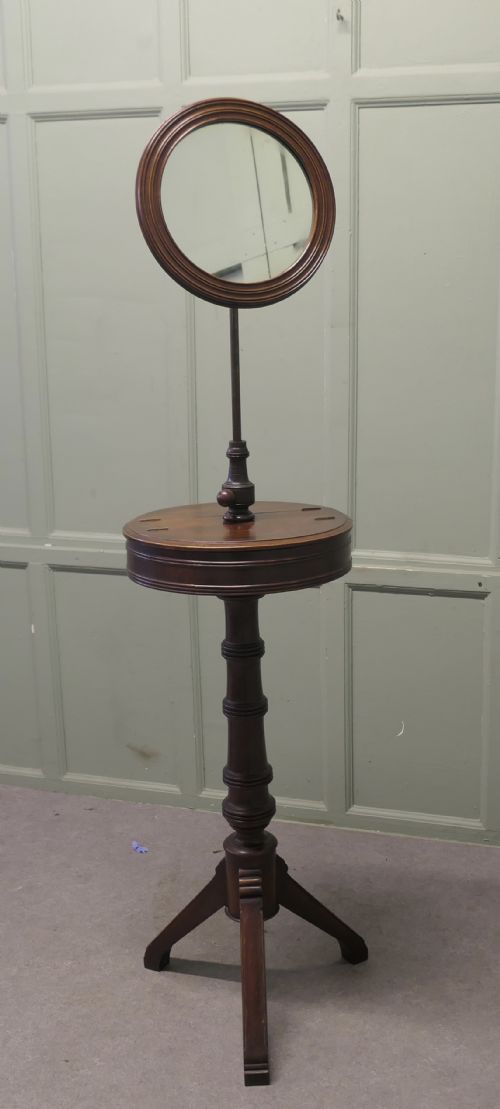
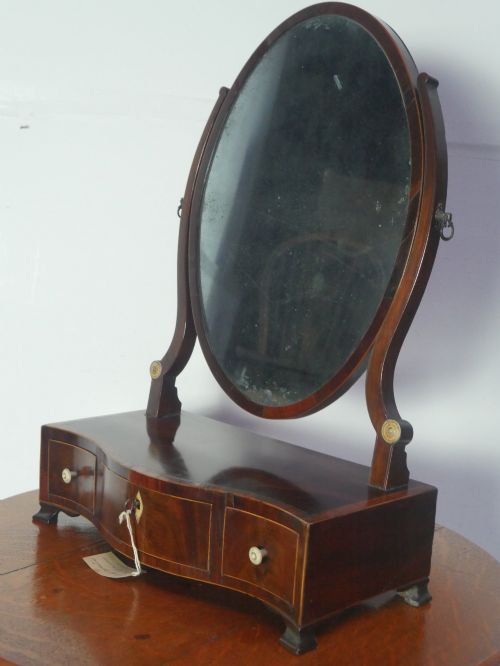
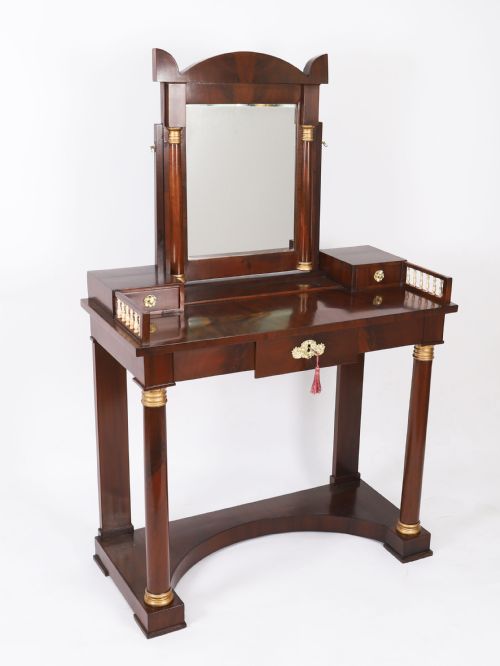
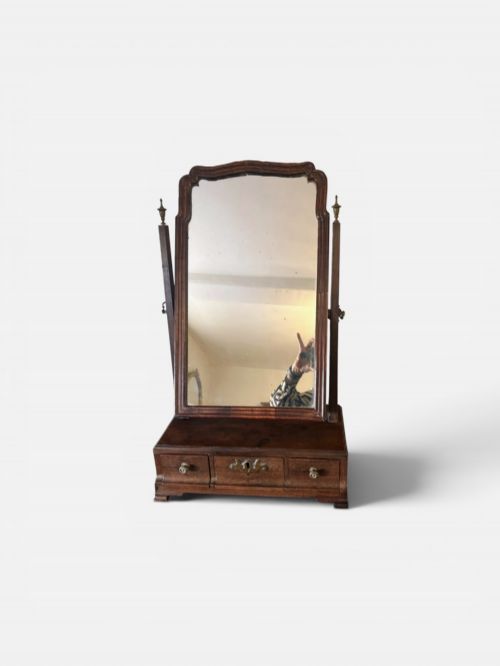
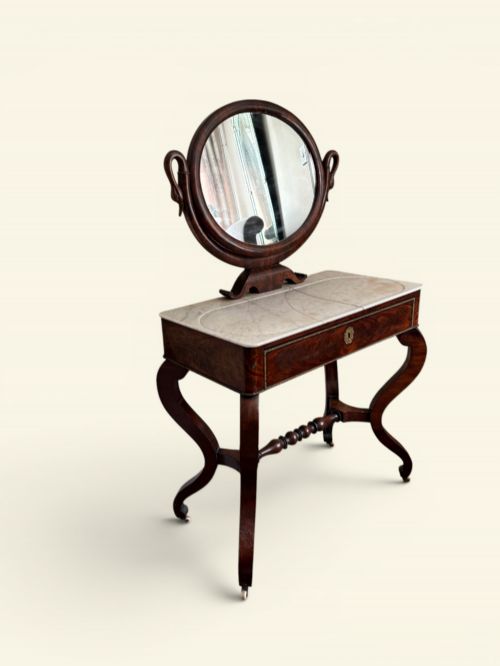
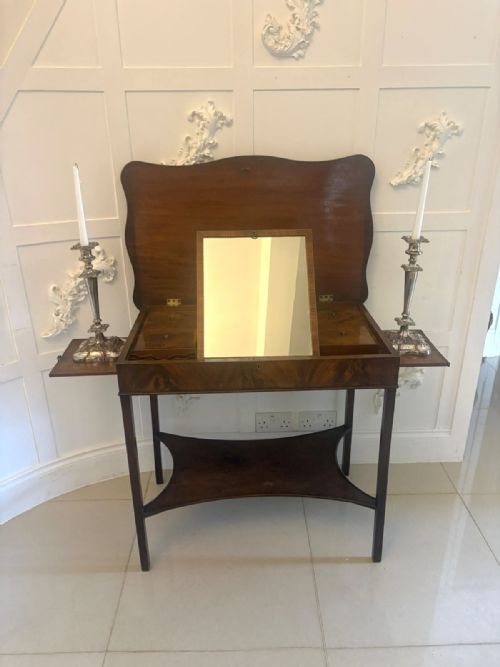
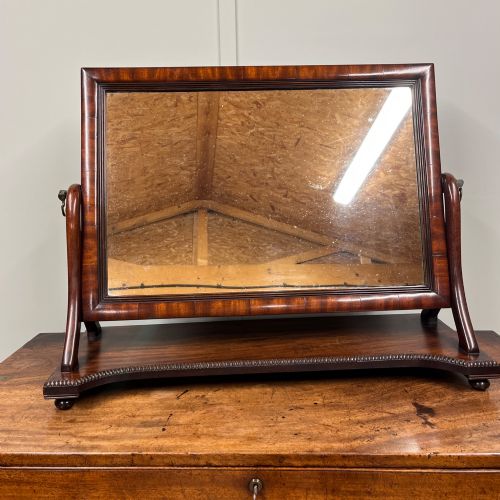

Dark Wood Toilet Mirror
A dark wood toilet mirror brings rich timber tones and practical reflection to a dressing space, offering period character in a compact form.
Identifying these pieces
When you search for a dark wood toilet mirror, you encounter pieces designed to sit atop a chest of drawers or a dressing table for close-up grooming. These portable looking glasses date from the eighteenth and nineteenth centuries, spanning Georgian, Regency and Victorian periods.
The examples on this page take forms such as dressing mirrors, dressing table mirrors and standard toilet mirrors. You will find standard table-standing formats alongside larger proportions and miniature variants.
Materials and construction
Cabinet makers constructed these mirrors primarily in mahogany and padouk, selecting dense tropical hardwoods for their deep grain and durability. Giltwood and brass accents frequently appear on mounts, brackets and adjustment screws, adding metallic contrast to the timber frames.
The glass itself is held within pivoting frames supported by upright arms and small drawer bases. Construction methods rely on traditional joinery techniques suited to supporting the weight of heavy mirror glass.
Retail Price Guide 2026
Typical UK retail prices for dark wood toilet mirror, calculated from the Sellingantiques database of over a million retail prices indexed since 2003. This retail price guide relies exclusively on Sellingantiques data; no external sources or auction records are used, so the figures do not describe the wider market.
Listings on this page span the 18th century, Regency period and the Victorian era, utilising mahogany, padouk, brass, and glass.
Assessing quality
Quality in these pieces is dictated by the selection of timber and the sophistication of the joinery rather than mere scale. Highly figured grain, meticulous dovetailing on the base drawers and well-cast brass hardware distinguish superior examples from simpler utilitarian workshops.
Unusual proportions and imported timbers, such as padouk, indicate ambitious commission work rather than standard production. The integrity of the pivoting mechanism and the clarity of the retained glass also mark the division between ordinary and exceptional survivals.
The Dark Wood Toilet Mirror Glossary
- Toilet mirror
- A small mirror designed to sit on a dressing surface or chest of drawers. These pieces became essential domestic furnishings during the Georgian and Victorian eras.
- Padouk
- A heavy, reddish-brown tropical hardwood prized for its rich colour and durability. It frequently appears in pieces associated with Anglo-Indian craftsmanship.
- Giltwood
- Wood that has been treated with a thin layer of gold leaf or gesso preparation. It provides a bright decorative contrast against dark mahogany frames.
- Dressing mirror
- A movable looking glass used for personal grooming and attire. The term often describes larger table-top formats with fitted drawer bases.
Frequently Asked Questions
What is a toilet mirror?
A toilet mirror is a table-standing looking glass historically used for personal grooming and dressing. They are traditionally placed on top of a chest of drawers or a dedicated dressing table.
These pieces feature a pivoting frame mounted on upright supports above a small base often fitted with drawers. They gained widespread popularity during the Georgian period and remained household staples through the Victorian era.
How do I date a dark wood mirror?
Dating relies on examining the timber species, construction methods and hardware style. Eighteenth-century examples often display simpler lines and native or colonial hardwoods, while Victorian pieces incorporate heavier mouldings.
Looking at the backboards, drawer construction and the type of mirror glass provides further clues. Subtle shifts in decorative motifs help separate Georgian craftsmanship from later Regency and Victorian revivals.
Where should I place mine?
These mirrors work best placed on sturdy chest of drawers, sideboards or dressing tables where their height can be fully appreciated. Because they are designed for tabletop use, they do not require floor space.
Keep them away from direct sunlight and damp environments to protect the polished wood finish and the antique glass plate. Ensure the surface is level to prevent strain on the pivoting frame joints.
Are these mirrors portable?
Yes, these pieces were originally constructed to be moved easily between rooms or taken on travels. Their compact size relative to full-length dressing glasses allowed for flexible placement in historic homes.
While solid mahogany and glass give them a reassuring weight, the two-part construction of frame and base makes relocation straightforward. Care should simply be taken to secure the pivoting mirror plate before moving.