
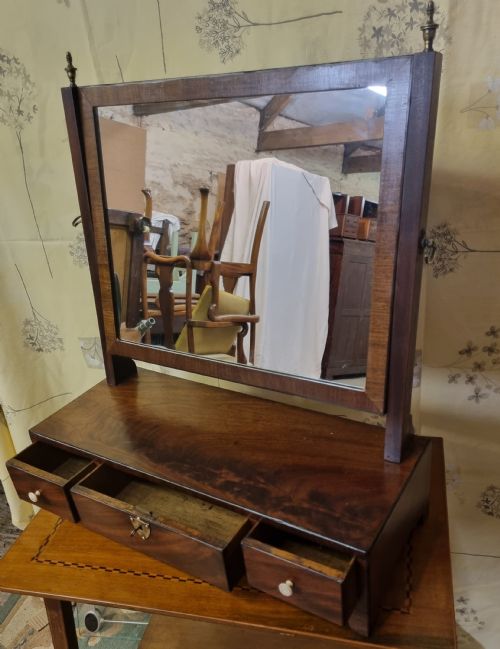
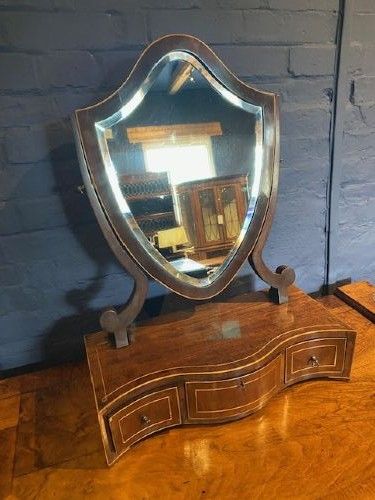
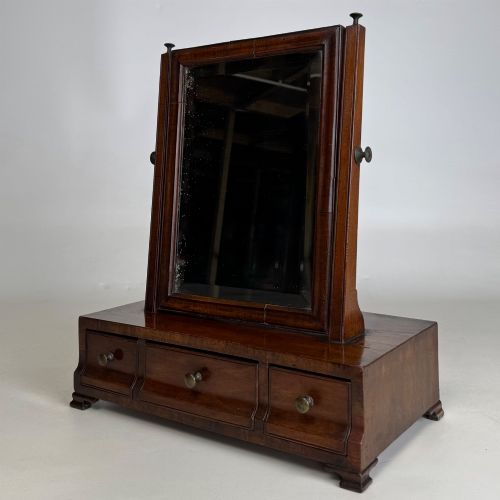
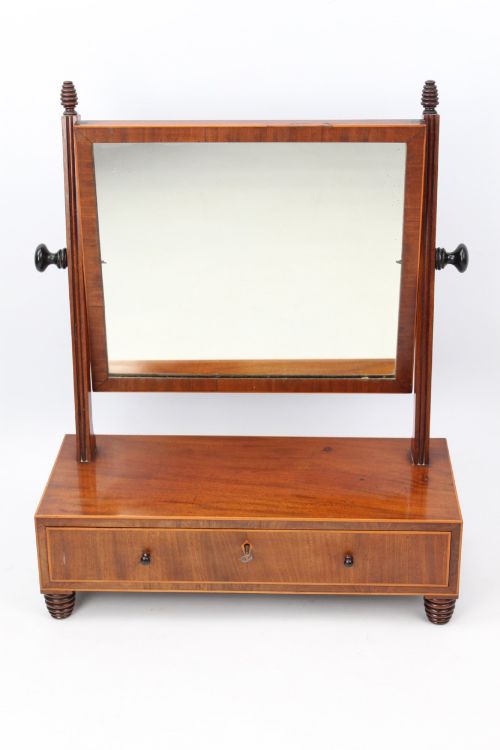
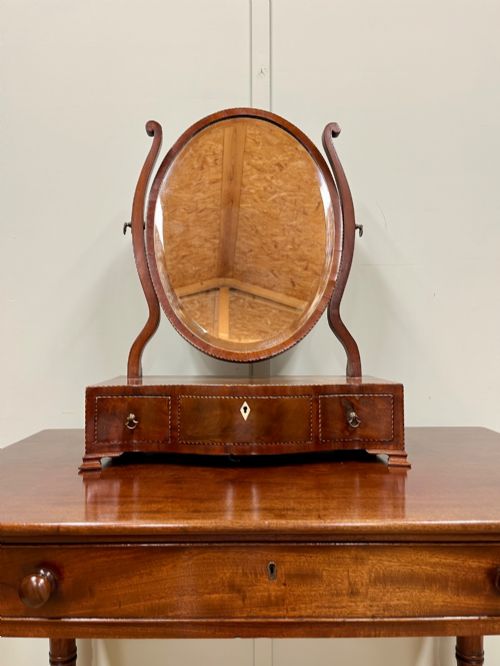
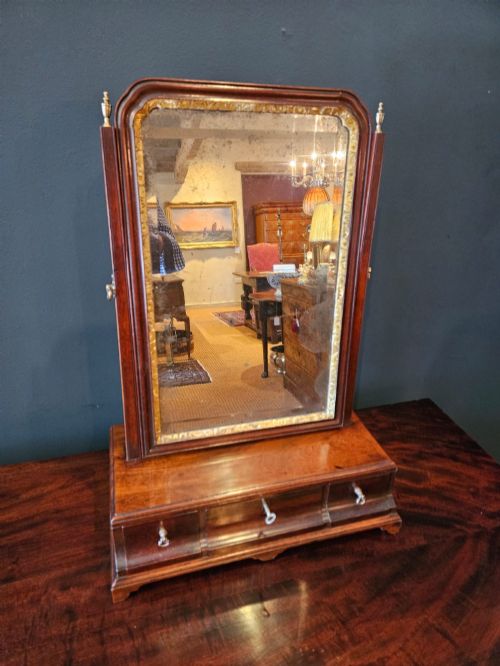
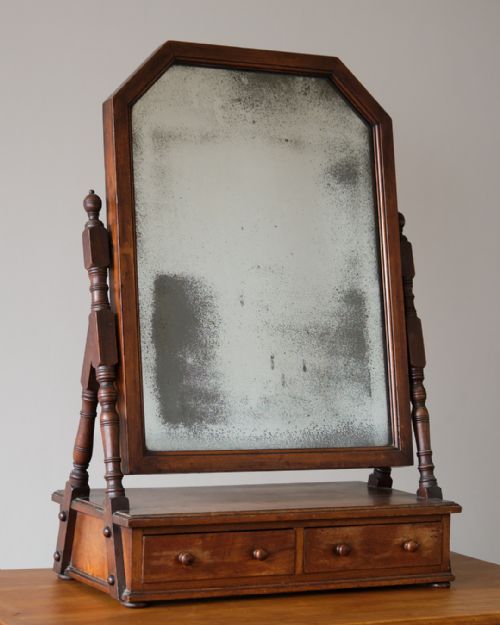
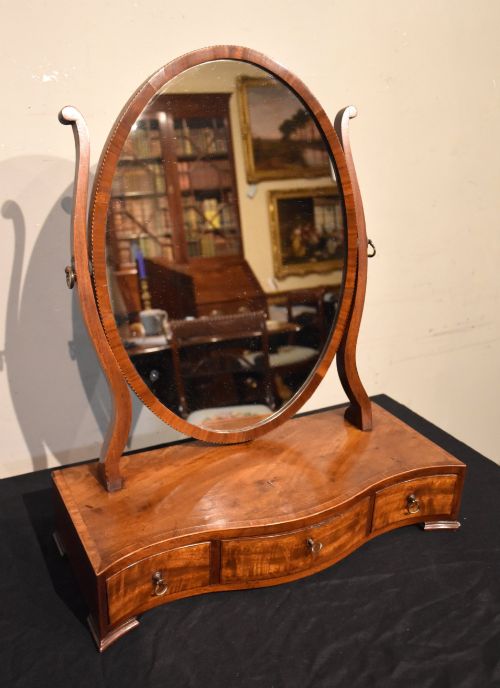
Mahogany Tabletop Mirror
A mahogany tabletop mirror brings warmth and practicality to a dressing space, offering a clear reflection framed in rich timber.
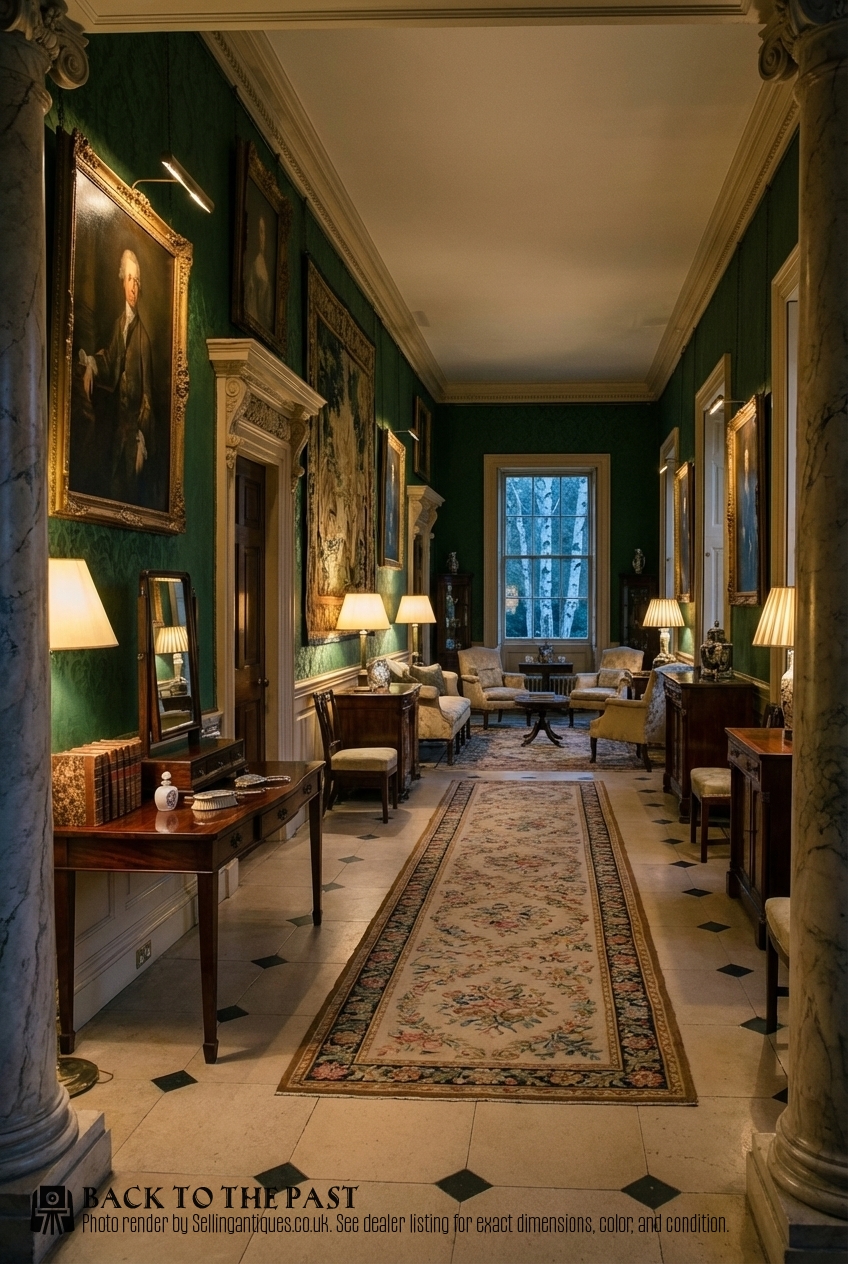
What these mirrors are
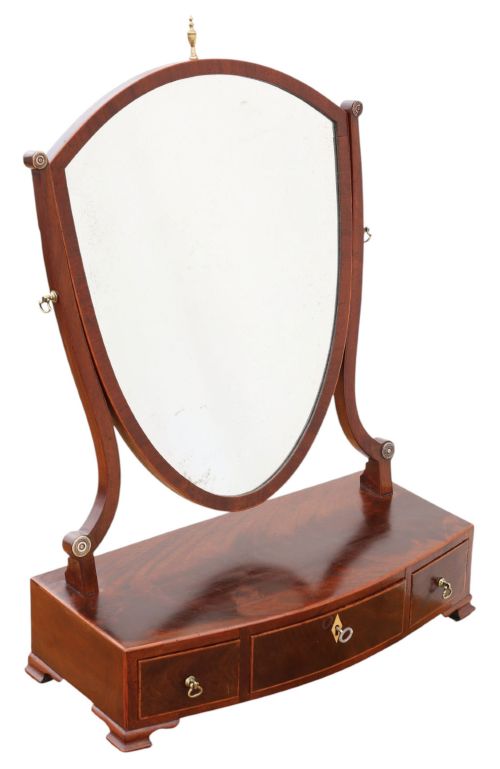
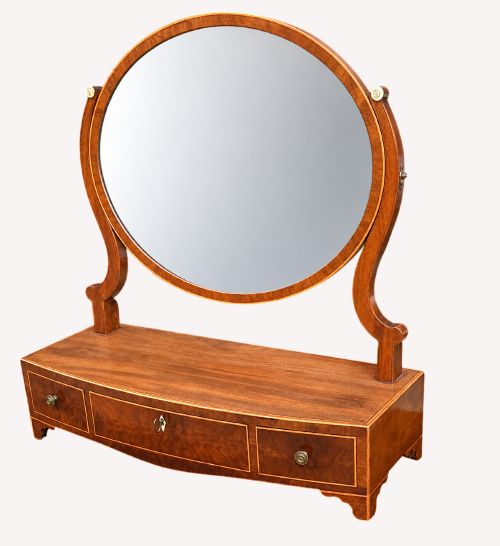
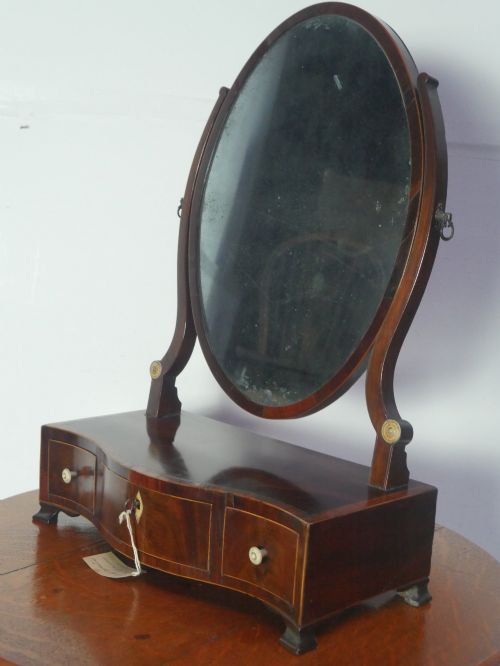
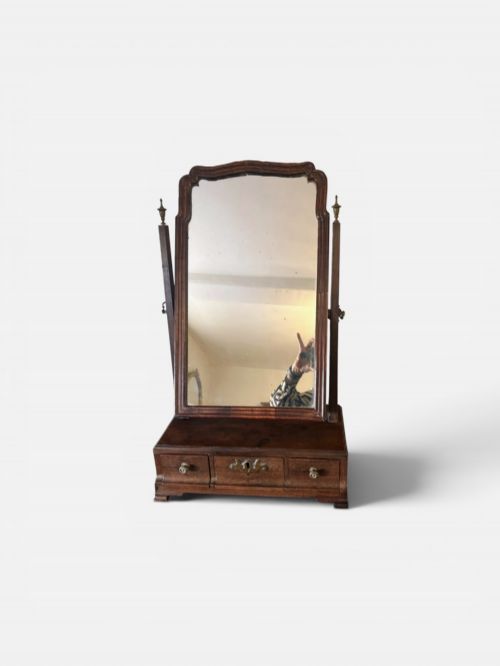
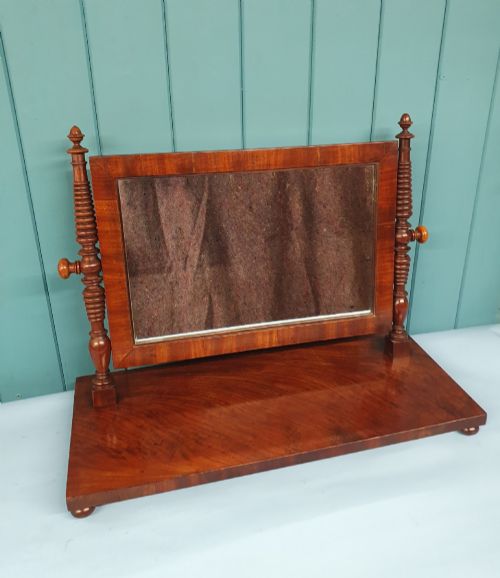
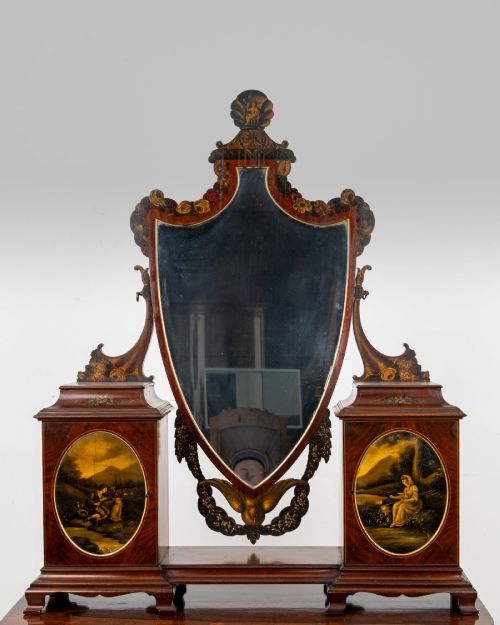
A mahogany tabletop mirror is a portable looking glass designed to sit upon a chest of drawers, sideboard or dressing table. These pieces range from compact miniature versions to large, imposing examples with built-in storage.
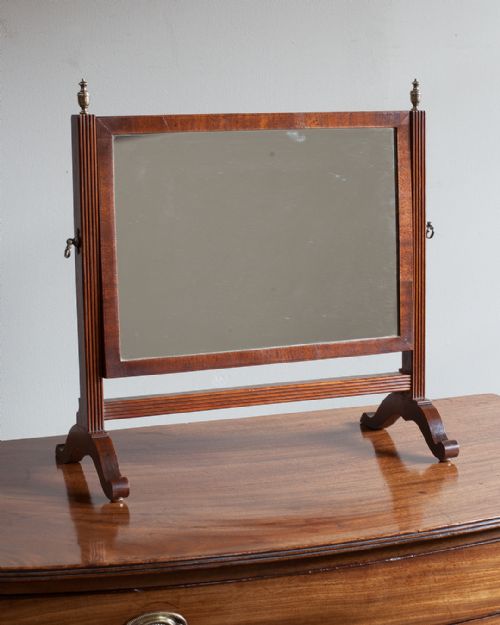
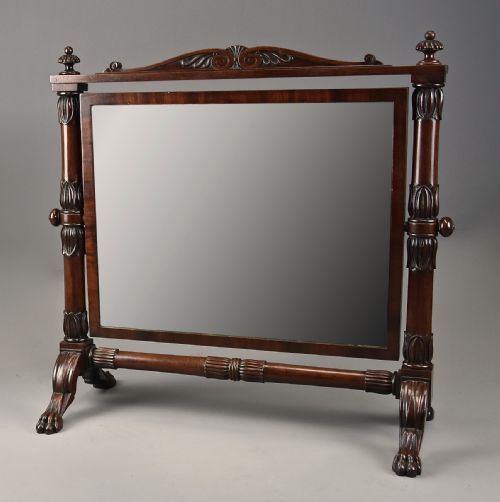
The pieces appearing on this page span the Georgian and Victorian eras, taking the form of dressing mirrors and dressing table mirrors. Collectors encounter both restrained eighteenth-century designs and more elaborate nineteenth-century interpretations.
Makers constructed these mirrors to pivot between upright supports, allowing the user to adjust the angle of the glass. Many incorporate small drawers in the base for storing jewellery and small trinkets.
Materials and construction
Cabinetmakers utilised solid mahogany and mahogany veneers over secondary timbers to build the frames, uprights and base boxes. This dense tropical hardwood provided both structural stability and a deep reddish-brown grain.
Reflective glass plates were silvered and fitted into rebated wooden frames, secured at the sides by brass pivots, screws or decorative finials. Brass hardware frequently appeared on the better examples for hinges, escutcheons and knob handles.
Retail Price Guide 2026
Typical UK retail prices for mahogany tabletop mirror, calculated from the Sellingantiques database of over a million retail prices indexed since 2003. This retail price guide relies exclusively on Sellingantiques data; no external sources or auction records are used, so the figures do not describe the wider market.
Some miniature mirrors were made as master furniture maker samples to show clients what full-sized dressing tables looked like.
Distinctions in quality
Quality reveals itself in the selection of the timber grain, the delicacy of the turnings on the upright supports, and the crispness of the dovetail joints in any base drawers. Superior examples show thoughtful proportion between the mirror plate and the supporting base.
The presence of original brass fittings and undamaged silvered glass plates elevates a piece above those that have undergone extensive replacement or modern restoration. Finer execution in the woodwork and hardware separates standard utilitarian items from finer domestic furnishings.
The Mahogany Tabletop Mirror Glossary
- Mahogany
- A durable tropical hardwood prized for its reddish-brown colour and fine grain. Cabinetmakers relied heavily upon it for case furniture and mirrors throughout the eighteenth and nineteenth centuries.
- Dressing mirror
- A small mirror designed for personal grooming, typically mounted on a pivoting frame above a set of drawers. These items sat atop larger furniture pieces rather than hanging on a wall.
- Georgian
- A design period spanning the reigns of the first four Georges, noted for proportion, classical restraint and quality cabinetmaking. Pieces from this era often display clean lines and subtle cockbeading.
- Victorian
- The stylistic period covering the reign of Queen Victoria, encompassing varied revivals and ornate decorative treatments. Items from this era show heavier proportions and sometimes elaborate carved details.
- Pivots
- The metal pins or screws connecting the mirror frame to the upright supports. They allow the glass to tilt forward and backward.
Frequently Asked Questions
What is a mahogany tabletop mirror?
A mahogany tabletop mirror is a portable looking glass set within a wooden frame that pivots between two upright supports. These items rest directly on furniture surfaces rather than being fixed to a wall.
They generally feature a rectangular or oval glass plate mounted above a small box base, which frequently includes one or more drawers for storage.
How were these mirrors used?
People placed these mirrors on dressing tables, chests of drawers, or sideboards to assist with personal grooming, shaving, and adjusting clothing. The pivoting mechanism allowed users to alter the angle of reflection easily.
The small drawers built into the base served as convenient storage for jewellery, hairpins, and other small personal accessories.
How do I tell Georgian from Victorian examples?
Georgian mirrors generally exhibit simpler, more restrained proportions with lighter framing and subtle decorative details. The woodwork often feels more linear and architectural.
Victorian pieces tend to be heavier and may incorporate more robust scrollwork, bolder turnings, or darker finishes characteristic of later nineteenth-century production.
Where should I place one at home?
These mirrors work well on top of a chest of drawers in a bedroom or upon a sideboard in a hallway or living space. Their compact footprint requires minimal surface area.
Ensure the placement provides adequate natural or artificial light in front of the glass for practical daily use.