

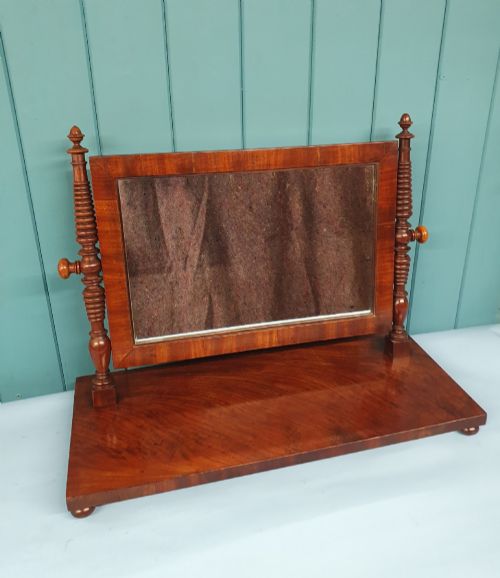
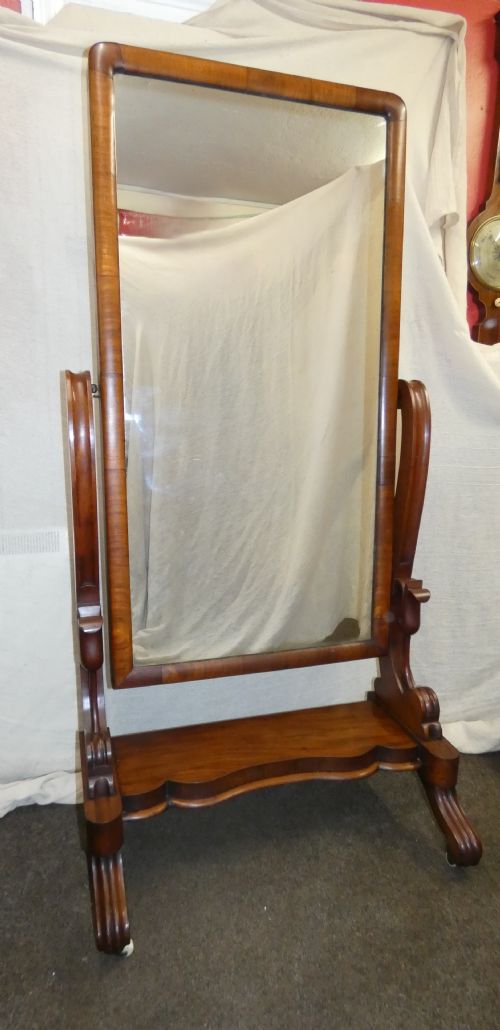
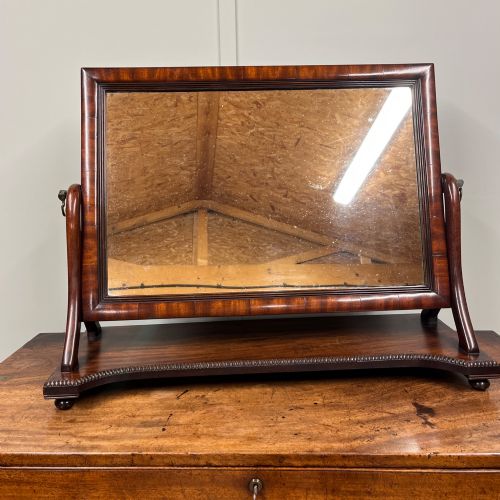
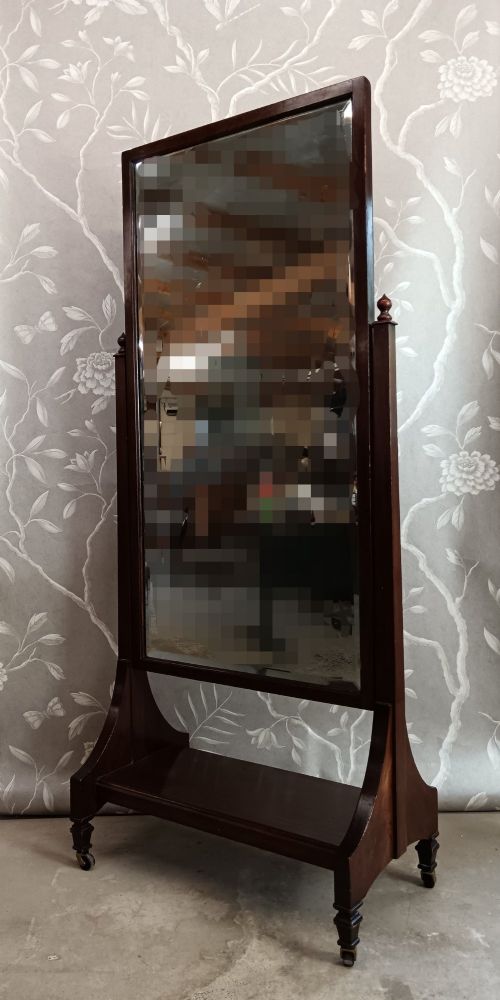



Victorian Mahogany Swing Mirror
These pieces of victorian mahogany swing mirror bring warmth and practical grace to a dressing table.

What these pieces are
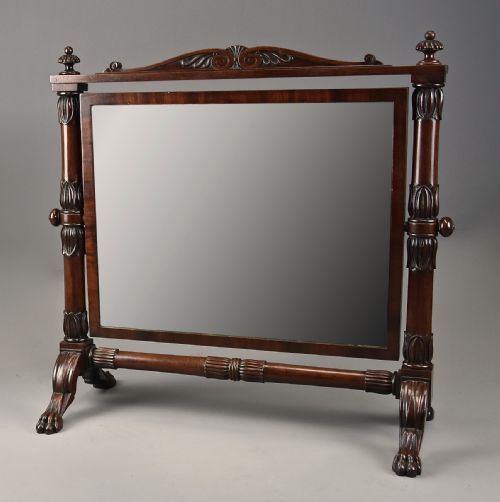
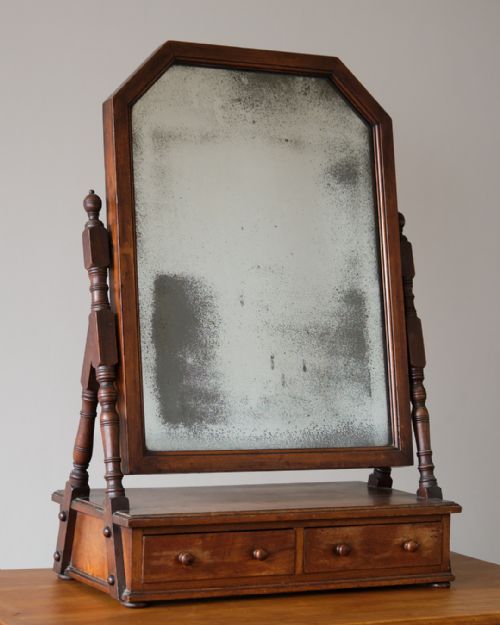
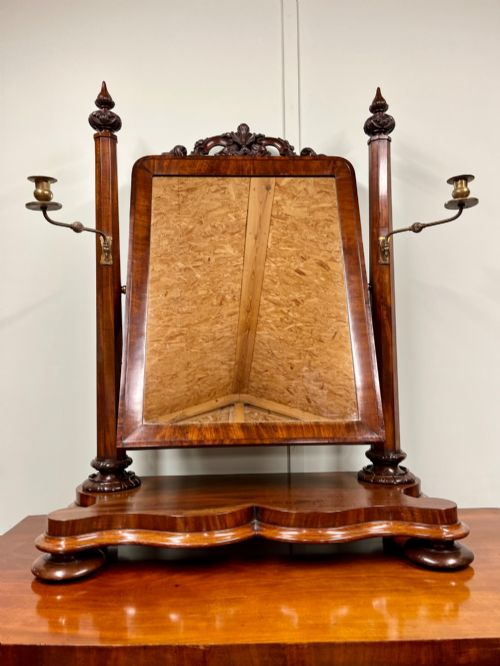
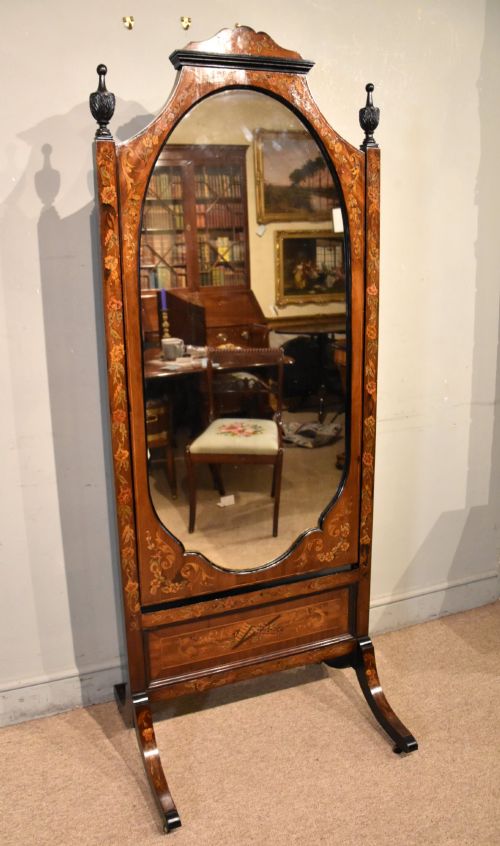
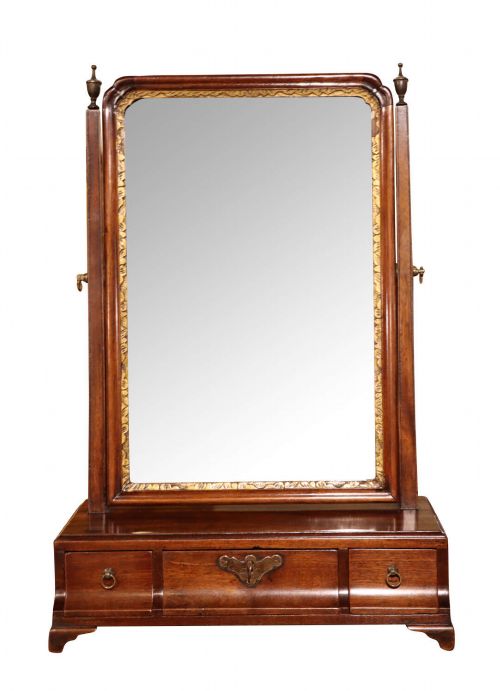
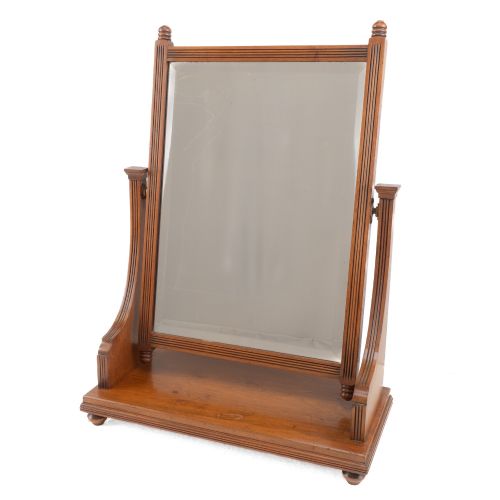
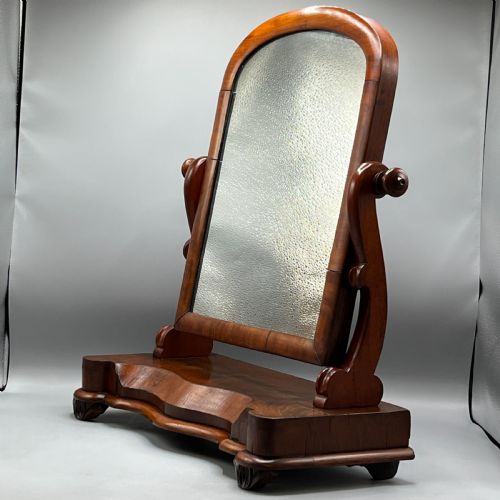
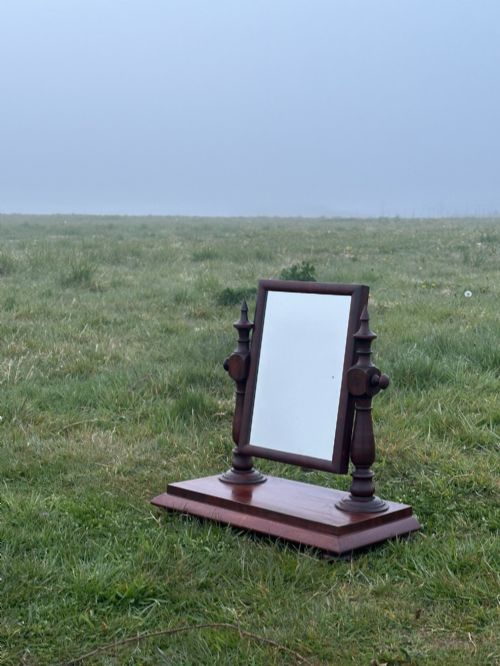
A victorian mahogany swing mirror sits upon a dressing table, chest or pedestal, offering an adjustable glass for daily grooming. These pieces take various forms, from simple rectangular frames on turned supports to elaborate designs featuring serpentine fronts or marble bases.
The selection ranges from compact travelling toilet mirrors and miniature versions to large dressing table mirrors framed in flame grain mahogany. Most examples date from the nineteenth century, with occasional pieces stretching back to the eighteenth century or forward into late Victorian decades.
Buyers encounter standard bedroom dressing mirrors alongside more substantial architectural forms incorporating single drawers or marble tops. Every piece relies on a pivoting frame held by upright arms, allowing the glass to tilt to the exact angle required.
How they were made
Cabinet makers constructed these frames predominantly from rich mahogany, often selecting highly figured or flame grain veneers to catch the light. Secondary woods provided structural stability inside drawers and backing boards.
Metal components played a crucial functional role, utilising brass for pivoting screws, mounting plates and delicate knobs on small drawer pulls. Bone details occasionally appeared as subtle escutcheons or decorative inlays on the woodwork.
Mirrored glass fitted securely within rebated wooden frames, backed by protective panels and supported by turned or shaped pillars. Marble slabs occasionally formed heavy, luxurious bases for larger Victorian table mirrors.
Retail Price Guide 2026
Typical UK retail prices for victorian mahogany swing mirror, calculated from the Sellingantiques database of over a million retail prices indexed since 2003. This retail price guide relies exclusively on Sellingantiques data; no external sources or auction records are used, so the figures do not describe the wider market.
Listings demonstrate that mahogany remains the universal timber choice across all periods, frequently paired with brass hardware and occasionally marble.
What varies in quality
Quality reveals itself first in the choice of timber, where tightly figured flame mahogany or substantial solid boards outclass plain, straight-grained alternatives. The depth of the polish and the crispness of the turned woodwork separate standard workshop production from finer examples.
Mechanical execution distinguishes the better pieces, particularly the smooth action of the brass pivot screws and the careful joinery of any integrated drawer. Heavier additions like fitted marble tops and finely cast brass mounts indicate a higher tier of nineteenth-century manufacture.
The Victorian Mahogany Swing Mirror Glossary
- Swing mirror
- A looking glass mounted on pivots within a frame that tilts back and forth. This arrangement allows the user to adjust the reflection easily.
- Toilet mirror
- A smaller mirror designed to sit on a table or chest rather than hang on a wall. These pieces frequently incorporate small drawers in the base for trinkets.
- Flame grain
- A striking wood veneer pattern resembling flickering flames, created by cutting across the branch forks of a tree. Cabinet makers prized this figure for principal display surfaces.
- Serpentine front
- A furniture contour featuring a curving line that convexly arches in the centre and concavely curves at the sides. This sophisticated shape demands precise woodworking skill.
- Escutcheon
- A protective plate surrounding a keyhole, often fashioned from bone or brass. It prevents the surrounding wood from suffering damage during daily use.
Frequently Asked Questions
How do I date a mirror?
Dating relies upon observing construction methods, wood types and the style of the turned uprights and feet. Eighteenth-century pieces differ noticeably in proportion and joinery from Victorian examples.
Examining the bevel of the glass and the composition of the backing boards provides further clues to the manufacturing period.
Where should I place it?
These mirrors find a natural home on top of a chest of drawers, sideboard or dressing table. Their adjustable glass makes them genuinely useful for daily routines.
Ensure the supporting surface is level and deep enough to bear the weight, particularly with heavier marble-based models.
How do I care for the wood?
Maintain the mahogany by dusting regularly with a soft, dry cloth and avoiding direct sunlight or damp conditions. Proper humidity prevents the timber and veneer from splitting.
Apply occasional appropriate wax polish to nourish the grain without building up heavy, dull layers.
Are the mirrors original?
Many surviving pieces retain their original glass, though silvering degradation over generations sometimes led to period replacements. Examining the back of the glass reveals how it sits within the wooden rebate.
Both original and period-replaced glasses contribute to the historical character of the object.