


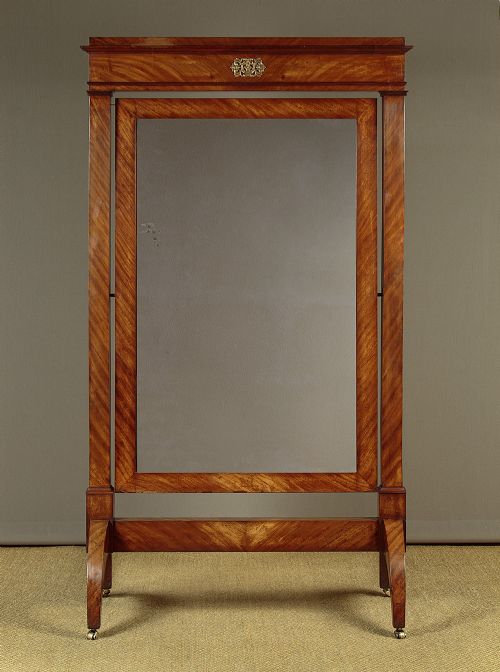
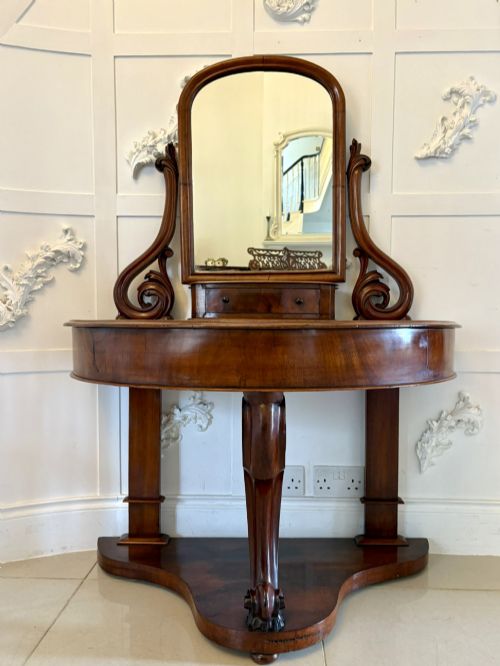
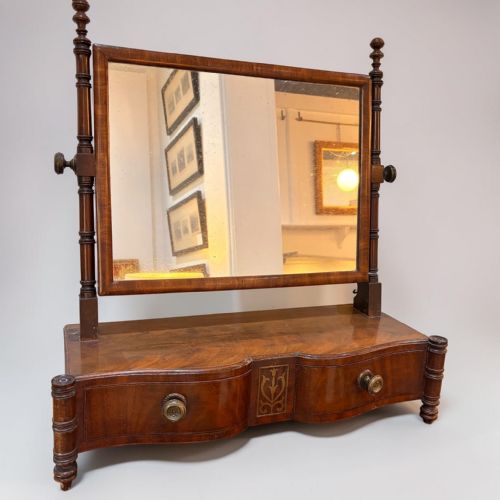
Brown Mahogany Dressing Mirror
These brown mahogany dressing mirrors are practical vanity pieces that bring rich timber grain and adjustable glass to a bedroom or dressing room.
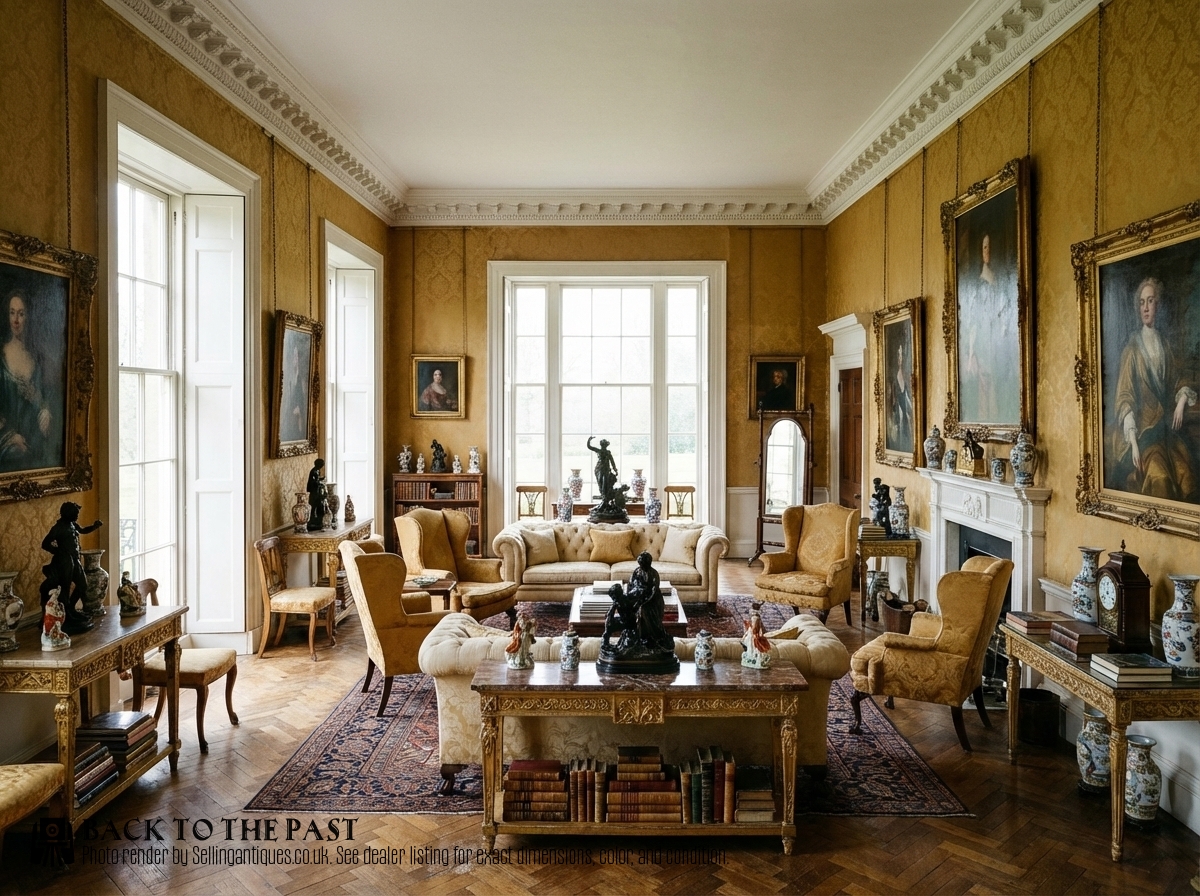
Brown Mahogany Dressing Mirror
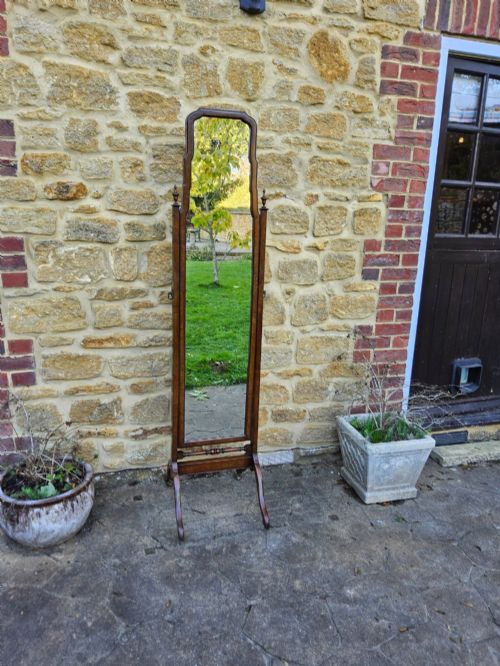
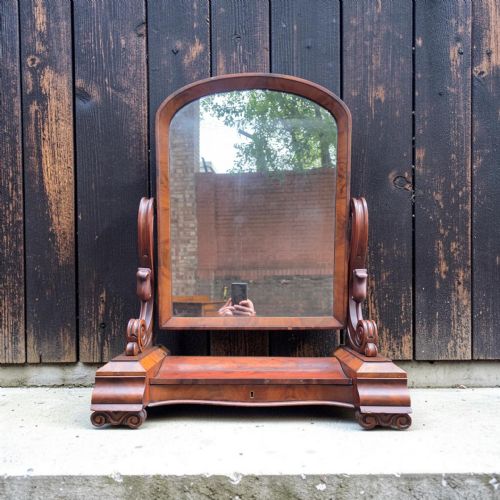
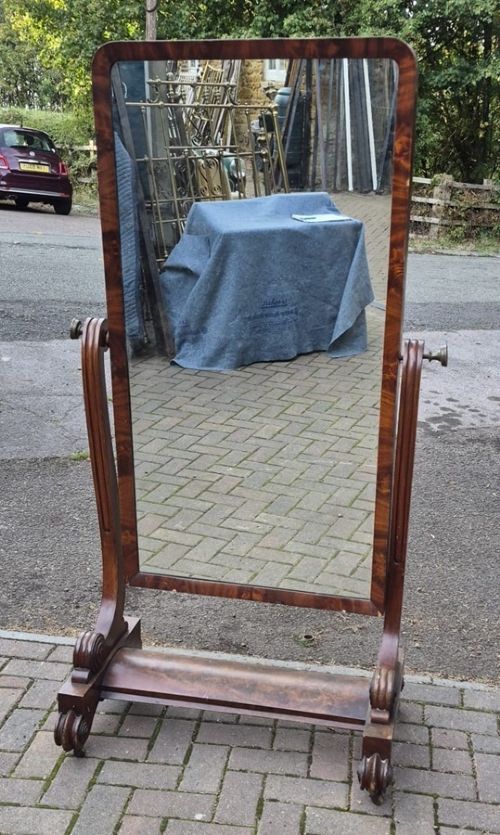
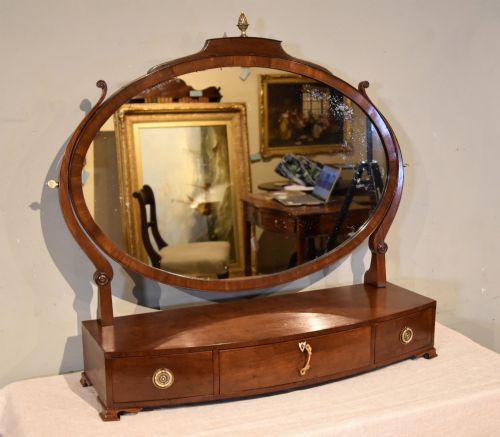
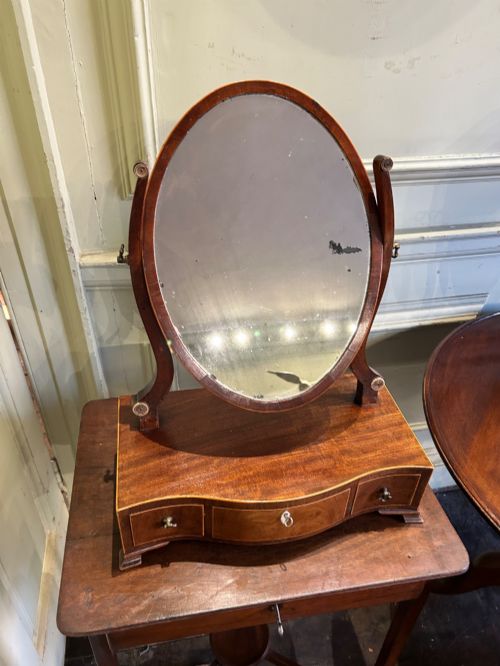
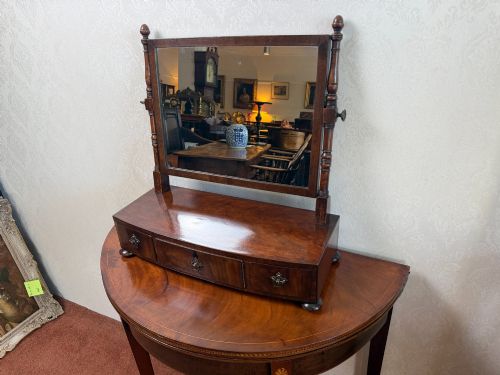
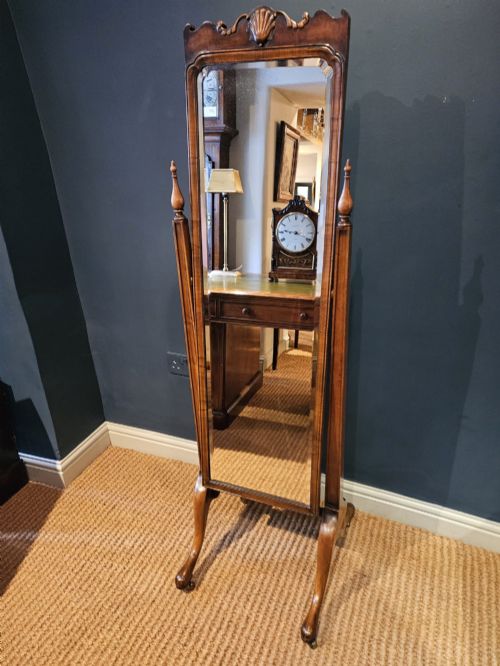
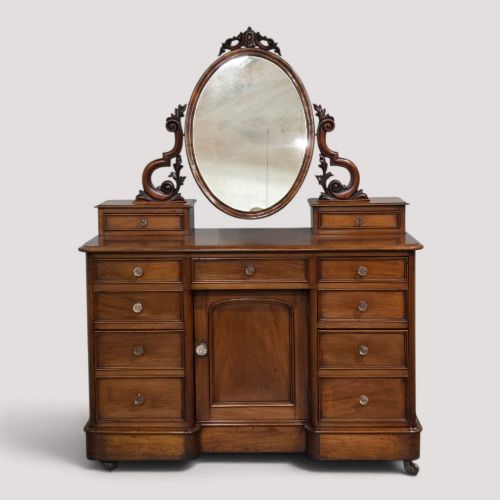
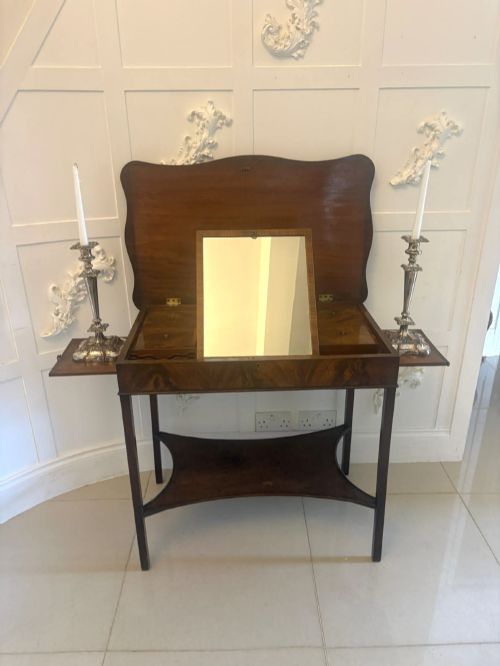
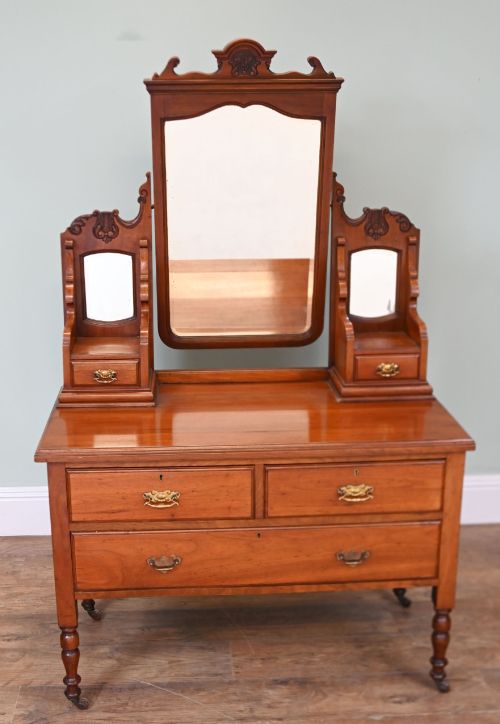
When searching for a brown mahogany dressing mirror, you encounter pieces spanning the Georgian, Victorian, and Edwardian periods, alongside specific Regency and later 19th-century examples. The selection includes smaller table-top toilet mirrors with fitted drawers as well as tall, freestanding cheval mirrors designed for full-length reflection.
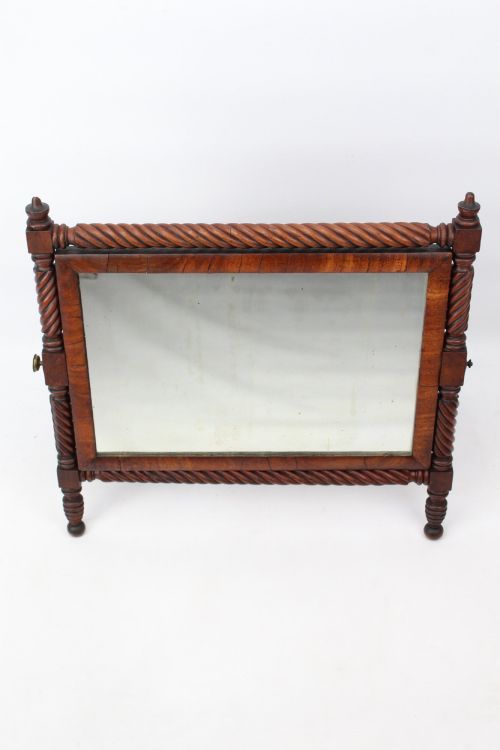
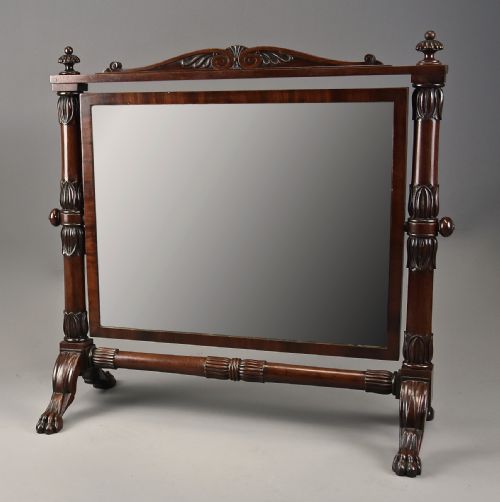
Tabletop versions often rest on shaped box bases containing small drawers for trinkets, while floor-standing cheval variants pivot within upright frames. The primary forms range from compact swing mirrors on serpentine bases to substantial country house standing glasses supported by barley twist columns.
Most items on this page reflect traditional British furniture forms made from rich tropical hardwoods, appearing either as standalone dressing glasses or integrated into larger dressing chests and washstands.
How they were made
Cabinet makers utilised solid mahogany and applied veneers to construct the frames and drawer boxes, frequently incorporating secondary timbers like satinwood for contrast. Timber selection focused on deep, warm grain patterns that responded well to hand-rubbed polishing.
Metal components such as brass swing pivots, screws, and handles allowed the glass frames to tilt smoothly to the desired angle. Bone escutcheons and delicate wood inlay or crossbanding added decorative detail around drawer fronts and mirror surrounds.
Brown Mahogany Dressing Mirror Retail Price Guide 2026
Typical asking prices for brown mahogany dressing mirror among the pieces listed under this phrase on Sellingantiques today, from the lower quarter to the upper quarter. They describe what is for sale here now, not the wider market.
Object types span cheval mirrors, dressing table mirrors, dressing tables, dressing mirrors, toilet mirrors, pier mirrors, and dressing chests.
What varies in quality
The distinction between standard production and top-tier pieces lies in the crispness of the carving, the selection of figured mahogany timber, and the subtlety of crossbanding or inlay work. Better workshops employed heavier brass hardware and finer dovetail joinery on the internal drawer boxes.
Proportion and stability define the upper range of cheval and swing mirrors, where the supporting uprights and base feet must bear the weight of the pivoting glass without sagging or requiring modern reinforcement.
Heal And Sons·P And MA Nicholson·Gillow
The Brown Mahogany Dressing Mirror Glossary
- Cheval mirror
- A large, freestanding floor mirror mounted on a vertical frame that allows the glass to swing back and forth on pivot pins. This form became popular for full-length dressing during the Regency and Victorian eras.
- Toilet mirror
- A smaller dressing mirror designed to sit on top of a table, desk, or chest of drawers. These usually incorporate a box base with small drawers for personal items.
- Crossbanding
- A decorative technique where a border of veneer is laid across the grain of the primary wood. This creates a contrasting frame effect around drawer fronts or mirror surrounds.
- Serpentine front
- A furniture front characterised by a concave central section flanked by two convex curves. This undulating shape requires skilled woodworking and appears on finer Georgian dressing mirrors.
- Barley twist
- A carved wooden support shaped in a continuous spiral resembling a twist of barley. This decorative turning is frequently found on Victorian upright mirror stands.
Brown Mahogany Dressing Mirror: Frequently Asked Questions
What is a cheval mirror?
A cheval mirror is a tall, freestanding dressing glass mounted within a frame that pivots on vertical pins. This design allows the user to adjust the angle for full-length viewing.
Such pieces range from modest Victorian examples to large country house floor mirrors supported by heavy wooden standards.
How do I date a mahogany dressing mirror?
Dating relies on observing structural characteristics, timber choices, and decorative details like inlay or brass hardware. Georgian examples often feature slender proportions and serpentine drawer bases, while Victorian pieces tend to be heavier with turned supports.
Changes in secondary woods and construction methods also help place an item within the Georgian, Victorian, or Edwardian periods.
Where should I place a swing mirror?
Tabletop swing mirrors sit comfortably on dressing tables, chests of drawers, or sturdy console surfaces. They require a stable platform that can support the weight of the pivoting frame and box base.
Positioning them near a natural light source helps maximise their utility for grooming and dressing tasks.
What is the difference between a toilet mirror and a dressing mirror?
In historical terms, a toilet mirror specifically refers to a smaller table-top glass with a fitted drawer base used for personal grooming. The term dressing mirror often encompasses both these tabletop versions and larger freestanding cheval glasses.
Both types utilise adjustable frames to tilt the glass as needed.