



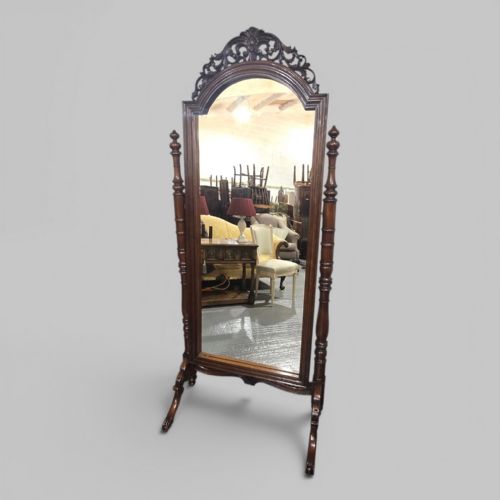
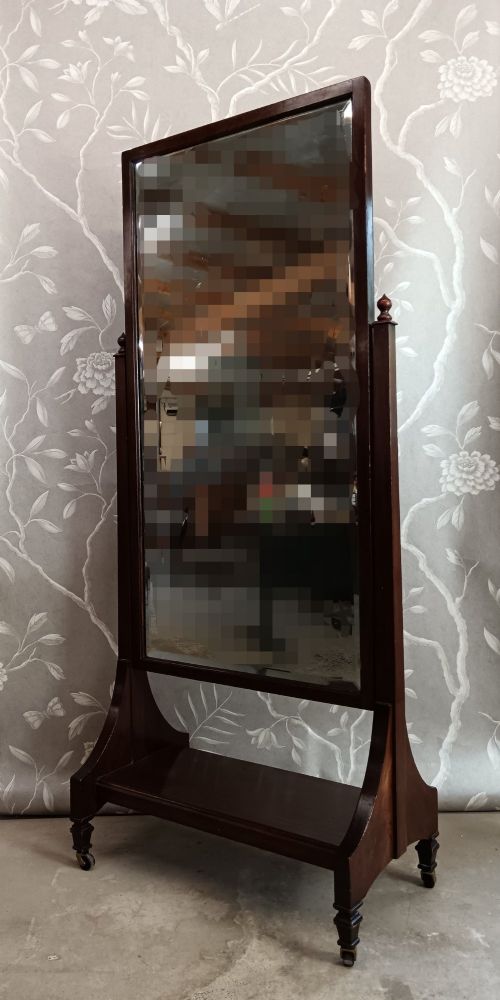
Dark Mahogany Floor Mirror
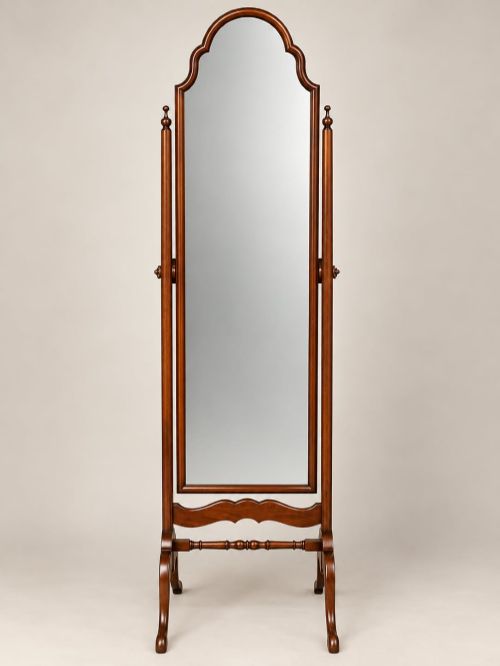
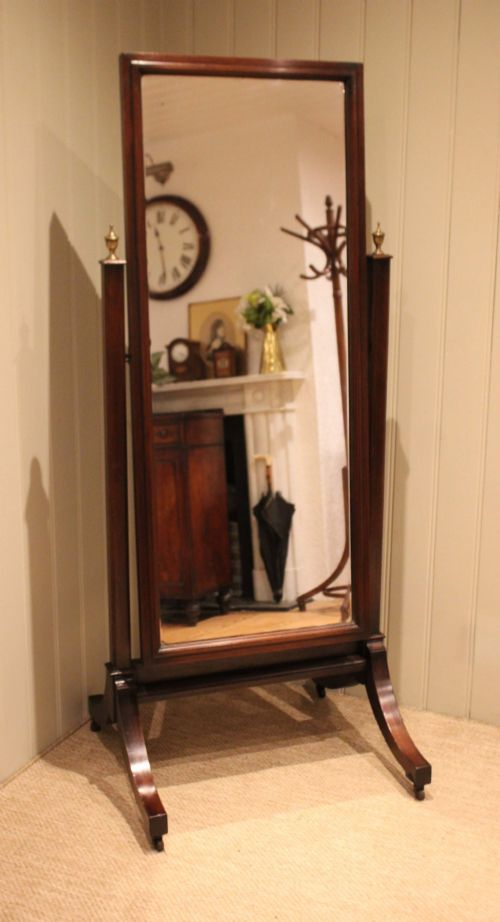
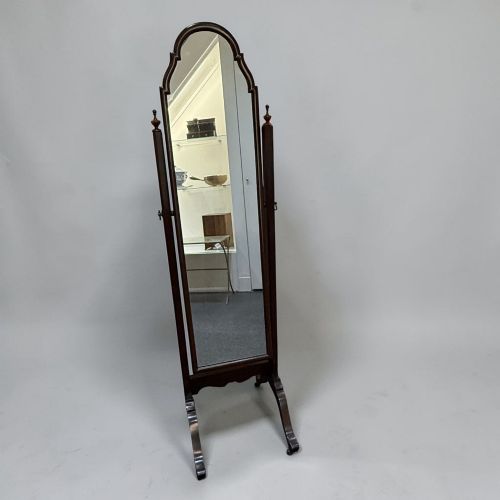
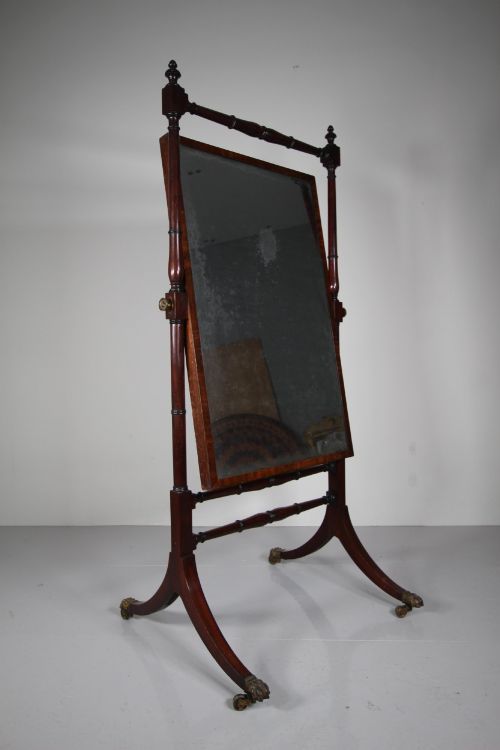
A dark mahogany floor mirror offers full-length reflection framed in rich timber, anchoring a room with period presence and functional grace.
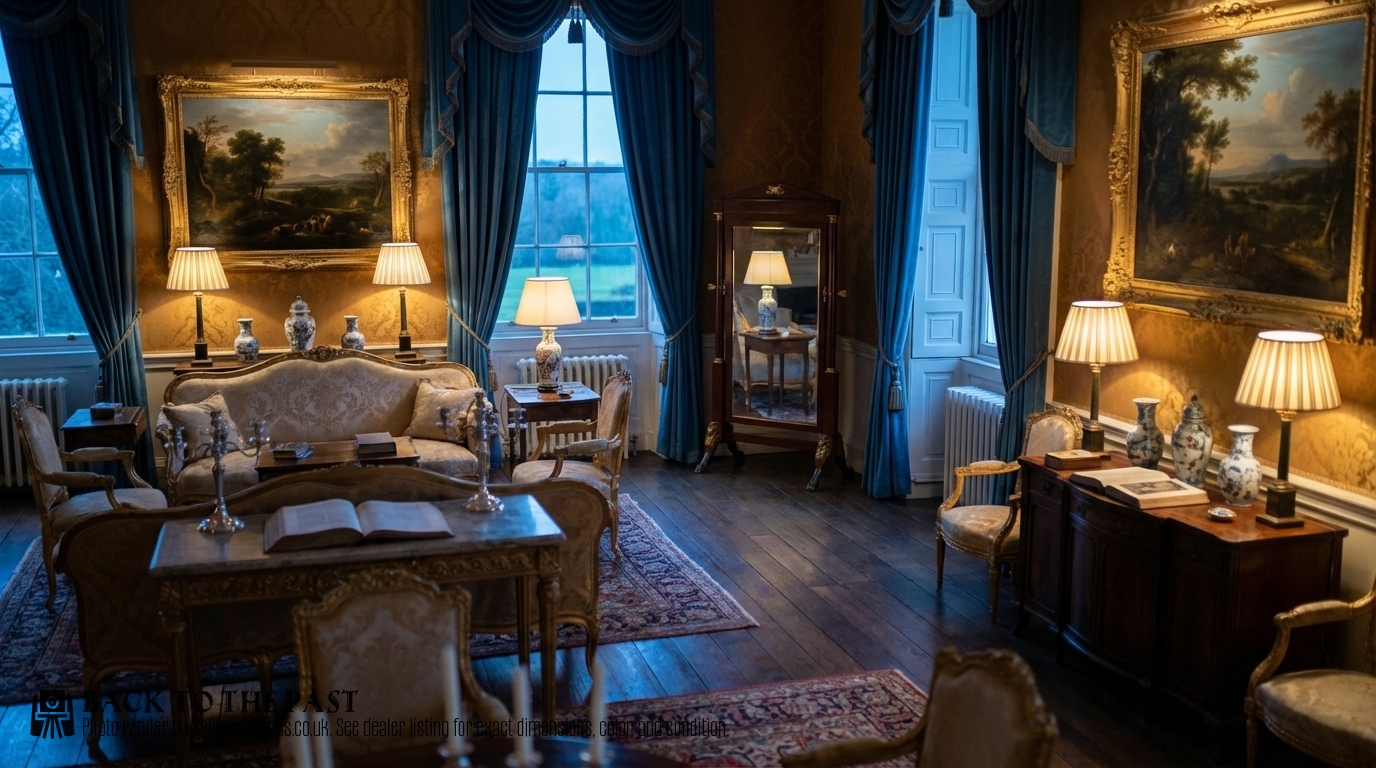
Dark Mahogany Floor Mirror
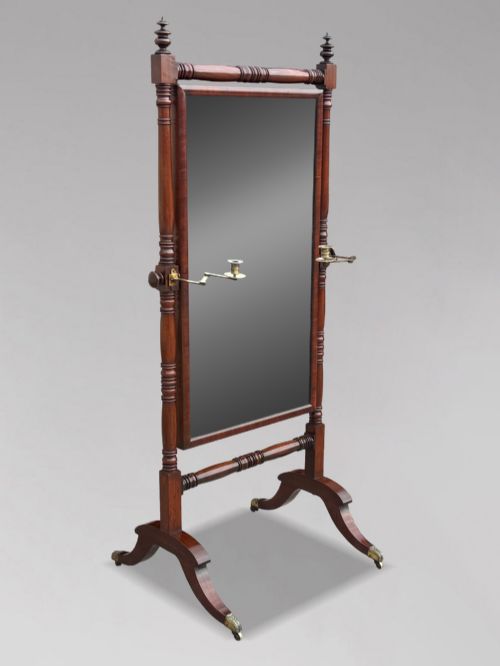
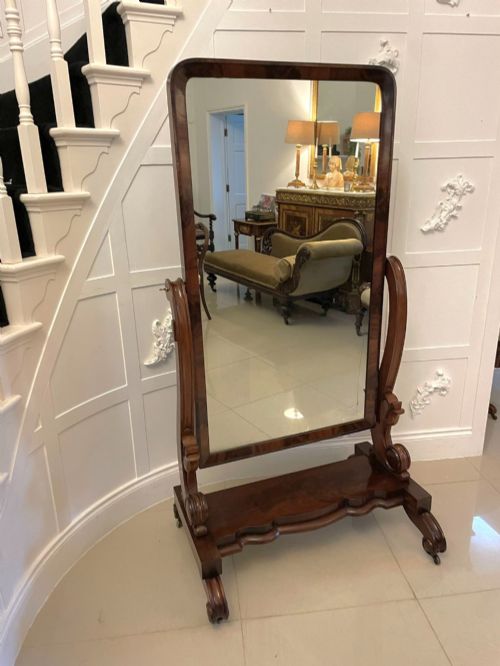
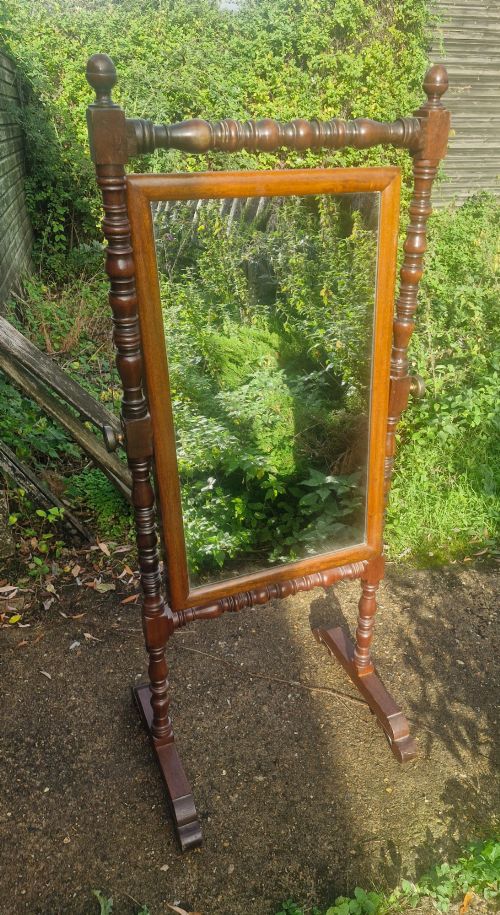
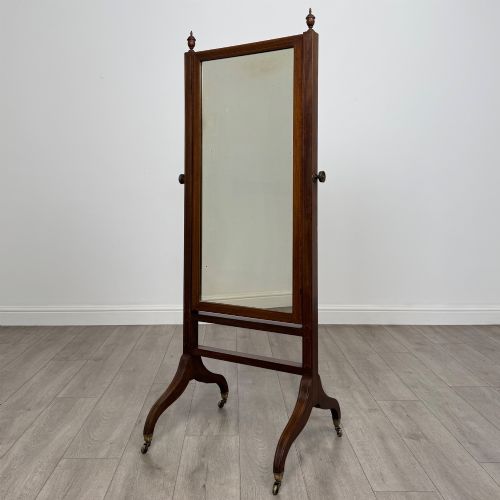
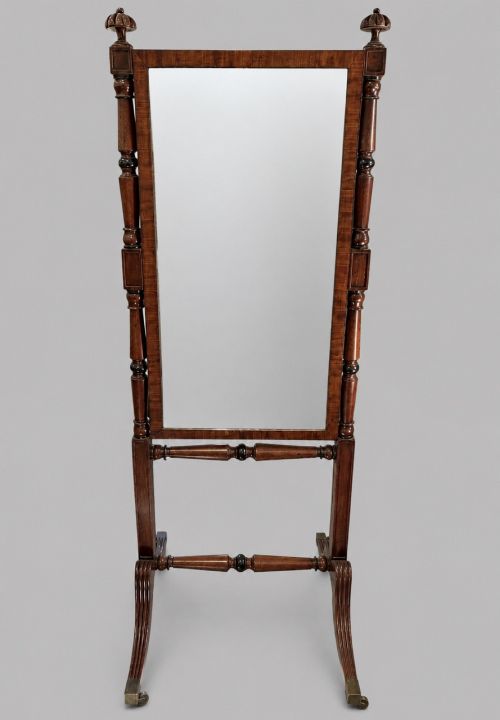
When searching for a dark mahogany floor mirror, buyers encounter freestanding cheval mirrors, swing dressing mirrors, and tall full-length frames designed to tilt. These pieces span from the Georgian and Regency eras through the Victorian period, Edwardian years, and into the early twentieth century.
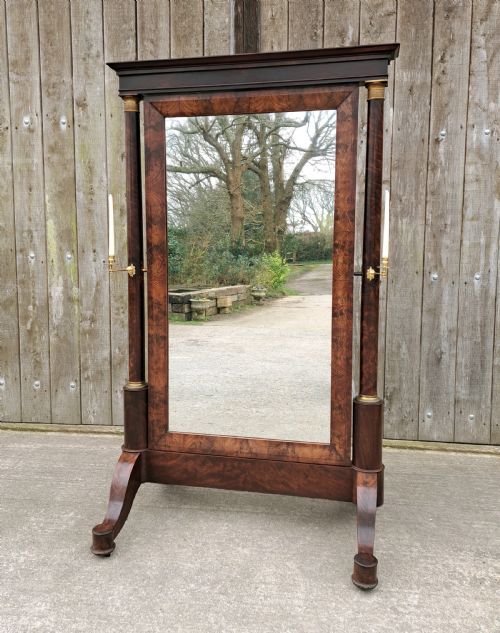
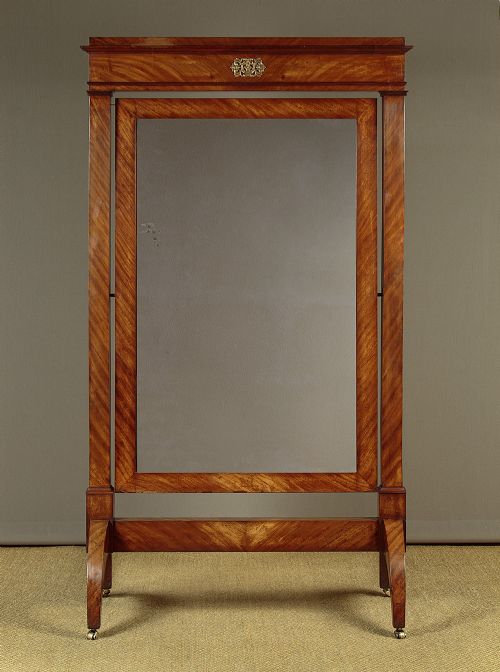
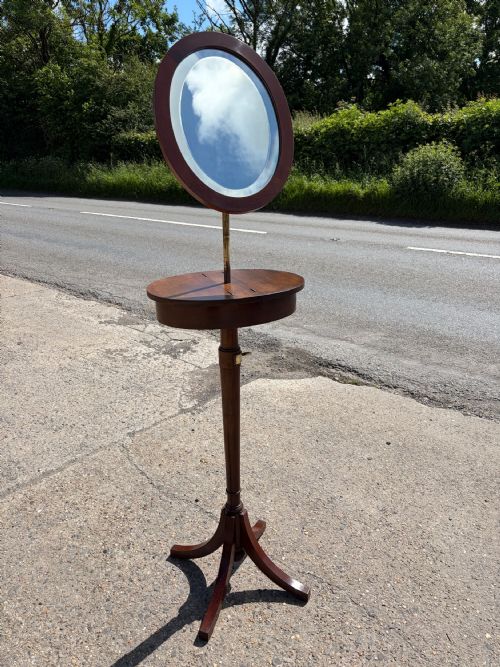
The selections on this page are predominantly nineteenth-century cheval mirrors in dark mahogany, alongside related shaving stands and dressing glasses. French styles such as Louis XVI and French Empire appear alongside British Regency and Victorian interpretations.
Most examples function as dressing mirrors, supported by robust frames with pivoting mechanisms that allow the glass to angle. The timber shows the deep, dark reddish-brown tones typical of aged mahogany.
Materials and construction methods
Makers utilised solid mahogany and mahogany veneers applied to secondary timbers, shaping the frames to house heavy mirror glass. Brass fittings, including pivot pins, castors, and candle sconces, support the swiveling action of the glass.
Surface decoration incorporates carved wood details, gold leaf accents, and occasionally ormolu mounts, particularly on French Empire and Louis XVI pieces. Tripod bases and sturdy uprights provide the necessary counterbalance for full-length tilting plates.
Dark Mahogany Floor Mirror Retail Price Guide 2026
Typical asking prices for dark mahogany floor mirror among the pieces listed under this phrase on Sellingantiques today, from the lower quarter to the upper quarter. They describe what is for sale here now, not the wider market.
Gentlemen's shaving stands occasionally retain tiny brass candle arms designed to illuminate the face during early morning grooming.
Distinctions in craftsmanship and design
Quality rests in the weight and selection of the mahogany timber, the crispness of any carved enrichment, and the integrity of the pivoting mechanism. Finer examples display well-figured wood grain and substantial brass hardware that bears the weight of the glass smoothly.
Proportion and scale separate standard workshop productions from bespoke or grander architectural pieces, such as large Victorian and Regency cheval mirrors. The joinery of the frame and the stability of the floor supports dictate longevity and daily utility.
The Dark Mahogany Floor Mirror Glossary
- Cheval mirror
- A freestanding full-length mirror supported in a frame that allows the glass to swing or tilt. The word derives from the French for horse, referring to the four-legged frame.
- Mahogany
- A durable tropical hardwood valued for its rich dark colour and fine grain. It accepts polishing exceptionally well.
- Telescopic shaving mirror
- An adjustable mirror on a standard, often with tripod legs, designed for grooming. Height and angle adjustments allow precise positioning.
- Ormolu
- Gilded bronze mounted onto furniture or mirror frames as decorative trim. It appears frequently on pieces influenced by French design.
- Tilt dressing glass
- A smaller mirror mounted on pivots between uprights, typically resting on a box base with small drawers. These sit atop dressing tables or chests.
Dark Mahogany Floor Mirror: Frequently Asked Questions
How do I secure a tilting mirror?
Most cheval mirrors use threaded brass thumbscrews or tension nuts fitted into the side pivots. Tightening these hand-screws locks the glass plate at the desired angle.
If the mirror slips, check that the internal washers and pivot pins are properly seated within the frame arms.
Can these mirrors be placed on carpet?
Freestanding floor mirrors require a stable foundation to prevent wobbling, particularly when the glass is adjusted. Many period examples feature original castors that roll easily on flat floor surfaces.
Placing them on thick carpets may require supportive cups under the feet to maintain balance and protect the floor.
How do I identify a Regency period mirror?
Regency pieces often display classical restraint, clean architectural lines, and restrained brass mounts. Look for reeded columns, sabre legs, and scroll supports typical of the early nineteenth century.
Timber choice and construction methods, such as hand-cut dovetails and older mirror plate bevels, help confirm the era.
Are the mirror plates original?
Many nineteenth-century frames retain their original mercury or early silvered glass, which frequently exhibits light foxing and small age spots. Replacement glass is common if the original silvering degraded significantly over time.
Examine the edges of the glass and the backing boards to determine whether the plate dates to the same period as the frame.