

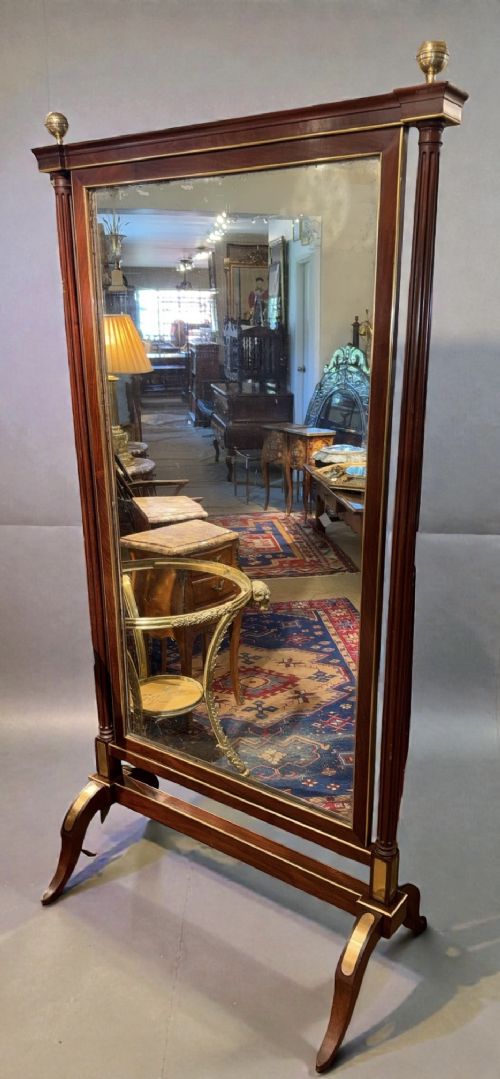


Antique French Psyche Mirror
An antique French psyche mirror brings a grand, pivoting glass and rich mahogany into a room.
Antique French Psyche Mirror
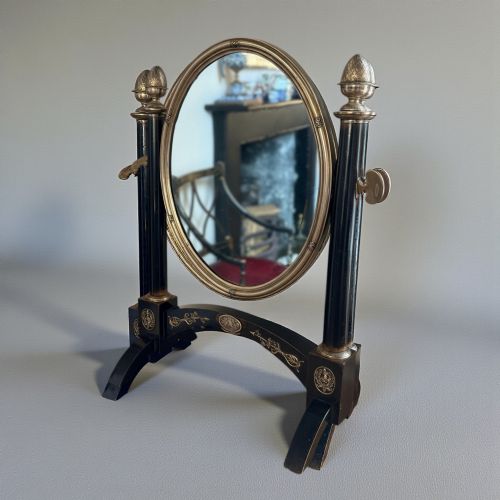
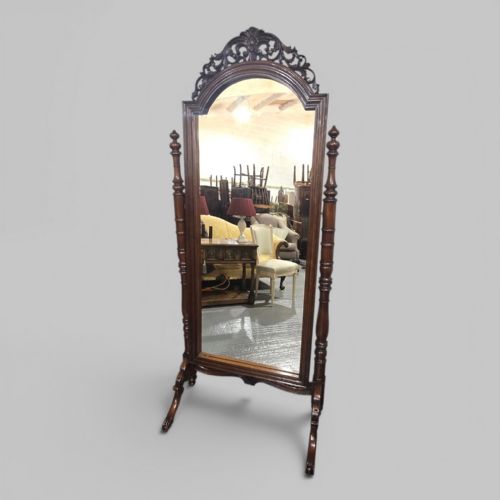
An antique French psyche mirror is a pivoting standing glass designed to give a full-length view, often housed within a sturdy frame. Buyers looking at this search phrase find tall cheval mirrors and dressing tables fitted with adjustable glass.
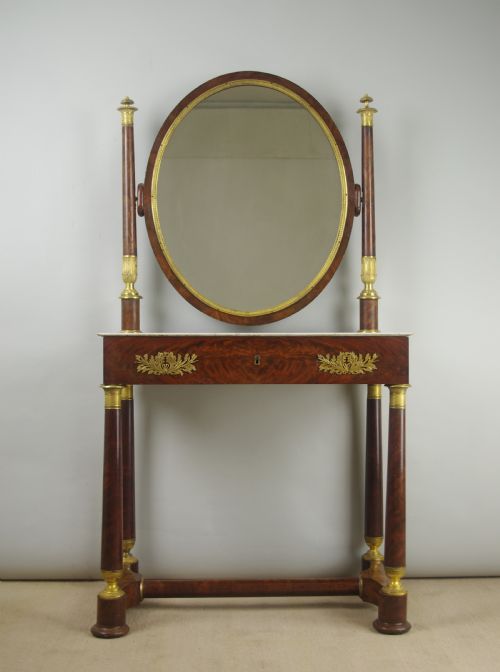
The versions most commonly met on this page date from the nineteenth century, reflecting classical French Empire and Louis XVI styles. Makers constructed these tall dressing glasses to tilt within upright supports mounted on pedestals or cabinet bases.
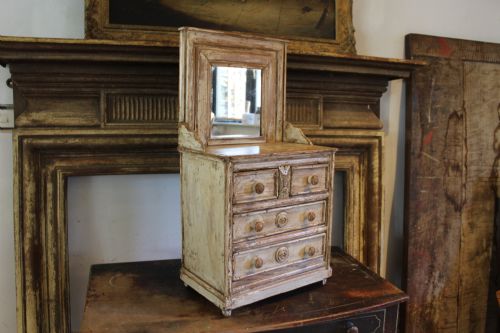
Beyond the standard cheval mirror, the selection includes miniature drawer chests and dressing tables featuring similar pivoting glass elements. These smaller forms serve the same decorative function on tables and chests while maintaining classical proportions.
How they were made
Cabinetmakers utilised rich timbers such as flame mahogany and pine as the structural foundation for these large frames and dressing tables. Selected veneers highlight the natural grain across the tall uprights and wide base plinths.
Metal ornamentation played a crucial role in finishing the French Empire and Louis XVI designs. Artisans applied cast ormolu, brass, and gilt bronze mounts to accent the corners, feet, and pivoting brackets of the mirror glass.
Antique French Psyche Mirror Retail Price Guide 2026
Typical asking prices for french psyche mirror among the pieces listed under this phrase on Sellingantiques today, from the lower quarter to the upper quarter. They describe what is for sale here now, not the wider market.
Listings feature mahogany, brass, ormolu, and marble across nineteenth-century French Empire and Louis XVI forms.
What varies in quality
The standard of the timber selection and the depth of the flame mahogany grain set the finest examples apart from simpler pieces. Richly figured wood indicates careful selection by the cabinetmaker during construction.
The crispness and weight of the ormolu and gilt bronze mounts define the upper tier of production. Finer chased metalwork shows sharper detail and heavier casting around the mirror pivots and feet.
The Antique French Psyche Mirror Glossary
- Psyche mirror
- A large standing mirror mounted on pivots so the glass tilts freely. This adjustable frame design became popular for full-length dressing in the eighteenth and nineteenth centuries.
- Cheval mirror
- A large standing floor mirror set into a supportive wooden frame with four legs or a heavy pedestal base. The French versions often incorporate classical architectural columns and metal mounts.
- Ormolu
- Gilt bronze mounts applied to furniture and mirror frames for decoration. The technique involves a mercury and gold amalgam fired onto a bronze base.
- Flame mahogany
- A decorative veneer cut from where a branch joins the main tree trunk. This wood figuring creates a distinctive flickering flame pattern across large cabinet surfaces.
- Louis XVI
- A neoclassical French design style characterised by straight lines, symmetry, and classical motifs. Furniture from this period uses restrained ornamentation compared to earlier baroque forms.
Antique French Psyche Mirror: Frequently Asked Questions
What is a psyche mirror?
A psyche mirror is a tall pivoting glass designed to tilt within a stationary frame. This allows the user to adjust the angle for a full-length reflection.
Such pieces usually stand on their own base or sit atop a dressing table base. They combine practical dressing utility with formal classical decoration.
How do I place one in a room?
These tall pivoting glasses work best in bedrooms, dressing rooms, or hallways where natural light can bounce off the glass. Their vertical proportions help visually expand smaller wall spaces.
Position the heavy base securely on a flat floor away from direct moisture. Ensure enough clearance around the frame for the glass to tilt fully on its pivots.
Are these mirrors adjustable?
Yes, the defining feature of a psyche glass is its ability to tilt back and forth on side pivots. Metal screws or pins tighten inside the support arms to hold the glass at the desired angle.
This mechanism allows viewers of different heights to adjust the reflection. The pivot hardware is typically integrated into decorative bronze mounts.