



French Cheval Glass
A French cheval glass is a full-length dressing mirror on a pivoting frame, offering a functional piece of furniture that anchors a room.
French Cheval Glass
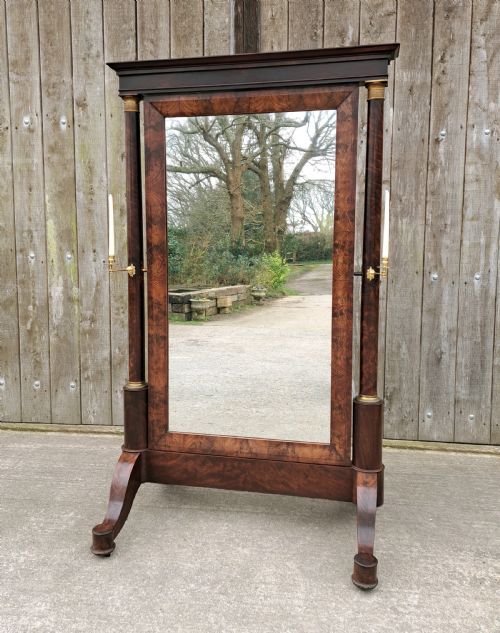
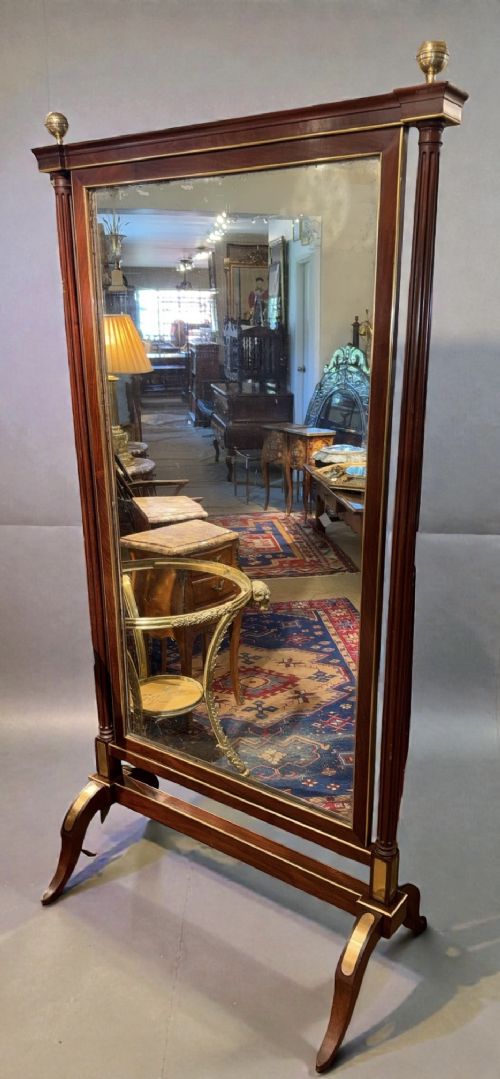
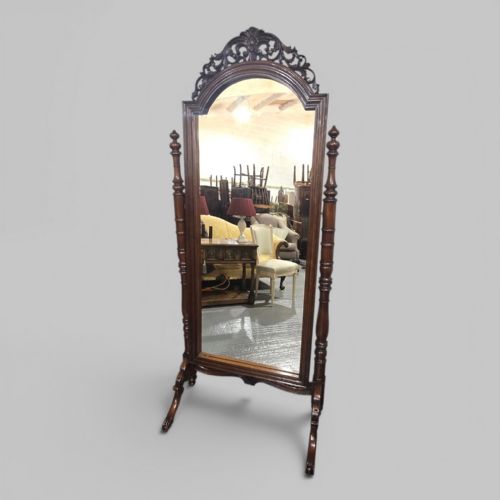
When you search for a french cheval glass, you are looking at tall floor-standing dressing mirrors designed to tilt within a stable frame. The pieces seen here span from the eighteenth century through to the early twentieth century, taking forms such as cheval mirrors, dressing mirrors, and pier console dressing room wall mirrors.
The version you are most likely to meet on this page is constructed from mahogany or giltwood, following styles ranging from French Empire and Louis XVI to Victorian and French Rococo Revival. These mirrors served a practical purpose in bedrooms and dressing rooms, allowing the user to view their entire outfit at once.
Origins stretch across classic French and Victorian periods, often featuring traditional floor-standing configurations. Some examples incorporate brass mounts, candle holders, or intricate carved woodwork, showing the versatility of the design across different decades.
How they were made
Makers utilised solid timbers such as mahogany and walnut for the structural frames, applying skill to balance the weight of the glass safely on pivoting pins. Giltwood, gesso, and ormolu appeared frequently on ornamental frames, bringing decorative richness to the finished object.
Mirror glass was set securely within these wooden or metal frameworks, sometimes enhanced by brass articulated candle holders or silver deposit porcelain details. Craftspeople shaped the timber and applied carved ornamentation by hand, ensuring each frame could support the heavy glass plate during daily tilting.
French Cheval Glass Retail Price Guide 2026
Typical asking prices for french cheval glass among the pieces listed under this phrase on Sellingantiques today, from the lower quarter to the upper quarter. They describe what is for sale here now, not the wider market.
Some nineteenth-century dressing mirrors arrived equipped with brass articulated candle holders, ensuring proper illumination for evening routines.
What varies in quality
The sophistication of the carved woodwork and the choice of primary timber separate the standard examples from the finer productions. Flame mahogany veneer and deep ormolu mounts signal a higher grade of craftsmanship.
The structural integrity of the pivoting mechanism and the clarity of the original mirror glass also dictate the standard of the piece. Ormolu details and substantial brass hardware point to workshops that invested greater labour in the finishing stages.
Jean Gille
The French Cheval Glass Glossary
- Cheval glass
- A large full-length mirror mounted on a swivel frame that allows the glass to tilt back and forth. This form became popular for dressing rooms during the eighteenth and nineteenth centuries.
- Ormolu
- Gilded bronze applied as decorative mounts to furniture and mirror frames. This technique was widely utilised in French Empire and Louis XV styles.
- Giltwood
- Timber that has been coated with a thin layer of gold leaf or gold paint. It provides a bright, reflective surface favoured in ornate mirror designs.
- Gesso
- A plaster-like mixture applied to wood surfaces as a base for gilding or painting. It allowed carvers to achieve sharp relief details on ornate frames.
- Flame mahogany
- Mahogany timber cut to reveal a distinctive flamed or figured grain pattern. Cabinet makers reserved this material for prominent surfaces on high-quality furniture.
French Cheval Glass: Frequently Asked Questions
What is a french cheval glass?
A french cheval glass is a freestanding floor mirror suspended on pivots within a vertical frame. This allows the glass to tilt at different angles for full-length viewing.
Such mirrors were essential furnishings in nineteenth-century bedrooms and dressing rooms. They combined practical utility with decorative wood and metal work.
How do you use a cheval mirror?
You stand before the glass and tilt the mirror plate on its side pins to adjust the viewing angle. This lets you check your full attire from head to toe.
In period interiors, they stood freely in the room rather than hanging on a wall. Some designs included candle holders to provide light while dressing.
What materials are used in these mirrors?
Frames are commonly built from timbers such as mahogany and walnut, often paired with mirror glass. Decorative surfaces frequently feature giltwood, gesso, and ormolu.
Additional elements like brass candle holders and porcelain components appear on specific styles. The choice of material usually reflects the period and design movement of the piece.
How do I date an antique cheval mirror?
Dating relies on identifying the prevailing style, such as French Empire, Louis XVI, or Victorian, alongside the construction methods of the frame. The type of wood and the character of the mirror glass offer further clues.
Markings from makers or specific signatures can narrow down the origin more precisely. Comparing the carved motifs to known period designs helps confirm the era.