


Georgian Full Length Mirror
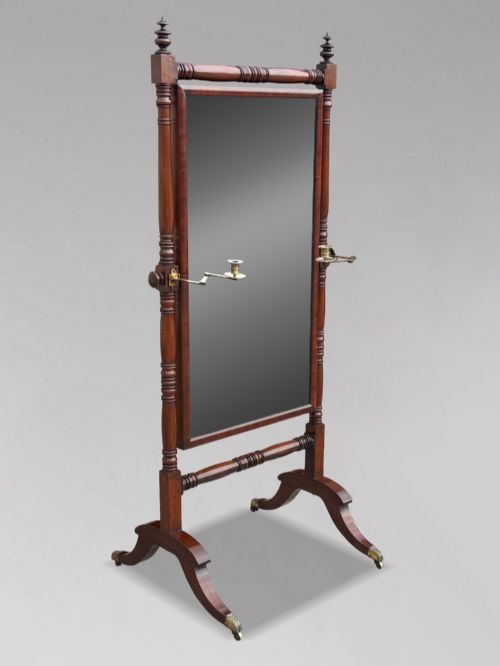
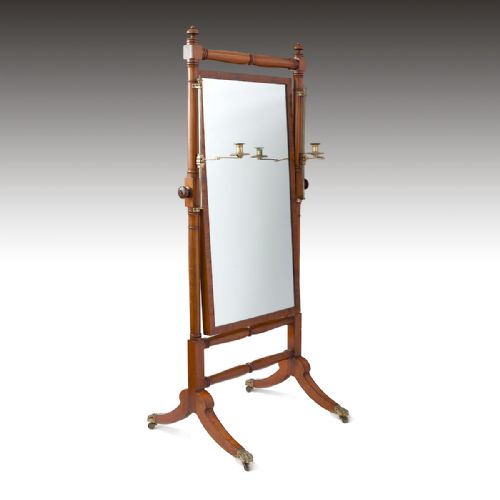
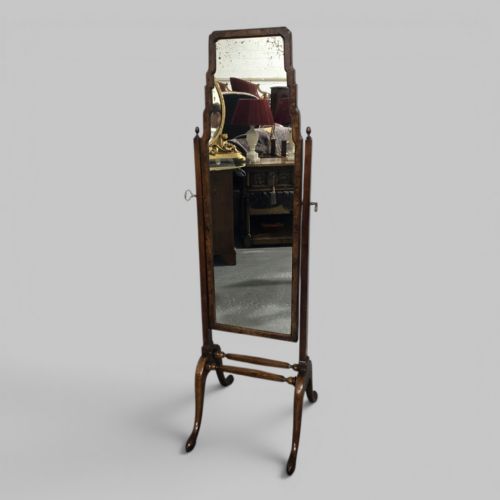
A georgian full length mirror brings freestanding height and reflected light to a room, most often appearing as a mahogany cheval swing glass.
Georgian Full Length Mirror
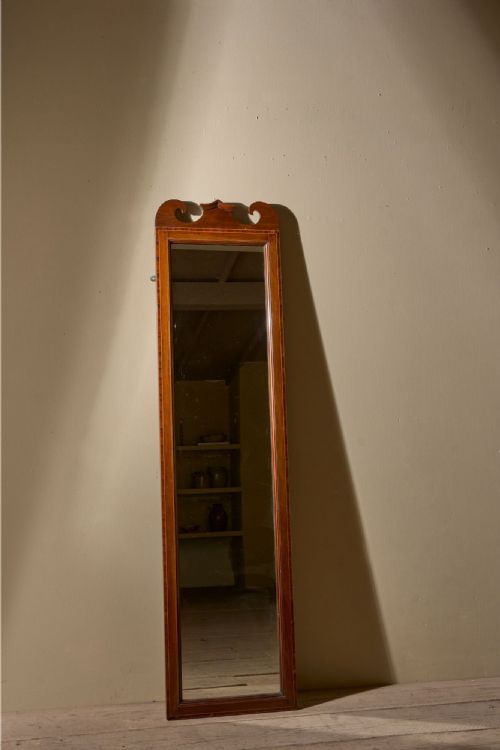
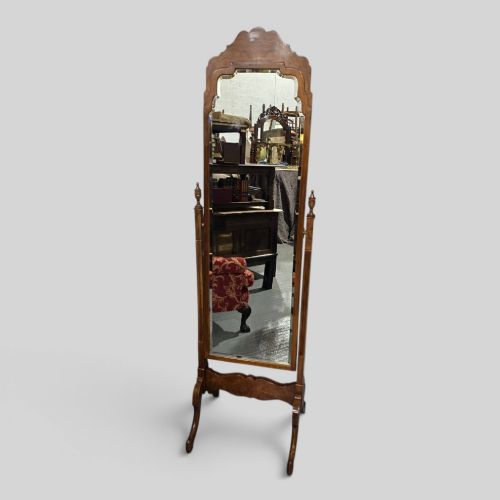
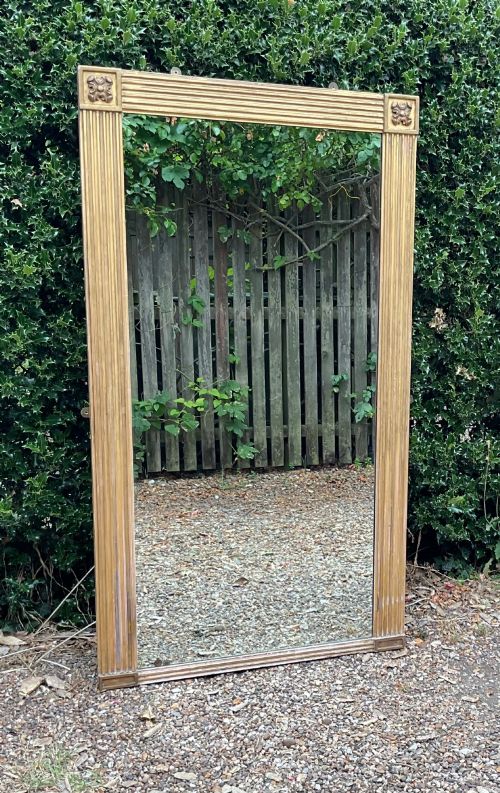
A georgian full length mirror primarily takes the form of a cheval glass or tall pier mirror, designed to stand freely on the floor or hang upon a wall. These pieces provide full-length reflection, which emerged as a domestic necessity for dressing and robing during the eighteenth and nineteenth centuries.
The versions met most frequently on this page belong to the Regency period and the wider Georgian era, alongside later revivals from the nineteenth and early twentieth centuries. Mahogany forms the backbone of these selections, supplemented by walnut, satinwood, and giltwood frames.
Makers constructed these mirrors as freestanding cheval designs pivoting on floor stands, or as tall wall-hung pier and dressing glasses. The architectural proportions suit hallways, bedrooms, and dressing rooms, anchoring the space with period presence.
How they were made
Cabinet makers utilised dense hardwoods such as mahogany and walnut for the structural frames and floor stands, often employing boxwood inlay, marquetry, or giltwood highlights to enhance the visual depth. Timber selection ensured the upright standards could support the heavy weight of a swinging glass frame without warping.
Silvered glass plates were housed within adjustable swivel frames supported by brass pivots, sabots, and castors. Joinery relied on traditional framing techniques, while turned supports and sabre legs provided stability to the floor-standing models.
Listings feature mahogany, walnut, satinwood, and giltwood materials across Georgian, Regency, and Victorian periods.
What varies in quality
The standard of timber and execution distinguishes the output, ranging from plain country house pieces to finely figured mahogany with intricate boxwood inlay. Cabinet work visible in the turned frames, brass mountings, and the crispness of carved details dictates the standing of the piece.
Proportion and structural integrity define the higher tiers, where the weight of the glass is counterbalanced effectively by well-turned uprights and sturdy sabre legs. Original castors, brass sabots, and untouched surfaces elevate the integrity of surviving examples.
Gillows
The Georgian Full Length Mirror Glossary
- Cheval mirror
- A freestanding full-length mirror suspended on a vertical frame with pivots that allow the glass to tilt. This form became popular for dressing rooms in the Georgian and Regency periods.
- Pier mirror
- A tall mirror designed to hang on the wall between two windows, often placed above a pier table to maximise light reflection in a room.
- Giltwood
- Timber that has been coated with a thin layer of gold leaf or gesso preparation. It appears frequently on decorative Regency frames.
- Sabre leg
- A curving, outward-swooping furniture leg of classical origin that tapers toward the foot, often finished with a brass castor.
- Marquetry
- Decorative woodwork where pieces of veneer are fitted into a structural background to form geometric or floral patterns.
Georgian Full Length Mirror: Frequently Asked Questions
How do I use a cheval mirror?
A cheval mirror stands independently on the floor, allowing you to adjust the angle of the glass using its central pivots for a complete view.
Position the piece in a bedroom or dressing area where natural light from a window can bounce across the room.
What is the difference between a pier mirror and a cheval mirror?
A pier mirror mounts directly to the wall, usually between windows, whereas a cheval mirror is a freestanding floor item supported by a frame and legs.
Both types deliver full-length reflection but serve different spatial layouts within a period interior.
How do I date a mahogany mirror?
Dating relies on examining the timber grain, construction methods, and stylistic cues such as Regency sabre legs or Georgian scrollwork.
Later revival pieces from the twentieth century often adopt earlier forms like Queen Anne walnut or George III mahogany.
Can these mirrors stand on carpet?
Freestanding floor mirrors stand securely on most surfaces, though heavy frames benefit from level flooring to prevent strain on the brass castors and pivot joints.
Ensure the floor stand or sabre legs distribute the weight evenly to protect both the furniture and the ground beneath.