
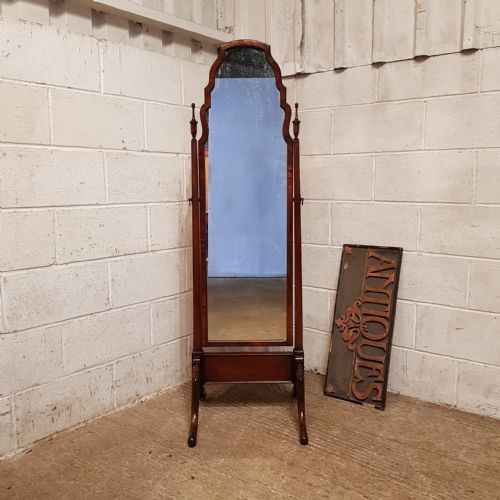


Free Standing Cheval Mirror
A free standing cheval mirror gives you a full length view while anchoring a room with period timber and glass.
Free Standing Cheval Mirror
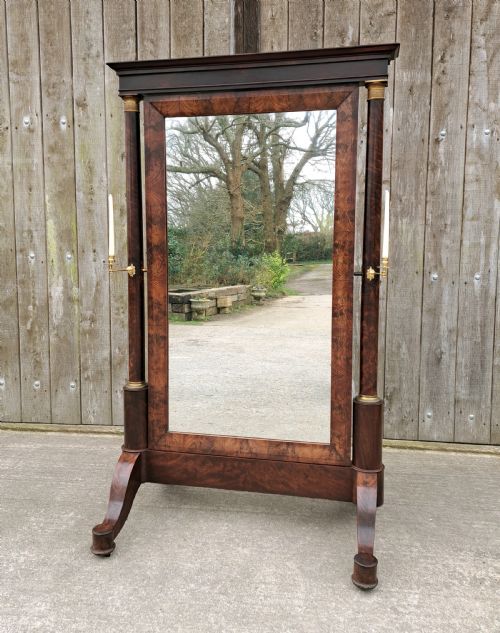
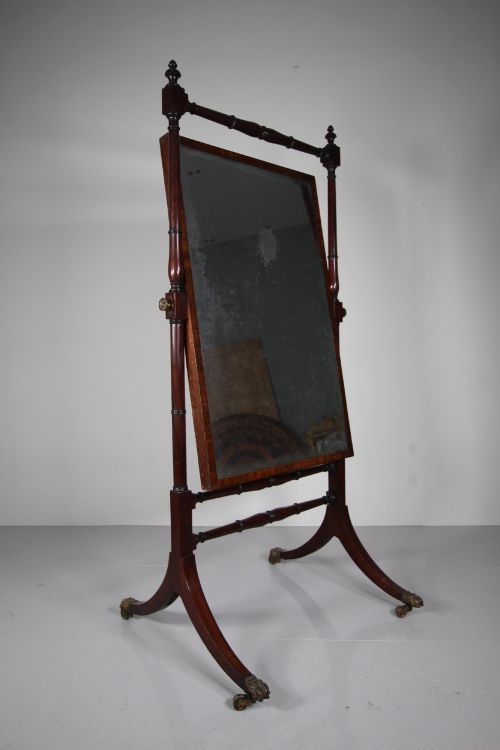
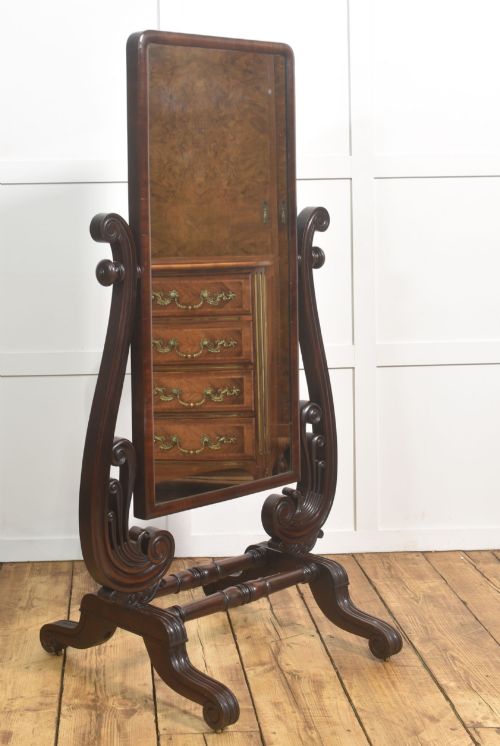
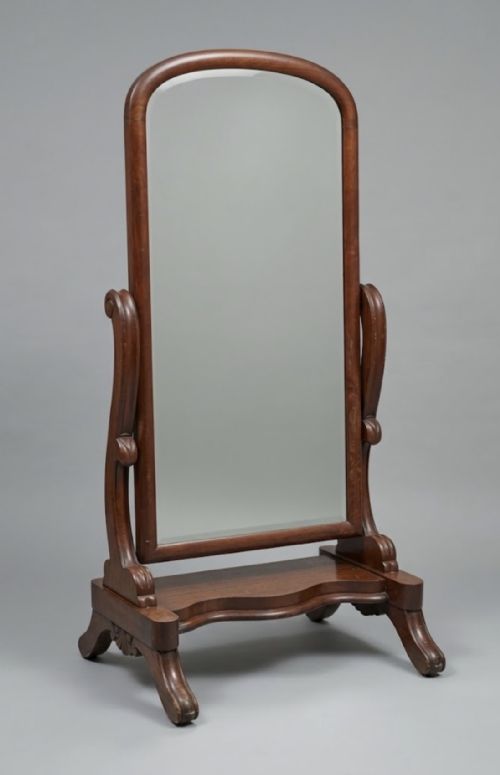
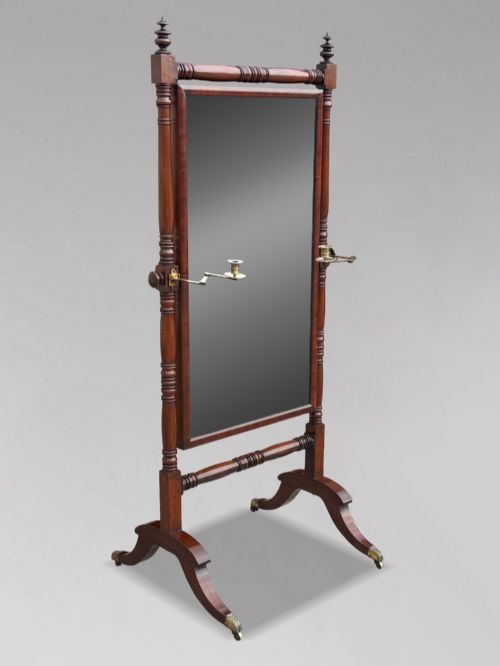
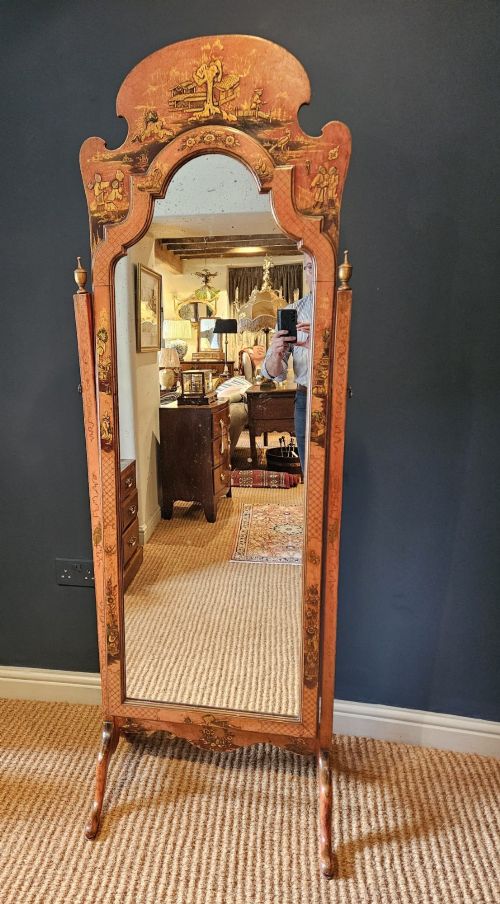
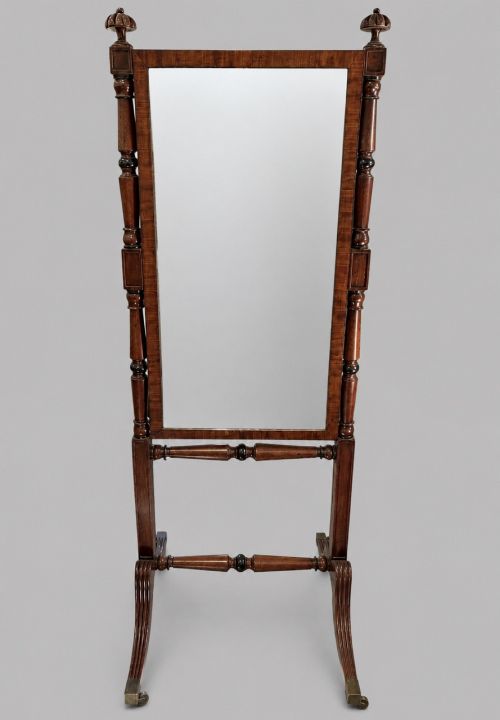
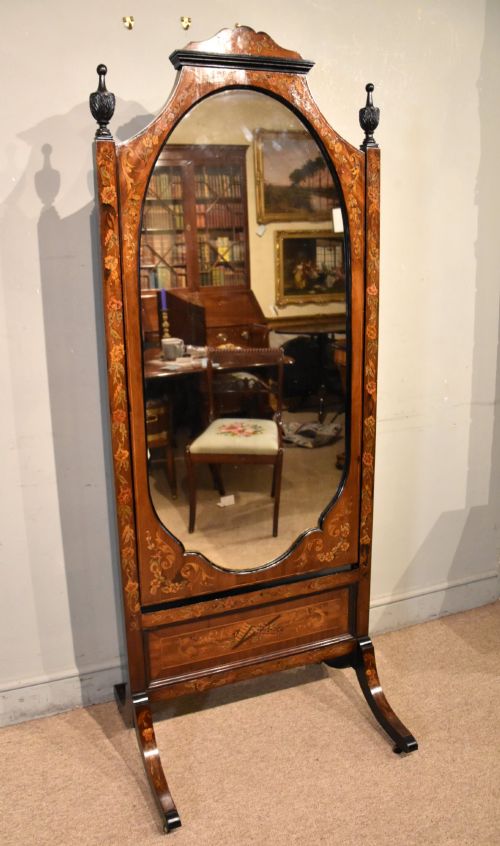
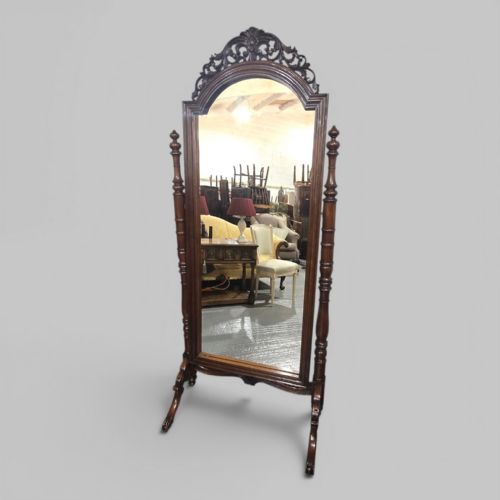
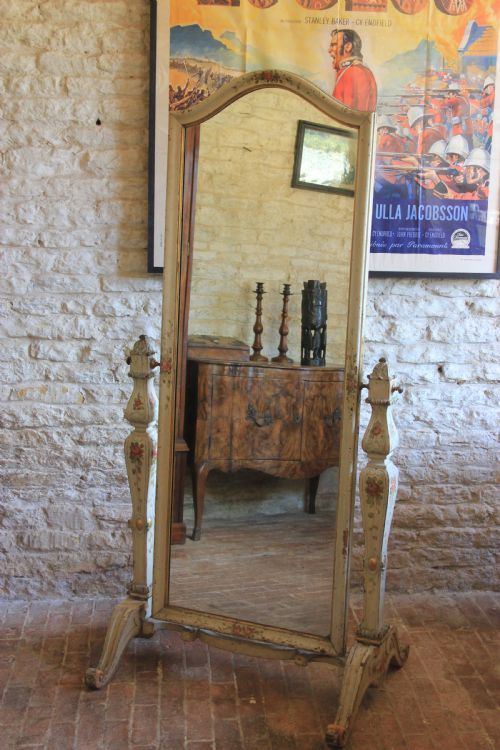
A free standing cheval mirror is a floor-standing swing glass designed for full-length dressing, appearing frequently in Victorian and Regency forms across this selection.
The heavy frames pivot between upright pillars, allowing you to tilt the glass angle to suit your posture.
Most examples rely on rich timbers like mahogany or walnut, standing on sturdy feet or branching trestle bases.
Materials and construction
Cabinetmakers utilised solid mahogany, walnut, and satinwood, often applying marquetry inlay or brass mounts to enhance the timber grain.
The heavy plate glass swings within a wooden frame, supported by pivoted brass screws fixed to sturdy upright posts.
One Art Deco cheval mirror served duty inside a gentleman's outfitters before joining the collection.
Judging the quality
Superior execution shows in the weight and stability of the frame, where dense figured timber prevents any wobble at the joints.
Finer pieces display crisp hand-carving on the upright supports and original brass pivot hardware that holds the swing glass firmly at any angle.
Gillows
The Free Standing Cheval Mirror Glossary
- Cheval mirror
- A large floor-standing dressing mirror mounted on a vertical frame with pivots. It lets the glass swing back and forth.
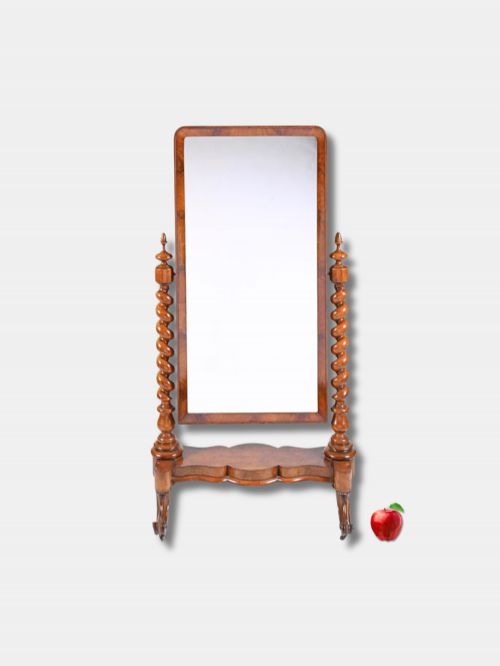
- Barley twist
- A carved spiral column resembling twisted barley sugar. Makers turned this decorative shape on wood lathes for supports.
- Marquetry
- Decorative patterns formed by fitting small pieces of veneer into a timber base. Craftsmen used contrasting woods for visual depth.
- Satinwood
- A pale, lustrous hardwood from tropical trees. Cabinetmakers prized it for fine inlay and cabinet fronts.
Free Standing Cheval Mirror: Frequently Asked Questions
How do I place a cheval mirror in a room?
Position the piece near a window to reflect natural light across the floor and brighten dark corners.
Ensure the surrounding clearance allows the heavy frame to tilt safely without bumping nearby furniture.
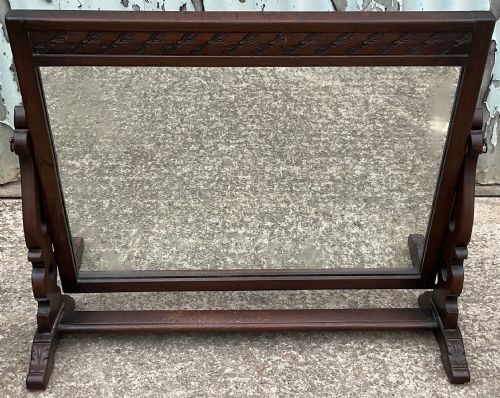
What is the difference between a cheval mirror and a toilet mirror?
A cheval mirror stands directly on the floor to provide a full-length view of an outfit.
A toilet mirror is much smaller and sits upon a dressing table or chest of drawers.
How do I date an antique cheval mirror?
Look closely at the timber choice, leg style, and the type of brass hardware used for the pivots.
Heavier mahogany frames with sweeping scroll feet often point to Regency or Victorian periods.
Can these mirrors support their own weight safely?
Original frames are built from dense hardwoods like mahogany and oak to keep the heavy glass stable.
The side pillars and wide feet distribute the weight evenly across the floor.