

Mahogany Floor Standing Mirror
A mahogany floor standing mirror offers full-length reflection with a sturdy timber frame, designed for bedrooms and dressing rooms since the Georgian and Regency eras.
Mahogany Floor Standing Mirror
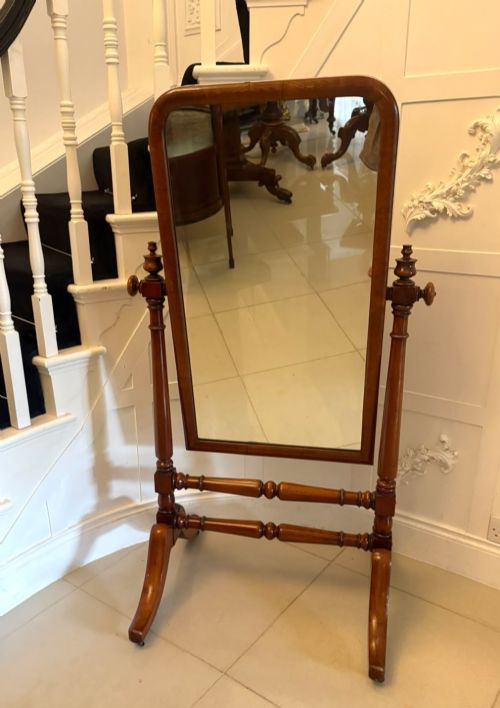
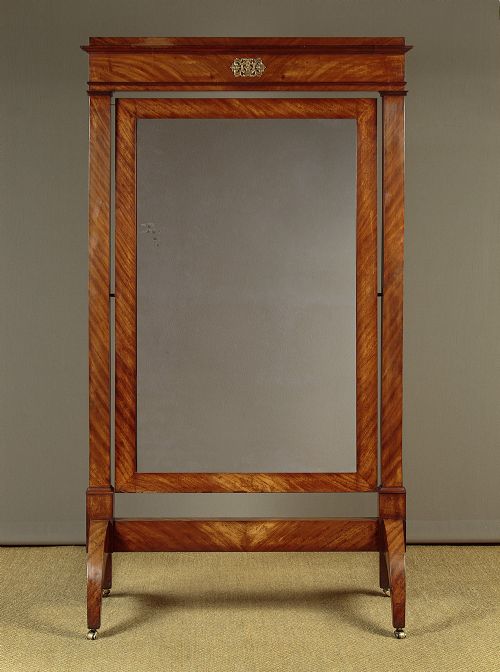
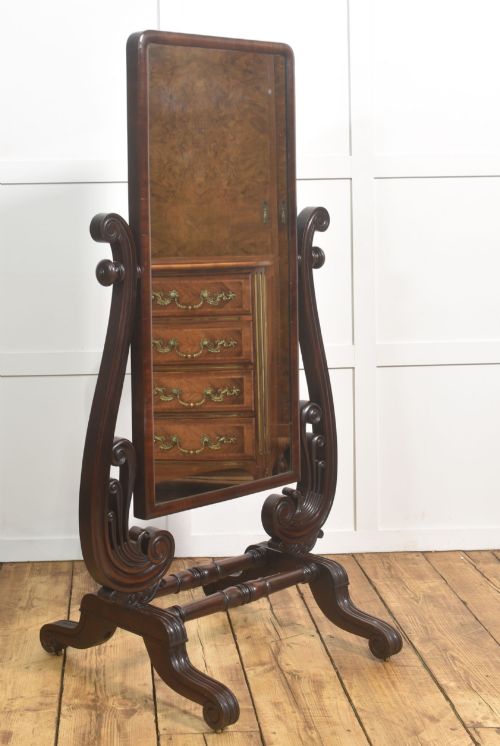
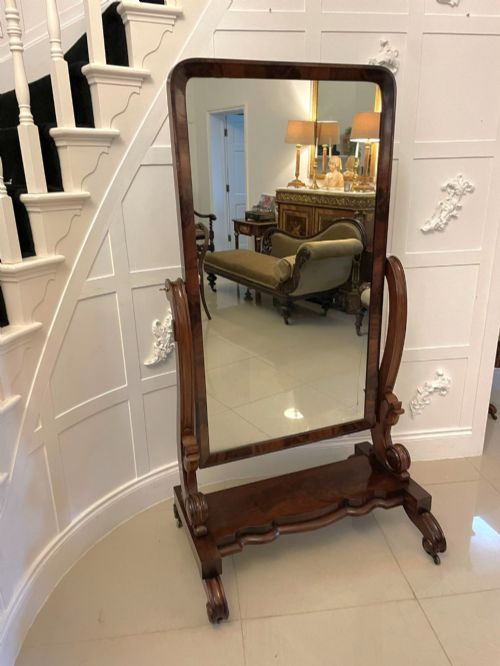
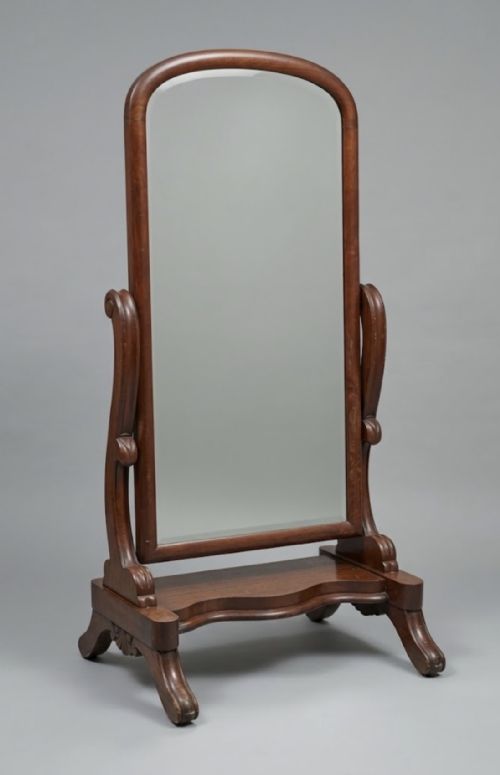
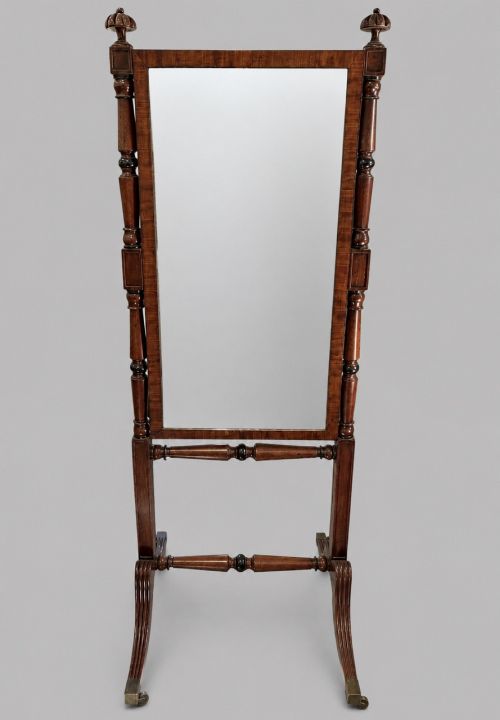
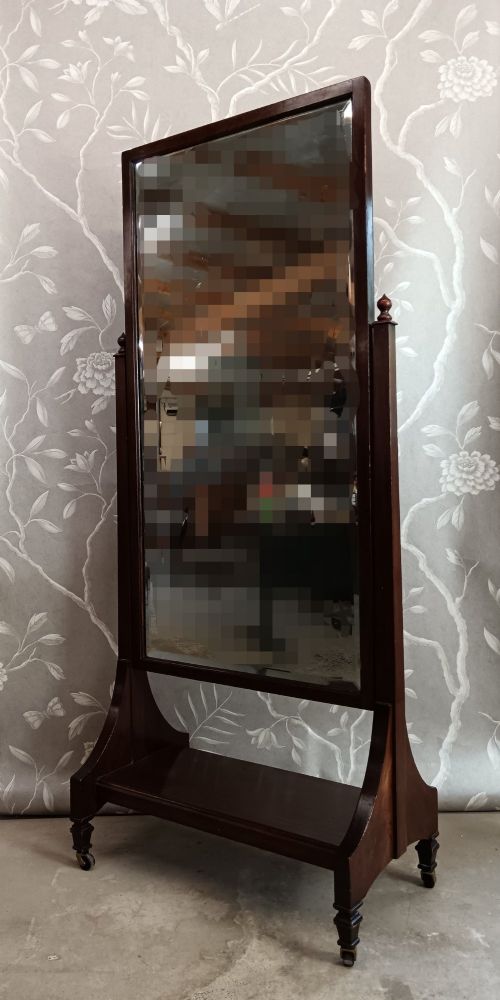
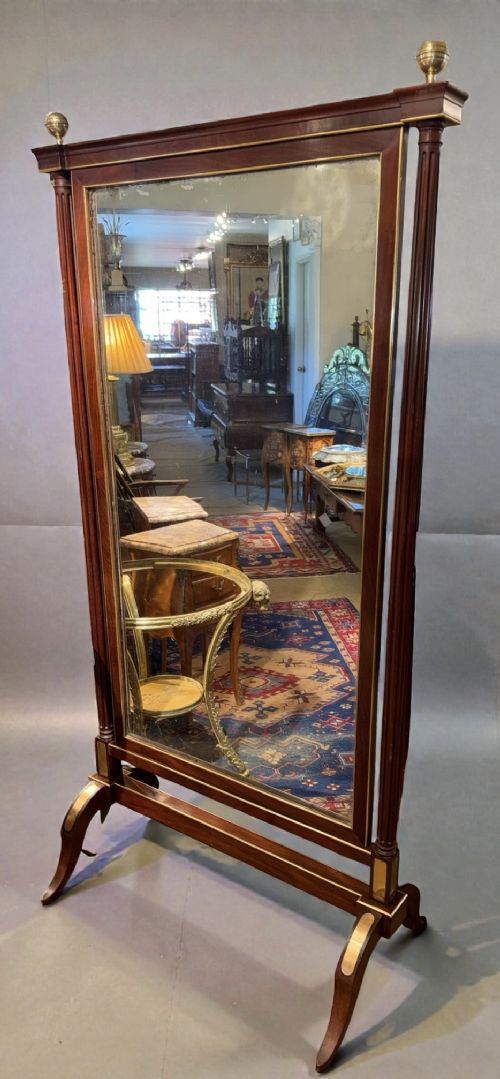
A mahogany floor standing mirror primarily appears as a cheval mirror, where a tall swing glass pivots within a vertical frame. These pieces stem from periods including the Regency, Victorian, and Edwardian eras.
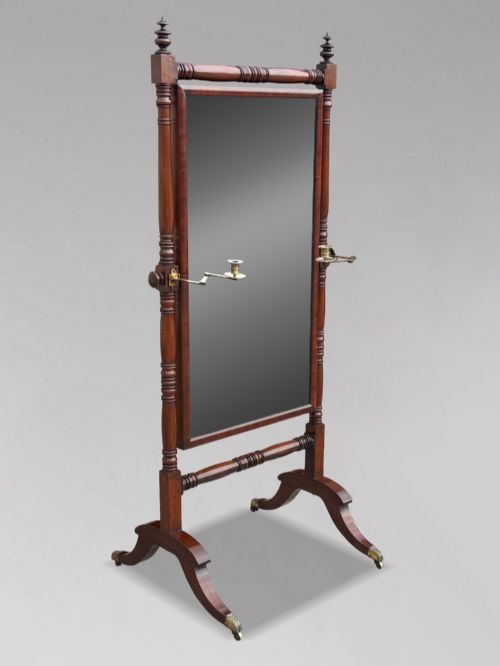
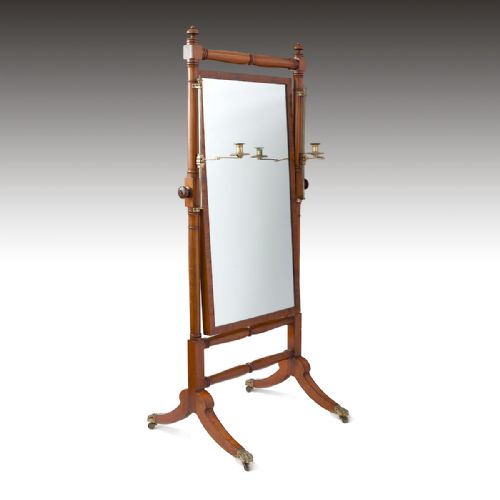
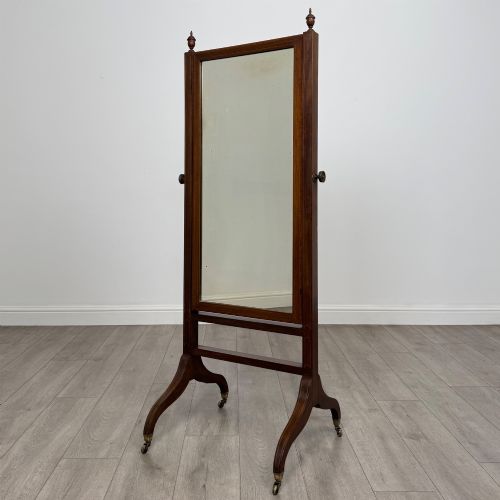
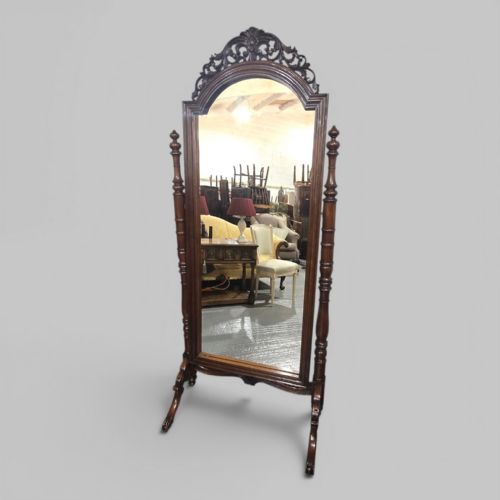
The most common form met here is the Victorian cheval mirror, alongside earlier Regency examples and occasional Edwardian pieces. Frames range from simple rectangular swing glasses to grand country house versions.
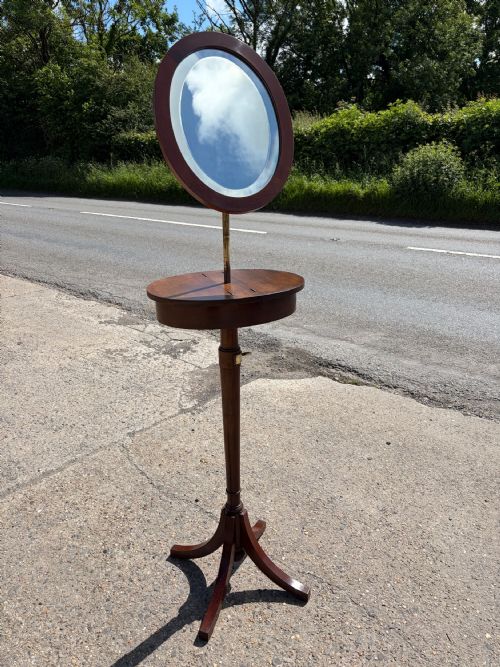
Standing mirrors also include shaving stands and adjustable gentleman's dressing glasses on tripod or pivoted bases. These compact pieces serve tabletop or floor-standing use in period bedrooms.
Materials and construction methods
Makers utilised solid mahogany and flame mahogany veneers over secondary timbers to construct the uprights and bases. Brass fittings, including castors, sabots, and pivot pins, support the moving parts.
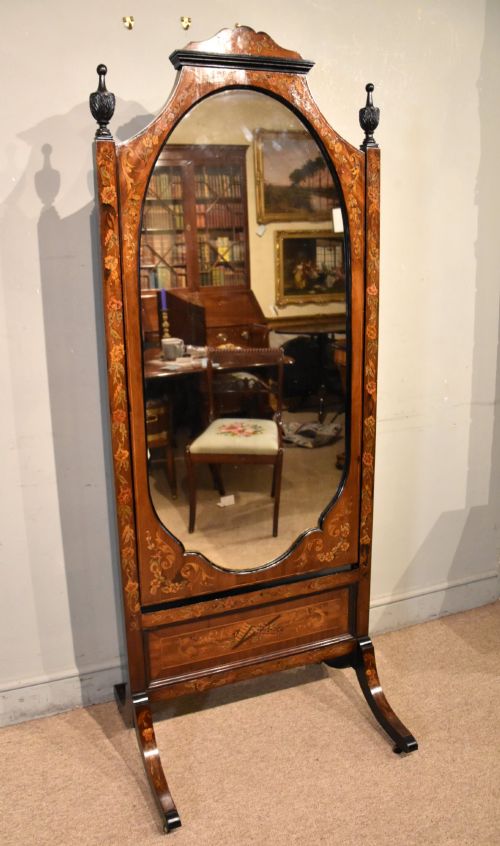
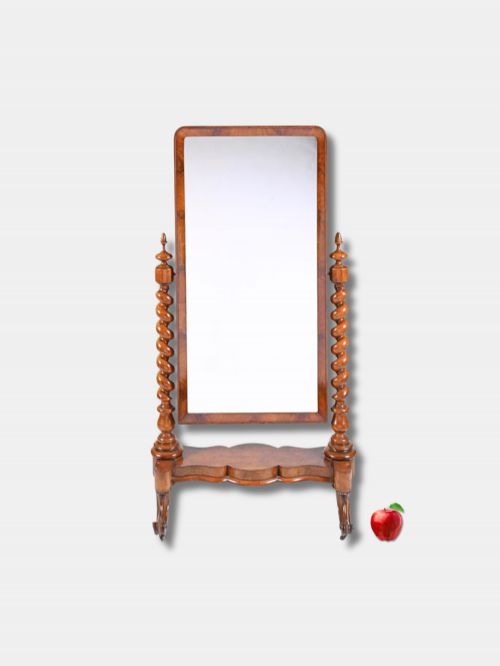
Glass plates provide the reflection, held within frames that often incorporate satinwood inlay, marquetry, or barley twist supports. Sabre legs and tripod bases stabilise the heavy frames against the floor.
Some Victorian gentleman's shaving stands include tiny integrated platforms designed specifically to hold a pocket watch while shaving.
Distinctions in quality
The choice of timber creates a primary distinction, with figured flame mahogany and crisp marquetry inlay sitting above plain secondary woods. Finely carved details, such as barley twist uprights or decorative crests, indicate skilled cabinet work.
Hardware quality defines the upper tier, seen in heavy cast brass sabots, original wheel castors, and robust tilt mechanisms. Proportion and stability dictate how well a tall frame balances its pivoting mirror glass.
Gillow
The Mahogany Floor Standing Mirror Glossary
- Cheval mirror
- A large mirror suspended on a freestanding frame that swings on vertical pivots. This design allows the full-length glass to tilt to various angles.
- Flame mahogany
- A veneer cut from the fork of the mahogany tree where branches meet the trunk. It creates a distinctive, fiery flame-like grain pattern prized by cabinet makers.
- Sabots
- Metal sleeves or caps fitted to the feet of furniture legs. They protect the timber and frequently incorporate brass on Regency and William IV pieces.
- Tilt dressing glass
- A smaller mirror mounted on pivots between upright supports, designed to tilt. These sit on stands or tables to aid with grooming.
- Barley twist
- A turned wooden column carved in a spiral shape resembling twisted barley sugar. This decorative support appears frequently on Victorian mirror frames.
Mahogany Floor Standing Mirror: Frequently Asked Questions
How do I date a mahogany floor standing mirror?
Dating relies on stylistic details, such as Regency sabres legs with brass castors or Victorian barley twist uprights. Frame construction and the type of mahogany veneer also indicate the period of manufacture.
Later Edwardian pieces often display lighter frames and simpler turning compared to heavy Georgian or William IV examples.
What is the difference between a cheval mirror and a dressing mirror?
A cheval mirror stands directly on the floor as a full-length piece supported by its own frame and legs. A dressing mirror is traditionally smaller and meant to sit upon a chest of drawers or a vanity.
Some standing pieces bridge these categories by combining a pivot glass with a compact shaving stand base.
How do the tilting mechanisms work?
Pivoting mirrors hang on threaded metal pins or screws set into the side uprights. Tightening or loosening these pivot hardware components allows the glass to hold a chosen angle.
Original brass hardware on these pieces moves smoothly when properly aligned within the frame brackets.
Where should I place a standing mirror in a room?
These mirrors require a stable floor surface where the splayed legs or heavy base can rest securely without wobbling. Placing them opposite a window helps bounce natural light deeper into the space.
Allow enough clearance around the frame for the glass to swing freely on its pivots.