
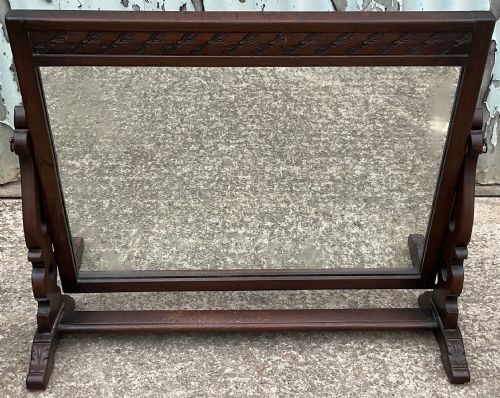


Swivel Dressing Glass
These swivel dressing glass pieces are pivoting mirrors designed for the dressing table or floor, prized for adjusting angles during grooming.
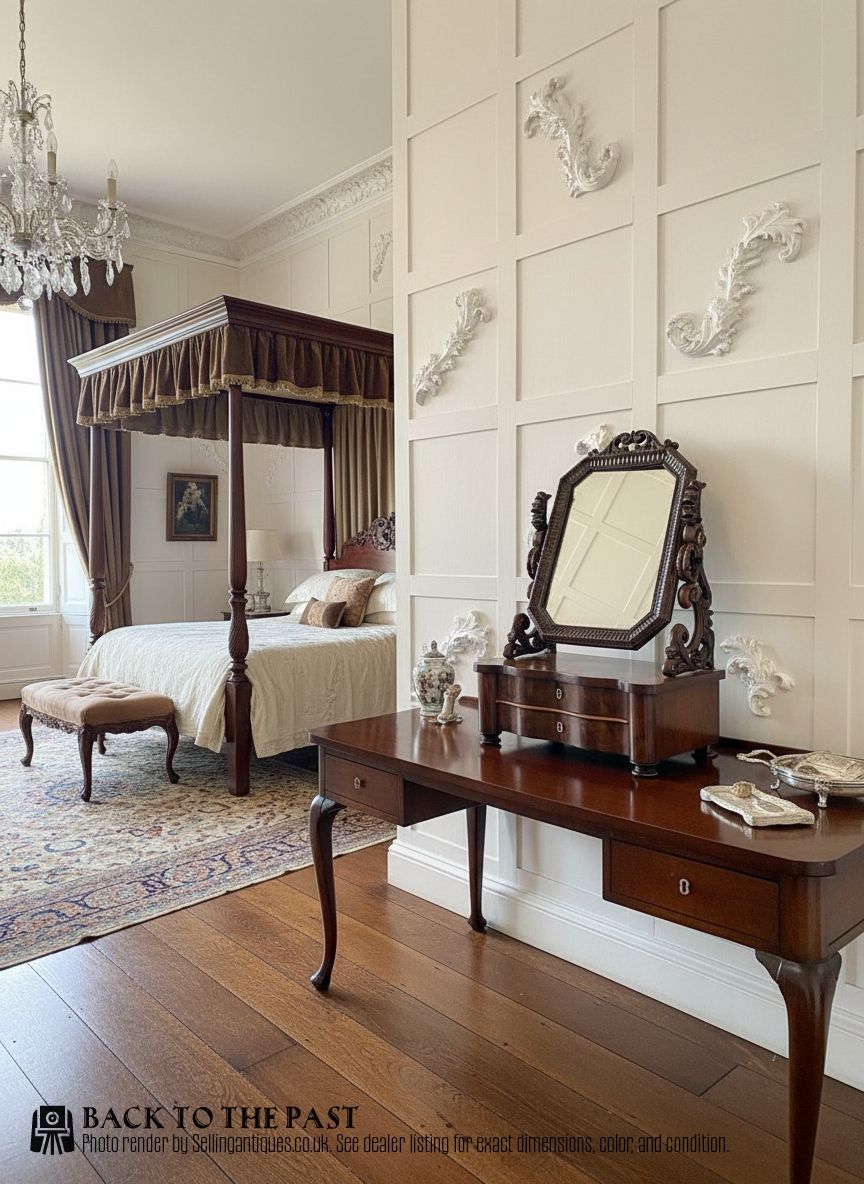
What these swivel dressing glass pieces are
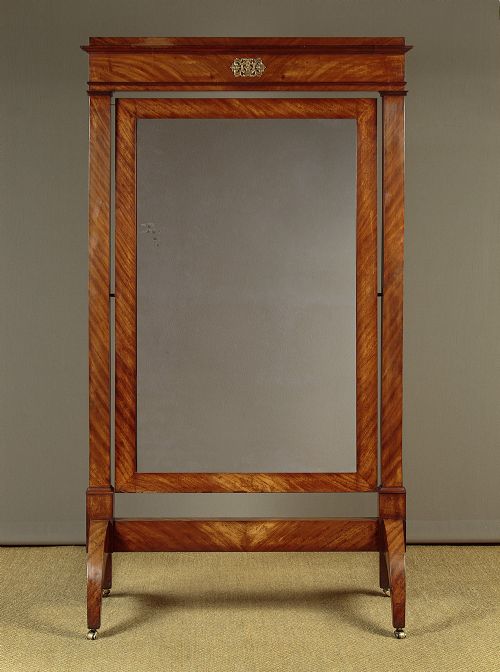
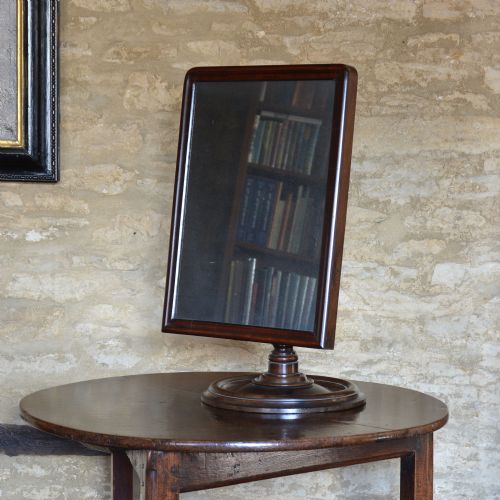
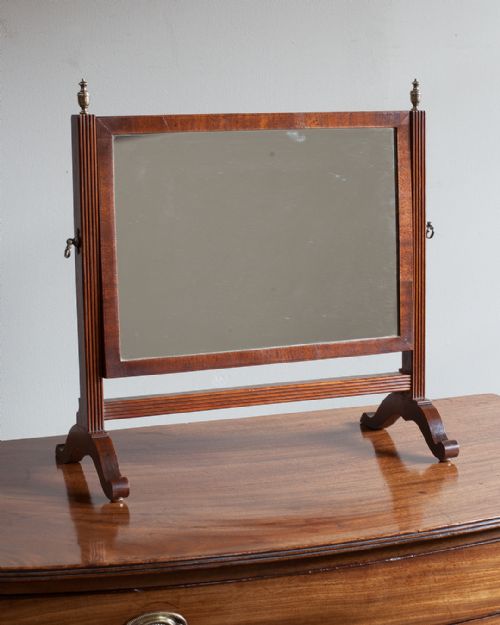
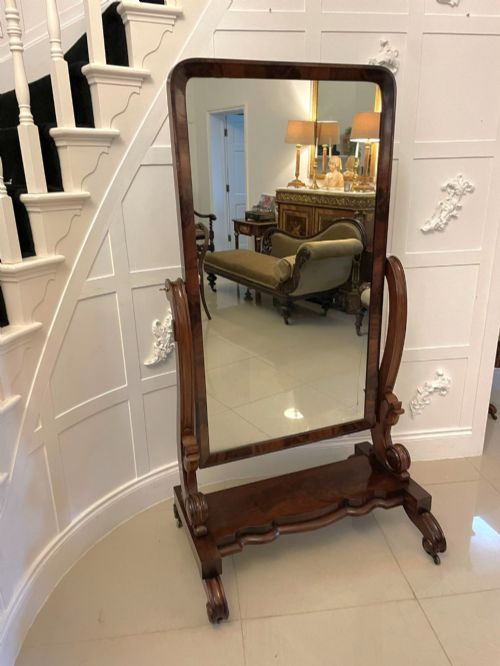
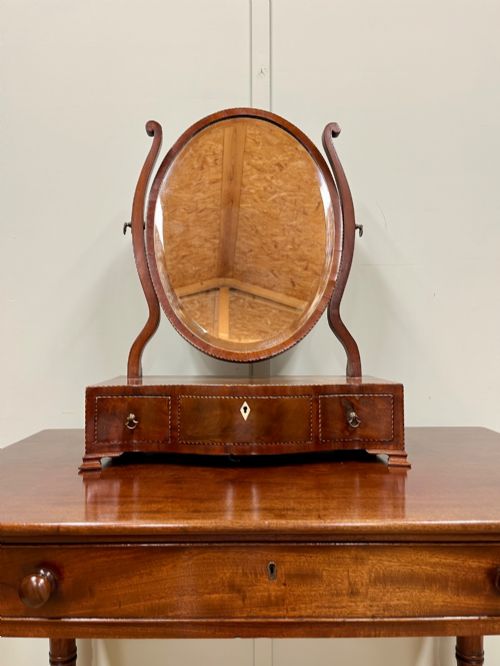
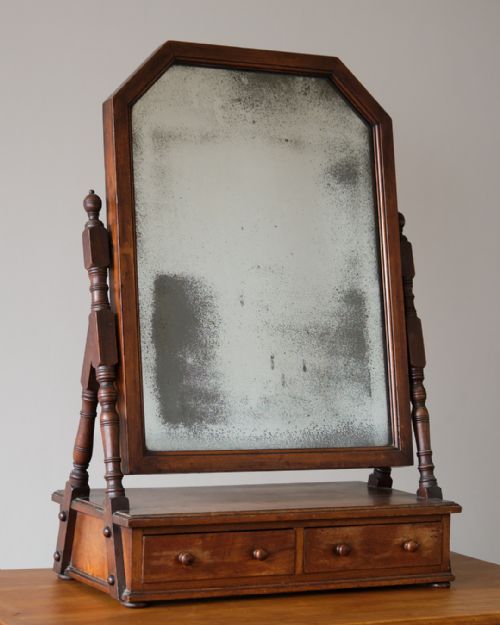
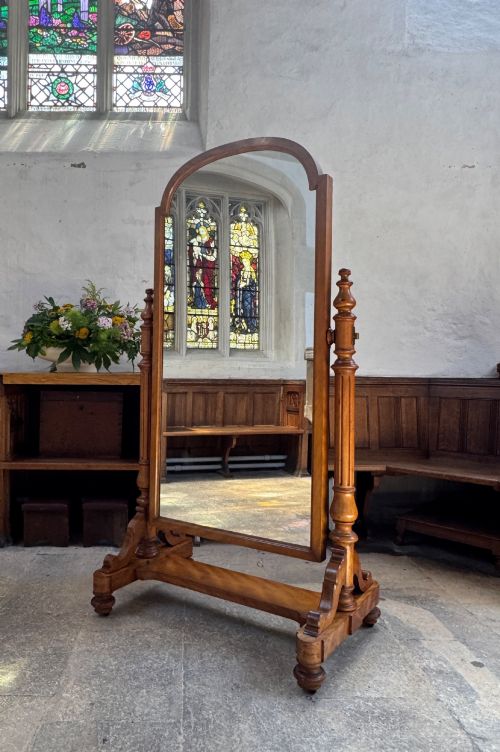
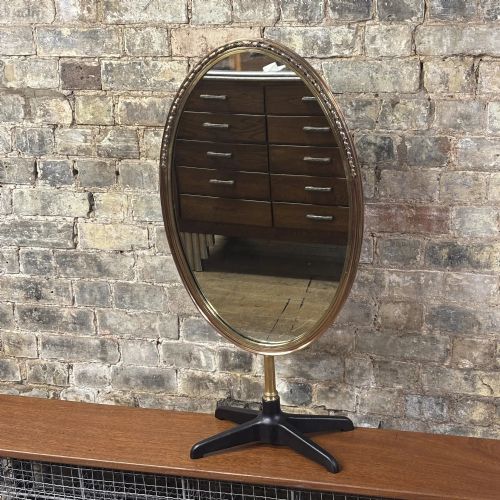
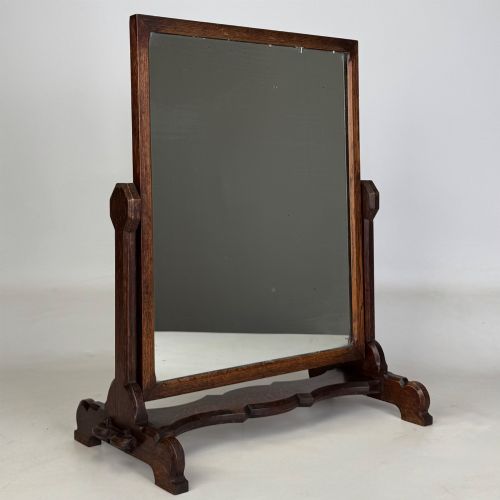
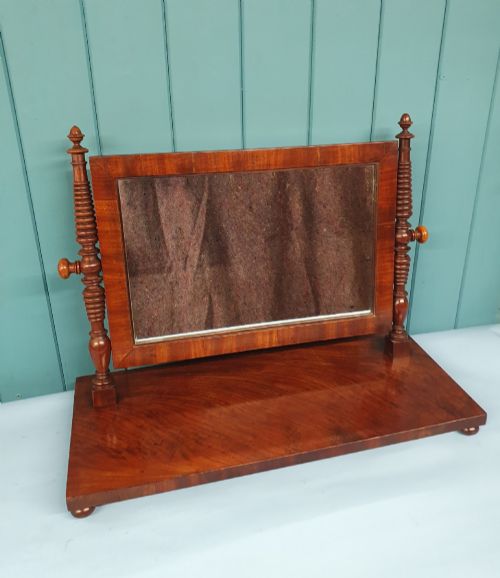
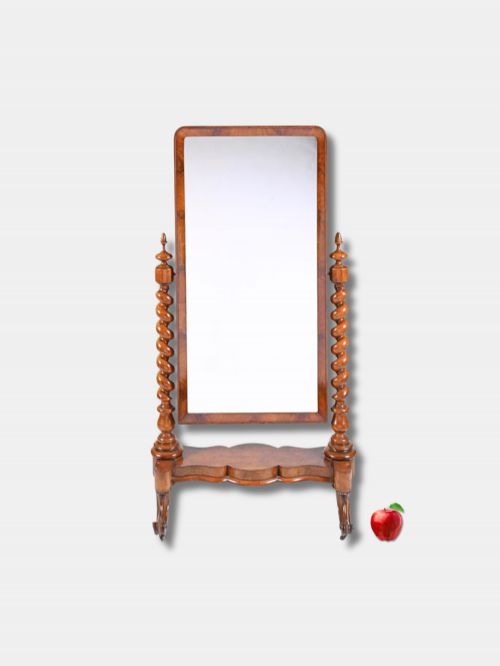
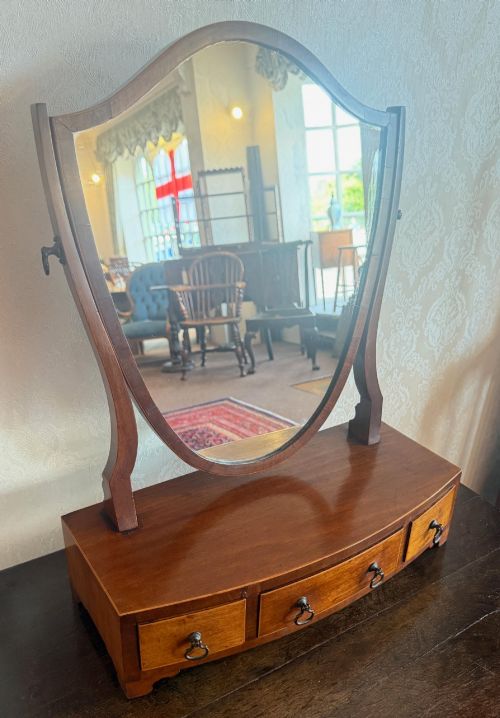
A swivel dressing glass sits atop a table or stands full-length upon the floor, allowing the user to tilt the plate to various angles. When searching for a swivel dressing glass, buyers encounter formats ranging from compact table mirrors to grand floor-standing cheval mirrors.
The evidence shows forms spanning the nineteenth century, including Victorian and Regency styles. Materials such as mahogany, walnut, ebonised wood, and brass feature prominently across these pieces.
Origin points noted in the listings include English, Russian, and Vienna workshops. Formats vary from barley twist supports to country house proportions and retail establishment mirrors.
How they were made
Cabinet makers built the frames using solid timbers and veneers like flame mahogany and walnut, often mounting the pivoting plates on brass pivots or ormolu mounts. Detail work incorporates materials such as mother-of-pearl inlay and ebonised wood.
Support structures range from simple turned uprights to elaborate barley twist columns on sturdy table bases or floor-standing trestles. The mirror glass itself sits securely within adjustable side arms attached to upright pillars.
Retail Price Guide 2026
Typical UK retail prices for swivel dressing glass, calculated from the Sellingantiques database of over a million retail prices indexed since 2003. This retail price guide relies exclusively on Sellingantiques data; no external sources or auction records are used, so the figures do not describe the wider market.
The documented pieces span the nineteenth century, incorporating Victorian, Regency, and Empire design influences.
What varies in quality
The choice of timber grain defines much of the visual merit, with rich flame mahogany veneer and deeply figured walnut commanding attention over plain secondary woods. Cabinet-making joinery, such as finely dovetailed drawer boxes in the table bases, demonstrates the maker's hand.
Hardware quality alters the character of the piece, where heavy cast brass pivots and ormolu mounts elevate an ordinary frame into a refined object. The proportion between the pivoting mirror plate and its supporting uprights governs the visual balance.
The Swivel Dressing Glass Glossary
- Cheval mirror
- A large floor-standing dressing mirror supported by a frame with four legs or feet. This tall format permits a full-length view.
- Barley twist
- A spiral turning resembling a twisted rope, used to shape wooden uprights and support columns. This decorative turning technique appears on nineteenth-century frames.
- Ormolu
- Gilt bronze mounts applied to furniture and frames for decorative effect. This gilded brass technique adds metallic highlight to timber constructions.
- Flame mahogany veneer
- Timber sliced to reveal a distinctive flickering grain pattern resembling flames. Cabinet makers laid this expensive veneer over stable core woods.
Frequently Asked Questions
Where did people place these mirrors?
Smaller versions sat upon dressing tables in bedrooms, while larger cheval formats stood directly on the floor in dressing rooms or outfitters.
Their pivoting design let users adjust the glass angle to suit the height of the person using it.
How do I date a swivel glass?
Dating relies on timber choices, such as flame mahogany or walnut, alongside structural details like barley twist supports.
Stylistic cues from the Victorian and Regency periods also help place the piece within the nineteenth century.
What is the difference between table and floor mirrors?
Table mirrors feature shorter stands designed to rest on top of furniture pieces for upper-body reflection.
Floor-standing cheval mirrors provide a full-length view supported by taller upright pillars and floor feet.
How do the pivoting mechanisms work?
Metal pins or screws insert through the upright supports into the sides of the mirror frame.
This pivoting axis allows the glass plate to tilt back and forth smoothly.