




Mother of Pearl Mirror
A mother of pearl mirror catches the autumn light with an iridescent gleam that brings unmistakable depth to any hallway.
Identifying the mother of pearl mirror
A mother of pearl mirror combines reflective glass with shimmering marine shell inlay, creating a surface that shifts in tone as daylight moves across the room.
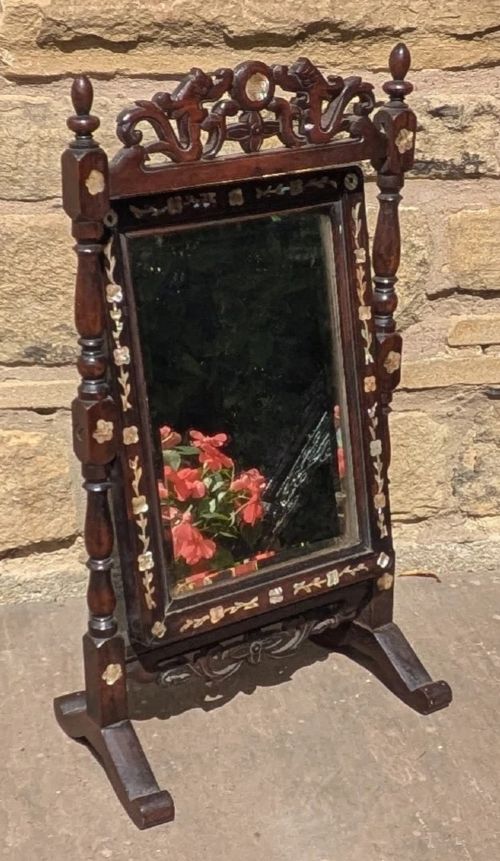
Pieces on this page span the nineteenth century through the early twentieth century, appearing as wall hanging formats, dressing table accessories and freestanding cheval stands.
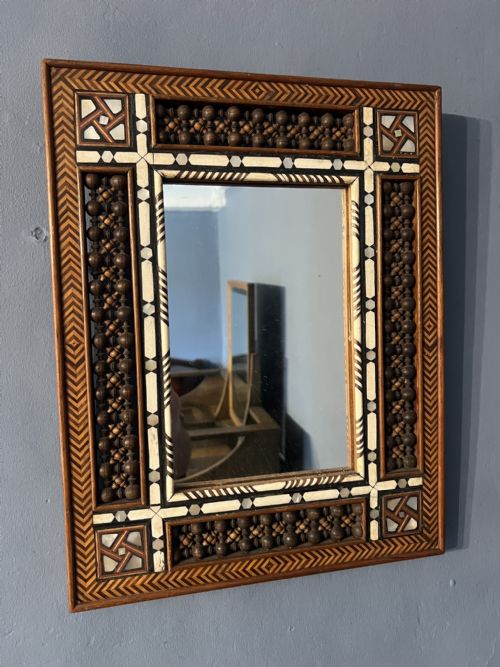
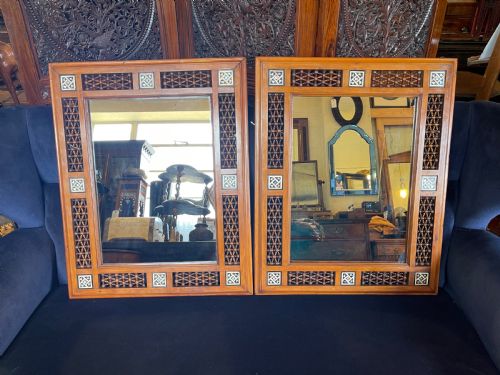
Makers drew on diverse regional traditions including Qing Dynasty woodworking, Syrian Damascus craftsmanship, Anglo-Indian Hoshiarpur production, and Ottoman revival aesthetics.
Materials and construction
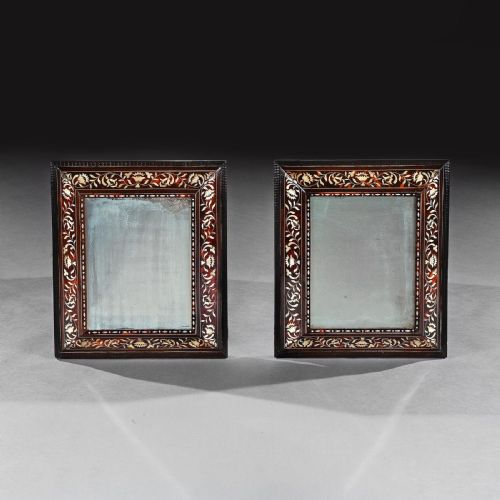
Craftsmen set thin plates of mother-of-pearl alongside bone, ivory, and tortoiseshell into wooden carcases made from walnut, ebonised wood, hardwood, and general timber.
Intricate geometric or figural designs relied on meticulous hand-cutting of shell fragments, secured within recesses carved directly into the supporting wooden frames.
Retail Price Guide 2026
Typical UK retail prices for mother of pearl mirror, calculated from the Sellingantiques database of over a million retail prices indexed since 2003. This retail price guide relies exclusively on Sellingantiques data; no external sources or auction records are used, so the figures do not describe the wider market.
The listings span the nineteenth century up to the nineteen-twenties, incorporating glass, hardwood, walnut, bone, and ebonised wood alongside marine shell.
Assessing craftsmanship and execution
Quality rests upon the density and precision of the shell inlay, where tighter geometric tessellation and intact securing pins distinguish finer work from simpler decorative surfaces.
The choice of structural timber dictates the dignity of the piece, with dense hardwoods and figured walnut providing greater stability than basic secondary woods.
The Mother of Pearl Mirror Glossary
- Cheval mirror
- A freestanding full-length dressing mirror mounted on a pivoting frame between upright pillars. This format allows the glass to tilt at various angles.
- Mashrabiya
- An architectural element of turned wooden lattice-work often integrated into Syrian Damascus furniture and mirror frames. It adds intricate textural depth to the piece.
- Hoshiarpur
- A North Indian style of intricate wood carving and inlay originating from Punjab. Pieces from this tradition typically feature dense vegetal motifs in bone and shell.
- Ebonised wood
- Timber treated with a chemical stain or dark finish to imitate the appearance of heavy ebony. This dark ground makes iridescent shell inlay stand out sharply.
Frequently Asked Questions
How should I clean mother of pearl inlay?
Dust the surface gently with a dry, soft microfiber cloth to prevent dirt from accumulating within the tiny crevices around the shell plaques.
Avoid commercial liquid polishes and harsh solvents, as moisture and chemicals can loosen the old adhesives holding the delicate inlays in place.
Can I place these mirrors in direct sunlight?
Intense direct sunlight can cause organic materials like tortoiseshell, bone, and wood to dry out, warp, or fade significantly over extended periods.
Positioning the glass away from harsh south-facing windows preserves both the wooden carcase and the subtle colours of the marine nacre.
How do I date a nineteenth century mirror?
Dating relies on examining the construction methods of the wooden frame, the clarity and thickness of the mirror glass, and the style of regional decoration.
Earlier examples often display hand-bevelled glass plates and distinctive regional joinery that evolved distinctly across Qing, Ottoman, and Victorian workshops.