




Anglo Indian Wall Mirror
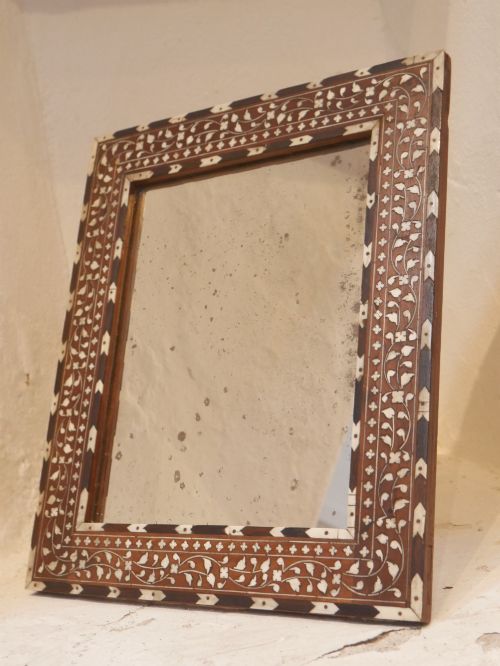
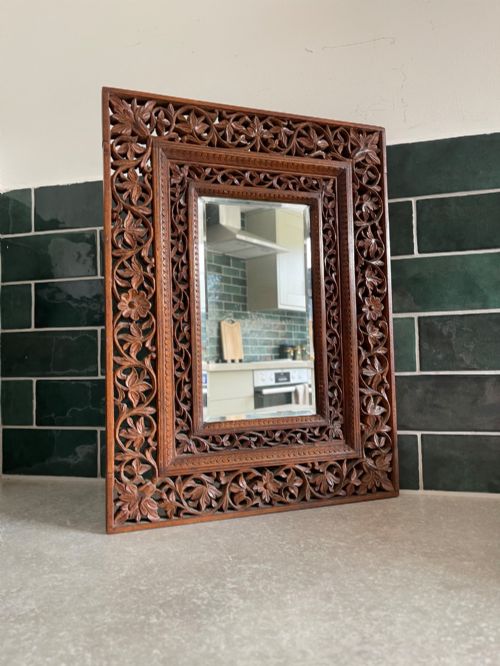
An anglo indian wall mirror brings rich carving and intricate inlay into a room, offering dense floral patterns and striking visual depth.
Anglo Indian Wall Mirror
An anglo indian wall mirror bridges British domestic taste and traditional subcontinent craftsmanship, resulting in dense architectural woodwork designed for European interiors. You will most frequently encounter wall mirrors and pairs of mirrored sconces dating from the late nineteenth century to the early twentieth century.
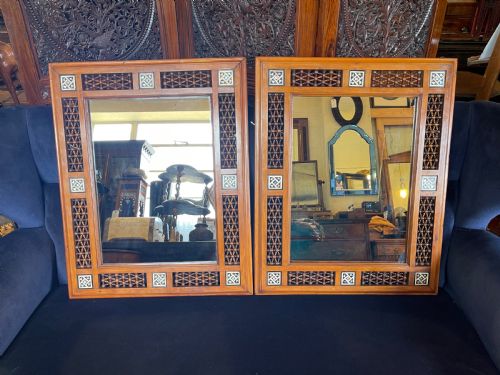
The forms span regional centres such as Hoshiarpur and Kashmir, alongside revival styles like Moorish and Ottoman designs. These pieces range from compact frames to large overmantle mirrors intended to anchor a room.
Surviving examples reflect the colonial exchange of the period, combining British frame proportions with intricate local carving traditions. They serve as functional looking glasses and as decorative panels of intense surface texture.
How they were made
Cabinetmakers worked dense regional timbers including teak, rosewood, shisham, walnut, ebony, and mahogany, carving deep relief foliage and geometric scrollwork across the entire wooden surface. These hardwoods provided the structural stability required for intricate pierced edge work and heavy relief.
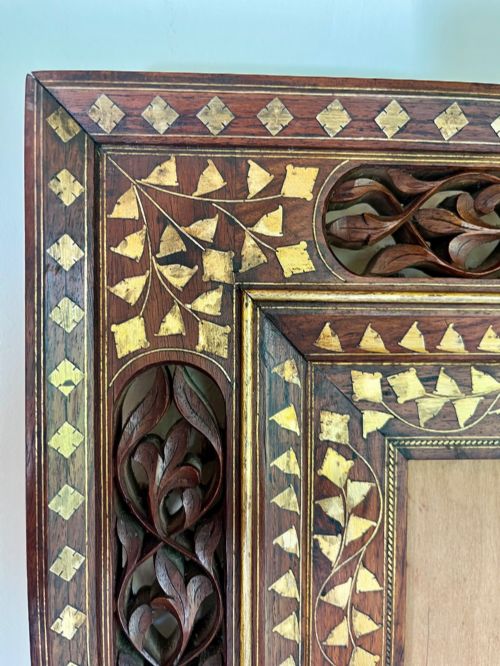
Craftsmen enriched the timber surfaces through detailed inlay work, setting bone, ivory, and sheet brass into precise channels cut into the wood. The reflective glass itself was set within these heavily decorated borders, sometimes accompanied by painted folk art details on select frames.
Current listings feature hardwoods such as teak, rosewood, shisham, walnut, and mahogany, alongside brass, bone, and ivory inlay elements.
What varies in quality
The distinction between standard production and superior craftsmanship lies in the depth and precision of the carving, where crisp undercut foliage surpasses shallow surface scratching. Finer frames maintain symmetry and structural integrity across complex pierced edges without relying on excessive filler or crude repairs.
The material composition also dictates value, with dense ebony or substantial ivory and bone inlay representing more ambitious workshop output than plain hardwood or simpler brass wire work. The completeness of the inlay pattern across the entire frame separates exceptional examples from ordinary decorative pieces.
The Anglo Indian Wall Mirror Glossary
- Hoshiarpur
- A historic centre in Punjab renowned for intricate wood carving and ivory or bone inlay work. Items from this region typically feature dense floral and geometric patterns.
- Shisham
- An Indian rosewood utilised extensively for structural furniture and heavily carved mirror frames. It provides a durable base for deep relief work.
- Bone Inlay
- The technique of inserting shaped pieces of animal bone into carved recesses within the wooden frame. This creates a high contrast decorative surface.
- Moorish Revival
- An architectural and decorative style popular in the nineteenth century that incorporates Islamic design motifs such as horseshoe arches and intricate lattice patterns.
- Overmantle
- A large mirror designed specifically to hang on the wall directly above a fireplace mantel. These pieces often feature extended horizontal proportions.
Anglo Indian Wall Mirror: Frequently Asked Questions
How do I date an anglo indian wall mirror?
Dating relies on timber choice, construction methods, and stylistic markers recorded in nineteenth and early twentieth century examples. Pieces from the eighteen eighties and nineties often display heavier carved hardwood and traditional bone inlay.
Later pieces from the twentieth century can show simpler brass wire inlay or alternative regional woods. Examining the backboards and fixings provides further clues to the manufacturing era.
Where should I hang a carved wooden mirror?
These mirrors suit rooms that benefit from rich texture, such as hallways, living spaces, or above fireplace mantels as overmantle pieces. Their dark hardwoods and reflective glass help bounce light into darker corners.
Ensure the wall fixings can support the substantial weight of dense timbers like teak and rosewood. Pairing them with symmetrical sconces creates a balanced display.
Are bone inlay mirrors fragile?
The structural timbers are robust, but the individual bone or ivory inlay elements require careful handling in dry environments to prevent movement. Regular dusting with a soft brush keeps the carved crevices clean without moisture damage.
Avoid placing these frames in direct sunlight or near sudden heat sources that could affect the wood and inlay adhesives. Gentle care preserves the crispness of the intricate surface.
What is the difference between Hoshiarpur and Kashmiri mirrors?
Hoshiarpur pieces are defined by dense all over carved woodwork combined with bone or ivory inlay. Kashmiri production frequently incorporates brass inlaid pierced edges and painted decorative schemes.
Both styles reflect distinct regional craft traditions adapted for British colonial homes during the Victorian period. Recognising these material details helps identify the origin of each frame.