




Antique Indian Wall Mirror
An antique indian wall mirror brings intricate craftsmanship and rich timber tones into a room, offering both depth and decorative presence.
Antique Indian Wall Mirror
When you search for an antique indian wall mirror, you encounter hand-carved frames fashioned from dense hardwoods like shisham, teak, walnut, and mahogany. These pieces bridge British colonial tastes with traditional subcontinent craftsmanship, often produced during the nineteenth and early twentieth centuries.
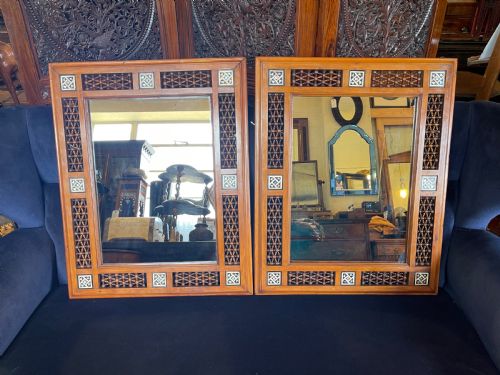
The forms you are most likely to meet on this page range from compact wall sconces and geometric fretwork frames to large overmantle mirrors. Many examples display the distinct regional characteristics of Hoshiarpur or Kashmir, reflecting Victorian and Edwardian periods.
Moorish and Ottoman revival styles frequently appear alongside Anglo-Indian designs, showing pierced edges and architectural silhouettes. Each wall mirror carries the marks of regional workshop traditions, making them distinct focal points for hallways and living spaces.
How they were made
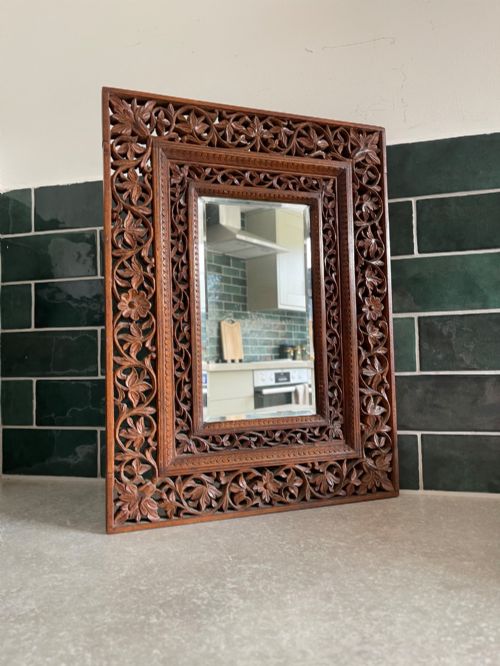
Artisans carved structural frames from seasoned hardwoods, utilising dense timbers such as shisham, rosewood, teak, and walnut. These woods provided a stable foundation capable of holding deep relief carvings and intricate geometric patterns without warping.
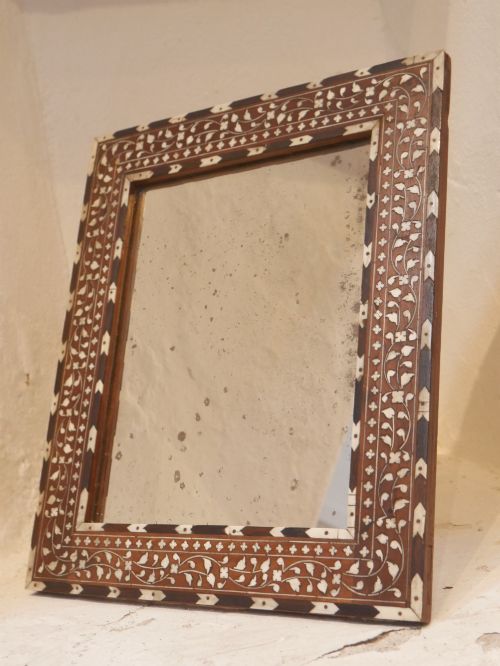
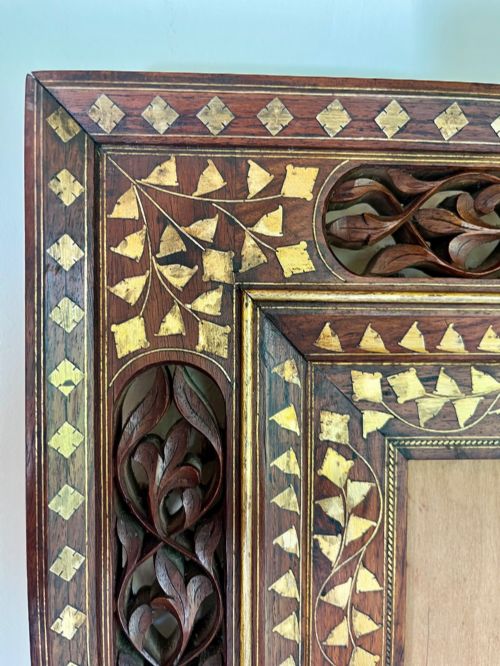
Surface ornamentation relied heavily on intricate inlay work, incorporating contrasting bone, ivory, and polished brass elements into the wooden ground. Pierced fretwork and delicate turning further defined the Kashmiri and Hoshiarpur workshop output.
Listings feature hard timbers including shisham, rosewood, teak, walnut, and mahogany across nineteenth and early twentieth-century periods.
What varies in quality
The depth and precision of the hand-carving separate ordinary frames from exceptional examples. Crisp relief work in the hardwood and tightly fitted inlay pieces demonstrate superior workshop skill.
The integrity of the decorative surface depends on the preservation of the bone, ivory, or brass elements within the timber. Complete inlay work without significant losses maintains the visual harmony intended by the maker.
The Antique Indian Wall Mirror Glossary
- Hoshiarpur
- A region in Punjab known for producing highly decorated wooden furniture and mirror frames inlaid with bone or ivory.
- Shisham
- A durable Indian rosewood frequently utilised for carved frames and decorative objects due to its rich grain and strength.
- Fretwork
- An ornamental design created by piercing wood with a scroll saw or chisel to form intricate openwork patterns.
- Overmantle
- A large mirror designed specifically to be hung on the wall directly above a fireplace mantel.
- Anglo-Indian
- A descriptive term for decorative items produced during the British colonial period combining British forms with Indian craftsmanship.
Antique Indian Wall Mirror: Frequently Asked Questions
How do I hang an antique indian wall mirror safely?
These frames often carry significant weight due to dense hardwoods and glass plates. Ensure you locate wall studs or utilise heavy-duty fixings suited to the specific wall construction.
Check the existing hanging wire or brackets on the back of the frame to confirm stability before mounting the piece securely at eye level.
What woods were commonly used for these mirrors?
Makers utilised native timbers available in their regions, resulting in frames constructed from shisham, teak, walnut, mahogany, and rosewood. These hardwoods provided the necessary density for deep relief carving.
The natural colour and grain of the timber often dictated whether the surface received a polished finish or remained matte to highlight the carved details.
How should I clean the frame and glass?
Dust the carved wooden elements gently with a soft, dry brush to prevent dirt buildup in the recesses. Avoid harsh chemical polishes that can damage aged timber surfaces.
Apply glass cleaner sparingly to a cloth rather than directly onto the mirror plate, ensuring liquid does not seep behind the antique glass edges.
Are these mirrors typically original to the period?
Most examples date from the late nineteenth century through the early twentieth century, aligning with Victorian and Edwardian periods of production. The combination of traditional carving techniques and period hardware helps establish authenticity.
Mirror plates in older frames sometimes show silvering degradation or replacement over time while the carved wooden frame remains entirely period.