



Vintage Kashmiri Lacquerware
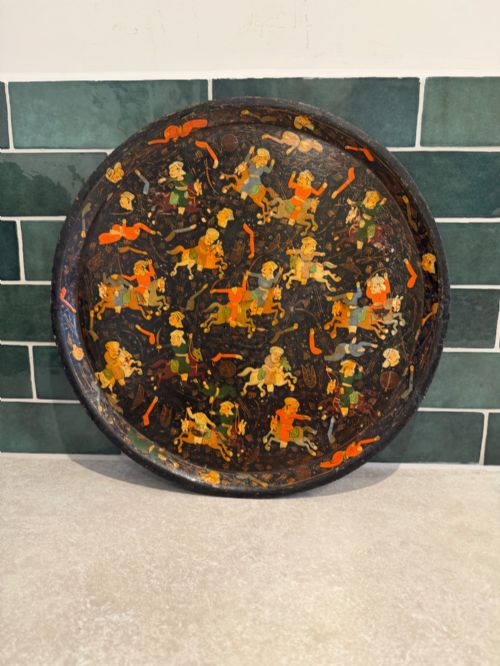
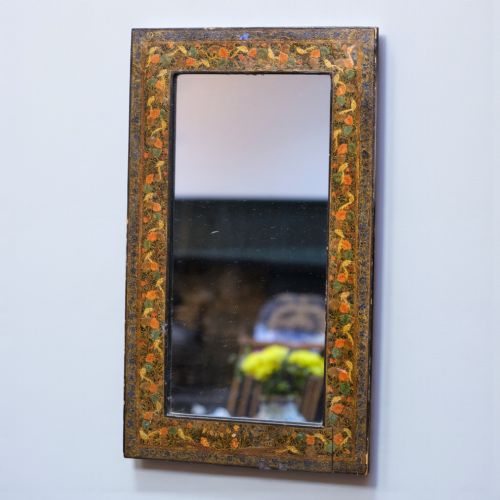
These vintage kashmiri lacquerware pieces bring hand-painted pattern and colour to a room through traditional papier-mache and wood forms.
Vintage Kashmiri Lacquerware
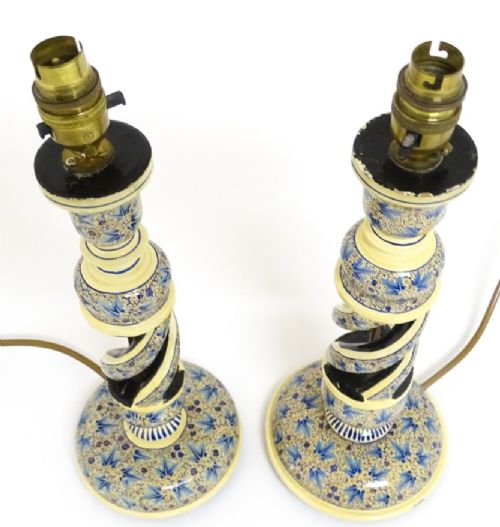
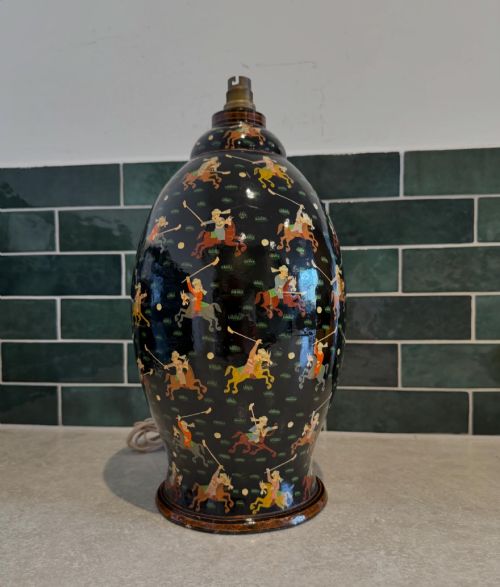
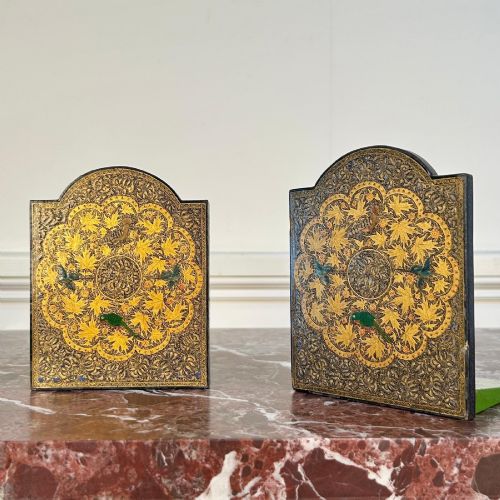
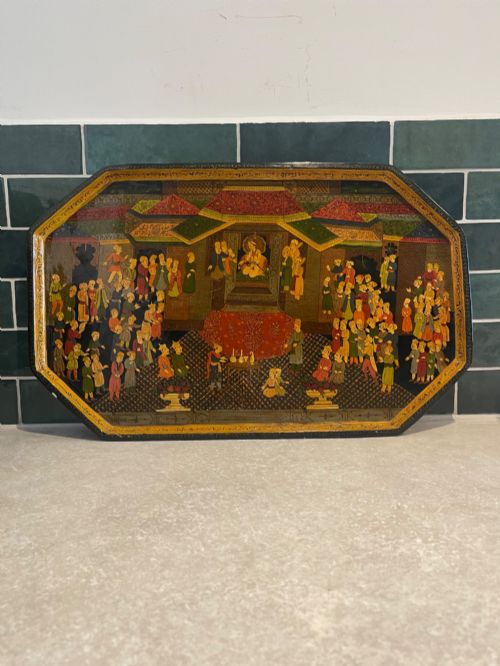
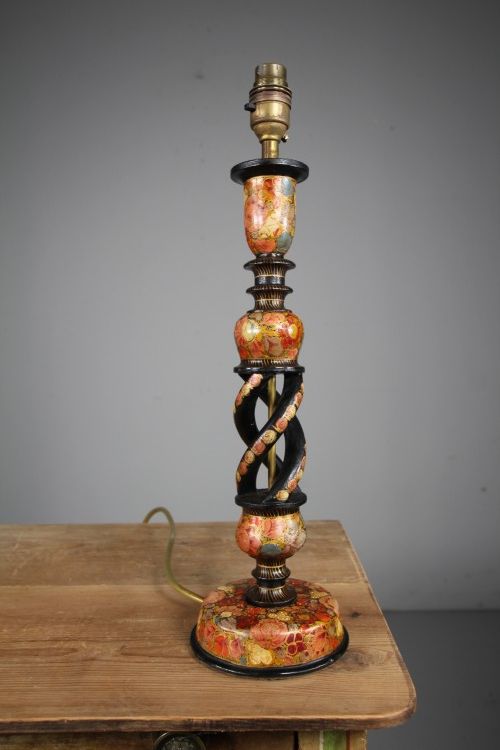
Vintage kashmiri lacquerware comprises decorative items shaped from papier-mache and wood, painted by hand with intricate foliage, birds and traditional motifs. Buyers searching this phrase typically encounter table lamps, lidded pots, decorative bowls, bookends, trays, vases and boxes.
The selection on this page spans from the nineteenth century through the Edwardian era to the nineteen-thirties, reflecting Anglo-Indian and Kashmiri folk art styles. Forms range from small graduated round boxes to tall table lamps and large bowls.
Most pieces show surface painting over a papier-mache or wooden base, sometimes paired with brass components or fabric elements. They serve primarily as decorative vessels and functional items like lamps and bookends for domestic interiors.
Materials and construction methods
Makers formed these objects primarily from papier-mache and wood, applying layers of pigment and paint by hand to build up detailed surface patterns. Some items incorporate brass or fabric alongside the main painted body.
The decorative schemes rely on hand-painted pigments depicting birds and foliage, finished with a protective lacquer coat. Construction methods date from nineteenth-century workshop traditions through to early twentieth-century production.
Vintage Kashmiri Lacquerware Retail Price Guide 2026
Typical asking prices for vintage kashmiri lacquerware among the pieces listed under this phrase on Sellingantiques today, from the lower quarter to the upper quarter. They describe what is for sale here now, not the wider market.
Listings feature items from the 19th century through the Edwardian period to the 1930s, constructed in papier-mache, wood, brass and paint.
Judging the quality of lacquerware
Quality in vintage kashmiri lacquerware rests on the fineness and preservation of the hand-painted brushwork. Pieces with crisp, detailed bird and foliage motifs and well-preserved pigment display superior craftsmanship compared to simpler or heavily rubbed surfaces.
The integrity of the underlying papier-mache or wooden form and the balance of the overall design differentiate standard utility items from finer decorative examples. Original wiring on lamps and intact lids on pots also influence the appeal of a piece.
The Vintage Kashmiri Lacquerware Glossary
- Papier-mache
- A composite material consisting of paper pieces or pulp reinforced with adhesives, moulded into shapes and dried before painting. This forms the lightweight base for many Kashmiri vessels and boxes.
- Lacquer
- A clear or coloured varnish applied in multiple coats over painted surfaces to create a hard, smooth and protective finish. It deepens the colours of the underlying pigment.
- Anglo-Indian
- A style reflecting the aesthetic exchange between British tastes and traditional Indian craftsmanship during the colonial period. It often characterises decorative items produced for export.
- Kashmiri folk art
- Traditional design styles originating from the Kashmir region, typically featuring local flora, fauna and geometric patterns executed in bright pigments.
- Graduated
- A term describing a set of objects, such as boxes, where each piece scales down in size proportionally to fit inside the next.
Vintage Kashmiri Lacquerware: Frequently Asked Questions
What is vintage kashmiri lacquerware?
Vintage kashmiri lacquerware consists of decorative and functional objects made from papier-mache or wood, featuring hand-painted designs finished with a clear coat. These items include bowls, lamps, boxes and trays decorated with traditional motifs.
Production spans from the nineteenth century into the twentieth century, encompassing pieces created in Kashmiri and Anglo-Indian styles for domestic use and export.
How were these papier-mache pieces used?
Many of these pieces served practical domestic functions alongside their decorative role. Table lamps provided lighting, bookends supported volumes on shelves, and lidded pots and boxes held small household items.
Trays and vessels were used for display or serving, while bowls and vases added decorative colour to nineteenth and early twentieth-century interiors.
How do I date Kashmiri lacquerware?
Dating relies on stylistic clues, construction materials and historical context documented in the piece's description. Nineteenth-century examples often display traditional Kashmiri folk art motifs, while Edwardian and 1930s items reflect slightly later adaptations.
Lamp fittings, wiring updates and the wear patterns of the hand-painted pigment also help establish the approximate period of manufacture.
How should I care for lacquerware?
Keep lacquerware away from direct sunlight and excessive moisture to protect the painted pigment and lacquer surface. Dust gently with a dry, soft cloth.
Avoid using liquid cleaners or chemical polishes, as these can damage the delicate hand-painted finish on the papier-mache or wooden base.