


Kashmiri Table Lamp
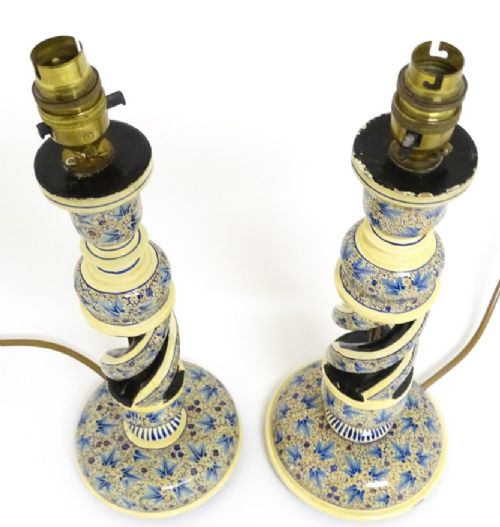
These Kashmiri table lamps bring rich hand-painted colour and intricate folk art patterns to a room, offering a distinctive decorative focal point.
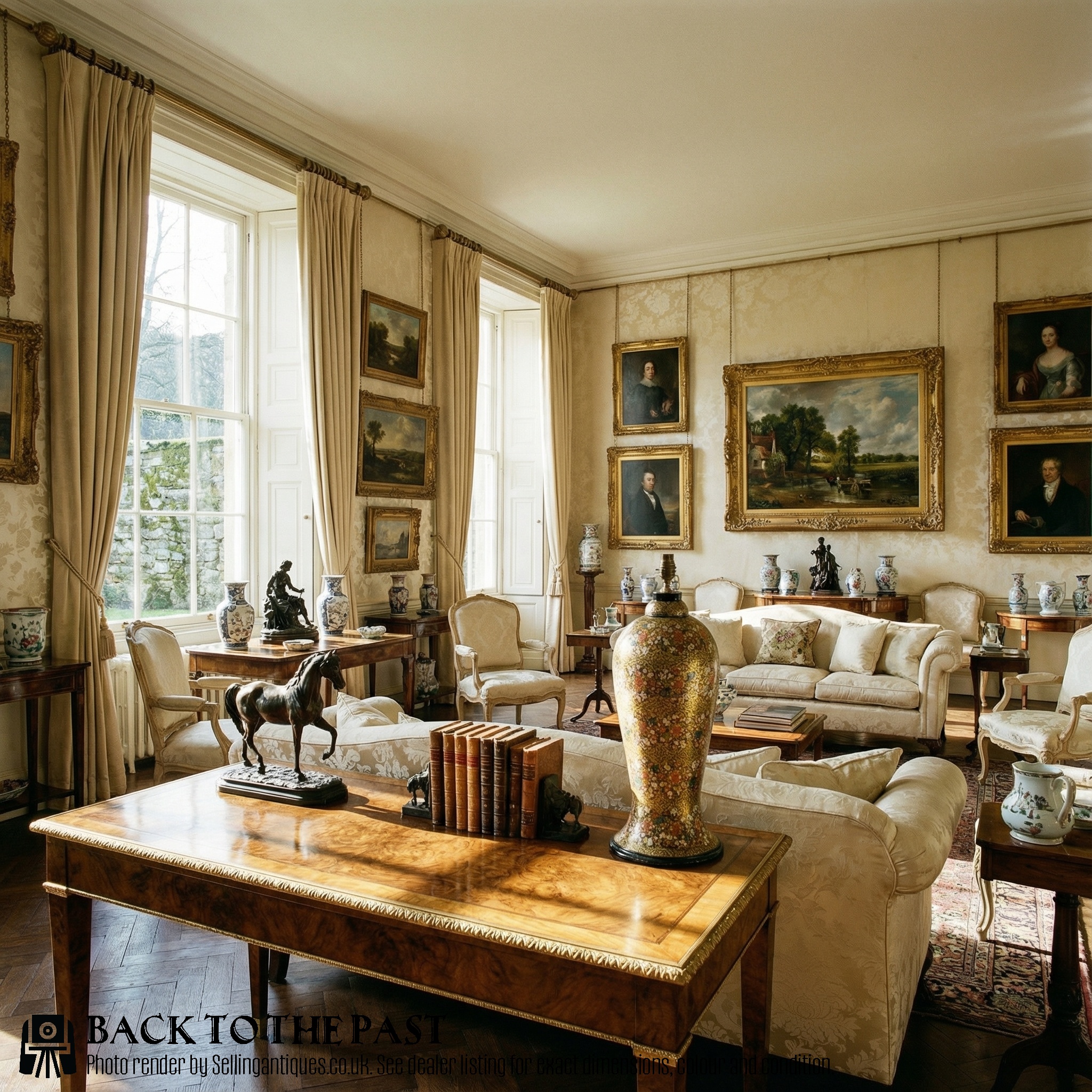
Kashmiri Table Lamp
A kashmiri table lamp brings distinctive eastern craftsmanship into a domestic interior, functioning primarily as both a light source and a vibrant decorative object. When browsing this selection, buyers encounter pieces originating from the nineteenth century up through the nineteen-thirties.
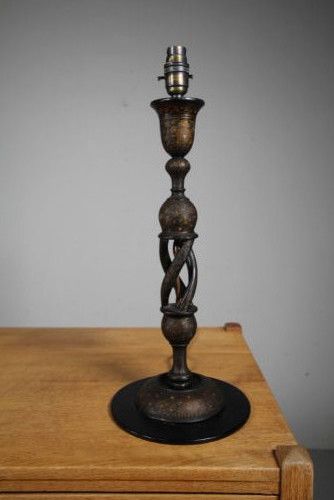
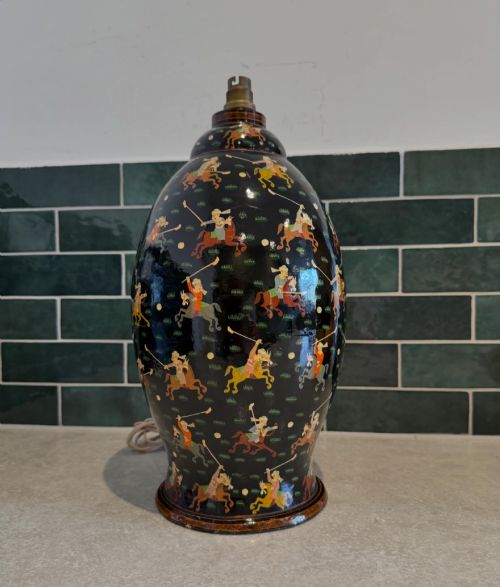
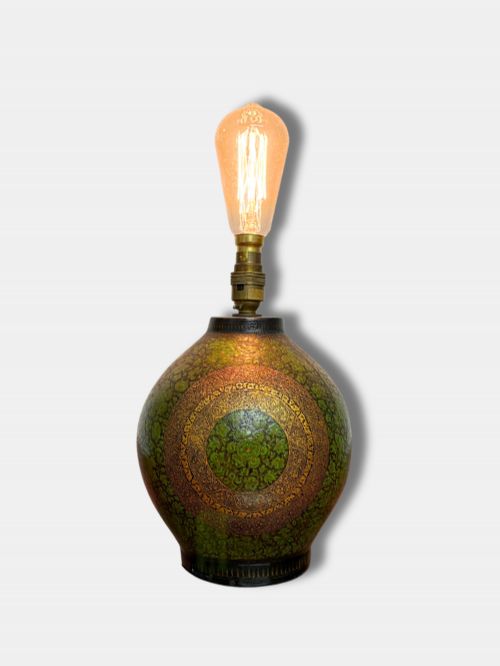
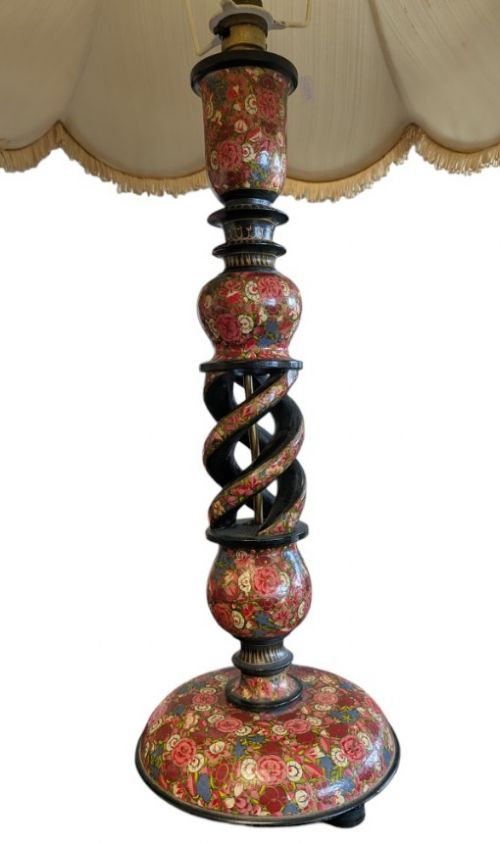
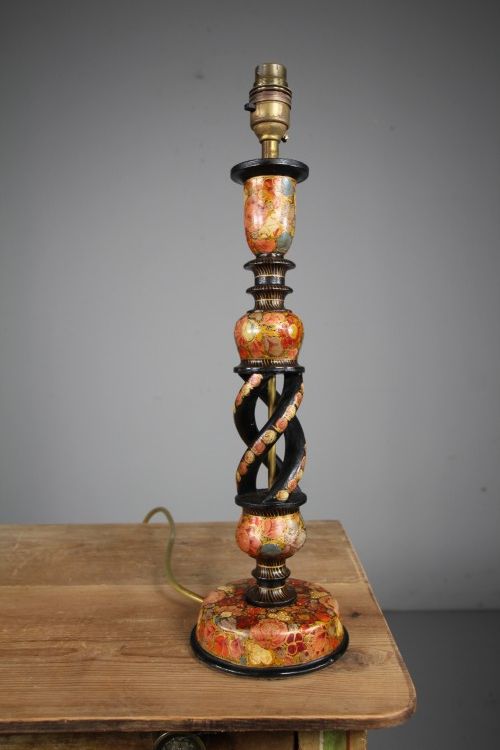
The assortment spans diverse silhouettes, from slender twist columns to substantial turned bodies and delicate papier-mache vessels. Most examples fall into the early twentieth century and Edwardian periods, reflecting the heavy British influence on the region's export crafts during that era.
Anglo-Indian aesthetic sensibilities heavily shape these items, blending traditional local ornamentation with forms suited for Western households. Buyers regularly find single lamps as well as balanced pairs, finished in cream, green, gilt gold, or with pictorial motifs depicting birds and foliage.
Materials and Construction
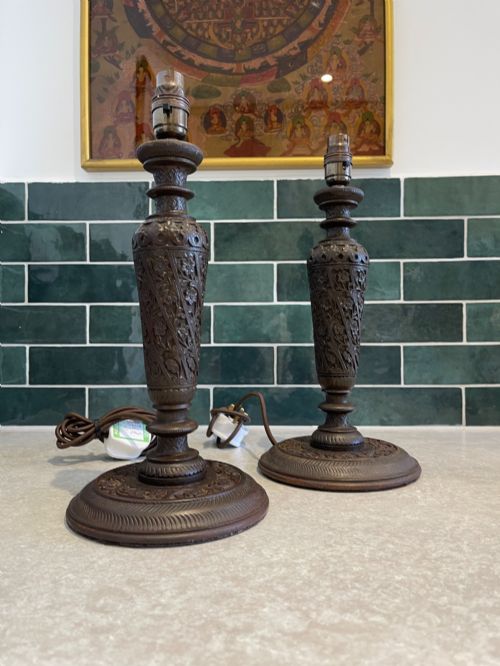
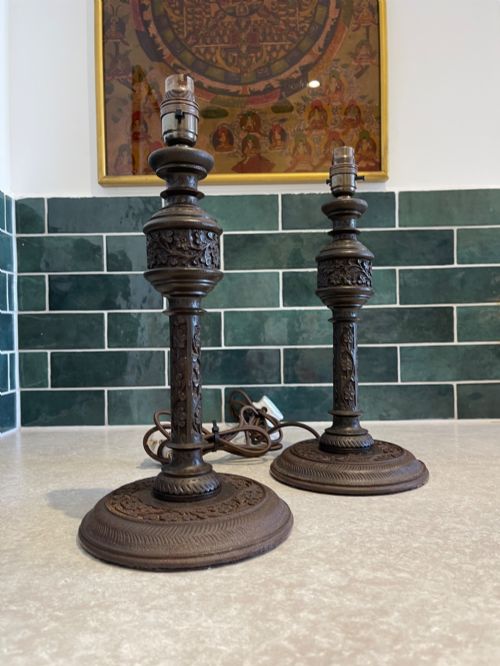
Makers fashioned these lamps from various organic and metallic substrates, predominantly utilising wood, walnut, carved wood, and papier-mache alongside brass fittings. Artisans shaped timber into smooth or open twist columns, whilst papier-mache bodies provided a smooth canvas for detailed surface ornamentation.
Surface decoration relied on meticulous hand-painting and lacquer techniques to seal and protect the pigments. Craftsmen applied gilt gold, fine brushwork depicting kingfishers, irises, and foliage, and protective lacquer coats to achieve a durable, lustrous finish.
Kashmiri Table Lamp Retail Price Guide 2026
Typical asking prices for kashmiri table lamp among the pieces listed under this phrase on Sellingantiques today, from the lower quarter to the upper quarter. They describe what is for sale here now, not the wider market.
The listings on this site feature items spanning the nineteenth century, nineteen-hundred, nineteen-ten, nineteen-twenty, and nineteen-thirty periods.
Assessing Quality and Execution
Quality rests primarily on the crispness and complexity of the hand-painted surface decoration, distinguishing standard utility items from masterwork examples. Pieces featuring finely rendered birds, intricate floral details, or rich gilt gold demonstrate superior artisan skill.
The structural integrity of the turned wood or papier-mache body and the proportion of the silhouette drive value and desirability. Tall formats and open twist designs command attention, showing greater turning expertise and balanced proportions than simpler, stout forms.
The Kashmiri Table Lamp Glossary
- Papier-mache
- A composite material consisting of paper pieces or pulp bound with glue, used to form smooth lamp bodies. Artisans lacquer and paint these surfaces to create intricate decorative patterns.
- Open twist
- A carved wooden column design where the timber spirals around a central void. This technique requires precise woodworking skill to maintain structural stability.
- Anglo-Indian
- A descriptive term for decorative arts created in India during the British period, combining local craftsmanship with European forms. These objects often bridge Eastern motifs and Western domestic utility.
- Lacquer
- A clear or coloured varnish applied to wood and papier-mache surfaces to create a hard, durable shine. This finish protects the delicate hand-painted pigments underneath.
- Gilt gold
- A thin layer of gold applied to surfaces to provide metallic highlights. This technique enhances the decorative depth of floral and foliate motifs.
Kashmiri Table Lamp: Frequently Asked Questions
What periods do these lamps come from?
The pieces span from the nineteenth century through the nineteen-thirties, covering the Edwardian era and the early twentieth century.
Most surviving examples date from the nineteen-teens and twenties, reflecting peak periods of export production.
Are these lamps rewired for modern use?
Many listings feature lamps that have been updated with modern electrical wiring to meet current safety standards.
Buyers should check individual descriptions to confirm whether original fittings remain or if modern components are installed.
What materials were used to make them?
Artisans utilised carved wood, walnut, brass, and papier-mache as the primary structural materials for these decorative objects.
Surfaces were then finished with lacquer, paint, and sometimes gilt gold to create the detailed patterns.
Do these lamps come in pairs?
The selection includes both individual lamps and matched pairs suitable for placement on bedside tables or sideboards.
Pairs often command higher interest for symmetry in interior styling.