


Papier Mache Lamp
These papier mache lamp pieces offer brilliant hand-painted surfaces and rich historical character for any interior.
Papier Mache Lamp
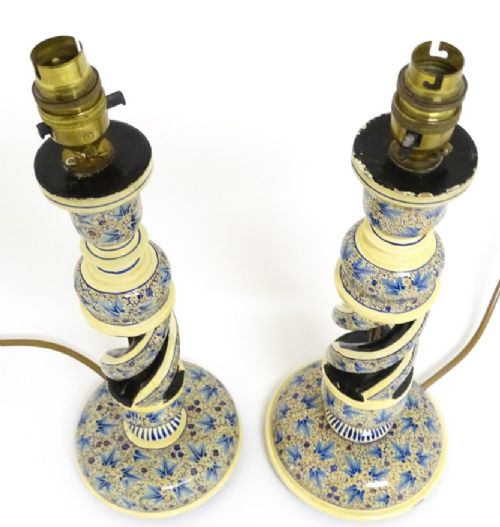
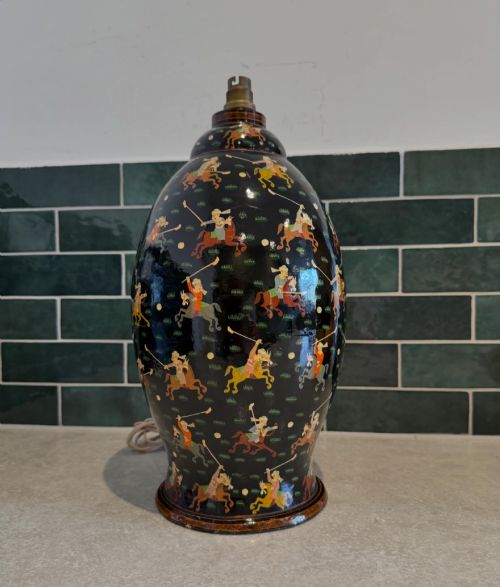
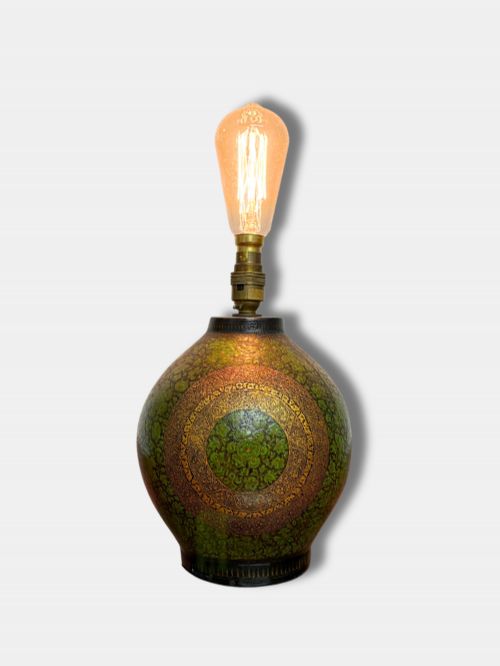
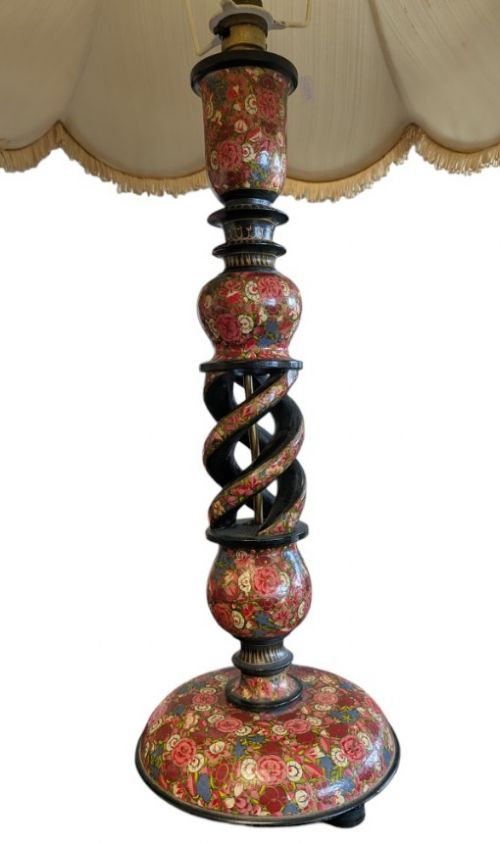
A papier mache lamp brings hand-painted colour and intricate surface decoration directly from Kashmiri workshops into the modern room. Most examples found here originate from the early twentieth century or the late nineteenth century, reflecting enduring traditions of craftsmanship.
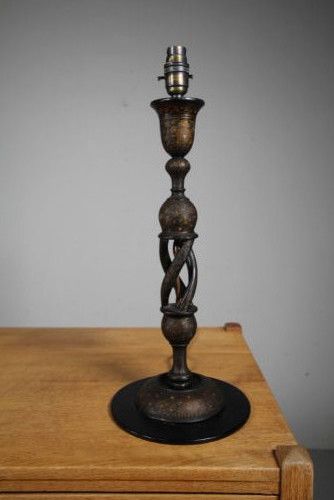
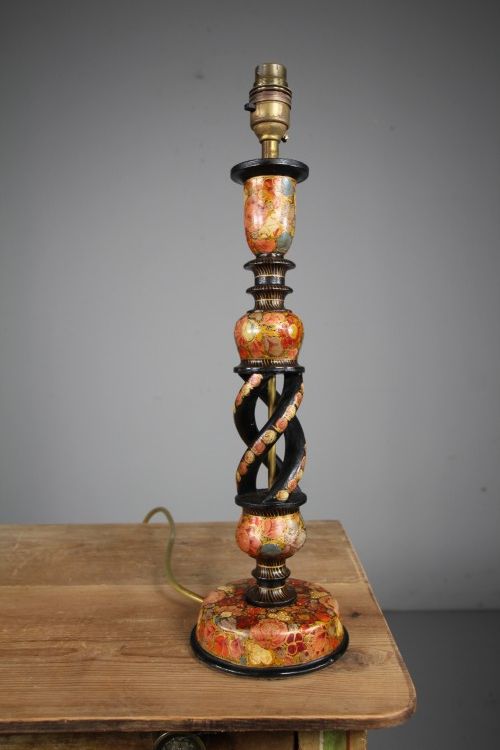
Buyers will encounter various forms including tall twist standards and pairs designed for balanced placement on side tables. The overarching aesthetic draws heavily on Kashmiri folk art traditions, offering rich patterns across turned wooden structures.
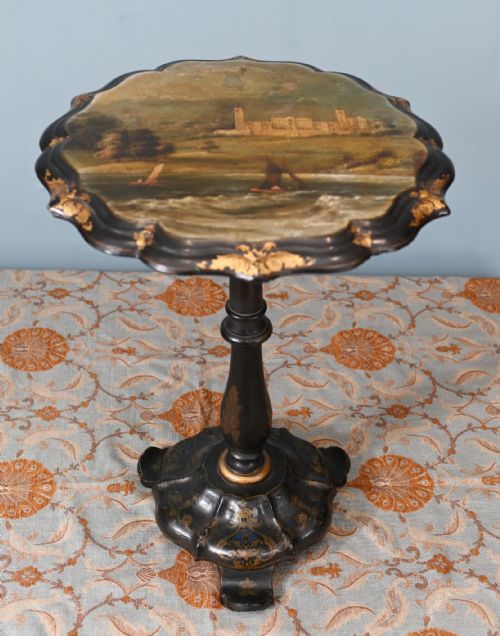
Alongside dedicated lighting, the selection occasionally includes related Victorian side tables and folding tables adapted for lamp use. These pieces share similar decorative finishes, uniting functional lighting with ornamental furniture.
How they were made
The construction typically combines papier-mache and wood to form durable lamp bodies and stands. Artisans shape and turn the wooden elements, incorporating twist designs and structural supports before applying preparatory layers.
Surfaces receive detailed hand painting, utilising lacquer, gilt gold, and vibrant pigments to create traditional Kashmiri motifs. Some pieces incorporate painted cream or green backgrounds, whilst others feature intricate floral and geometric patterns.
What varies in quality
Quality rests primarily on the crispness and complexity of the hand-painted decoration across the papier-mache surface. Finer examples display meticulous detail in the gilt gold and lacquer work, showing steady brushwork and deep colour saturation.
The underlying woodwork dictates the structural integrity, with well-turned twist columns and solid bases separating superior items from simpler standard forms. Original painted schemes that survive with minimal restoration command greater appreciation from collectors.
The Papier Mache Lamp Glossary
- Papier-mache
- A composite material consisting of paper pieces or pulp, sometimes reinforced with textile, bound with glue or paste and moulded into shape. Once dried, it provides a smooth, rigid canvas for intricate lacquer and paint.
- Kashmiri
- Pertaining to the region of Kashmir, renowned for distinctive folk art traditions involving hand-painted papier-mache and woodwork. These objects often display dense floral or foliate patterns in bright pigments and gilt.
- Ebonised
- Wood finished to resemble ebony through a staining and polishing process. This dark treatment provides a dramatic contrast against painted papier-mache or inlaid elements.
- Lacquer
- A clear or coloured varnish applied in thin coats to produce a hard, durable, and lustrous finish. It protects the delicate hand-painted decoration beneath whilst adding depth to the surface.
Papier Mache Lamp: Frequently Asked Questions
What periods do these lamps come from?
The available selection spans the late nineteenth century through to the early twentieth century, particularly highlighting pieces from the 1880s, 1920s, and 1930s.
These dates reflect traditional craft output periods recorded across the current and archival listings.
Are these lamps rewired for modern use?
Many examples are offered as rewired items to ensure compatibility with contemporary electrical standards.
Buyers should inspect individual listings to confirm the current wiring status of each specific lamp holder.
How do I style a papier mache lamp?
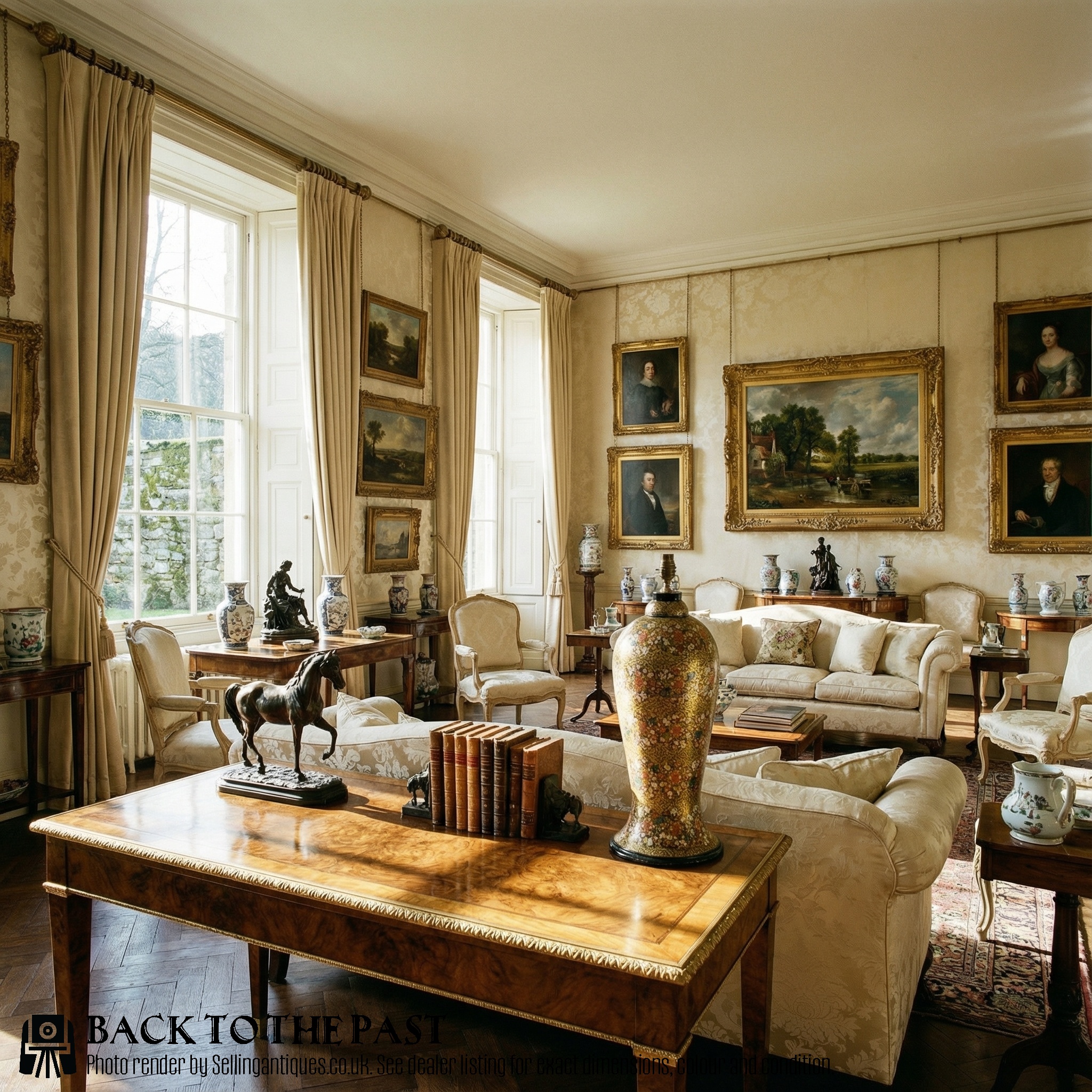
These colourful pieces work well as focal points on side tables, console tables, or sideboards. Their vibrant hand-painted patterns introduce warmth and textural contrast to traditional or eclectic interiors.
What materials are used besides paper?
Makers frequently integrated wood, brass, lacquer, and fabric alongside the primary papier-mache bodies. Turned wooden components provide structural stability, whilst brass and fabric often form supportive hardware and shades.