
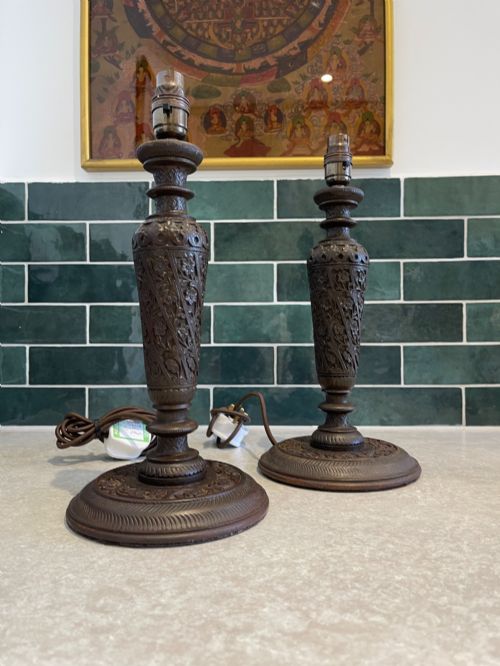
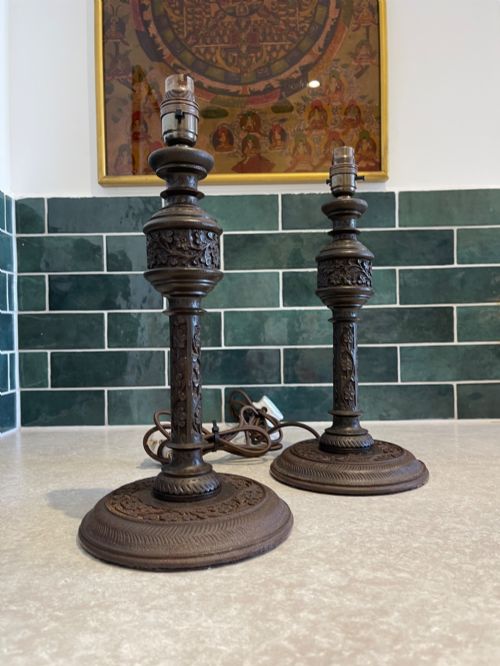


Anglo Indian Table Lamp
An anglo indian table lamp brings rich colonial craftsmanship and intricate woodwork directly into a room.
Anglo Indian Table Lamp
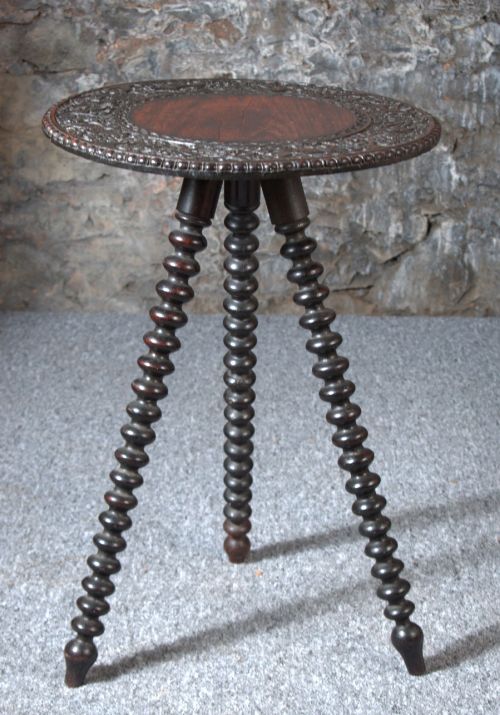
An anglo indian table lamp comprises lighting pieces and adapted occasional furniture originating from the nineteenth and early twentieth centuries. These items reflect colonial design exchanges, blending traditional Eastern forms with British interior tastes.
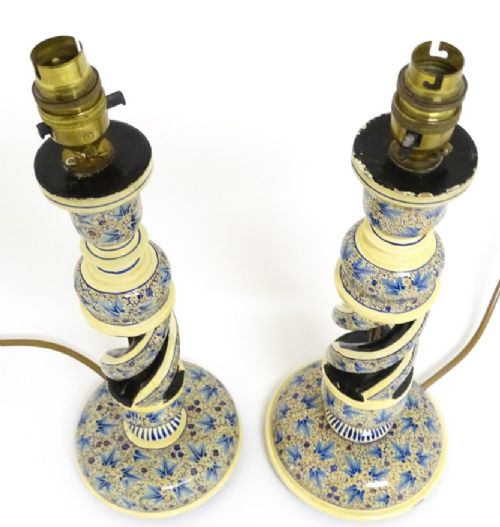
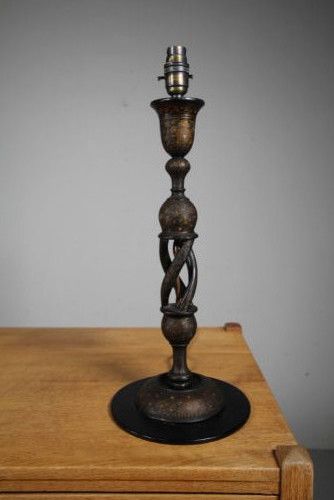
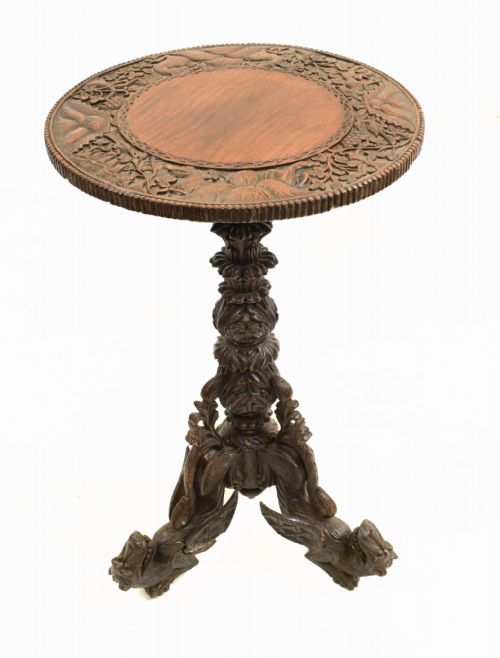
The selections on this page span several decades from the Victorian era onward, incorporating regional specialisms such as Kashmiri hand-painted surfaces and North Indian carved woodwork. Buyers frequently encounter turned wooden lamp bases alongside occasional tables utilised as lamp stands.
Makers drew upon diverse stylistic influences including Moorish Revival and Aesthetic Movement motifs. Many surviving pieces demonstrate how local workshops adapted indigenous crafts to suit British domestic lighting and display needs.
How They Were Made
Artisans constructed these pieces using dense timbers such as teak, padauk, rosewood, and general hardwoods suited to intricate carving. Workshops employed hand tools to produce deep relief ornamentation, pierced lattice details, and structural joints.
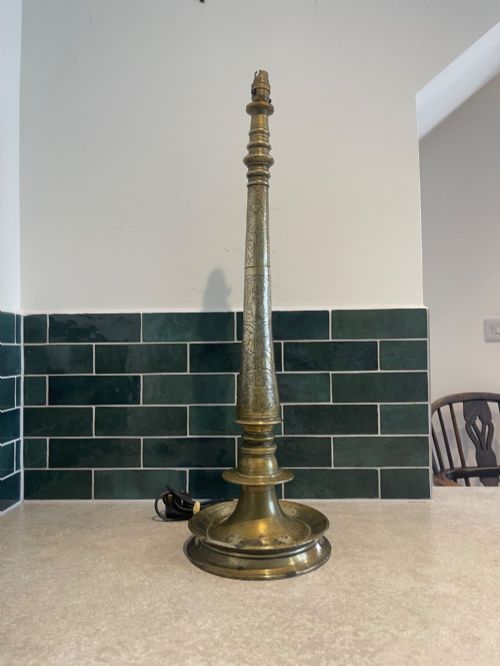
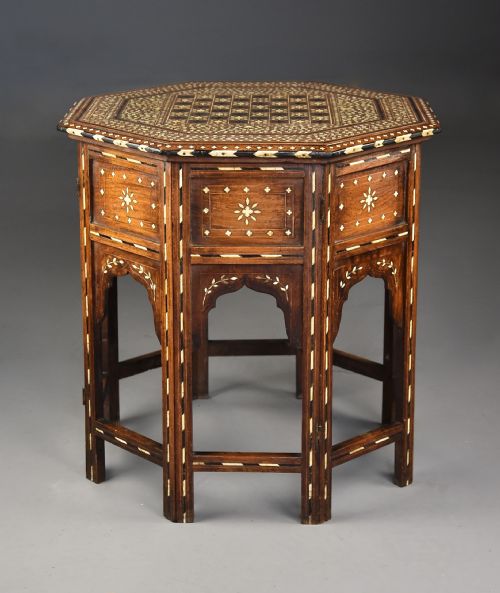
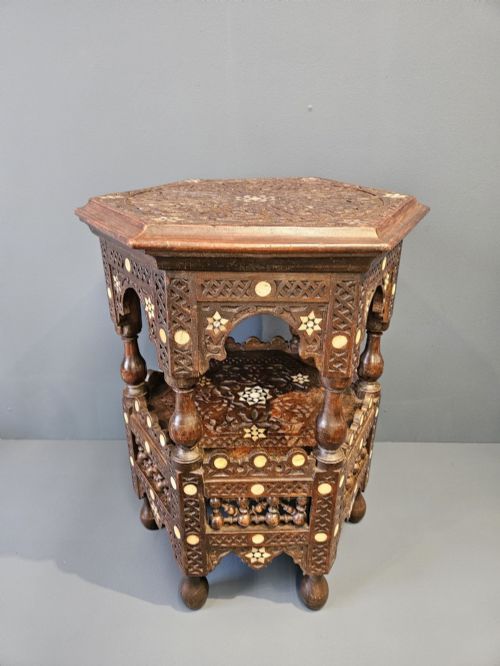
Surface decoration frequently involved polychrome lacquer, hand-painted floral motifs, or contrasting inlays of bone, ivory, and ebony. Brass components also appear in cast bases, telescopic mechanisms, and plated fittings.
Meticulous joinery ensured stability in folding or occasional formats, while turned elements provided sturdy columns for electrical conversion.
Anglo Indian Table Lamp Retail Price Guide 2026
Typical asking prices for anglo indian table lamp among the pieces listed under this phrase on Sellingantiques today, from the lower quarter to the upper quarter. They describe what is for sale here now, not the wider market.
Several items double as ingenious folding stands, ready to pack flat for a colonial sea voyage.
What Varies in Quality
The depth and crispness of the hand-carved detail dictate the standard of execution across wooden surfaces. Superior examples exhibit sharp, undercut foliage and geometric patterns without loss of definition.
The integrity of the timber and the precision of inlaid elements distinguish finer production. Finishes ranging from aged lacquer to polished padauk reveal the original care given to material selection.
Proportion and balance determine the architectural success of a piece, particularly where turned columns or folding supports must sustain a lamp securely.
Liberty
The Anglo Indian Table Lamp Glossary
- Anglo-Indian
- Pertaining to decorative arts produced in India during the British colonial period. This style synthesises traditional Indian craft techniques with European furniture forms.
- Padauk
- A heavy, durable tropical hardwood possessing a rich reddish-brown tone. Artisans utilised this material for high-status carved tables and structural lamp bases.
- Kashmiri
- Referring to items originating from the Kashmir region, noted for painted papier-mache and finely decorated wooden surfaces. These objects often display detailed floral and foliage designs.
- Inlay
- A technique where contrasting materials such as bone, ivory, or lighter woods are set into recesses flush with the surface. Hoshiarpur was a renowned centre for this intricate work.
- Occasional Table
- A small, movable table designed for specific subsidiary uses within a room. Many period examples serve double duty as sturdy stands for table lamps.
Anglo Indian Table Lamp: Frequently Asked Questions
How do I date an anglo indian table lamp?
Dating relies on examining the timber species, wiring history, and stylistic markers such as Victorian revival motifs or early twentieth-century turning patterns.
Construction methods and regional decorative techniques provide further context to narrow the decade of production.
Were these lamps originally electric?
Most nineteenth-century examples began as oil lamps, candle stands, or occasional tables before later conversion to electricity.
Twentieth-century pieces frequently incorporated wiring ports or tubular channels from initial manufacture.
How do I care for carved wooden bases?
Maintenance requires dry dusting with a soft brush to keep intricate recesses free from accumulated particles.
Avoid excessive moisture and direct sunlight to preserve the original polish and painted lacquer surfaces.
What woods were commonly used?
Workshops utilised dense tropical timbers including teak, padauk, rosewood, and general hardwoods.
These materials provided the necessary stability for deep relief carving and complex turned columns.