
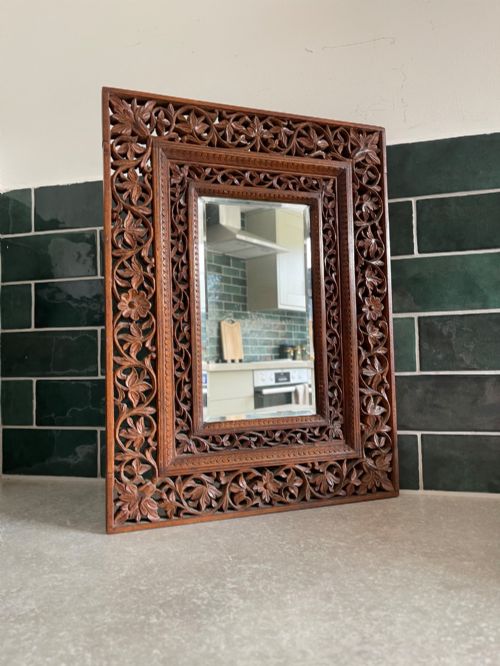
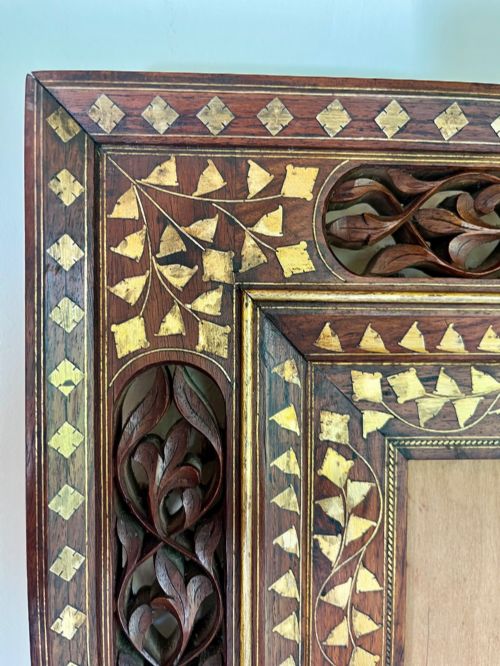


Anglo Indian Mirror Frame
An anglo indian mirror frame brings tactile warmth and intricate surface pattern to a room, which is why collectors seek them out.
Anglo Indian Mirror Frame
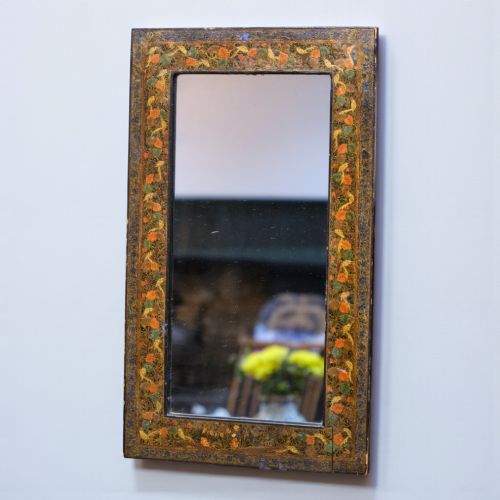
An anglo indian mirror frame is a wall-hanging piece designed to catch the light and anchor a room with dense surface carving. The pieces appearing here predominantly span the nineteenth century and the early decades of the twentieth century, running from eighteen eighty through to nineteen twenty.
The forms on this page take the shape of wall mirrors and mirror frames, often showing regional stylistic traits from Kashmir, Hoshiarpur, or broader North Indian traditions alongside Ottoman revival influences. Buyers will frequently encounter wall mirrors shaped by regional workshops, offering either paired symmetry or single focal presence.
Makers produced these works using specific regional timber and decorative schemes, resulting in items that range from simple carved hardwood surrounds to complex inlaid surfaces. These pieces bridge British domestic utility with traditional Indian hand-working techniques.
Materials and construction
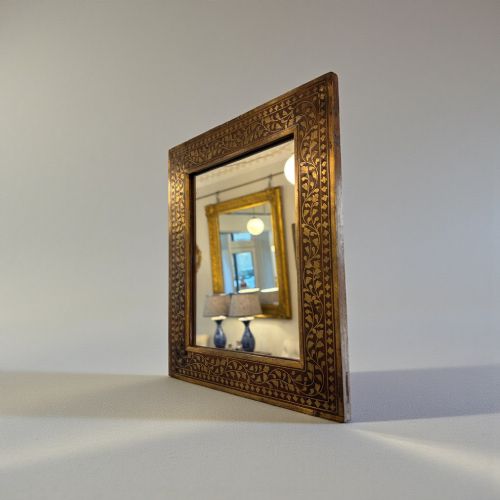
The construction of these pieces relies heavily on dense timbers such as teak, rosewood, shisham, and walnut, providing a sturdy foundation for deep relief work. Artisans worked these hardwoods with hand tools to achieve pierced edges and heavily textured borders.
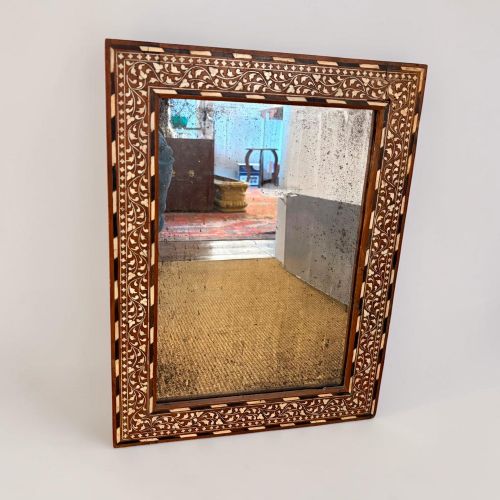
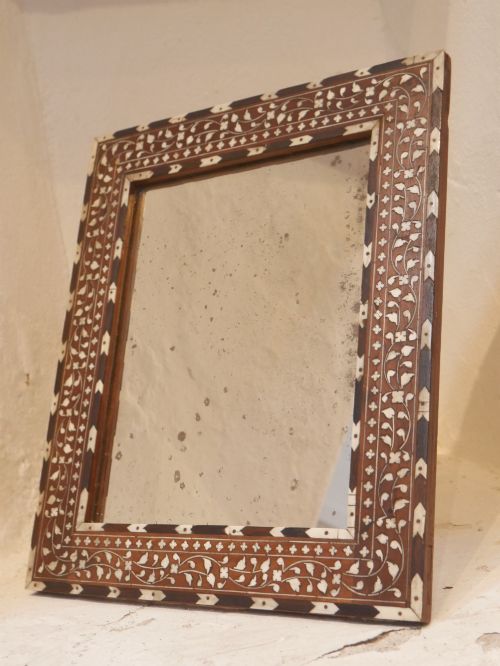
Surface decoration frequently incorporates brass inlay, bone, and ivory set flush into the wooden substrate to create geometric and floral patterns. Glass and mirror glass complete the works, fitted behind frames that often display intricate Kashmiri or Hoshiarpur carving styles.
Some nineteenth century artisans cleverly hid their joinery beneath layers of intricate foliage, ensuring the frame looks entirely organic from every angle.
Distinctions in quality
Quality in these frames rests upon the crispness of the carving and the precision of the inlay work. Finer examples display deeply undercut foliage and geometric schemes that remain sharp and securely seated within the timber.
The choice of primary wood and the complexity of the brass or ivory elements dictate the visual depth of the piece. Superior craftsmanship shows careful attention to the joinery and a balanced integration of inlaid materials across the entire frame.
The Anglo Indian Mirror Frame Glossary
- Hoshiarpur
- A city in Punjab known for its distinct tradition of wood carving and intricate inlay work. Pieces from this region often feature dense floral and geometric patterns.
- Shisham
- A durable Indian rosewood utilised frequently in regional cabinetmaking and decorative frames. It provides a rich dark ground for contrasting inlay.
- Pierced work
- A technique where the carver cuts entirely through the timber to create openwork borders and fretwork patterns. This lightens the visual weight of heavy hardwood surrounds.
- Inlay
- The practice of embedding contrasting materials such as brass, bone, or ivory into shallow recesses carved into the wood. This method creates flat, patterned surfaces across the frame.
Anglo Indian Mirror Frame: Frequently Asked Questions
What periods do these mirrors date from?
The pieces available on this page date from the late nineteenth century through to the early twentieth century, specifically spanning from eighteen eighty to nineteen twenty.
This era encompasses various decades of production under British influence in India, reflected in the stylistic labels of the period.
Which regions produced these frames?
Production is concentrated in northern regions of the subcontinent, with particular emphasis on Kashmir and Hoshiarpur.
Workshops in these areas developed distinct decorative vocabularies involving specific carving techniques and inlay materials.
What materials were used for the inlay?
Artisans utilised brass, bone, and ivory to create contrasting patterns against the dark hardwood backgrounds.
These materials were meticulously shaped and fitted into recessed channels within the wooden frame.
How do I hang a heavy wooden mirror?
Due to the substantial weight of dense hardwoods like teak and rosewood, secure wall fixings are essential.
Ensure the hanging wire or brackets match the load capacity and are anchored directly into wall studs or appropriate masonry fixings.