





Bone Inlay Mirror
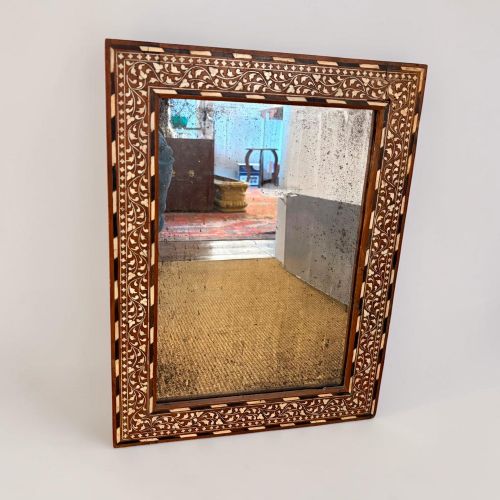
A bone inlay mirror brings rich texture and intricate geometric patterns into a room, framed in woods from walnut to ebonised timber.

Bone Inlay Mirror
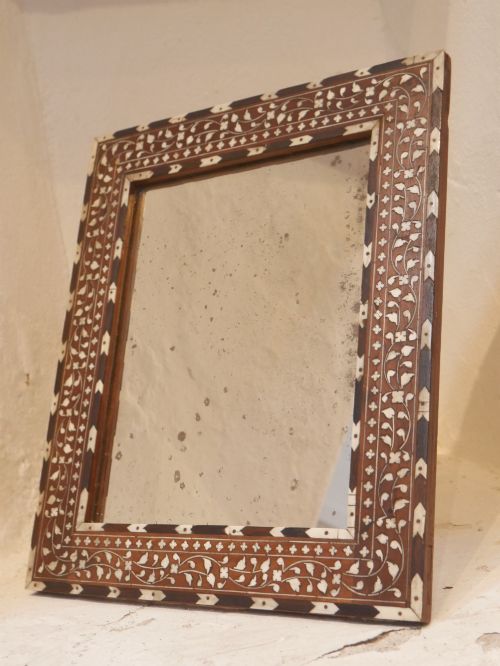
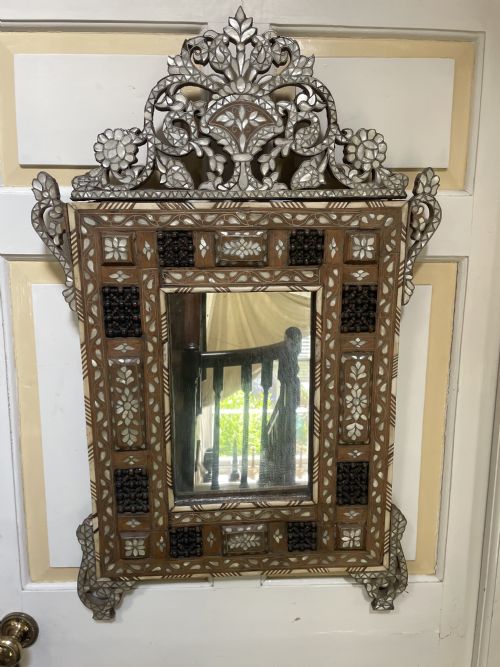
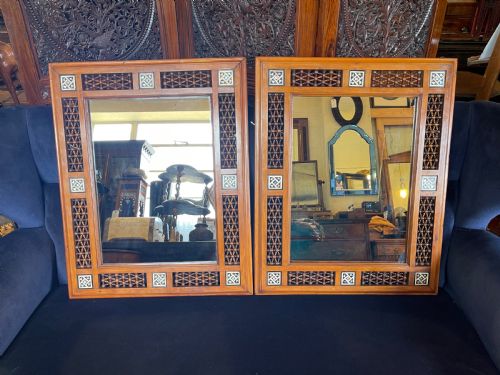
A bone inlay mirror is a decorative wall hanging defined by intricate geometric or floral patterns set into a wooden frame. When searching for a bone inlay mirror, collectors encounter diverse regional interpretations spanning the nineteenth century, including Anglo-Indian, Syrian Ottoman, and Moorish Revival styles.
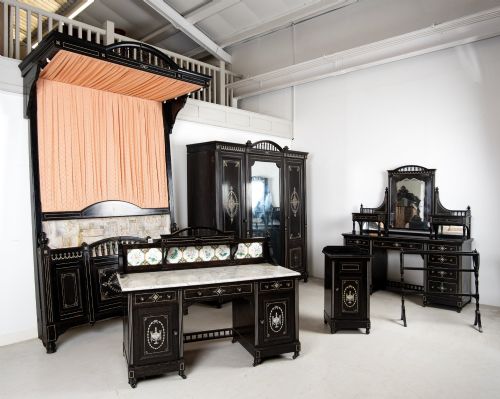
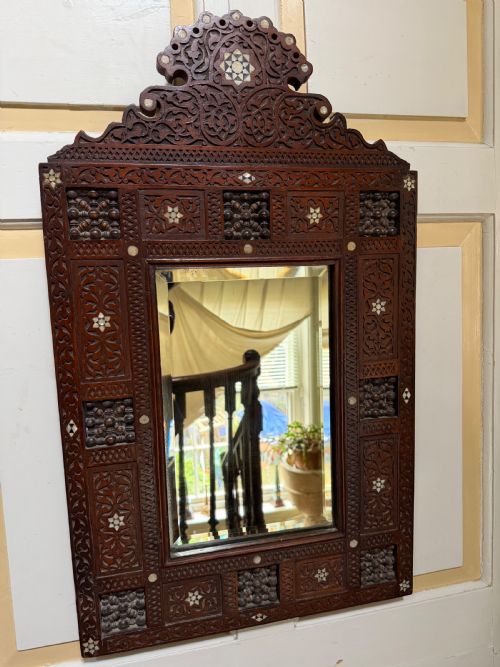
The pieces appearing on this page range from specific Hoshiarpur works featuring shisham and ivory to Syrian Damascus mother-of-pearl examples and Victorian ebonised bedroom suites. Walnut and hardwood form the structural foundation for these detailed surface ornaments.
How they were made
Artisans constructed these frames using hardwoods such as shisham and walnut, often applying ebonised finishes to the timber base. Skilled makers shaped small pieces of bone and mother-of-pearl by hand before recessing them tightly into carved channels across the wooden surface.
The decorative schemes frequently combine multiple materials, integrating contrasting sections of bone with shimmering mother-of-pearl inlay. This meticulous mosaic technique requires steady precision to align the organic segments uniformly across the mirror frame.
Intricate bone fragments sit patiently within dark timber frames, having watched Victorian drawing rooms transform into modern spaces.
What varies in quality
Quality rests upon the intricacy of the surface pattern and the precision of the fitted bone sections within the wooden ground. Finer examples display tight, seamless tessellation where the organic material sits flush against the surrounding timber or ebonised surface.
The depth of carving and the variety of incorporated materials, such as the inclusion of mother-of-pearl alongside bone, elevate certain regional works above simpler production. The integrity of the foundational hardwood frame also dictates the enduring stability of the piece.
The Bone Inlay Mirror Glossary
- Bone inlay
- A decorative technique where small pieces of bone are embedded into carved recesses within a wooden surface to form intricate patterns. This method appears across various nineteenth-century revival styles.
- Ebonised wood
- Timber treated with a dark stain or chemical finish to imitate the appearance of dense ebony. This dark ground provides a striking contrast for pale bone inlay.
- Hoshiarpur
- A Punjabi town renowned for its traditional wood-working and intricate inlay craftsmanship utilising bone and ivory on shisham wood. Pieces originating from here display distinctive regional motifs.
- Mother-of-pearl
- The iridescent inner layer of certain mollusc shells used as a decorative inlay material. It is frequently combined with bone to create luminous highlights on nineteenth-century frames.
Bone Inlay Mirror: Frequently Asked Questions
How do I clean a bone inlay mirror?
Dust the surface gently with a dry, soft cloth to prevent particles from settling into the recesses of the inlay.
Avoid using liquid cleaners or abrasive agents, as moisture can damage both the historic wood and the organic bone material.
What periods do these mirrors come from?
The examples on this page primarily date from the nineteenth century, spanning various revival movements between eighteen-eighty and nineteen-twenty.
Maker traditions from Anglo-Indian workshops to Syrian centres define the primary stylistic periods.
Are these mirrors heavy to hang?
Many of these pieces utilise dense hardwoods such as walnut and shisham as a structural base, which adds considerable weight.
Ensure appropriate wall fixings are employed to support the substantial frame securely.
How do I identify a Syrian mirror?
Syrian pieces often incorporate luminous mother-of-pearl alongside bone inlay to create complex geometric decorative schemes.
Damascus workshops traditionally produced these distinctive designs within the broader Ottoman aesthetic.