




Antique Indian Mirror
These antique Indian mirror pieces bring intricate woodwork and distinct regional carving into a room, offering both practical reflection and rich historic character.
Antique Indian Mirror
An antique Indian mirror combines traditional craftsmanship with functional wall and dressing furniture. Buyers seeking an antique indian mirror will encounter various forms, including wall mirrors, dressing table mirrors, and mirrored sconces.
The pieces on this page span from the Regency era and the nineteenth century up to the early twentieth century. Styles range from Anglo-Indian and Anglo-Indian Colonial to Moorish Revival and Ottoman Revival.
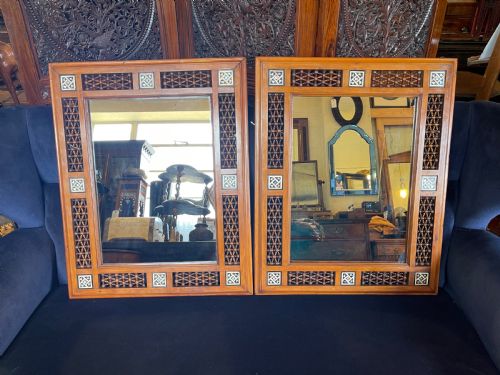
Makers and workshops across different regions produced distinctive wooden frames, often incorporating architectural elements or intricate surface decoration. Wall mirrors and dressing mirrors remain the most frequently seen formats in this category.
Materials and construction methods
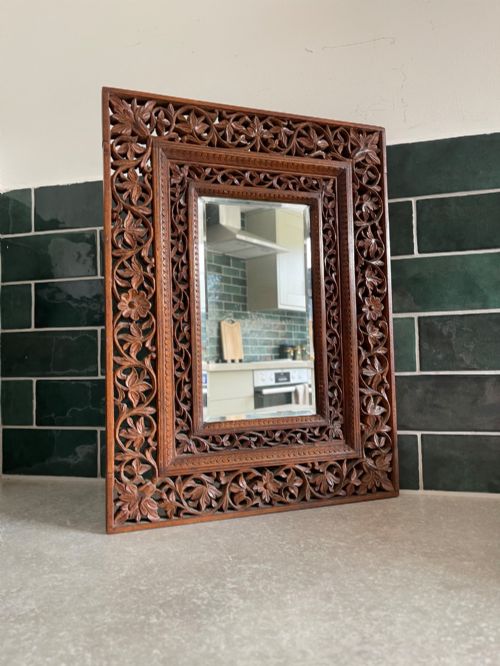
Carved hardwood frames form the structural core of these pieces, utilising materials such as teak, shisham, padouk, walnut, and mahogany. Artisans shaped these dense timbers using traditional hand-carving techniques.
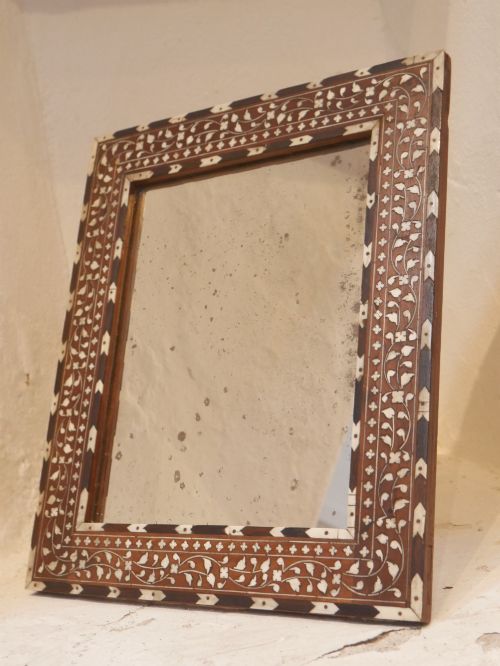
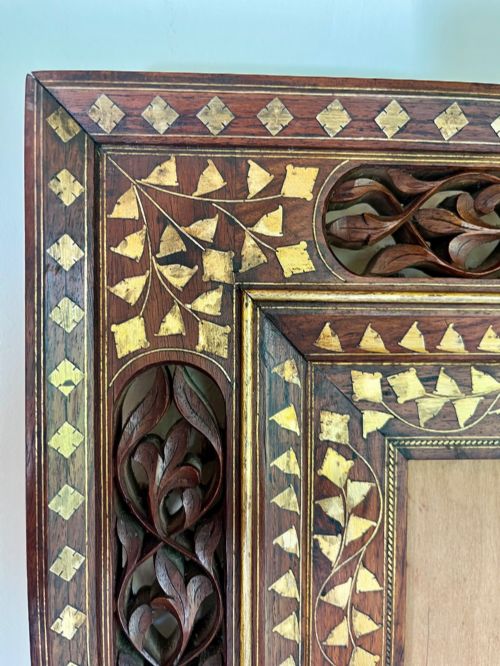
Surface ornamentation often involves detailed inlay work using bone, ivory, and brass. Some pieces also feature hand-painted details or pierced edge designs set around the glass.
Periods represented span from the Regency era through Victorian times and up to 1920.
Distinctions in craftsmanship and design
Quality in these mirrors rests upon the depth and precision of the carved woodwork and the complexity of any inlay. Pieces featuring dense bone, ivory, or brass work require exceptional skill from the artisan.
The scale and proportion of the frame also influence the overall character, with larger architectural elements and unusual furniture formats commanding attention. Intact inlay work and well-preserved secondary timbers elevate the standard of an individual piece.
Hoshiarpur workshops·Kashmiri artisans
The Antique Indian Mirror Glossary
- Anglo-Indian
- A term describing items made in India during the British colonial period, often combining British furniture forms with local decorative techniques. These objects reflect a distinct cross-cultural design exchange.
- Hoshiarpur
- A region in Punjab renowned for its intricate wood carving and inlay work. Pieces from this area frequently feature dense floral or geometric patterns using bone or brass.
- Shisham
- An Indian rosewood known for its durability and rich grain. Artisans favored this timber for detailed carving.
- Padouk
- A heavy, durable tropical hardwood with a reddish hue. It appears in several substantial colonial furniture pieces.
- Sconce
- A wall-mounted fixture holding a mirror or candles. These items often incorporate reflective glass surfaces to amplify light.
Antique Indian Mirror: Frequently Asked Questions
What is an antique Indian mirror?
An antique Indian mirror is a decorative looking glass framed in hand-carved hardwood, often featuring detailed bone, ivory, or brass inlay work. These pieces range from wall-mounted frames to dressing table mirrors produced during the nineteenth and early twentieth centuries.
They reflect a blend of traditional regional craftsmanship and colonial-era furniture forms. Many examples originate from specific centres like Hoshiarpur or Kashmir.
How do I date an antique Indian mirror?
Dating relies on examining the timber species, the style of carving, and the construction methods used in the frame. Nineteenth-century examples often display deep hand-carving and specific colonial adaptations.
Comparing the mirror glass, backing boards, and any inlay materials helps determine whether a piece belongs to the Victorian period or the early twentieth century.
Where were these mirrors used?
These mirrors served practical and decorative functions in both colonial drawing rooms and traditional domestic interiors. Wall mirrors and sconces were hung to catch the light, while dressing mirrors stood on tables for daily grooming.
Larger architectural pieces and overmantles were integrated directly into grand interior settings.
How do I care for an antique wooden frame?
Keep the carved wooden frame away from direct sunlight and steady heat sources to prevent the timber from drying out. Dust the intricate carvings gently with a soft brush.
Avoid using modern chemical polishes on the wood or the inlay work. A micro-fiber cloth is usually sufficient for routine maintenance.