
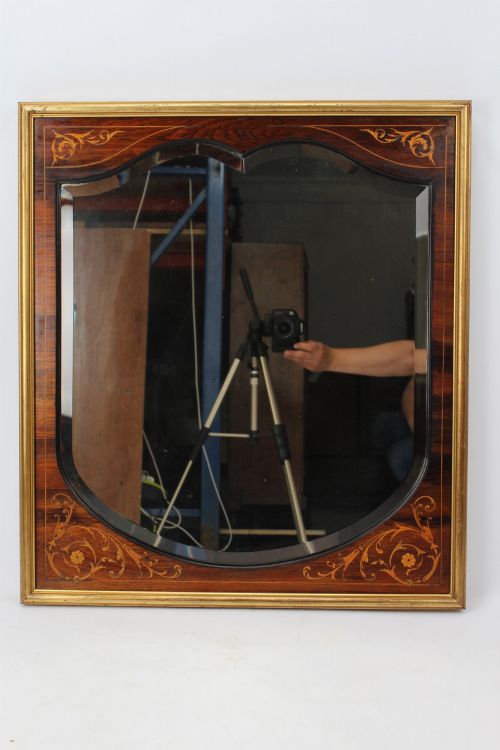


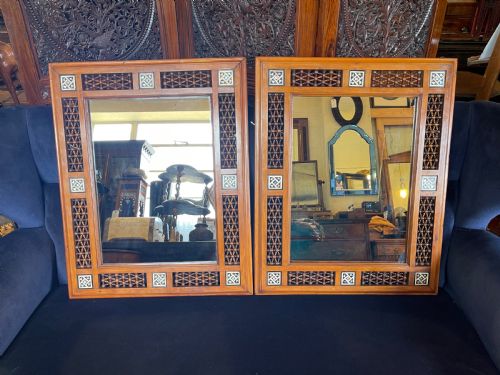


Decorative Inlaid Wall Mirror
These decorative inlaid wall mirror pieces bring warmth and intricate pattern to a room.
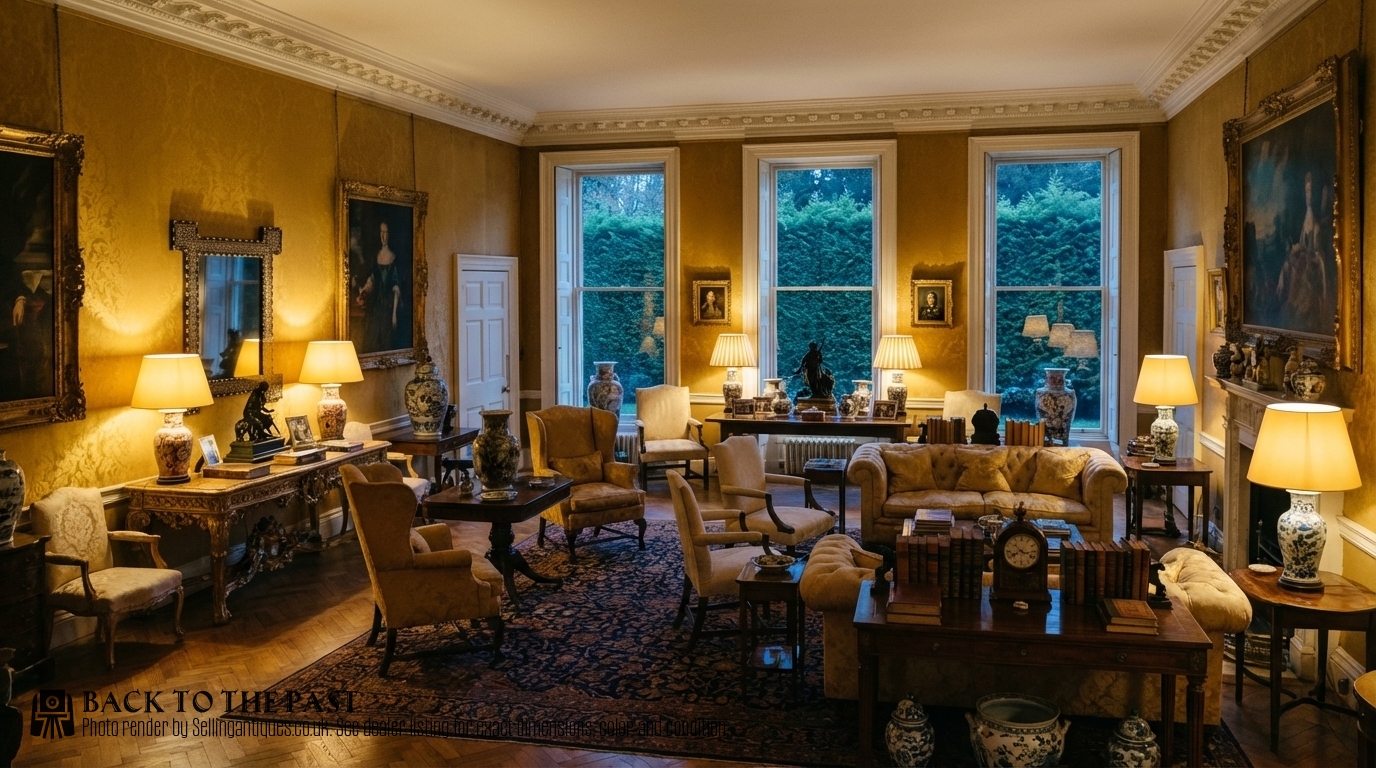
Decorative Inlaid Wall Mirror
The most common examples on this page date from the nineteenth century and the early twentieth century, showing influences ranging from Chippendale revival fretwork to Ottoman Revival and Art Deco marquetry. These pieces function as focal points in hallways, reception rooms, and bedrooms, offering both reflection and ornamentation.
How they were made
Craftsmen built these frames using dense timbers such as rosewood, mahogany, and walnut, often applying ebonised finishes or incorporating kingwood and oak. The structural integrity relies on traditional joinery suited to supporting bevelled or plain mirror glass.
Surface ornamentation involved intricate inlay techniques, utilising bone, ivory, brass, and contrasting wood veneers to create geometric and floral motifs. Specialised workshops, including those in Hoshiarpur, specialised in detailed shisham wood and bone inlay work.
Periods represented span from the Regency era through Victorian, Edwardian, and Art Deco styles.
What varies in quality
Quality rests in the precision and complexity of the inlay work, where tightly fitted natural materials and intricate botanical or geometric patterns distinguish finer examples from simpler production. The choice of primary timber, such as solid rosewood or figured mahogany, elevates the status of a piece.
The sophistication of the frame's construction, whether through delicate fretwork, cast brass elements, or specialist marquetry like that by A.J. Rowley, defines the upper tier of the range. Original glass plates and well-preserved surface patination also contribute significantly to the standing of an individual mirror.
A.J Rowley
The Decorative Inlaid Wall Mirror Glossary
- Inlay
- A technique where pieces of a contrasting material, such as bone, ivory, brass, or different woods, are inserted into depressions in a base object to form a decorative pattern. This method creates a smooth, flush surface.
- Fretwork
- Ornamental design executed in wood by cutting intricate patterns, frequently seen in the pierced scrollwork of eighteenth-century revival frames. It adds a sense of lightness and architectural depth.
- Marquetry
- The art and craft of applying pieces of veneer to a structure to form decorative designs, ranging from landscapes to geometric abstractions. It differs from inlay by covering the entire foundational surface.
- Hoshiarpur
- A region in India renowned for producing wooden furniture and mirrors embellished with dense bone and ivory inlay. These pieces typically feature elaborate scrolling plant and animal motifs.
- Pier glass
- A tall mirror designed specifically to hang on the wall space between windows, often positioned above a pier table or console. Regency and nineteenth-century examples often utilise this specific vertical proportion.
Decorative Inlaid Wall Mirror: Frequently Asked Questions
Where should I hang a wall shelf?
These hybrid pieces combine a small display surface with a mirror, making them suitable for entrance halls or compact rooms. They provide a practical ledge for small items while reflecting light.
Ensure the wall fixings match the weight of the dense hardwood frame. Placing them at eye level maximises both the decorative impact and the utility of the mirror.
How do I care for bone inlay?
Bone and ivory inlay requires a stable environment away from direct sunlight and excessive moisture to prevent warping or loosening. Dusting gently with a dry, soft cloth keeps the surface clean without damaging the delicate recesses.
Avoid using liquid cleaners or polishes that can seep into the joints between the wood and the inlay. Natural waxes applied sparingly help preserve the finish of the surrounding timber.
What is Moorish Revival style?
Moorish Revival design draws inspiration from Islamic architecture, featuring horseshoe arches, intricate geometric lattice, and dense surface ornamentation. In mirrors, this translates to exotic wood frames with complex, star-patterned inlay.
These pieces became popular in European interiors during the nineteenth century as part of a broader fascination with Eastern craftsmanship. They offer a distinct visual contrast to standard classical furniture.