




Anglo Indian Mirror
An anglo indian mirror brings intricate regional carving and exotic hardwoods straight into a room.
Anglo Indian Mirror
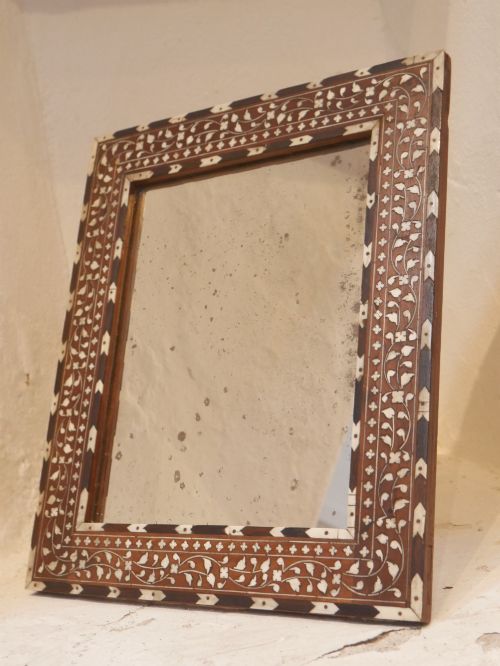
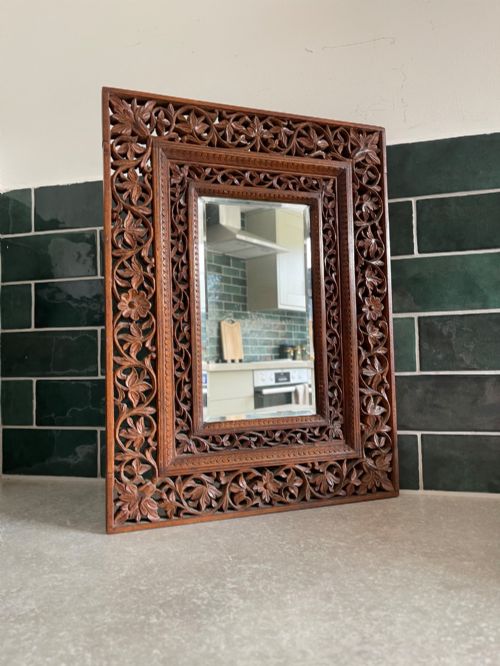
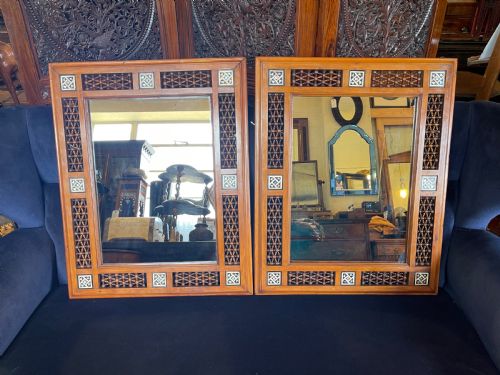
The most common forms on this page include carved hardwood wall mirrors and dressing mirrors featuring dense foliate patterns or geometric inlay. Surviving examples span simple teak frames to large, highly decorative pieces incorporating bone or ivory elements alongside complex pierced woodwork.
Makers utilised native timbers such as teak, shisham, padouk, and rosewood, shaping them into distinctive silhouettes influenced by Victorian, Regency, Moorish Revival, and Ottoman Revival styles. Their enduring appeal lies in the sheer intricacy of the surface decoration and the warm, dark tones of the tropical woods.
What varies in quality
Quality rests primarily on the depth, precision, and crispness of the hand carving rather than the mere presence of decoration. Superior examples show remarkable control in piercing and undercutting the wood without splintering the dense grain.
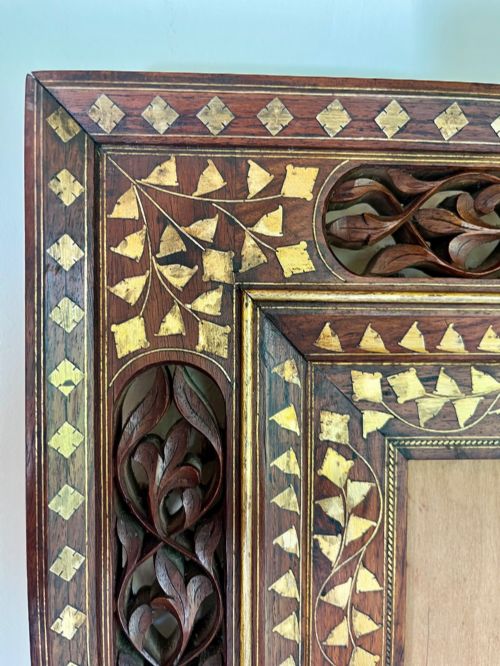
The integrity of the inlay work marks another clear distinction between standard pieces and the finest items. Tightly fitted bone, ivory, or brass sections that sit flush with the surrounding hardwood indicate superior craftsmanship and careful execution.
Listings feature woods such as teak, padouk, shisham, and rosewood alongside bone and brass inlay.
The Anglo Indian Mirror Glossary
- Shisham
- A dense Indian hardwood used extensively for traditional carved furniture and mirror frames. It accepts intricate detail work exceptionally well.
- Padouk
- A heavy tropical timber displaying rich reddish-brown tones, favoured for large dressing mirrors and colonial furniture.
- Fretwork
- Ornamental perforated woodwork created by cutting patterns through thin boards. It defines the pierced edges seen on many wall mirrors.
- Sconce
- A wall-mounted lighting fixture incorporating a mirror plate to reflect candlelight. Pairs of these items frequently survive together.
Anglo Indian Mirror: Frequently Asked Questions
How do I date an anglo indian mirror?
Dating relies on identifying the underlying timber, the fastening methods, and the prevailing stylistic influences such as Regency proportions or Victorian dressing table designs.
Examining the mirror glass itself and the construction of the backboards also provides clear chronological clues.
Where were these mirrors made?
Production centred on specific woodworking hubs across the subcontinent, notably Hoshiarpur in Punjab and the Bombay Presidency.
Local workshops adapted traditional regional motifs to suit the demands of British residents and the export market.
How should I hang a heavy wooden mirror?
Because these frames utilise dense tropical hardwoods like teak and padouk, they carry considerable weight and require secure wall fixings.
Professional mirror plates or substantial batten systems distribute the load safely across wall studs.