



Hand Carved Mirror
A hand carved mirror brings depth and texture to a room through the skill of the carver.
Hand Carved Mirror
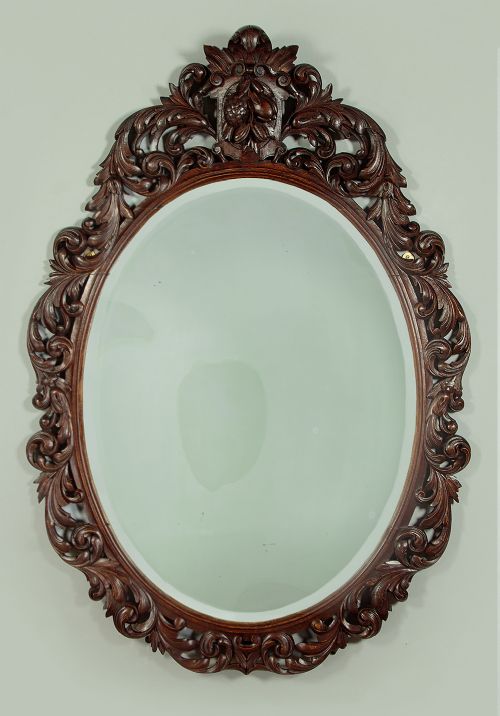
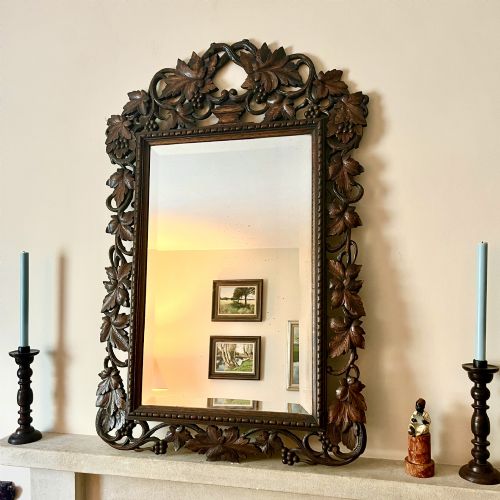
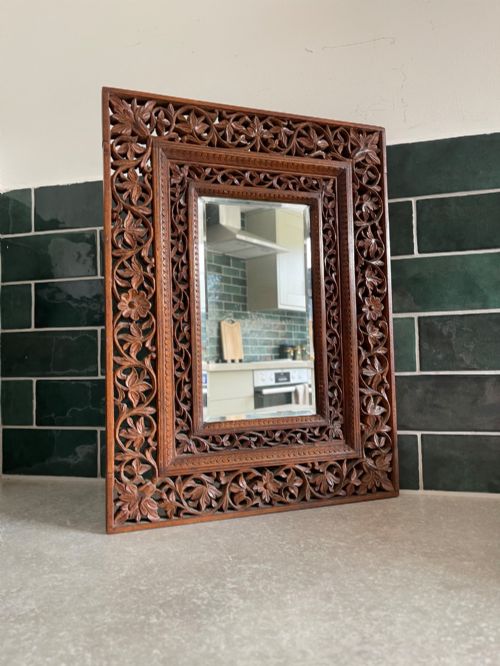
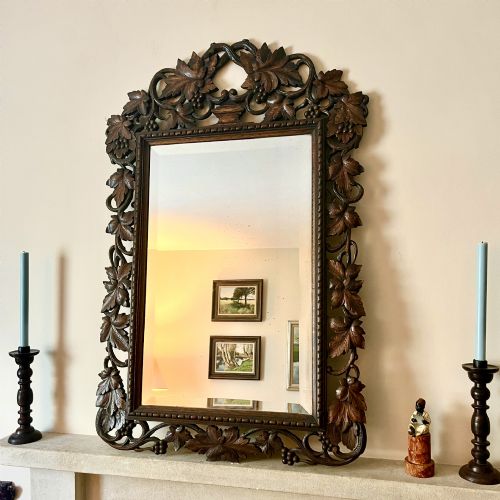
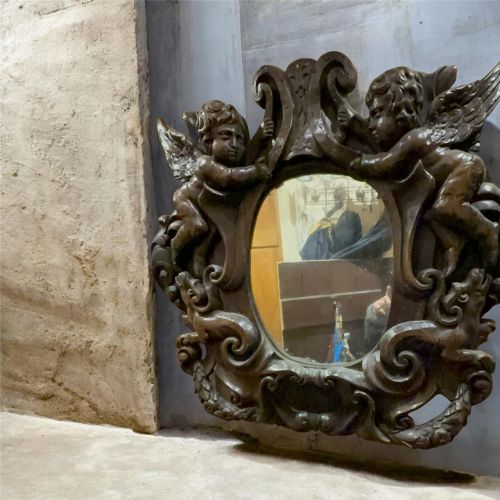
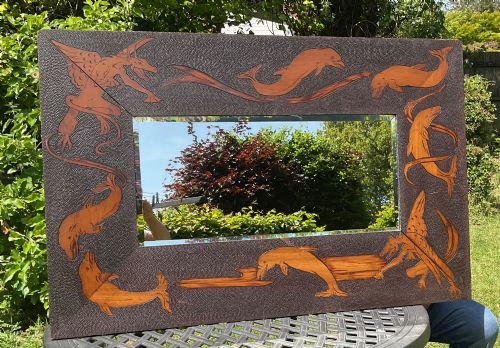
A hand carved mirror is a functional looking glass set within a decorative wooden or gesso frame shaped entirely by hand tools. These pieces span from the eighteenth century through to the early twentieth century, showing regional styles from British oak designs to continental giltwood and Black Forest work.
Forms range from simple oval and rectangular wall hangings to elaborate console tables with matching mirror plates and wall sconces. Each piece relies on the weight of solid timber or heavy gesso to hold deep relief ornament.
How they were made
Makers shaped these frames from native timbers such as oak, walnut, and mahogany, alongside limewood and softwoods destined for gilding. Cabinetmakers and carvers worked seasoned boards with gouges and chisels to create deep relief foliage, figures, and geometric patterns directly into the wood.
Giltwood and gesso pieces received multiple layers of chalk preparation over a wooden base before water gilding or oil gilding with thin metal leaf. Glass plates were traditionally silvered with mercury or tin amalgam in earlier examples, or produced by later chemical processes as the nineteenth century progressed.
Listings feature oak, walnut, and teak woods alongside giltwood, gesso, and glass across the nineteenth and twentieth centuries.
What varies in quality
Quality rests in the depth and authority of the carving, where confident, crisp undercut work separates skilled regional or studio pieces from mechanical later copies. The relationship between the scale of the ornament and the proportion of the mirror glass determines the visual balance of the object.
The integrity of the original surface, whether unpainted oak, aged walnut, or untouched water gilding, dictates the desirability of the piece. Subtle details like hand-painted foliate panels or original mercury mirror plates elevate the refinement of the whole object.
The Hand Carved Mirror Glossary
- Giltwood
- Wood, typically pine or lime, that has been prepared with gesso and covered in gold leaf. This finish reflects light and was favoured in formal drawing rooms.
- Overmantel mirror
- A large horizontal mirror designed to hang specifically above a fireplace mantelpiece. These often match the architectural scale of period chimney breasts.
- Pier glass
- A tall, narrow mirror designed to hang on the wall space between two windows. They frequently sat above matching console tables.
- Black Forest
- A style of deeply carved wooden ornamentation originating from Brienz in Switzerland and Germany. These pieces typically depict naturalistic animals, foliage, and birds of prey.
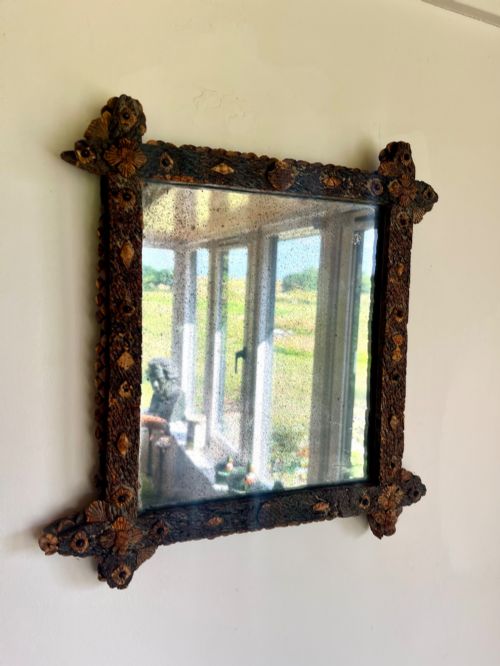
- Tramp art
- A form of folk art created by chipping, notching, and layering small pieces of scrap wood together. This technique often produced geometric frames and boxes.
Hand Carved Mirror: Frequently Asked Questions
How do I hang a heavy carved mirror?
Heavy carved mirrors require secure fixings screwed directly into wall studs or masonry using appropriate wall anchors. The weight of solid timber and plaster gesso demands professional assessment of the hanging wall.
Most antique frames retain their original iron rings or brackets on the reverse. Ensure any modern wire or chain replacement matches the load capacity of the piece.
Are the mirror plates original?
Many older pieces retain their original glass, which often shows characteristic foxing, minor speckling, and gentle distortion. These natural signs of age distinguish period mercury or early silvered plates from modern replacements.
Replacement glass is sometimes fitted during restoration if the original plate suffered breakage. Inspect the silvering from an angle to observe surface oxidation patterns.
How do I clean a carved wooden frame?
Dust carved wooden frames gently using a soft, dry brush to lift debris from deep recesses without snagging the wood fibres. Avoid liquid cleaners, modern polishes, and excess moisture which can damage aged finishes.
Giltwood surfaces are especially delicate and require minimal intervention to prevent lifting the gold leaf. Professional conservators should handle any deep cleaning or repairs.
What is the difference between oak and giltwood mirrors?
Oak mirrors display the natural grain and warm tones of timber, suiting country house interiors and Arts and Crafts aesthetics. Their decoration relies entirely on the crispness of the wood carving.
Giltwood mirrors offer a bright, reflective surface designed to amplify natural light in formal reception rooms. They utilise carved gesso and gold leaf to achieve ornate rococo or neoclassical forms.