
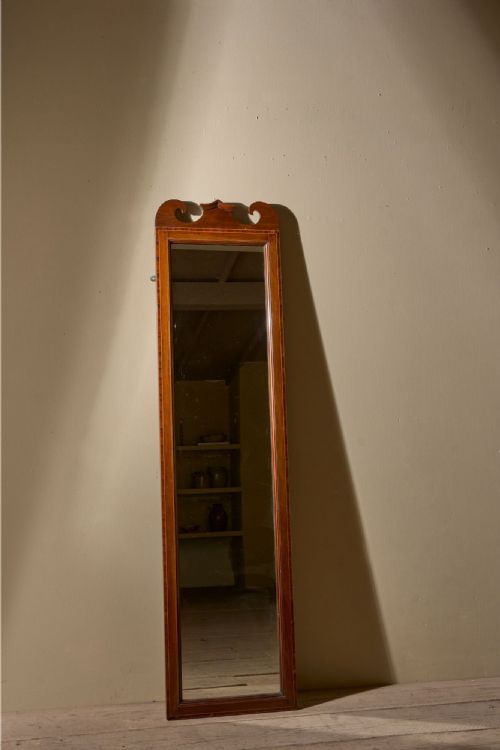
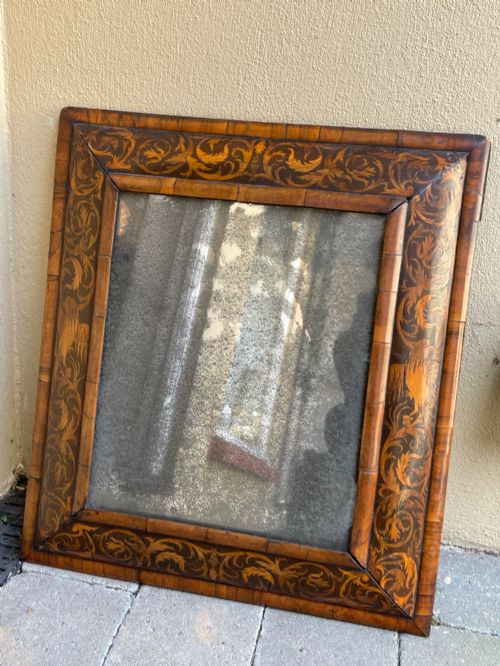
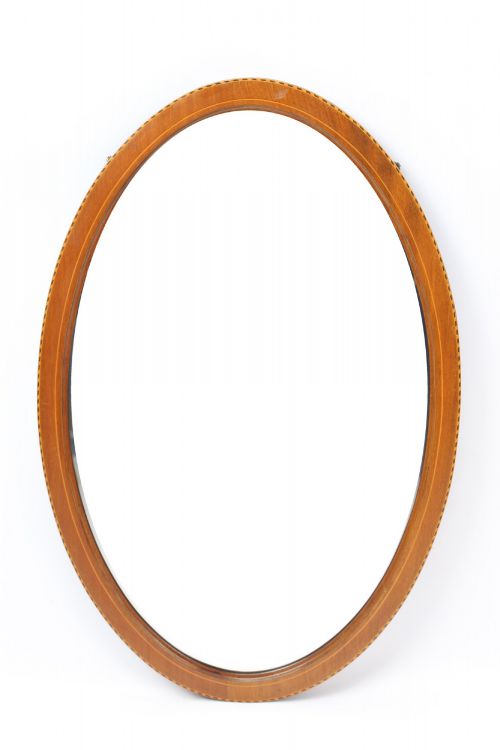
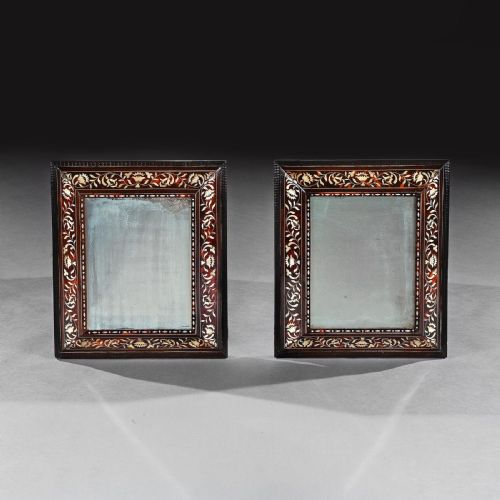


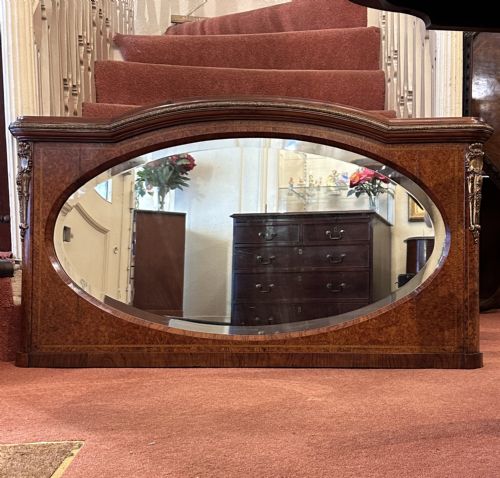


Brown Inlaid Wall Mirror
These brown inlaid wall mirror pieces bring warmth and refined detail to a room, ranging from simple Edwardian ovals to substantial nineteenth-century overmantels.
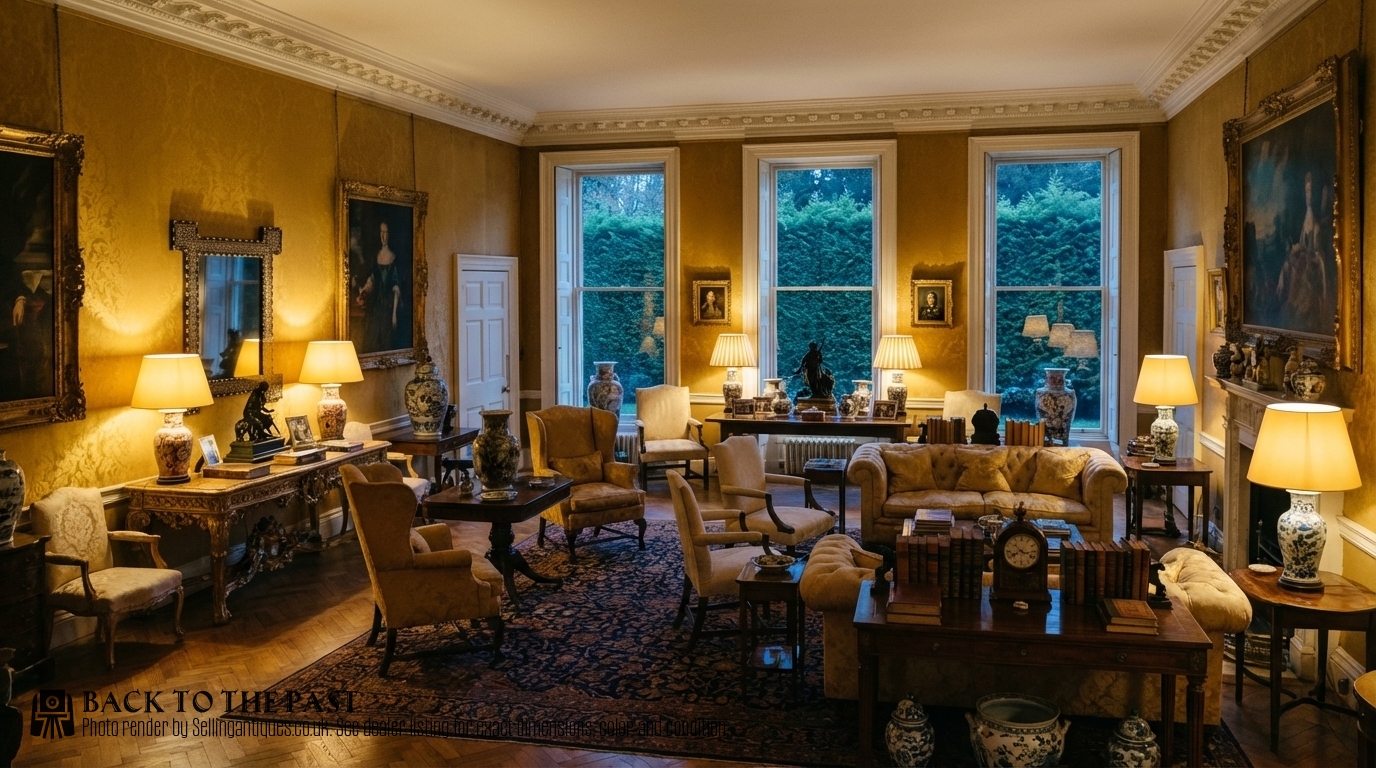
Brown Inlaid Wall Mirror
A brown inlaid wall mirror combines rich timber frames with contrasting decorative work, serving both a functional purpose and a strong visual role in an interior. When searching this phrase, buyers encounter various forms including tall pier mirrors, wide overmantels, and simple hanging ovals.
The selections span distinct periods from the seventeenth century through to the Edwardian era, taking influence from styles such as Chippendale, William and Mary, and Regency. Mahogany and walnut form the primary timber bodies for the majority of these examples.
Materials and construction
Makers utilised solid timbers and veneers of mahogany, walnut, burr yew-wood, and rosewood to build the structural frames of these mirrors. Contrasting woods such as satinwood and boxwood were shaped into intricate marquetry and line inlay.
Surface ornamentation frequently incorporated wood inlay alongside occasional brass detailing, giltwood highlights, and tortoiseshell or ivory elements in specific regional pieces like Spanish Colonial or Indian Hoshiarpur items.
Listings incorporate walnut, mahogany, satinwood, and boxwood across Victorian, Edwardian, and eighteenth-century periods.
Distinctions in quality
The standard of a brown inlaid wall mirror rests on the crispness of the timber carving and the precision of the contrasting inlay work. Finer examples display tight marquetry and harmonious grain selection across the entire frame.
Depth of design and the integration of secondary materials, such as ormolu mounts, tortoiseshell, or intricate brass stringing, separate standard production pieces from higher-tier works.
The Brown Inlaid Wall Mirror Glossary
- Pier mirror
- A tall mirror designed to hang on the wall between windows, often positioned above a matching console table.
- Overmantel mirror
- A wide mirror made specifically to sit above a fireplace mantelpiece, frequently featuring a landscape orientation or a domed top.
- Marquetry
- A decorative technique where small pieces of veneer are arranged in geometric or pictorial patterns on a wooden surface.
- Satinwood
- A pale, durable tropical timber used extensively for contrasting inlay and stringing on darker furniture frames.
- Fretwork
- Openwork carving produced by piercing thin wood, often seen on eighteenth-century and revival style frames.
Brown Inlaid Wall Mirror: Frequently Asked Questions
How do I hang a heavy overmantel mirror?
Substantial overmantel mirrors require secure wall fixing into masonry or direct wooden studs using appropriate heavy-duty brackets.
Weight distribution must be carefully managed to support the combination of dense timber frames and thick mirror glass.
Where should I place a pier mirror?
Pier mirrors work best in narrow wall spaces between architectural openings or above low-profile tables.
Their vertical proportions help bounce light into darker hallways and reception rooms.
How do I distinguish Edwardian mirrors from Victorian ones?
Edwardian examples tend to display lighter mahogany frames with simpler oval or rectangular shapes and restrained inlay.
Victorian pieces often utilise darker walnut, burr veneers, and heavier architectural overmantel proportions.
Can I clean the original mirror glass?
Original mirror glass requires gentle cleaning with a soft cloth and mild solution to protect the backing and silvering.
Avoid harsh commercial chemicals that can seep beneath the frame edges and damage old silver.