




Indian Carved Wall Mirror
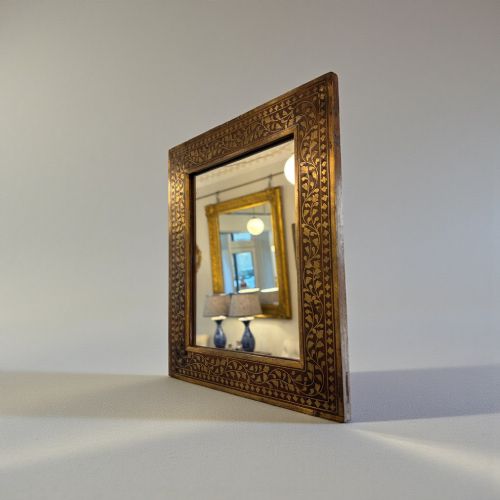
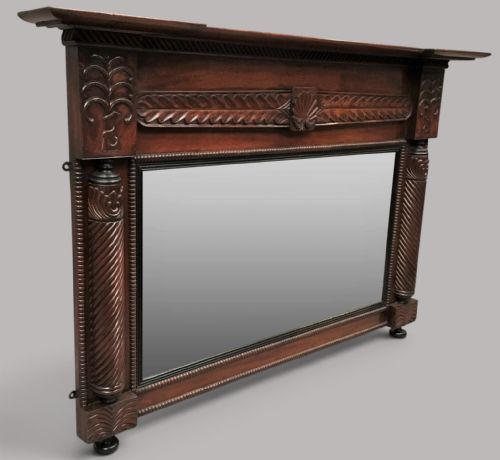
An indian carved wall mirror brings dense foliage and intricate geometric relief straight to a plain room.
Indian Carved Wall Mirror
When you search for an indian carved wall mirror, you encounter dense wooden frames shaped by hand during the nineteenth and early twentieth centuries. These pieces arrive in styles spanning Anglo-Indian, Moorish Revival, and Ottoman Revival, reflecting global Victorian tastes.
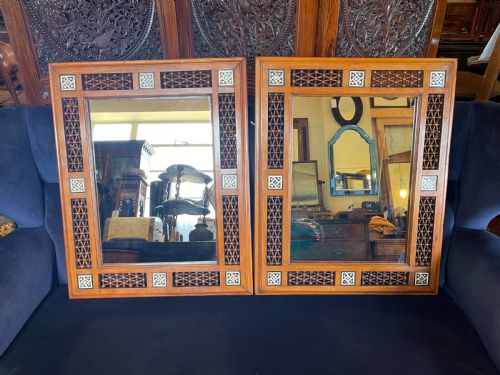
The most common examples on this page are wall mirrors and mirrored sconces originating from northern regions like Kashmir and Hoshiarpur. They appear in forms ranging from single hanging rectangular plates to pairs with pierced edges and bracketed shelves.
What varies in quality
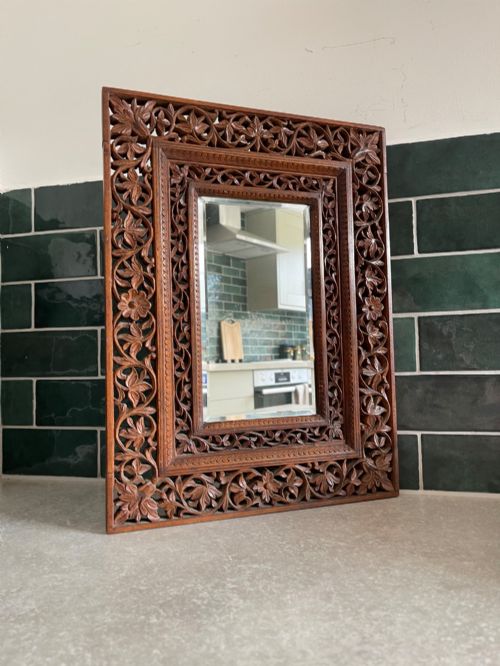
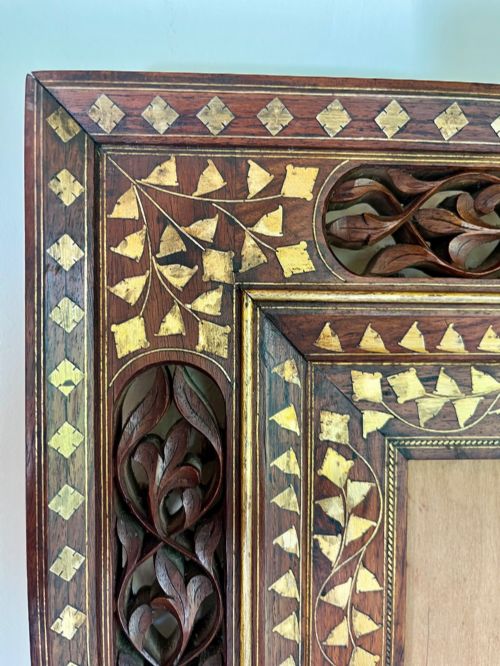
The distinction between ordinary and exceptional work lies in the crispness and depth of the chisel cuts across the wood. Superior pieces maintain sharp relief without splintering, whereas lesser examples show softer, shallower impressions in the grain.
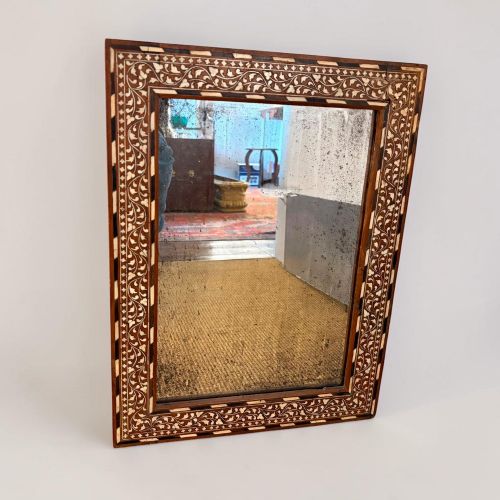
Integration of the inlay also separates the grades, as tight fitting brass or bone without excess adhesive demonstrates superior hand-fitting. The complexity of the overall design, such as fully pierced edges rather than flat borders, dictates the standing of the piece.
Indian Carved Wall Mirror Retail Price Guide 2026
Typical asking prices for indian carved wall mirror among the pieces listed under this phrase on Sellingantiques today, from the lower quarter to the upper quarter. They describe what is for sale here now, not the wider market.
Several mirrors arrive with bone inlay that has yellowed gracefully over the decades, proving that even cattle bones have a second act as fine art.
The Indian Carved Wall Mirror Glossary
- Anglo-Indian
- A descriptive term for items made in India during the British colonial period, often combining local craftsmanship with European furniture forms. These pieces frequently utilise traditional Indian carving methods on familiar British mirror shapes.
- Fretwork
- Ornamental perforated woodwork created by cutting patterns through a thin board. This technique allows light to pass through decorative borders and creates intricate silhouettes.
- Sheesham
- A durable Indian hardwood commonly used for traditional furniture and decorative frames. It takes a fine carved finish and develops a deep patina over time.
- Sconce
- A wall-mounted fixture designed to hold candles or lights, often incorporating a reflective mirror backplate. In this context, they combine carved wooden frames with small glass panels.
Indian Carved Wall Mirror: Frequently Asked Questions
Where should I hang these mirrors?
These pieces suit narrow hallways, above mantelpieces, or as focal points in living rooms where their carved depth can catch natural light.
Because many feature heavy hardwood and projecting frames, ensure your wall fixings are robust enough to support the weight securely.
How do I clean carved wooden frames?
Dust the deep recesses regularly with a soft, dry brush to prevent dirt accumulation in the intricate carved grooves.
Avoid liquid polish or water, which can damage exposed timber and loosen delicate brass or bone inlays over time.
What periods do these mirrors date from?
The pieces listed here span the late nineteenth century through to the early twentieth century, specifically from the eighteen-eighties to nineteen-twenty.
This era encompasses late Victorian production and the height of the Anglo-Indian export trade to British homes.
Are these mirrors usually found in pairs?
While many examples survive as single wall mirrors, this selection includes several matched pairs of sconces and mirrors.
Pairs were often produced for symmetrical placement flanking doorways, windows, or large pieces of drawing-room furniture.