
Dark Wood Inlay Mirror
A dark wood inlay mirror brings deep timber tones and contrasting decorative detail into a room, combining functional glass with skilled craftsmanship.
Dark Wood Inlay Mirror
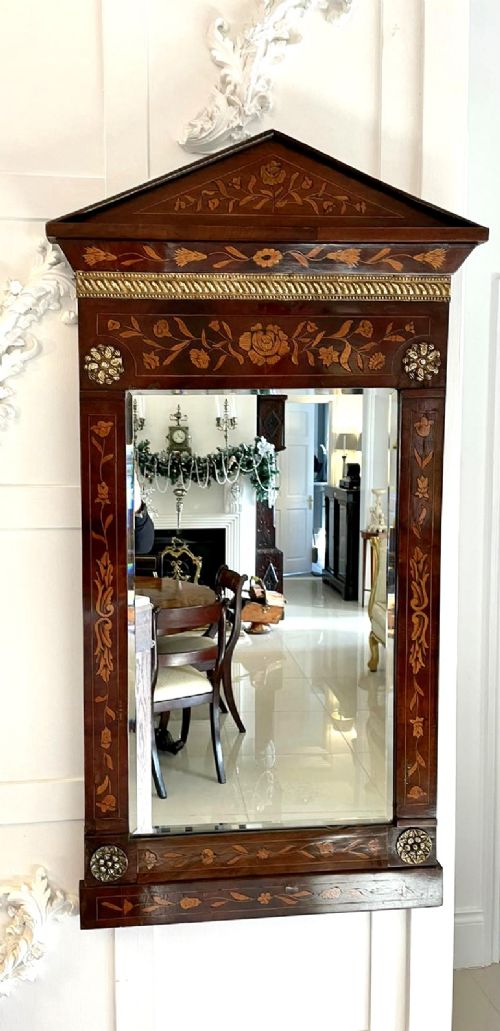
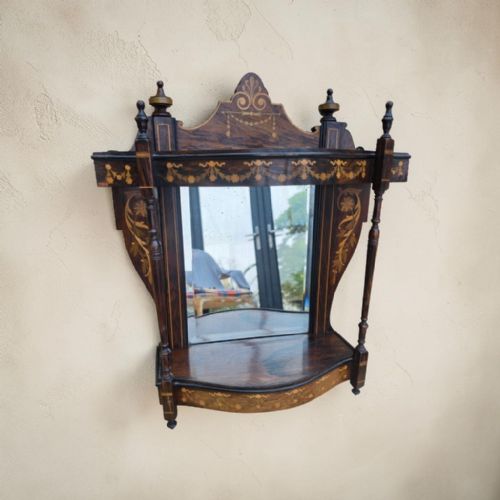
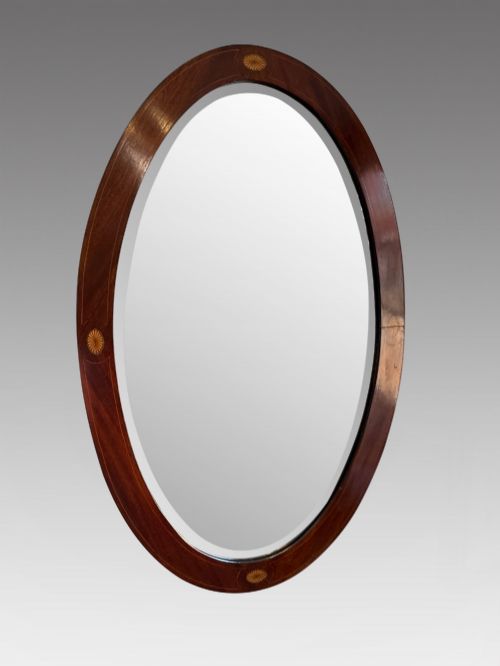
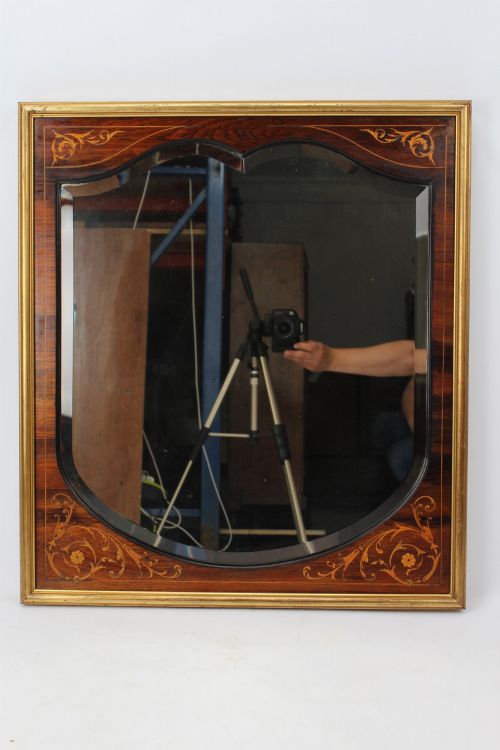
A dark wood inlay mirror combines a sturdy timber frame with contrasting decorative elements set flush into the surface, creating visual depth.
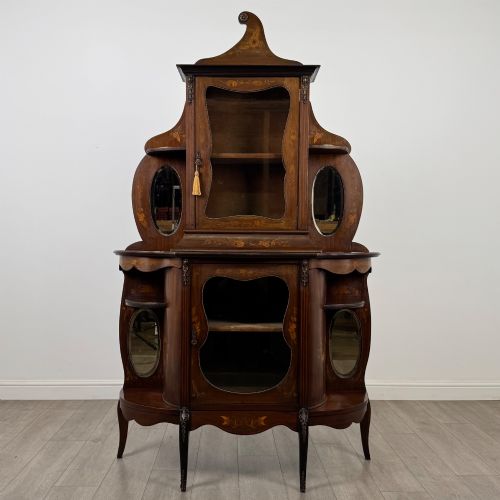
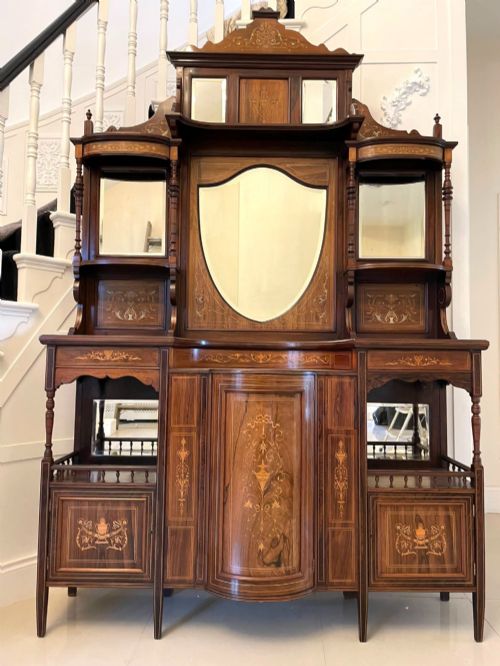
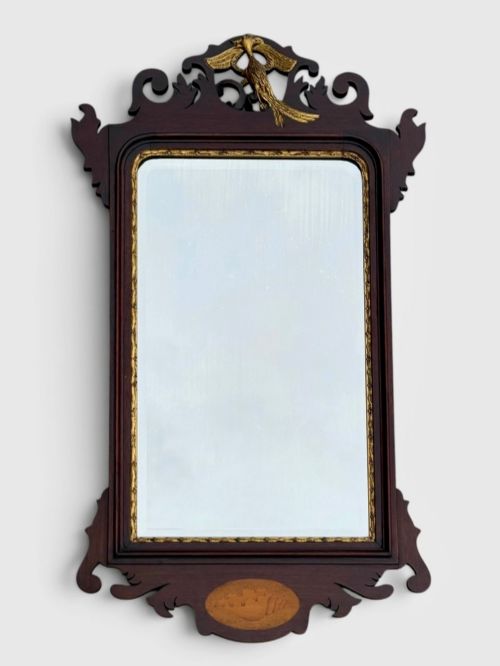
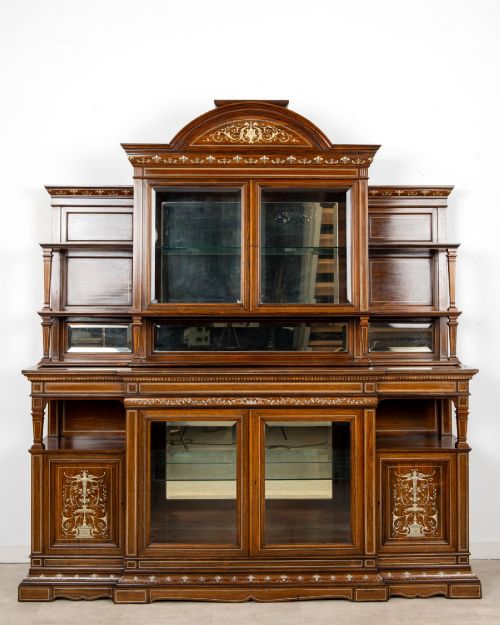
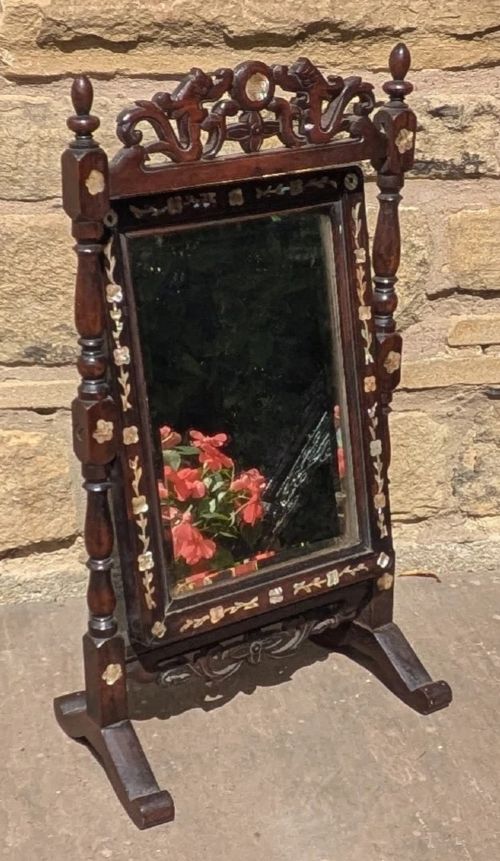
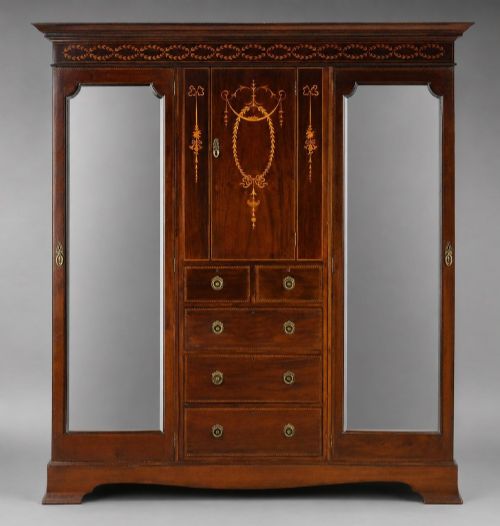
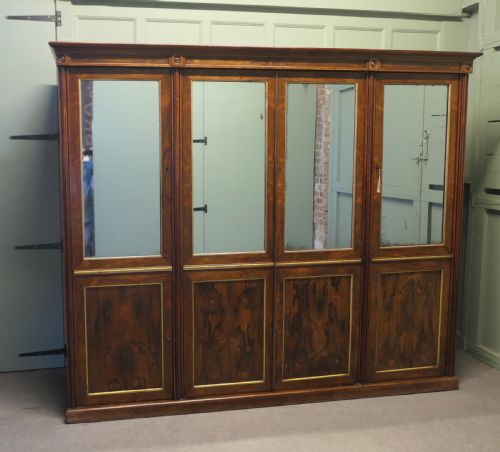
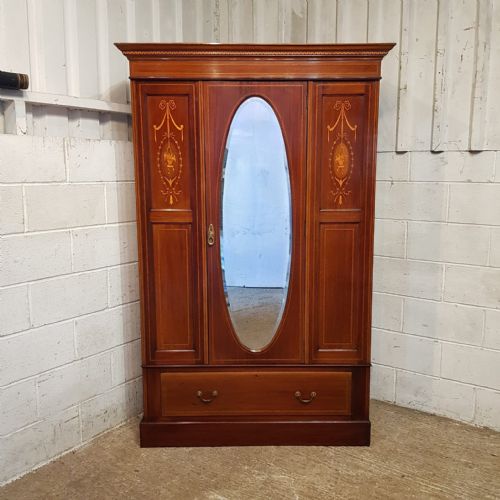
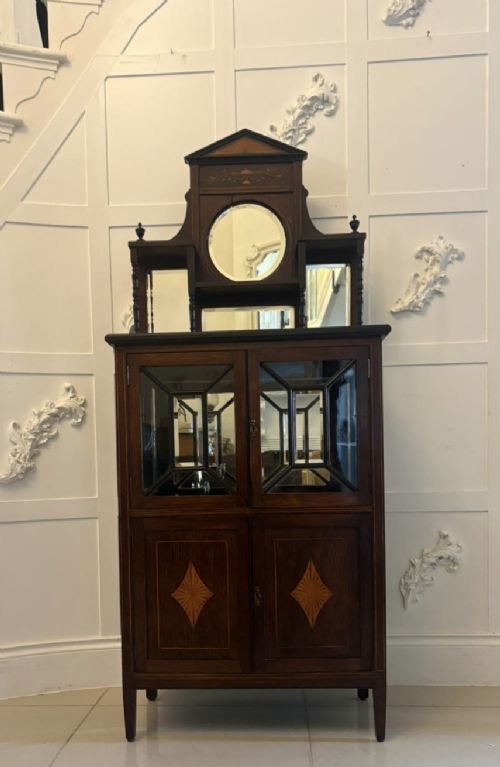
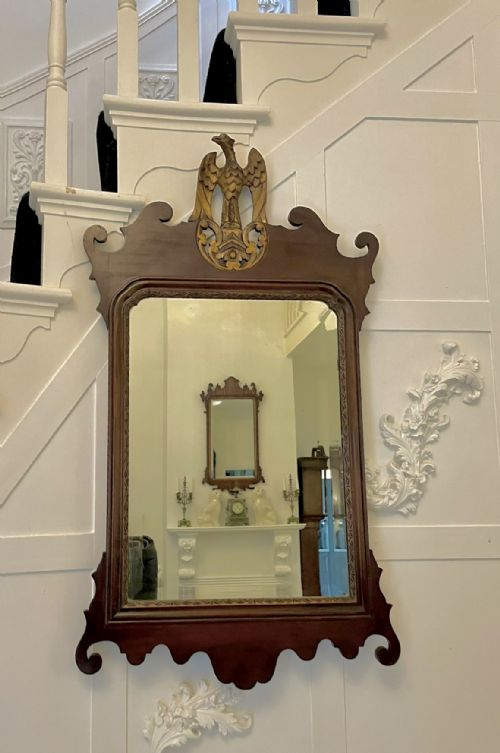
Buyers seeking a dark wood inlay mirror encounter wall mirrors, overmantel mirrors, and dressing mirrors originating from the Victorian, Edwardian, and Georgian periods.
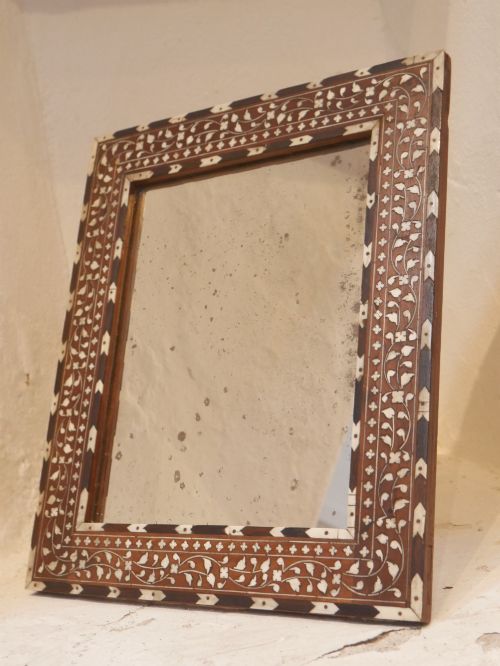
These pieces often incorporate mahogany, rosewood, or walnut frames accented with lighter woods, brass, bone, or mother of pearl.
How they were made
Cabinet makers constructed frames from dense timbers such as mahogany, rosewood, and walnut, providing a dark, stable foundation.
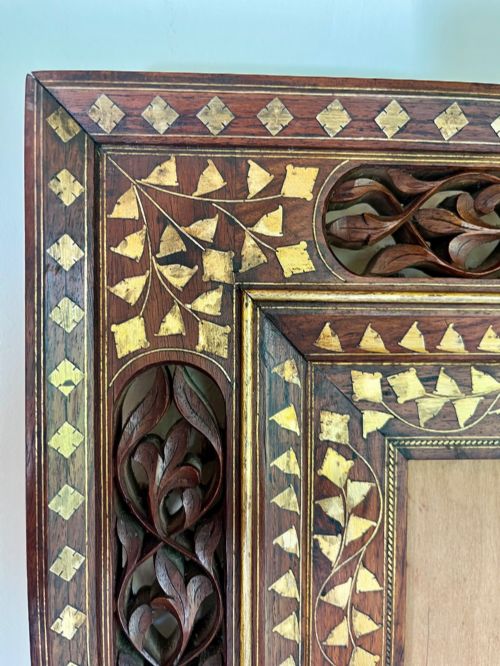
Craftsmen cut precise recesses into the wood to insert contrasting materials like satinwood, bone, mother of pearl, and brass wire.
Surfaces received hand-applied finishes to protect the timber and accentuate the grain alongside the intricate marquetry or parquetry details.
Some dressing mirrors hide secret compartments for storing small letters and trinkets behind the swing frame.
What varies in quality
The precision of the inlay work distinguishes standard items from superior examples, particularly where floral or geometric motifs meet the surrounding wood without gaps.
Timber selection governs the visual weight of the piece, with richly figured rosewood and dense mahogany commanding greater appreciation.
The clarity and originality of the mirror glass contribute significantly to the integrity of the object.
Collinson and Lock·Wylie Lochhead·E. A. Taylor
The Dark Wood Inlay Mirror Glossary
- Inlay
- A technique where pieces of contrasting material are embedded into a recessed wooden surface to form a decorative pattern. This method creates a smooth, flat finish across the frame.
- Marquetry
- Elaborate patterns formed from wood veneers applied to a structural wooden carcass. It differs from simple inlay by covering broader areas with pictorial designs.
- Overmantel
- A large mirror designed to hang specifically above a fireplace mantelpiece. These pieces frequently feature gilt accents and substantial wooden frames.
- Hoshiarpur
- A style of Indian woodworking characterised by intricate shisham wood frames densely inlaid with bone or mother of pearl. These objects often display complex geometric and floral motifs.
- Swing mirror
- A tabletop or dressing glass mounted on vertical pivots within a frame, allowing the user to tilt the angle of the reflection.
Dark Wood Inlay Mirror: Frequently Asked Questions
Where should I hang a dark wood inlay mirror?
These mirrors suit spaces with neutral walls where the dark timber frame and contrasting details can serve as a focal point. Hallways, living rooms above mantelpieces, and bedrooms benefit from the reflective glass and decorative borders.
Ensure the wall fixings support the weight of the dense timber frame, particularly for larger Victorian overmantel or wall-mounted examples.
How do I clean an antique inlaid mirror?
Dust the wooden frame gently with a soft, dry cloth to prevent accumulation in the recessed inlay areas. Avoid harsh chemical polishes that might degrade historic finishes.
Clean the mirror glass using a mild glass cleaner applied directly to the cloth rather than the surface, preventing liquid from seeping behind the plate or damaging the timber.
What is the difference between Victorian and Edwardian mirrors?
Victorian dark wood mirrors typically employ dense rosewood or mahogany with elaborate marquetry, gilt highlights, and heavy proportions. Edwardian pieces often lean towards lighter satinwood inlays, fretted mahogany frets, and airier designs.
Both eras utilise traditional hand-joinery, but Edwardian examples frequently reflect changing aesthetic preferences towards lighter domestic interiors.
Are Hoshiarpur mirrors made of dark wood?
Hoshiarpur mirrors generally feature dense shisham wood as a dark base material. This timber provides a strong contrast against the intricate bone and mother of pearl inlay.
These pieces arrived from India during the late nineteenth and early twentieth centuries, showcasing distinct regional carving techniques.