
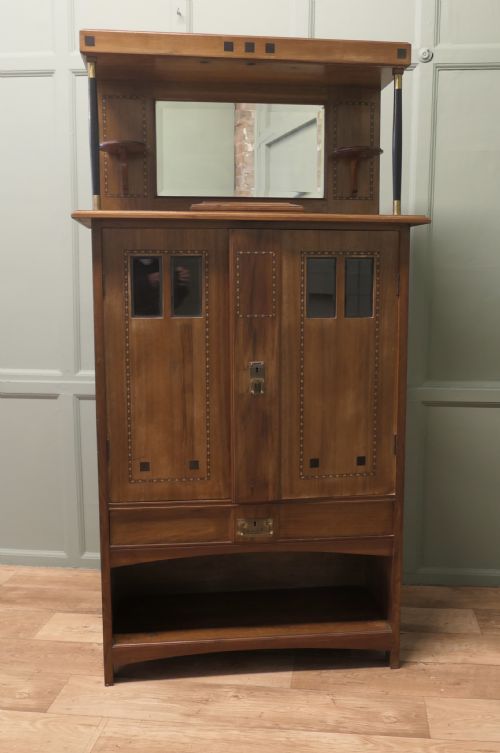
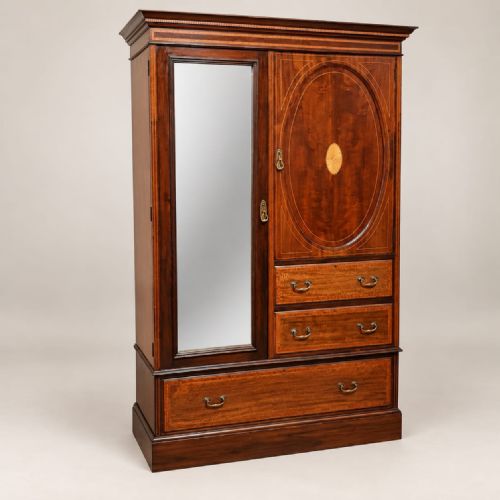
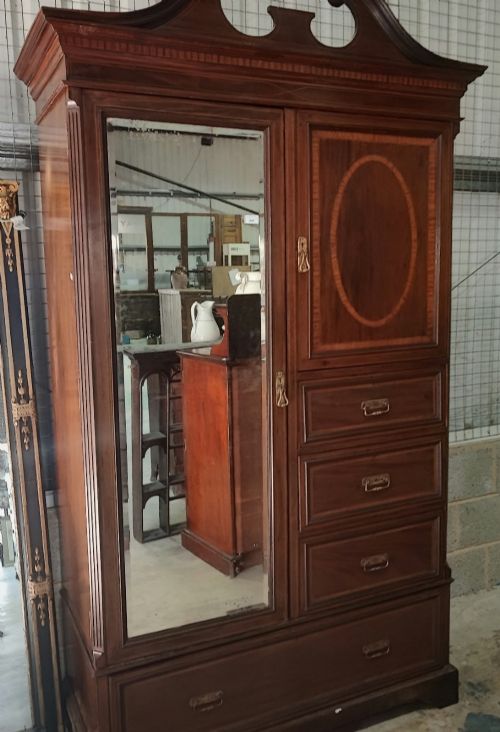
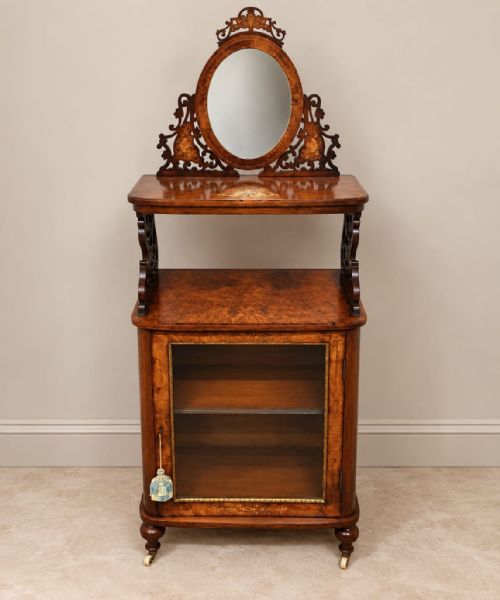


Vintage Inlaid Wooden Mirror
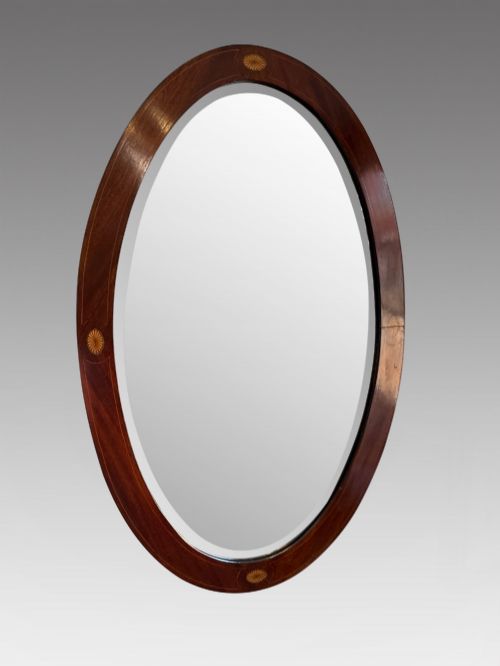
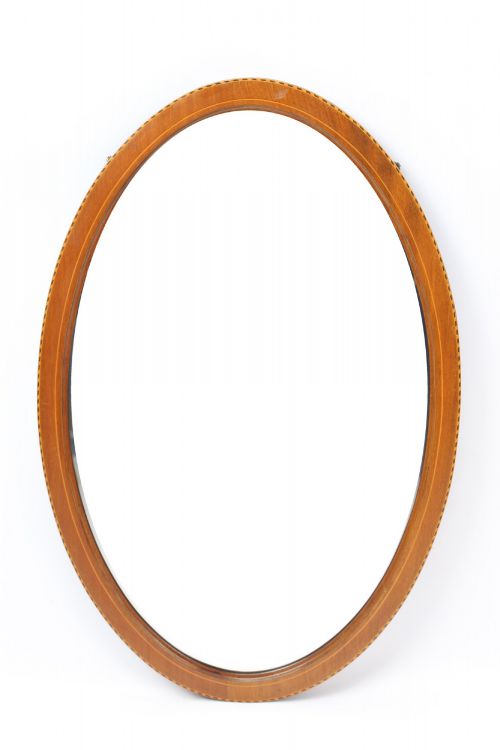
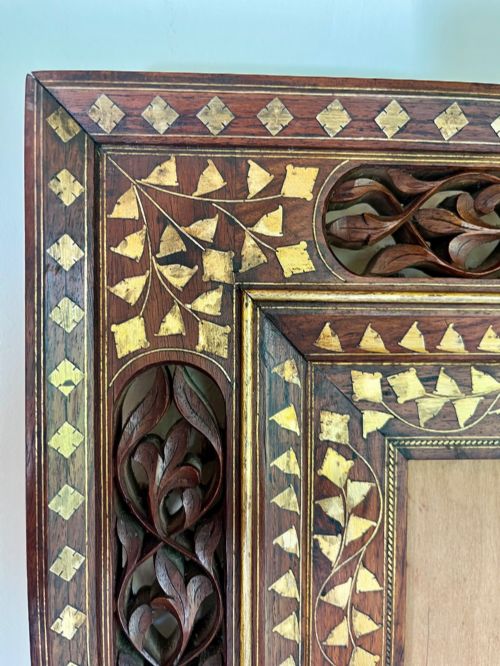
A vintage inlaid wooden mirror brings tactile warmth and precise geometry to a wall, combining rich timber grains with delicate contrasting stringing or marquetry.
Vintage Inlaid Wooden Mirror
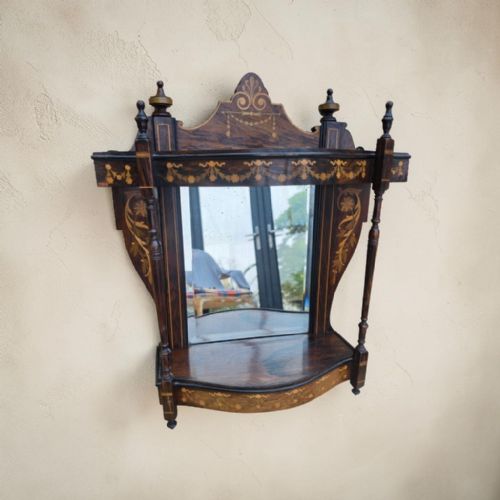
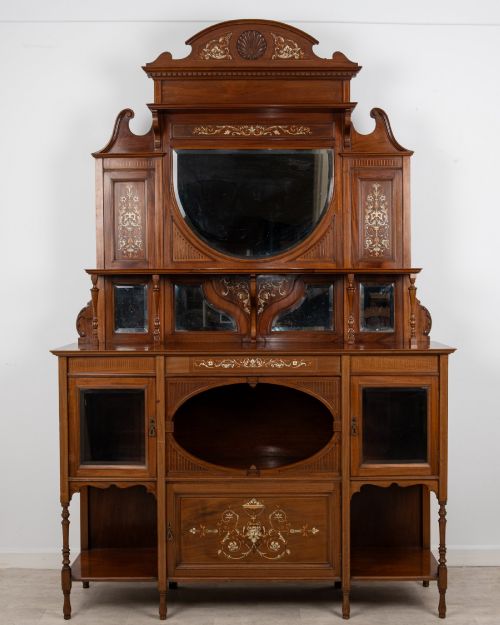
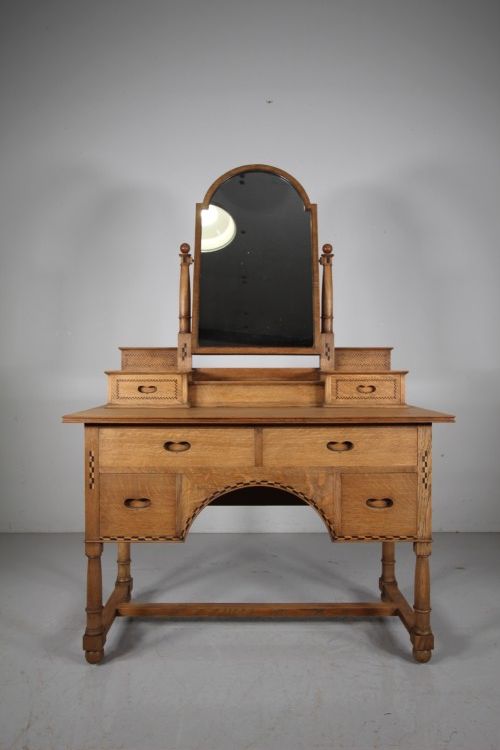
A vintage inlaid wooden mirror encompasses various wall-hanging, overmantel, and dressing formats produced primarily during the Victorian and Edwardian eras. These pieces range from compact oval wall frames to large overmantel glasses designed to sit above a fireplace.
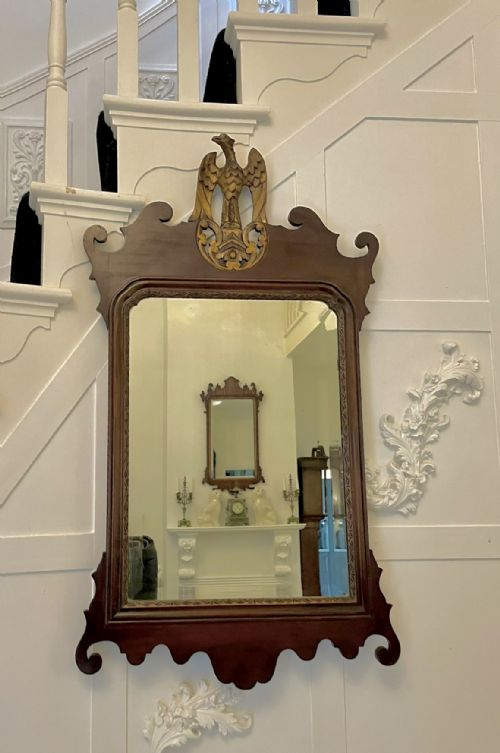
Makers utilised diverse timber grounds including mahogany, satinwood, walnut, and rosewood, often enhanced by elaborate marquetry or simple linear stringing. Wall mirrors frequently incorporate small shelves, fretwork borders, or brass detailing alongside the central glass.
The selection includes specialised regional forms such as Dutch marquetry toilet swing mirrors, Anglo-Indian Hoshiarpur frames with shisham and ivory inlay, and Arts and Crafts pieces associated with the Rowley Gallery.
Materials and construction
Cabinetmakers constructed these frames using solid hardwoods and decorative veneers laid over secondary timbers, employing traditional joinery methods such as mortise and tenon or dovetailing for structural stability. Wood inlay and marquetry techniques involved hand-cutting contrasting veneers to form floral, geometric, or pictorial motifs.
Surfaces were finished with French polish or natural oils to seal the grain and deepen the natural colour of the wood. Brass fittings, hanging loops, and occasional gilt accents were integrated to complete the functional hardware of each glass.
Listings feature periods spanning the early nineteenth century through the Edwardian era, incorporating mahogany, satinwood, walnut, and rosewood.
Assessing quality and execution
The refinement of the wood inlay dictates much of the visual distinction, separating crisp, precisely fitted marquetry from simpler stamped or painted imitations. The choice of primary timber also matters, with finely figured satinwood, burr walnut, and rosewood commanding greater attention than plain utility woods.
Structural integrity relies on the preservation of original mirror glass, robust frame joints, and undamaged fretwork borders. Pieces retaining maker labels, such as those from Heal or the Rowley Gallery, demonstrate documented provenance that elevates their standing.
Edwards and Roberts·Heal·Rowley Gallery·Gillows
The Vintage Inlaid Wooden Mirror Glossary
- Marquetry
- Decorative veneer work arranged in pictorial or geometric patterns using various coloured woods. This technique requires exceptional skill in cutting and fitting thin timber sections together.
- Stringing
- Thin lines of contrasting wood inlaid into channels cut into the primary surface. It creates a neat, linear border around panel edges and frame perimeters.
- Overmantel mirror
- A large mirror specifically proportioned to hang above a fireplace mantelpiece. These pieces often feature extended frames and integrated structural shelves.
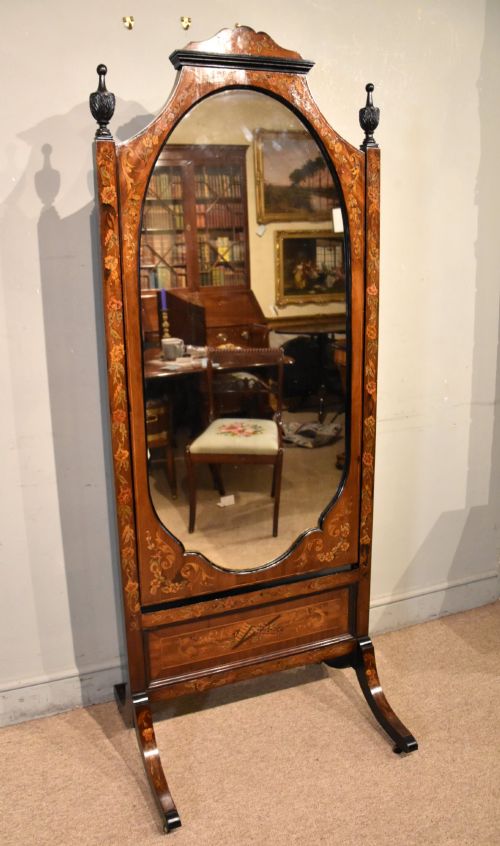
- Cheval mirror
- A full-length swing mirror suspended on a vertical floor-standing frame. It allows the glass to pivot freely to various angles.
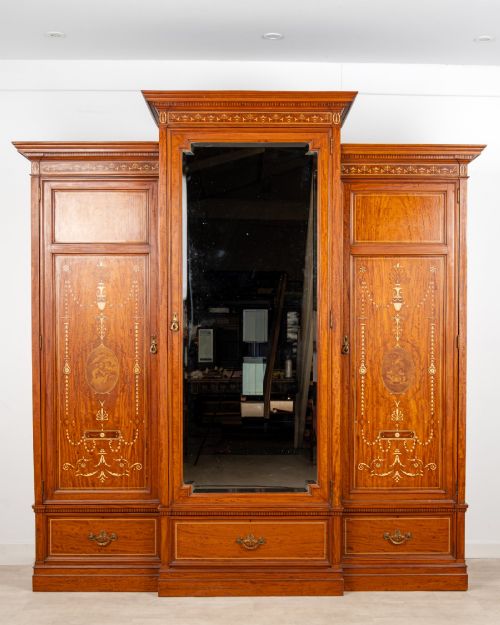
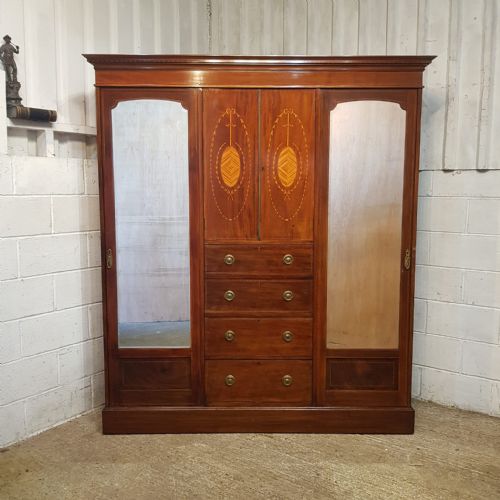
- Compactum
- A large multi-section wardrobe or cabinet combination designed to maximise interior storage. Some incorporate mirrored doors alongside internal drawers and hanging space.
Vintage Inlaid Wooden Mirror: Frequently Asked Questions
What is the difference between marquetry and inlay?
Inlay involves inserting pieces of wood into cavities carved directly into a solid timber background. Marquetry covers the entire surface with a composed picture or pattern made from assembled veneers before application.
Both techniques were common in decorative frames, but marquetry generally allows for more complex pictorial scenes and tonal shading.
How should I clean antique wood and mirror glass?
Dust timber frames gently with a dry, soft cloth and avoid commercial silicone sprays that can damage historic polishes. Clean the glass using a minimal amount of glass cleaner applied to a cloth rather than sprayed directly onto the surface, preventing liquid seepage behind the silvering.
Keeping the frame away from direct sunlight and damp conditions preserves both the wood colour and the integrity of the veneer.
Are original mirror plates usually bevelled?
Many Victorian and Edwardian mirror plates feature hand-bevelled edges that catch the light at oblique angles. Plain flat glass appears more frequently on earlier Georgian pieces or simpler vernacular items.
Original glass often shows faint oxidisation spots or light foxing, which collectors view as an authentic sign of age rather than a fault.