

Brown Wood Standing Mirror
A brown wood standing mirror brings warmth and practicality to a room, offering full-length reflection through centuries-old craftsmanship.
Brown Wood Standing Mirror
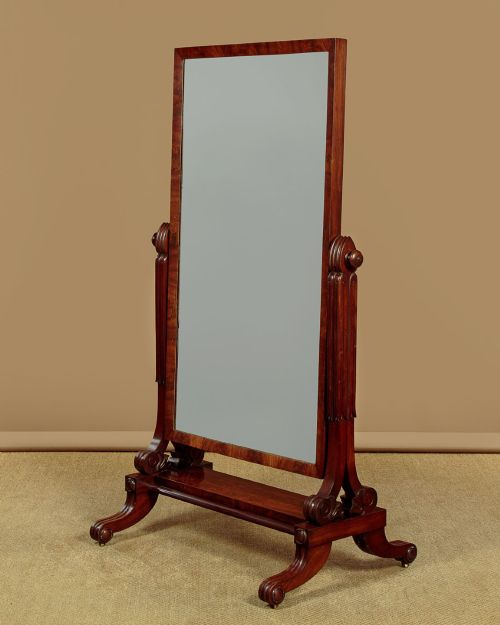
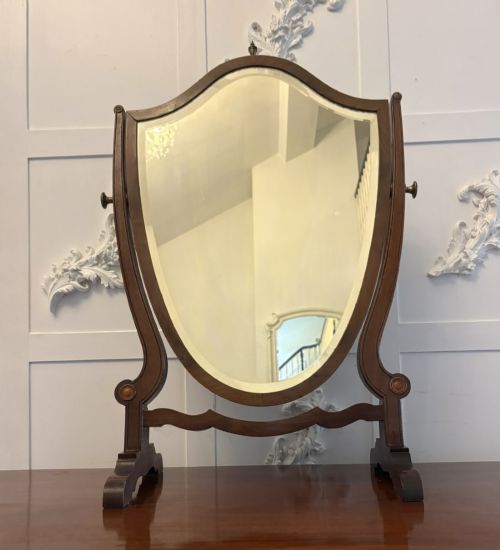
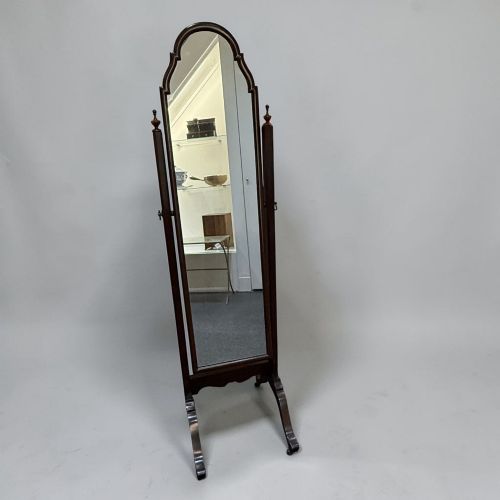
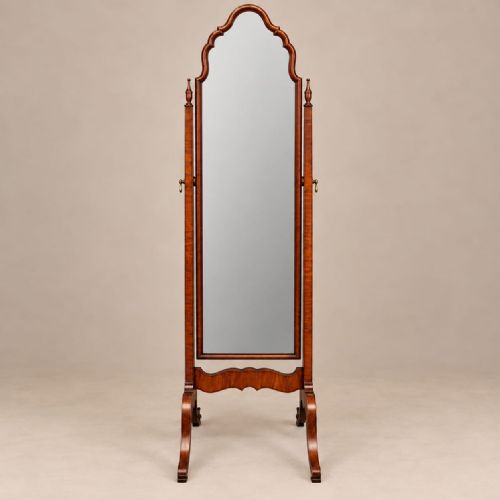
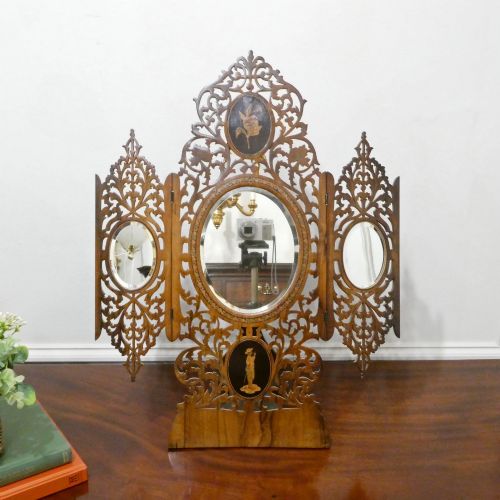
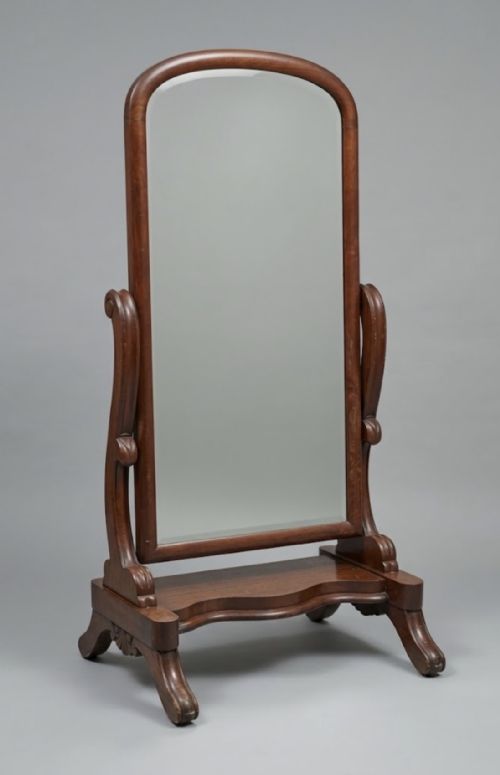
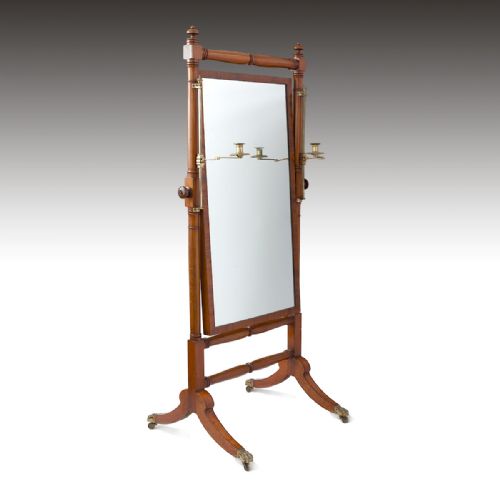
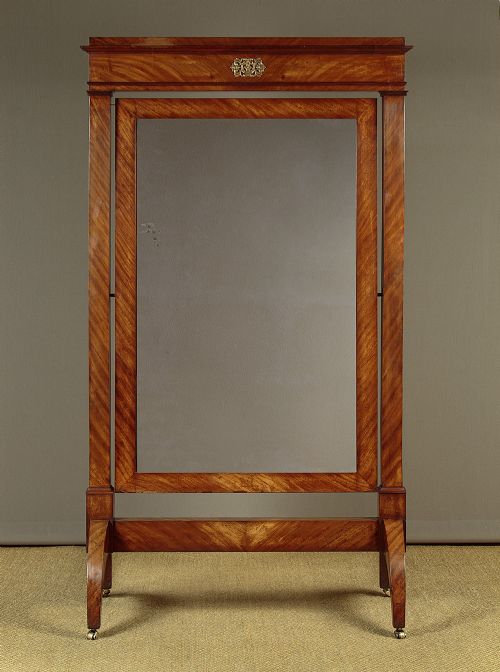
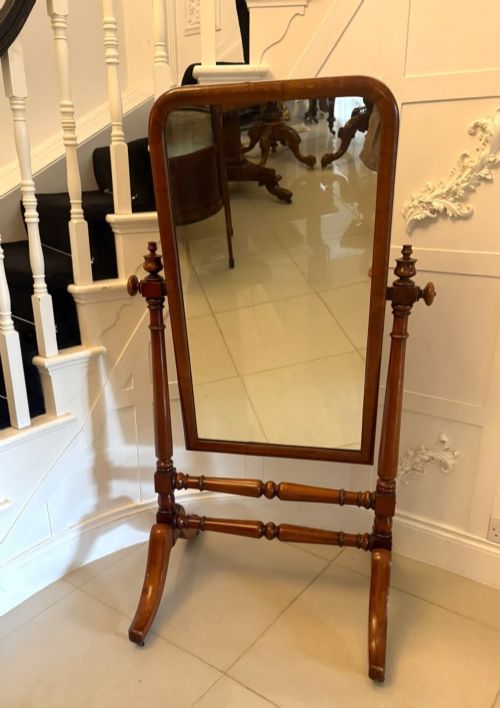
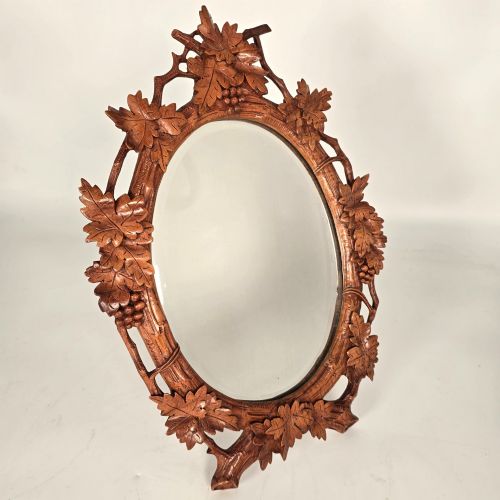
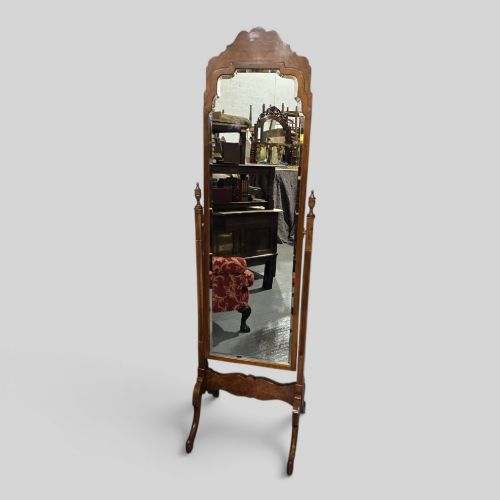
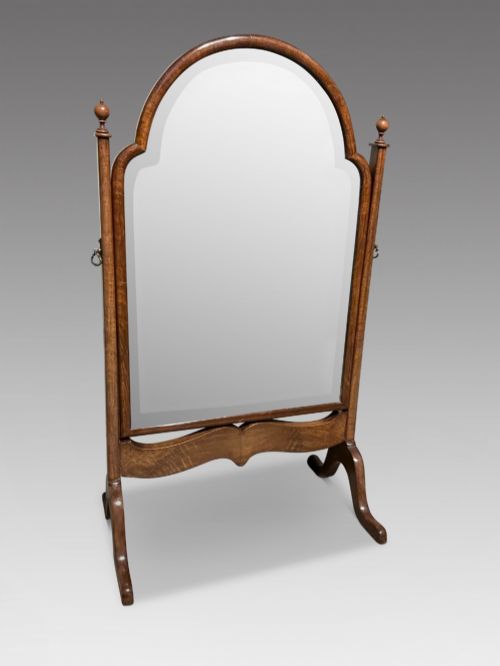
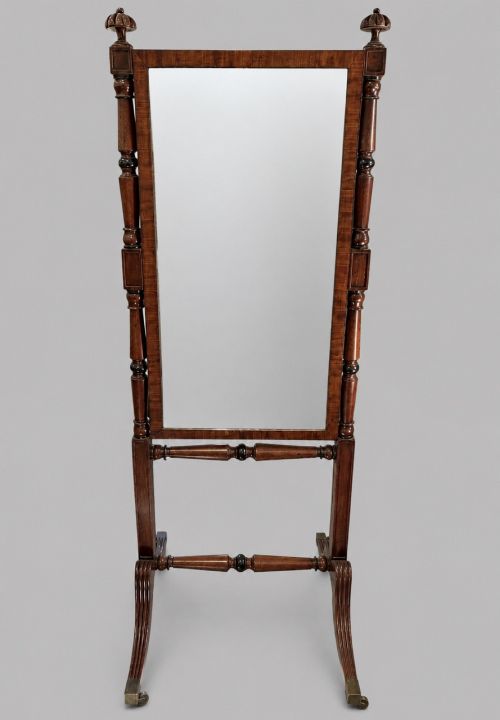
A brown wood standing mirror primarily takes the form of a cheval mirror or a dressing mirror designed to stand independently on the floor or a table. These pieces emerge across the Georgian, Regency, Victorian, and Edwardian periods, reflecting the shifting tastes in interior furnishings over two centuries.
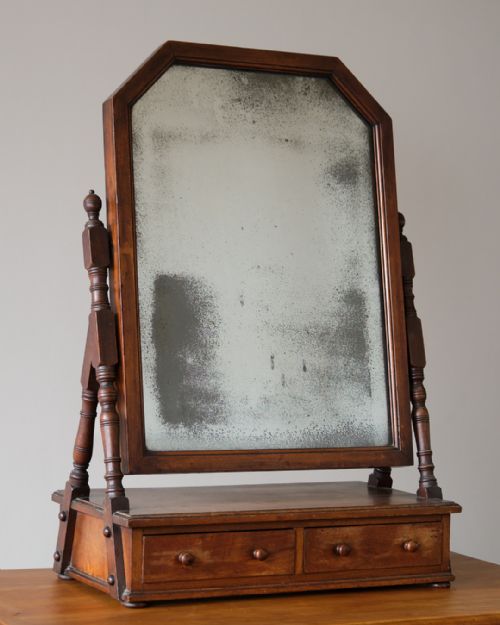
Buyers will encounter freestanding floor models alongside smaller toilet and shaving mirrors supported by stands or frames. Mahogany and walnut dominate these constructions, frequently shaped during the nineteenth century.
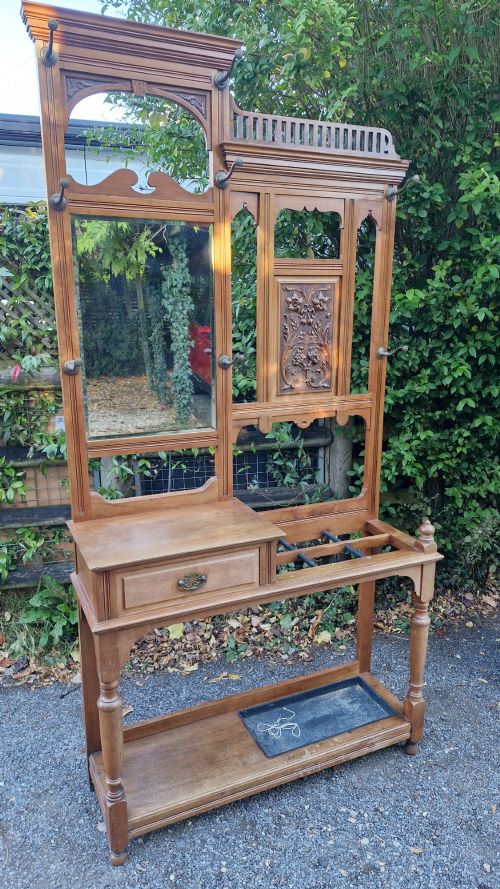
Originating in country houses and town residences alike, these mirrors served daily grooming needs while doubling as decorative furniture pieces. The selections on this page capture this diverse heritage through various regional and period styles.
Materials and Technique
Cabinet makers utilised dense hardwoods such as mahogany, walnut, and burr walnut to build durable standing frames that could support heavy glass plates. Oak, rosewood, and lime wood also appear across specific regional pieces and carved styles.
Joinery techniques involved precise framing to secure the swinging glass panels between sturdy upright posts, often mounted on supportive trestle bases or tripod stands. Artisans incorporated brass fittings, marquetry inlay, and detailed hand-carving to elevate the visual appeal of the timber.
Brown Wood Standing Mirror Retail Price Guide 2026
Typical asking prices for brown wood standing mirror among the pieces listed under this phrase on Sellingantiques today, from the lower quarter to the upper quarter. They describe what is for sale here now, not the wider market.
Listings feature mahogany, walnut, burr walnut, and oak across the nineteenth and early twentieth centuries.
Craftsmanship and Proportion
Superior examples display balanced proportions between the upright frame and the supporting base, ensuring stability for the pivoting mirror plate. The selection of timber grain, particularly figured burr walnut or rich mahogany, distinguishes finer workshops from standard production.
Collinson & Lock·Gillow·Heal & Sons·James Shoolbred
The Brown Wood Standing Mirror Glossary
- Cheval mirror
- A large floor-standing mirror suspended on a frame that allows it to swing. This design enables full-length viewing and became popular in dressing rooms during the eighteenth and nineteenth centuries.
- Toilet mirror
- A smaller dressing mirror mounted on a small box or stand, intended to sit atop a chest of drawers or a dressing table. These typically date from the Georgian and Victorian eras.
- Swing mirror
- Any mirror plate hung on pivots within a vertical frame, allowing the user to tilt the glass angle. They are common in both standing cheval formats and smaller table versions.
- Shaving stand
- A specialised piece of furniture incorporating an adjustable mirror alongside a small table surface or basin support. Gentlemen utilised these in bedrooms and dressing rooms for morning grooming.
- Burr walnut
- Wood taken from the gnarled growth of a walnut tree, highly prized for its swirling, intricate grain patterns. Cabinet makers used veneers of this material to create decorative surfaces on fine mirrors and cabinets.
Brown Wood Standing Mirror: Frequently Asked Questions
What is a cheval mirror?
A cheval mirror is a tall, floor-standing glass panel mounted on a frame that permits it to pivot. This design allows a person to view their entire outfit from head to toe.
Cabinet makers in the Georgian and Victorian periods favoured this form for bedrooms and dressing rooms, using sturdy timber legs or trestle bases to keep the heavy frame stable.
How do I date a wooden mirror?
Dating relies on observing the timber species, construction joinery, and the bevel or clarity of the glass plate. Georgian and Regency pieces often feature lighter frames with delicate proportions, while Victorian examples tend to be heavier and more heavily carved.
Nail types, backboards, and mounting hardware also provide clues to the decade of manufacture, aligning with the stylistic shifts recorded across the nineteenth and early twentieth centuries.
Where should I place a standing mirror?
A standing mirror suits bedrooms, dressing areas, or hallways where natural light can reflect across the room. Placing it opposite a window enhances illumination and creates a greater sense of space.
Ensure the floor surface is level so the frame rests securely on its base, allowing the pivoting mirror to remain balanced during daily use.
How do I maintain wood and glass?
Dust the wooden frame regularly with a soft cloth and feed the timber periodically with appropriate wax to preserve the finish. Avoid using harsh chemical sprays on antique polished surfaces.
Clean the glass plate using a mild cleaner applied to a cloth rather than sprayed directly, preventing moisture from seeping behind the frame edges and damaging the silver backing.