
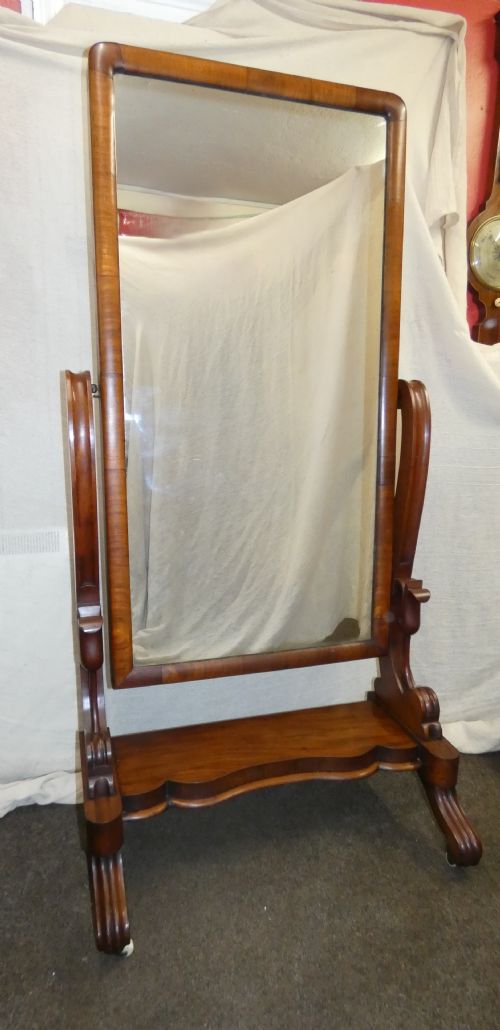

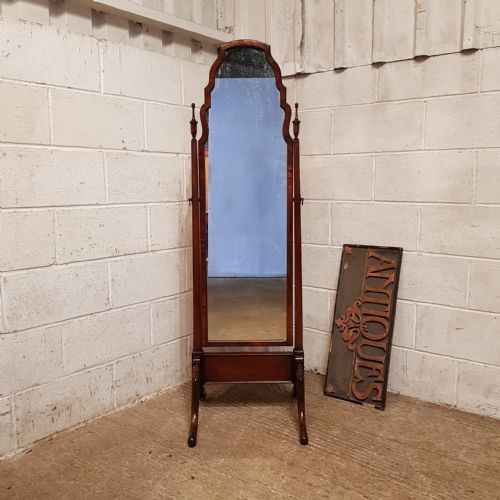


Mahogany Tilting Mirror
A mahogany tilting mirror brings warmth and functional elegance to a room, offering adjustable reflection set in rich timber frames.
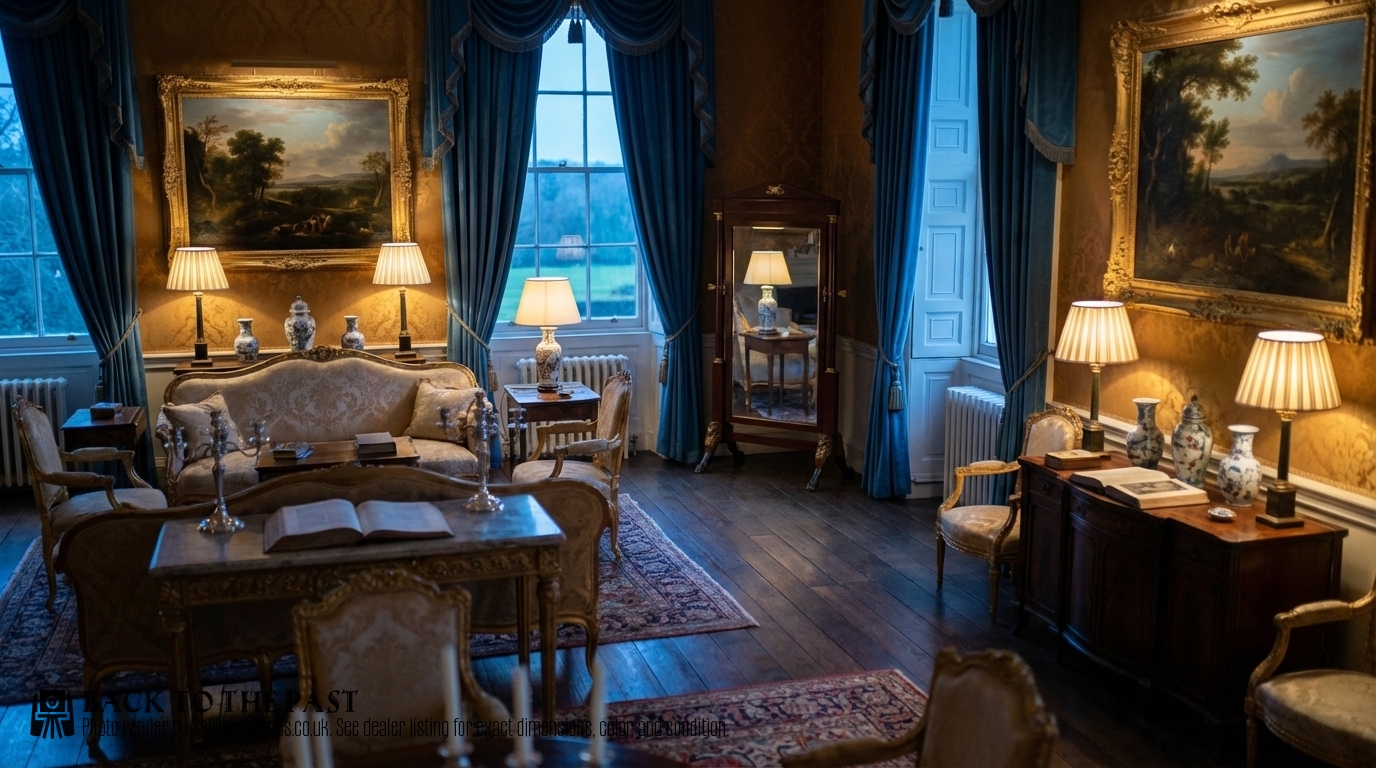
Mahogany Tilting Mirror
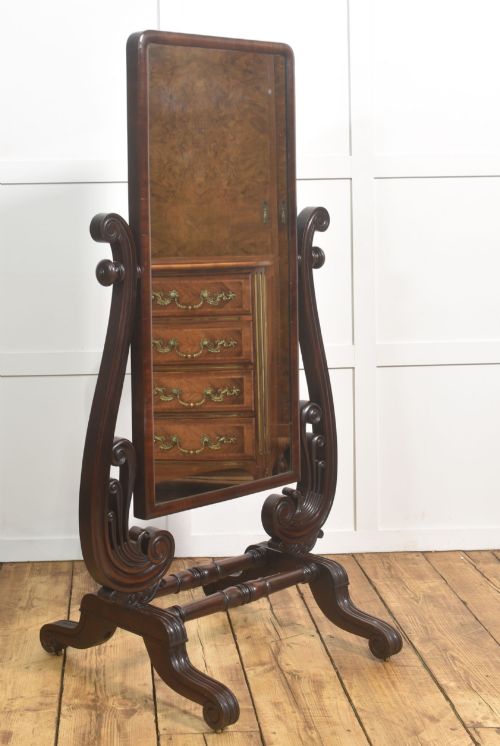
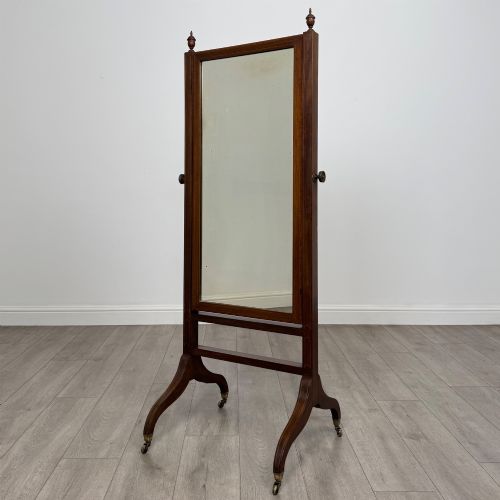
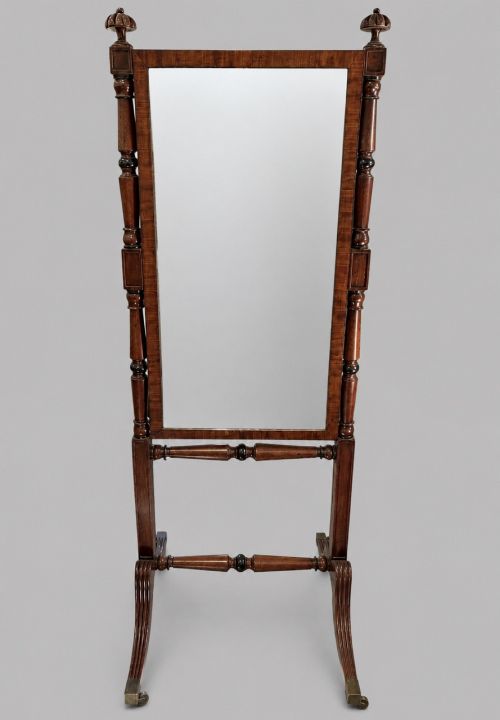
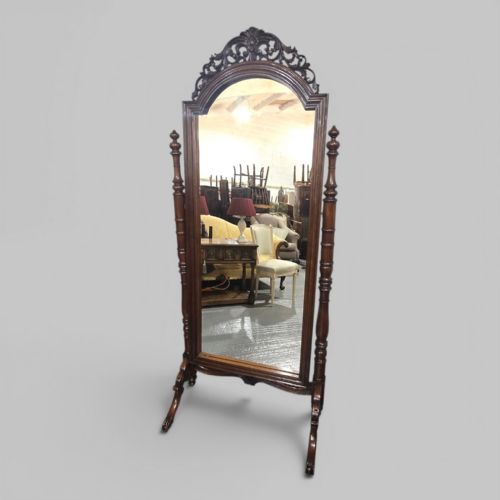
When you search for a mahogany tilting mirror, you encounter full-length cheval glasses designed to stand on the floor and smaller tabletop versions intended for dressing tables. These pieces span several eras, appearing most frequently in Victorian, Regency, and Edwardian guises alongside Georgian and William IV examples.
Floor-standing cheval mirrors dominate the selection, often featuring vertical swinging plates supported by upright pillars and sturdy legs. Tabletop or toilet variants also appear, offering compact surfaces with pivoted frames for intimate dressing spaces.
Materials and construction
Makers utilised solid mahogany and flame mahogany veneers, often highlighting the wood grain with polished finishes. Brass hardware, including sabots, castors, and pivot screws, provides both structural support and decorative contrast.
Glass mirrors are held within pivoting frames that allow the angle of reflection to adjust smoothly. Additional decorative elements like ormolu, satinwood inlay, gold leaf, and bone occasionally accent the timber framework.
Listings feature mahogany tilting mirrors spanning the Georgian, Regency, William IV, Victorian, and Edwardian periods.
Quality and execution
The distinction between standard examples and finer pieces lies in the selection of timber veneers and the precision of the joinery. Flame mahogany figures prominently in superior items, displaying deliberate grain patterns across the primary surfaces.
Hardware quality also separates grades, with heavy cast brass sabots and original functional pivot mechanisms indicating careful original manufacture. The integration of subtle details, such as inlaid satinwood or finely turned upright supports, elevates the overall presence of the piece.
The Mahogany Tilting Mirror Glossary
- Cheval mirror
- A full-length swing mirror supported by a freestanding frame with four legs. This form allows the glass to tilt back and forth on central pivots.
- Flame mahogany
- A timber veneer displaying a distinct, flamelike grain pattern. Cabinet makers selected this cut for its visual impact on prominent surfaces.
- Ormolu
- Gilt bronze ornamentation applied to furniture mounts. This material provides metallic highlights against dark timber.
- Sabot
- A metal shoe fitted to the foot of a furniture leg. Brass versions protect the base of the leg and often incorporate castors.
- Toilet mirror
- A smaller dressing mirror designed to sit on a tabletop or chest of drawers. These feature pivoting plates mounted on miniature stands.
Mahogany Tilting Mirror: Frequently Asked Questions
How do I use a cheval mirror?
A cheval mirror stands directly on the floor to provide a full-length reflection for dressing. The pivoting frame tilts to adjust the angle.
Position the piece near adequate natural light to ensure a clear view. Ensure the floor surface is level so the castors or legs remain stable.
What is the difference between cheval and toilet mirrors?
Cheval mirrors are tall, floor-standing pieces designed for full-body viewing. They incorporate sturdy legs and tall upright supports.
Toilet mirrors are compact versions meant for placement on top of a table or bureau. They focus on upper-body reflection during grooming.
How do I date a mahogany tilting mirror?
Dating relies on observing the structural style, leg design, and secondary woods used in construction. Regency and Georgian examples often feature sabre legs or delicate frames, while Victorian and Edwardian versions tend to be heavier.
Hardware details like brass pivot screws and castors also offer clues to the period of manufacture. Examine the backboards and joinery methods for further context.
Where should I place a tilting mirror?
Place the mirror in a bedroom or dressing area where full-length or tabletop reflection is useful. Bedrooms with neutral walls allow the mahogany timber to stand out.
Keep the piece away from direct, harsh sunlight to protect the polished wood finish over time. Ensure sufficient clearance around the frame to allow the tilting mechanism to operate freely.