





Nineteenth Century Cheval Mirror
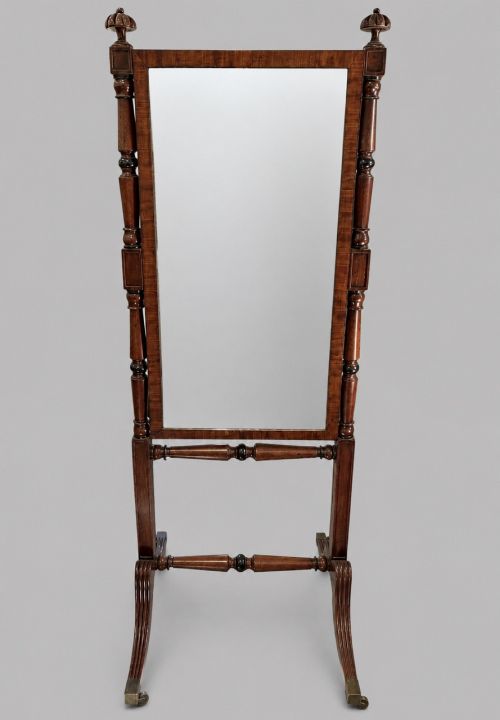
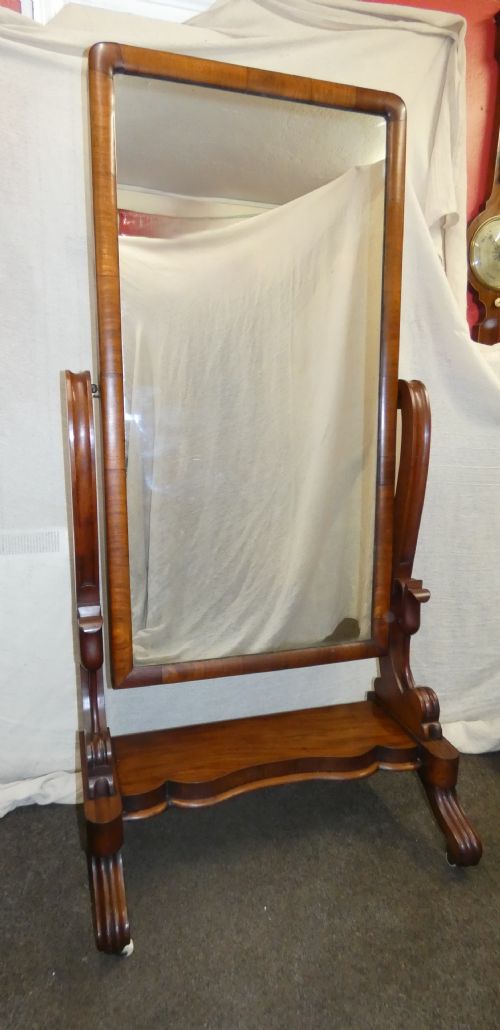
A nineteenth century cheval mirror is a freestanding full-length glass on a pivoted frame, offering a complete view and commanding a room.
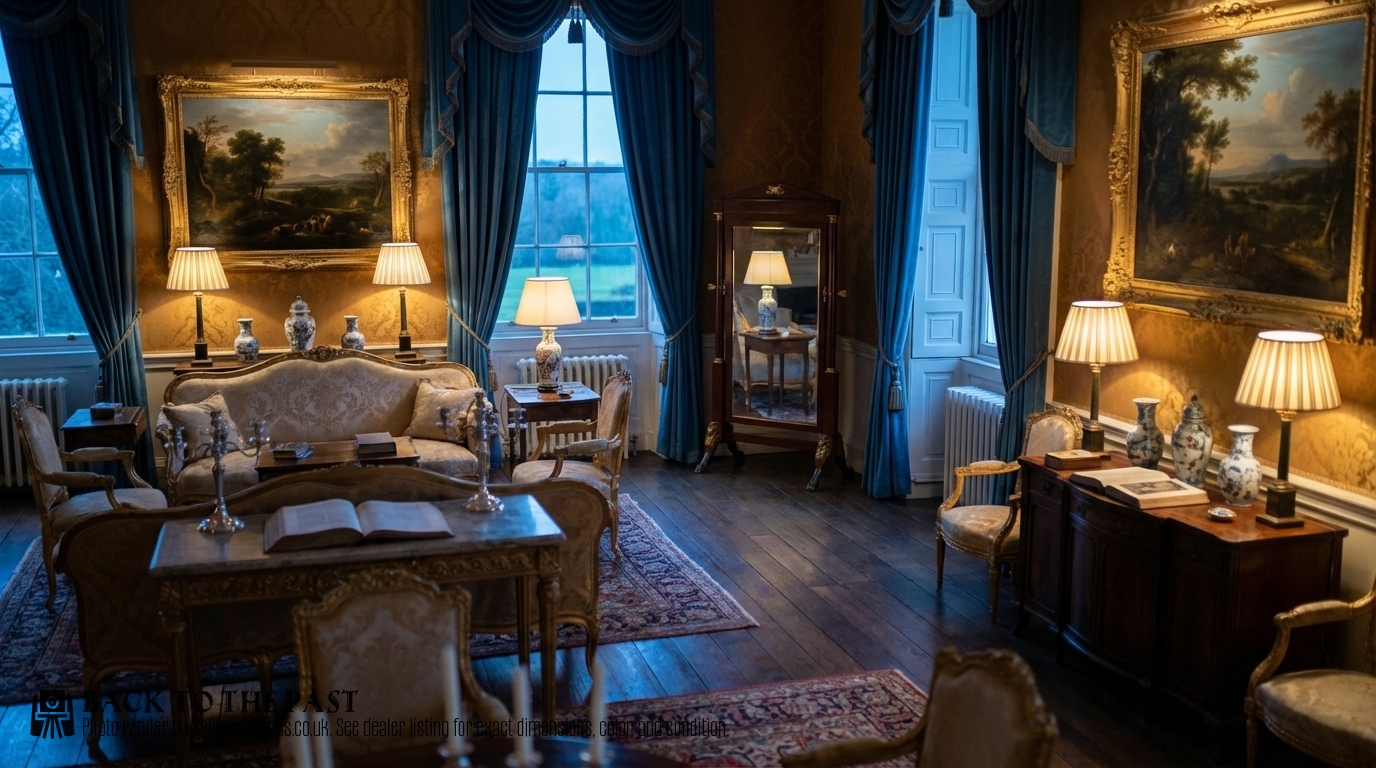
Nineteenth Century Cheval Mirror
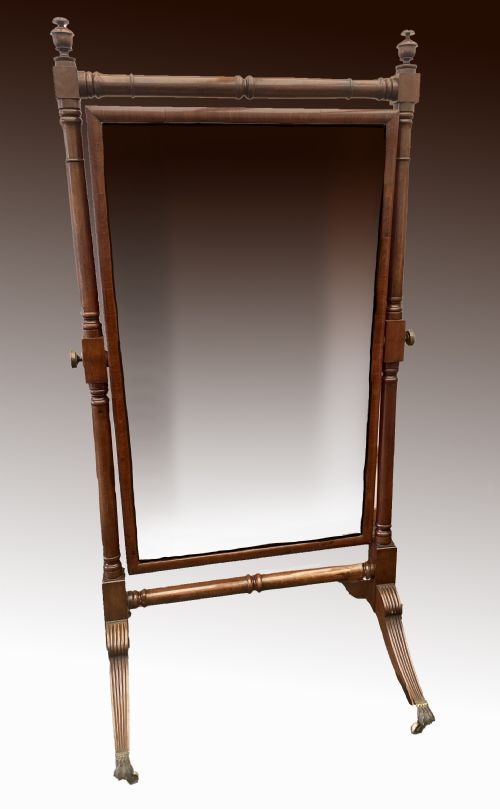
A nineteenth century cheval mirror is a floor-standing dressing glass supported by a frame with vertical pillars and pivoting side pins. These pieces allow the plate to tilt smoothly, a practical arrangement designed for full-length inspection.
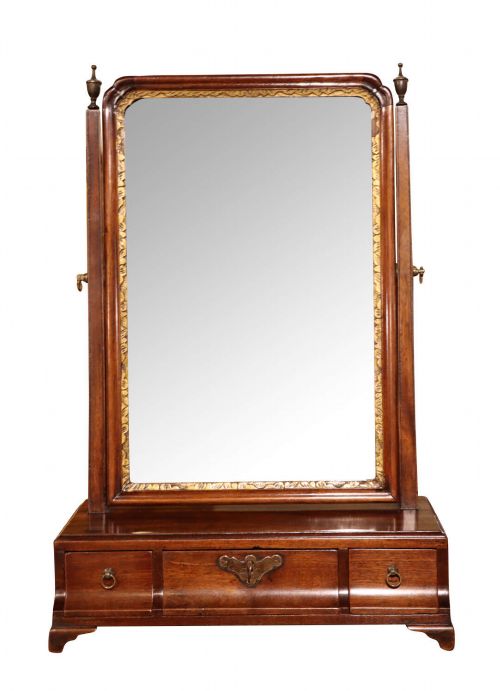
The versions met most often on this page are constructed from mahogany, appearing in Regency, Victorian, and William IV styles. Examples range from simple freestanding floor models to complex dressing table chests and dressing mirrors with drawers.
Makers and workshops of the period also produced variations featuring Dutch marquetry inlay, French Empire design, and French Rococo Revival ornamentation. Walnut and gilt wood alternatives appear alongside the predominant mahogany frames.
How they were made
Makers built the structural framework primarily from solid and figured mahogany, often employing flame mahogany veneers for enhanced grain pattern. Workshops incorporated satinwood inlay for decorative contrast on select panels.
Hardware elements such as brass mounts, pins, and ormolu details secured the pivoting mirror plate and provided structural articulation. Gold leaf was applied to enrich gilt wood surfaces, while specialised enamel work appears on select decorative table variants.
Nineteenth Century Cheval Mirror Retail Price Guide 2026
Typical asking prices for nineteenth century cheval mirror among the pieces listed under this phrase on Sellingantiques today, from the lower quarter to the upper quarter. They describe what is for sale here now, not the wider market.
Listings feature mahogany, walnut, brass, ormolu, and mirror glass across Regency, Victorian, and William IV styles.
What varies in quality
Quality rests in the selection of figured timber and the precision of the cabinetwork, particularly around the pivotal mounts and joints. Finer examples display meticulous matching of wood grain across the entire frame and drawer fronts.
The refinement of brass fittings and the presence of specialised ornamentation, such as ormolu or detailed inlay work, distinguish standard utilitarian items from superior workshop productions.
Gillows·F.Bienvue
The Nineteenth Century Cheval Mirror Glossary
- Cheval mirror
- A freestanding full-length mirror mounted on a pivoted frame between two upright posts. This form gained widespread popularity during the nineteenth century for bedroom and dressing room use.
- Regency
- A style spanning the early nineteenth century, characterised by classical restraint and neoclassical motifs. Pieces from this period often display clean architectural lines.
- Ormolu
- Gilded bronze ornamentation applied to furniture and decorative objects. It provides a bright metallic contrast against dark woods and enamel panels.
- Marquetry
- The art of applying pieces of veneer to a structure to form decorative patterns. Dutch examples often feature floral and pictorial designs in lighter woods.
Nineteenth Century Cheval Mirror: Frequently Asked Questions
What is a cheval mirror?
A cheval mirror is a full-length dressing glass designed to stand independently on the floor. It is supported by a vertical frame with pivots that allow the glass to tilt.
These pieces were developed to provide a complete view of attire, functioning as both a practical furnishing and a substantial room accent.
How do I place one in a room?
Position the mirror against a stable wall or in a bedroom corner where it receives adequate natural or artificial light. Ensure the floor is level so the frame remains balanced on its base.
Because the frame projects outward, allow sufficient clearance around the base to permit the glass to tilt without obstruction.
How do I tell Regency from Victorian styles?
Regency pieces generally exhibit leaner proportions and neoclassical restraint, often featuring simpler mahogany surfaces and restrained brass mounts. Victorian examples tend to be heavier and more ornate.
Victorian pieces frequently incorporate richer carving, serpentine fronts, or integrated drawers within the base structure, reflecting mid-century preferences for utility and display.
What woods were used?
Mahogany is the primary wood found across these listings, utilised both in solid form and as figured veneer. Walnut and gilt wood also appear in specific regional and revival styles.
Inlay work incorporates lighter timbers such as satinwood to create contrasting decorative borders and panels on the frame surfaces.