


Georgian Mahogany Cheval Mirror
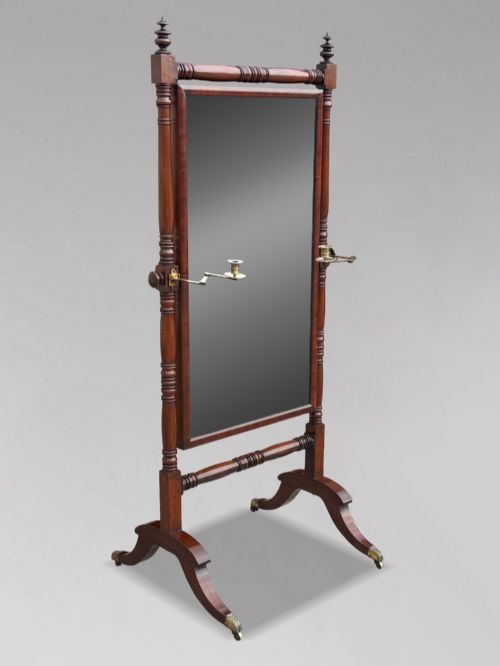
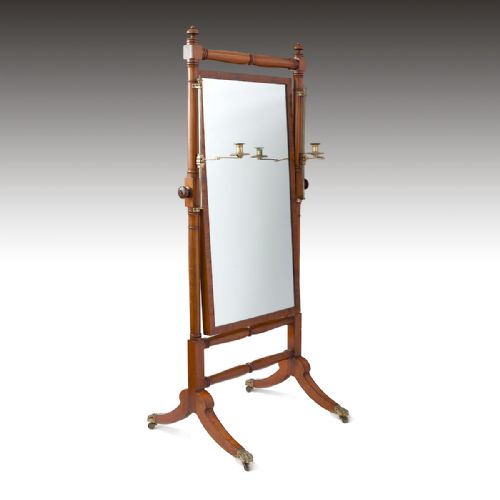
A georgian mahogany cheval mirror brings towering height and warm timber grain into a dressing room, offering a full-length reflection framed with period cabinet-making skill.
Georgian Mahogany Cheval Mirror
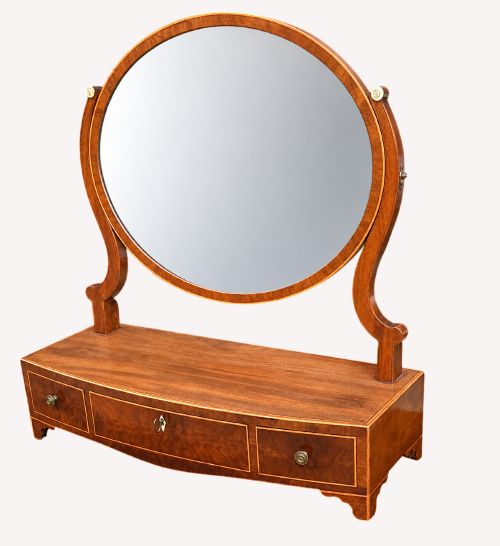
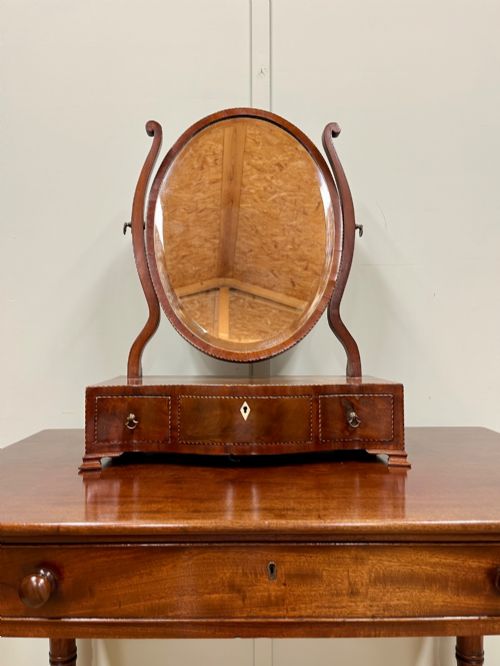
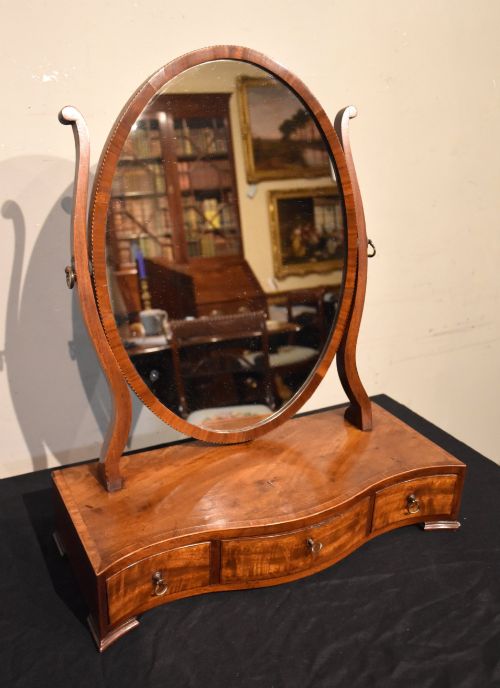
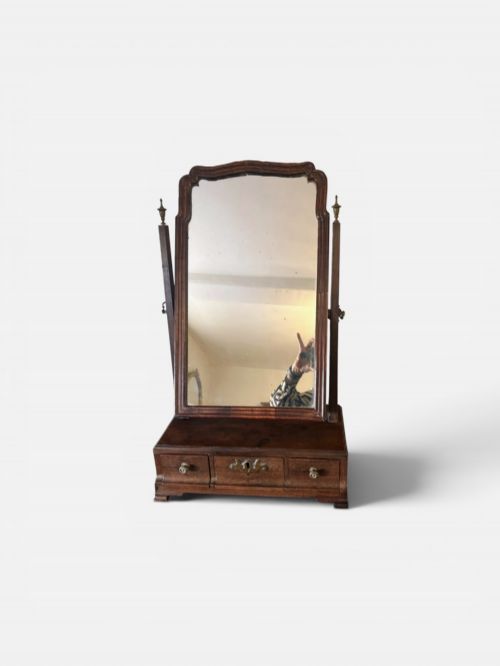
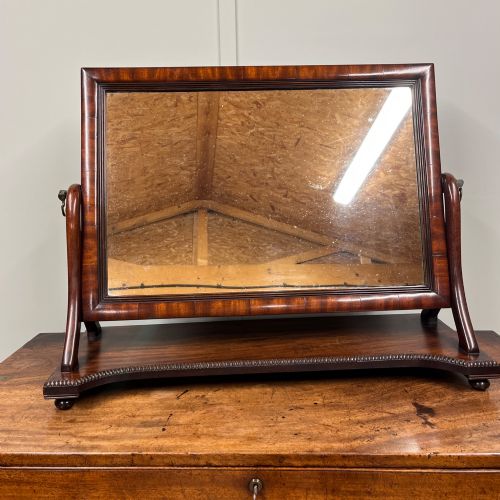
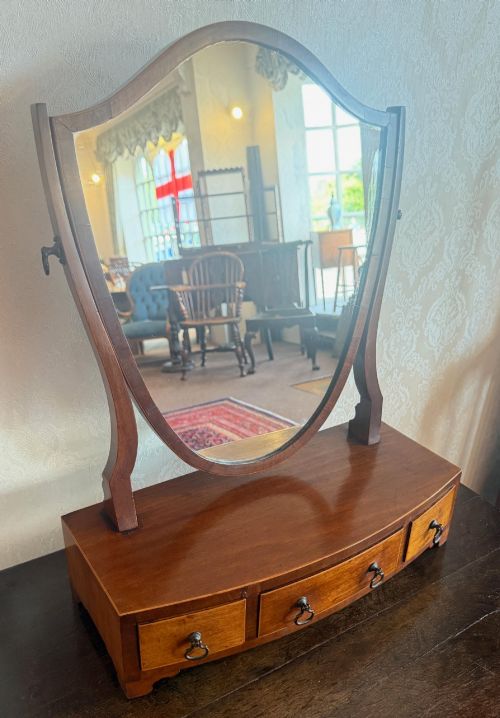
A georgian mahogany cheval mirror is a freestanding, full-length swinging glass designed for the bedroom or dressing room, appearing across this selection in floor-standing formats as well as smaller table and toilet versions.
The pieces span the Georgian, Regency, and Victorian eras, utilising styles from George III and William IV alongside later interpretations, with forms ranging from simple rectangular frames to grand country house editions.
Makers and workshops of the period produced these mirrors with adjustable tilt mechanisms, incorporating small drawers in the base or standing on sabre legs with brass castors.
Materials and Construction
Craftsmen built the frames primarily from solid and veneered mahogany, sometimes embellishing the timber with boxwood inlay, bone details, satinwood, or Dutch marquetry.
Structural hardware relies on brass, including sabots, castors, and pivot pins that allow the mirror plate to swing smoothly within its upright supports.
Original mirror glass is set within heavy timber surrounds, supported by sturdy side pillars and floor trestles or box bases containing fitted drawers.
Georgian Mahogany Cheval Mirror Retail Price Guide 2026
Typical asking prices for georgian mahogany cheval mirror among the pieces listed under this phrase on Sellingantiques today, from the lower quarter to the upper quarter. They describe what is for sale here now, not the wider market.
Early makers ensured dressing room occupants could check their boots and bonnets simultaneously without leaving the pivot.
Distinctions in Execution
The standard of timber selection and the crispness of inlay work dictate the refinement of a piece, distinguishing standard workshop production from finer cabinet work.
Proportion and stability separate simpler table mirrors from large scale freestanding cheval glasses, where the balance of the swinging frame and the strength of the upright supports matter greatly.
Gillows·Gillow·Chippendale
The Georgian Mahogany Cheval Mirror Glossary
- Cheval mirror
- A freestanding, full-length dressing mirror mounted on a swinging frame between two upright pillars. This design allows the user to tilt the glass to various angles.
- Toilet mirror
- A smaller dressing table or table mirror featuring a fixed or swinging glass mounted on a box base with small drawers. These sat upon chests of drawers or dressing tables.
- Sabre leg
- A curved, outwardly swept leg tapering toward the foot, commonly seen on Regency furniture. It provides steady support for freestanding floor mirrors.
- Sabot
- A metal sleeve or cap fitted to the foot of a furniture leg for protection and decoration. Brass sabots frequently appear on the feet of cheval mirrors.
- Marquetry
- Decorative veneer work arranged in intricate patterns using various coloured woods. Examples in these listings feature delicate floral or geometric inlay.
Georgian Mahogany Cheval Mirror: Frequently Asked Questions
Where should I place a cheval mirror?
A freestanding floor mirror requires adequate clearance to allow the heavy frame to swing on its pivot pins without striking surrounding furniture.
Positioning the glass opposite a window maximises natural light distribution across the room.
How do I operate the tilt mechanism?
Most swinging mirrors rely on brass side screws or pivot pins that tighten by hand to hold the glass at the desired angle.
Adjusting these fittings gently prevents undue strain on the timber uprights.
Can I place a toilet mirror on any chest?
Table mirrors require a flat, stable surface that matches the footprint of the box base or drawer section.
Ensuring the supporting furniture is level protects the antique joints from warping.
How do I care for mahogany frames?
Timber surfaces respond best to occasional dusting with a dry, soft cloth and benefit from natural beeswax applied sparingly.
Avoiding direct sunlight prevents the rich mahogany grain from fading over time.