
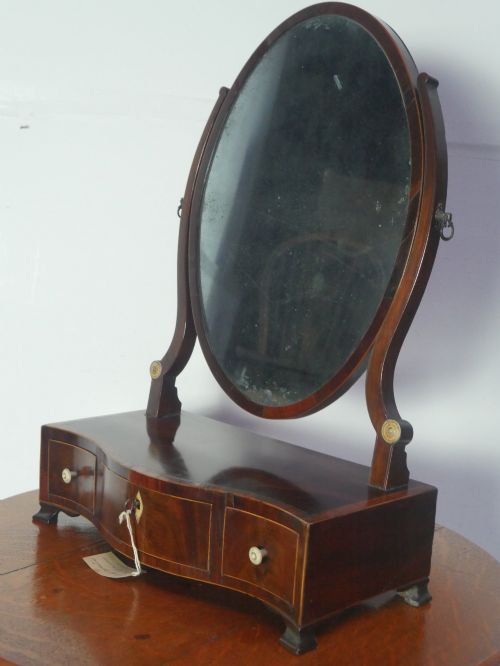


Regency Standing Mirror
A regency standing mirror brings the confident timber frames and pivoting glass of the early nineteenth century straight into a modern room.
Regency Standing Mirror
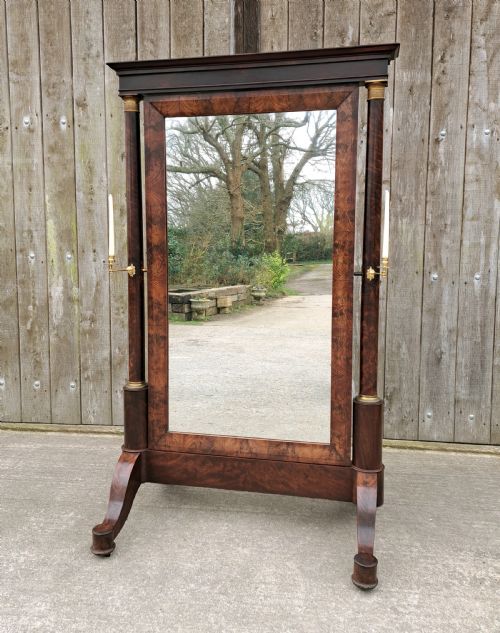
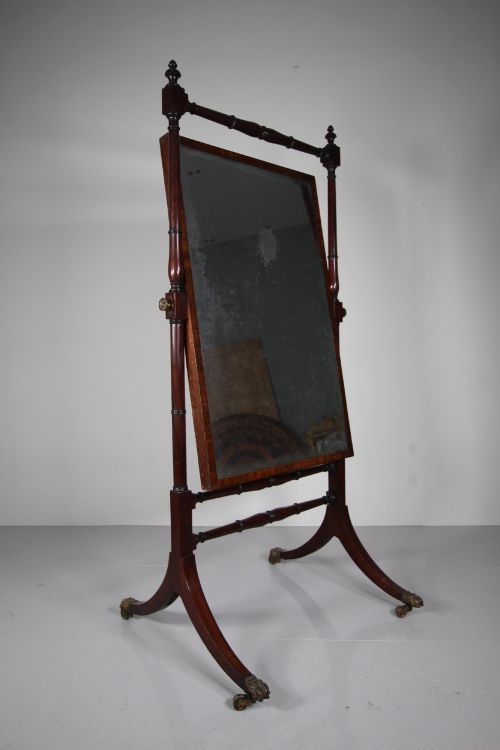
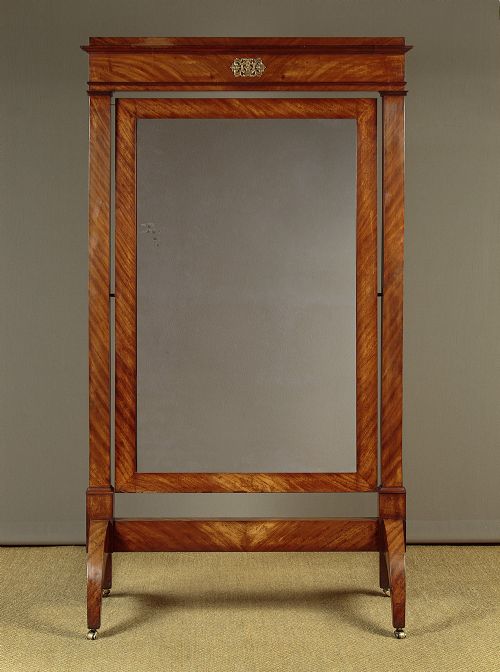
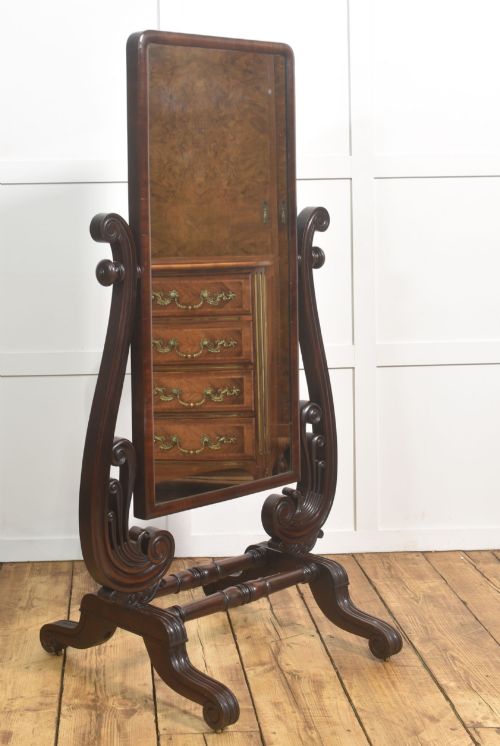
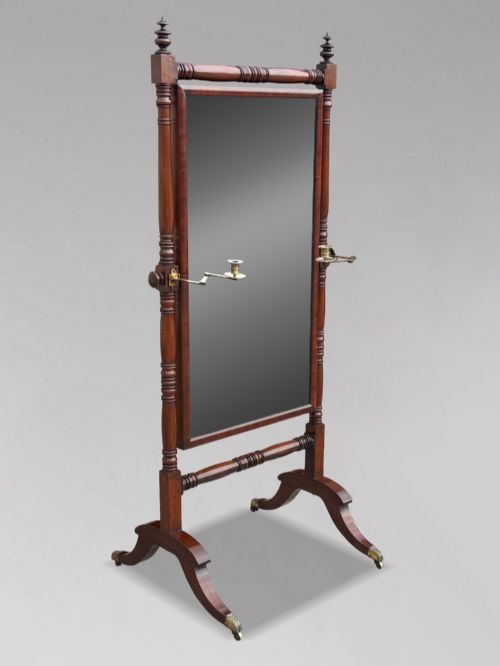
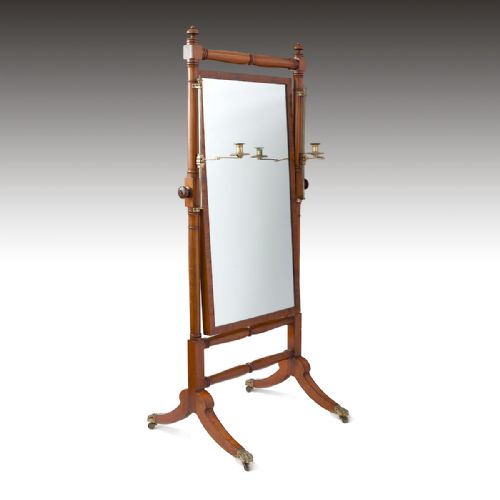
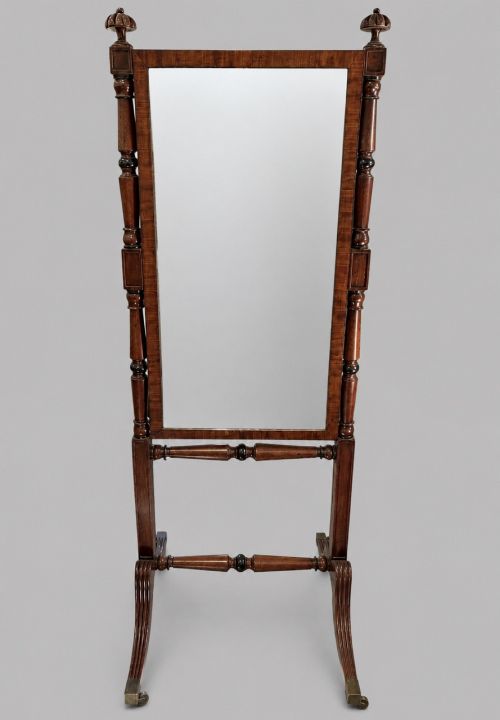
When you search for a regency standing mirror, you are looking for tall, pivoting floor-standing glasses designed to reflect full figures in bedrooms and dressing rooms. Most pieces on this page are cheval mirrors and dressing mirrors originating from the nineteenth century, built to stand independently on sabre legs or sturdy frames.
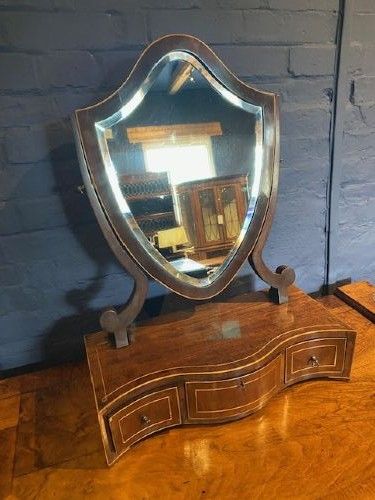
The selection ranges from large country house examples down to neat swing glasses and smaller dressing table mirrors. Alongside genuine Regency items, you will find pieces from the Georgian, William IV, and Victorian eras that share the same architectural uprights and swivelling frames.
Materials and construction
Cabinet makers relied heavily on rich mahogany, often paired with contrasting satinwood or walnut veneers to form the main structural uprights and bases. Frames frequently incorporate brass mounts, articulated candle holders, sabots, and castors to allow smooth movement across floor surfaces.
The original mirror glass sits within adjustable frames that tilt via side pivots, supported by substantial legs such as sabre or turned styles. Giltwood and bone details occasionally appear, adding decorative contrast to the warm timber grains.
Periods represented across the inventory span from the Georgian and Regency eras through William IV to the Victorian age.
Distinctions in quality
Quality reveals itself in the weight and selection of the timber, alongside the crispness of turned frames and the sturdiness of the pivoting mechanism. Superior examples show careful matching of mahogany veneers and finely cast brass sabots rather than plain replacement metalwork.
Proportion and scale dictate the presence of a piece, with larger country house mirrors displaying bolder mouldings and more complex joinery. The integrity of the original mirror glass and the smoothness of the tilt action separate ordinary utility mirrors from finer cabinet work.
Gillows
The Regency Standing Mirror Glossary
- Cheval mirror
- A large floor-standing mirror mounted on a vertical frame with pivots that allow the glass to swing. This design became popular during the Regency period for full-length dressing.
- Sabre leg
- A curving, outward-tapering furniture leg resembling a cavalry sabre. These often terminate in brass sabots and castors on standing mirrors.
- Sabot
- A protective metal sleeve fitted to the foot of a furniture leg. They are commonly cast in brass on nineteenth-century pieces.
- Giltwood
- Wood that has been coated with fine gold leaf or gilt powder. It appears on the more decorative mirror frames from the period.
- Dressing glass
- A smaller mirror designed to sit on top of a table or chest of drawers. Many share the pivoting frame mechanism of larger standing mirrors.
Regency Standing Mirror: Frequently Asked Questions
How do I use a standing mirror?
These pieces were originally designed for bedrooms and dressing rooms to check full attire before stepping out. Today they function just as well in hallways and living spaces to bounce light around the room.
Position the frame near a natural light source and adjust the tilt to catch the best angles. The pivoting mechanism lets you angle the glass precisely where you need it.
Are these mirrors easy to move?
Many of the larger examples are fitted with original brass castors on their feet, which were designed to help shift the heavy timber frames across carpets and floorboards.
Take care when repositioning older frames and lift them rather than dragging them by the side supports. The pivoting glass should be secured or locked in place before moving the piece.
How do I tell a Regency mirror from later copies?
Examine the timber grain, the construction of the joints, and the backing boards for signs of age. True period pieces often show hand-cut fixings and older glass plates with subtle imperfections.
Stylistic markers like sabre legs, brass candle arms, and turned uprights are typical of the early nineteenth century. Compare the proportion and weight of the frame against documented examples from the era.
What is the difference between a cheval and dressing mirror?
A cheval mirror is a tall, floor-standing glass that reflects the entire body. A dressing mirror is much smaller and intended to sit upon a table, washstand, or chest of drawers.
Both types utilise a swivelling frame held by side pivots, but their scale and placement in the home differ entirely. Floor-standing versions anchor a room, while table mirrors sit atop other furniture.