
Antique Swinging Dressing Glass
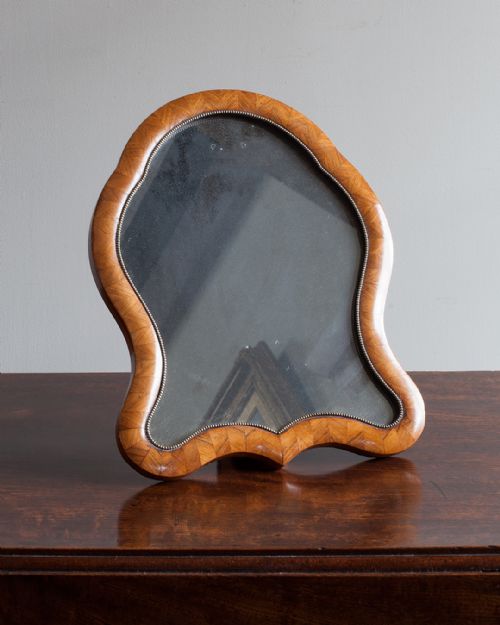
An antique swinging dressing glass brings practical elegance to a room, offering adjustable reflection within a fitted frame.
Antique Swinging Dressing Glass
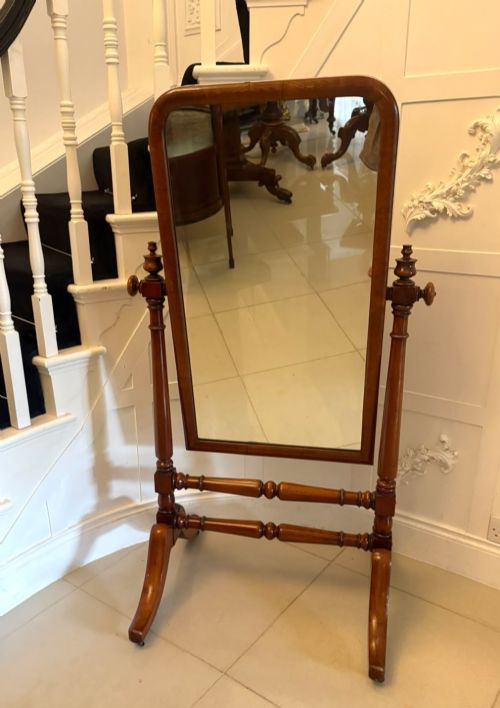
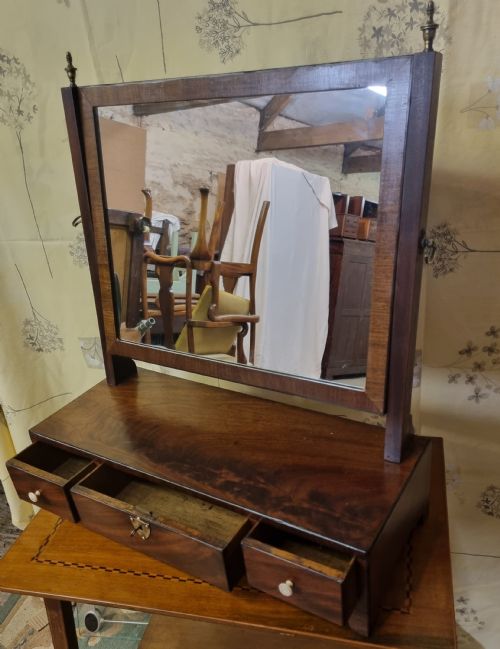
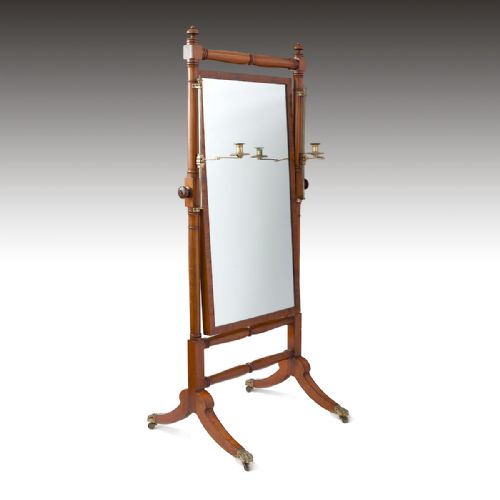
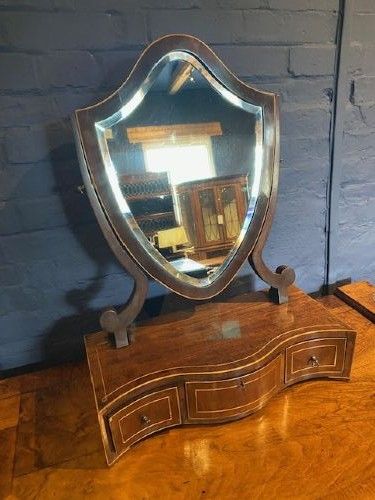
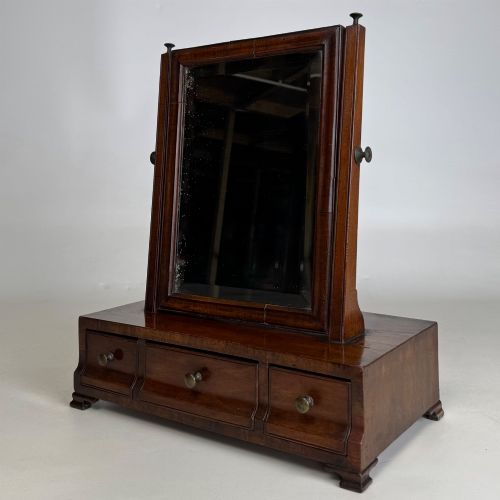
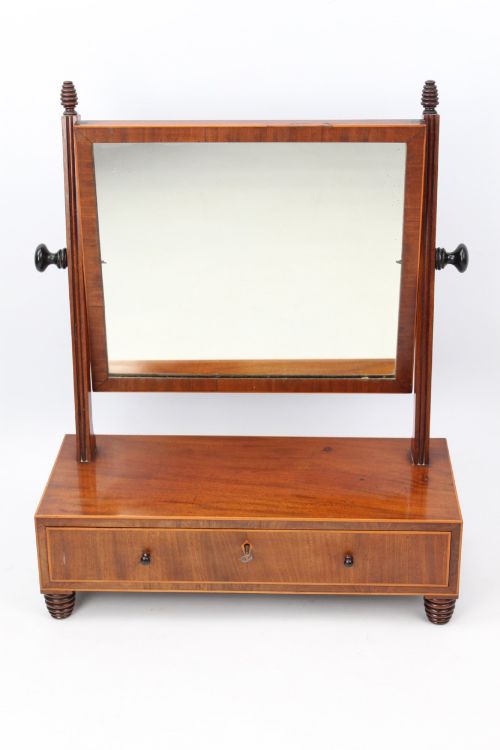
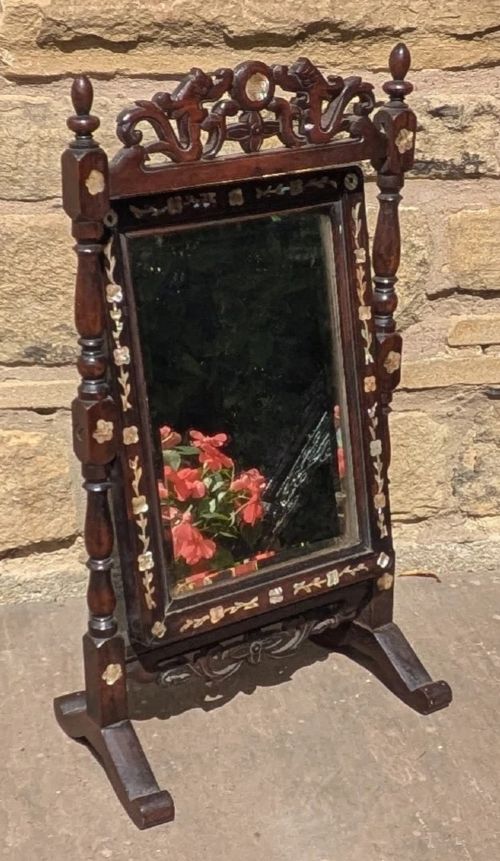
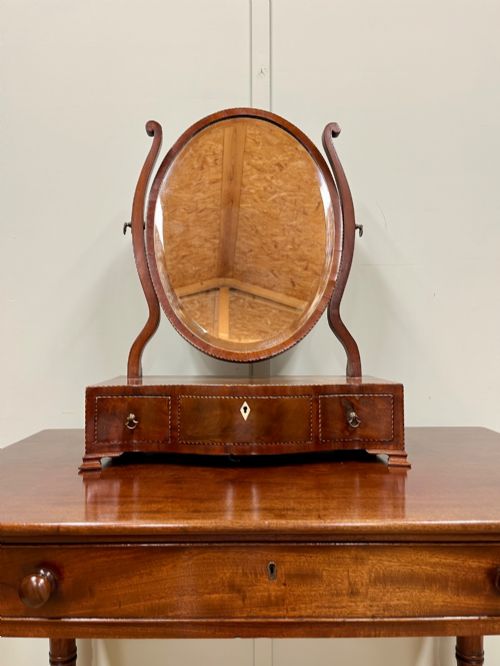
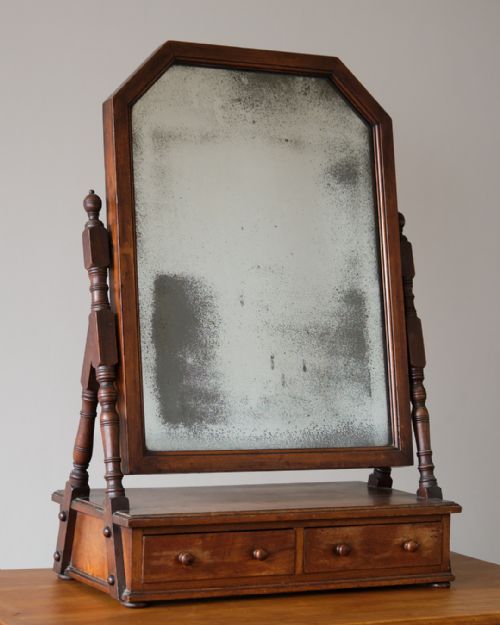
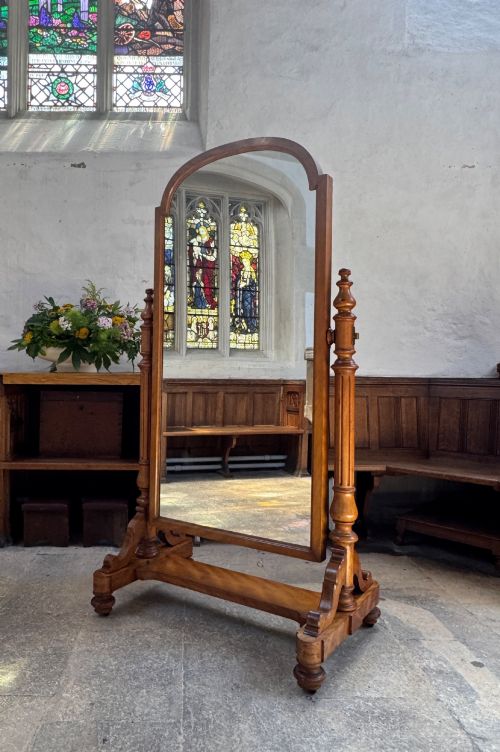
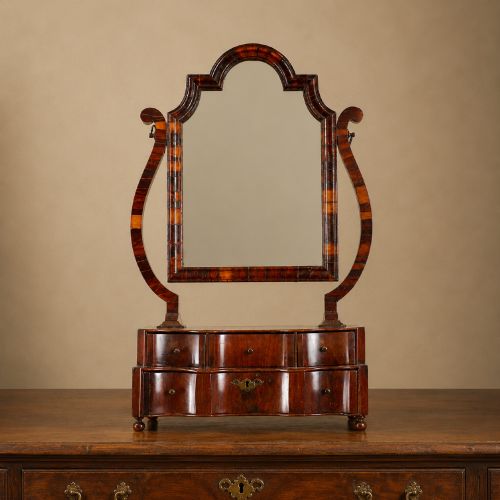
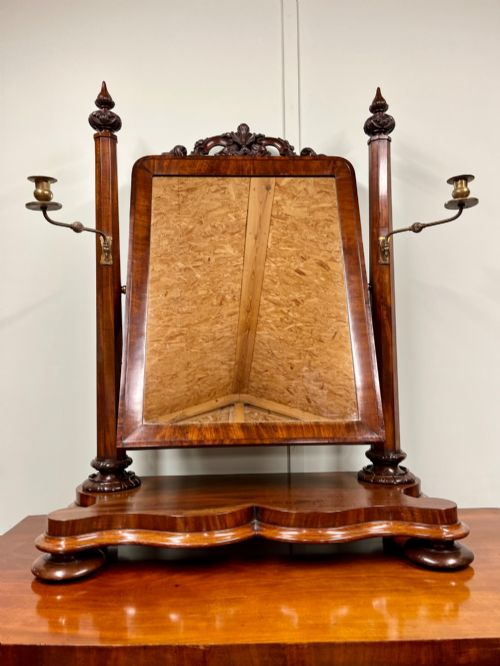
When you search for an antique swinging dressing glass, you are looking at tabletop and freestanding mirrors designed for grooming and personal reflection. These pieces range from compact toilet mirrors meant to sit on chests and tables to full-length cheval mirrors that stand directly on the floor.
The versions you are most likely to meet on this page date from the Georgian, Regency, and Victorian periods, constructed primarily in mahogany, walnut, and oak. They often feature pivoting plates held between upright supports, sometimes incorporating small drawers or box bases for storage.
Materials and construction
Cabinetmakers constructed these dressing glasses using dense timbers such as mahogany, walnut, and satin birch, frequently enhanced with boxwood inlay, crossbanding, or burr veneers. Frames were joined with traditional cabinetry methods to support the weight of the pivoting glass plate.
The mirror plates themselves hung between upright arms using brass pivots, swing screws, or trunnions that allowed the user to tilt the glass to the desired angle. Smaller table versions often incorporated dovetailed drawer boxes at the base, while larger freestanding cheval mirrors relied on sturdy side pillars and floor trestles.
Distinctions in quality
Quality in these pieces depends heavily on the choice of timber and the sophistication of the cabinet work. Finer examples display carefully selected grain patterns, such as figured walnut or richly grained mahogany, matched across the drawer fronts and frame mouldings.
Attention to detail in the secondary woods, the execution of inlay work, and the weight of the original brass hardware separate ordinary utilitarian items from superior pieces. The structural integrity of the pivoting mechanism and the proportion of the frame to the mirror plate also dictate the standing of a piece within the range.
Heal & Sons·Gillow
The Antique Swinging Dressing Glass Glossary
- Cheval mirror
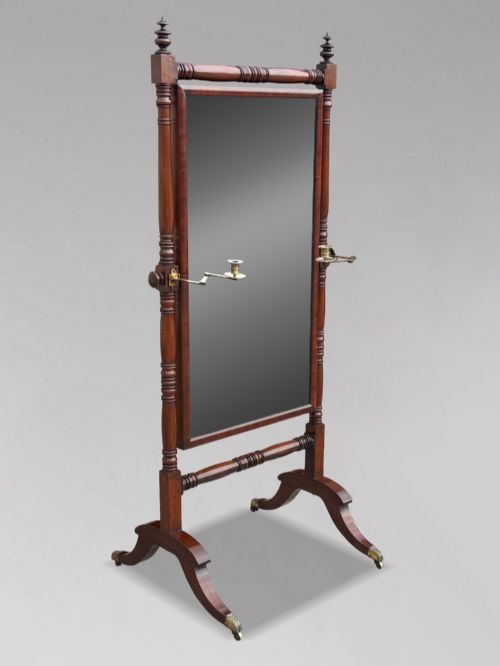
- A freestanding full-length dressing mirror supported by a frame with four legs or side pillars. This form allows the entire glass plate to swing freely between upright posts.
- Toilet mirror
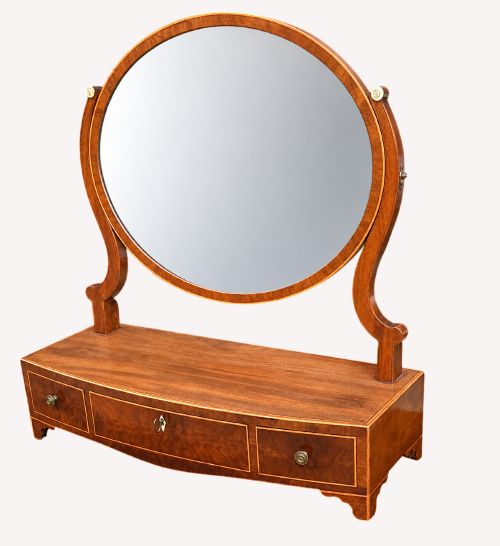
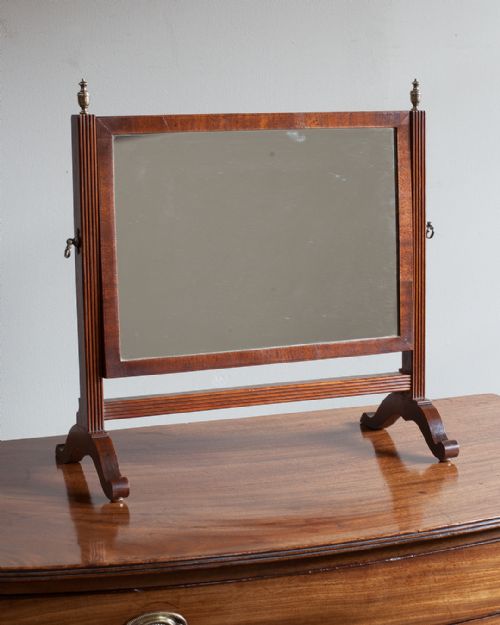
- A smaller table-standing mirror designed to sit atop a dressing table or chest of drawers. These units frequently include a small box base fitted with small storage drawers.
- Crossbanding
- A decorative technique where a border of veneer is applied to the edges of a surface so that the grain runs perpendicular to the main panel. It is commonly found on the outer borders of Georgian dressing glasses.
- Parcel-gilt
- Partially gilded woodwork where specific carved details, mouldings, or motifs are highlighted with gold leaf against a dark wood or painted ground.
- Trunnion
- A pin or pivot that projects from the side of the mirror frame, fitting into the upright supports to allow the glass to tilt back and forth.
Antique Swinging Dressing Glass: Frequently Asked Questions
Where should I place a dressing glass?
These mirrors suit dressing tables, low chests of drawers, or console tables where the height allows comfortable use while seated or standing. Freestanding cheval versions work well placed directly on the floor in bedrooms or dressing rooms.
Ensure the piece sits on a level surface to keep the pivoting frame balanced and stable during everyday adjustment.
How do I adjust the swing mechanism?
Most swinging mirrors rely on brass side screws or threaded pivots that can be tightened or loosened by hand or with a small tool. Adjusting these tension fittings controls how freely the glass tilts.
Take care not to over-tighten the hardware, as this can strain the wood around the pivot points and damage the upright supports.
What is the difference between a toilet mirror and a cheval mirror?
A toilet mirror is compact and built to sit on top of furniture, usually featuring a small drawer base. A cheval mirror is a tall, freestanding floor model designed to show the full figure.
Both types utilise the same swinging pivot principle, but their scale and placement in a room differ completely.
How do I identify a Georgian dressing glass?
Georgian examples typically feature rich mahogany timber, elegant bracket feet, and hand-cut dovetails on the base drawers. The proportions are often refined, with subtle mouldings and original cast brass hardware.
Later Victorian and Edwardian interpretations often introduce heavier proportions, different secondary woods, or decorative marquetry and inlay work.