



Vintage Floor Mirror
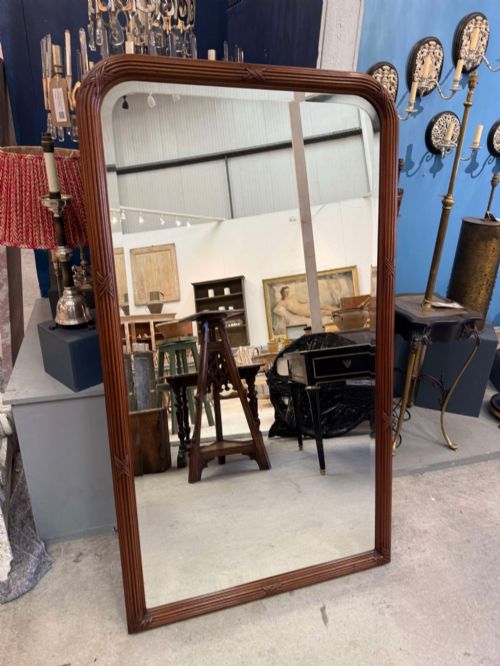
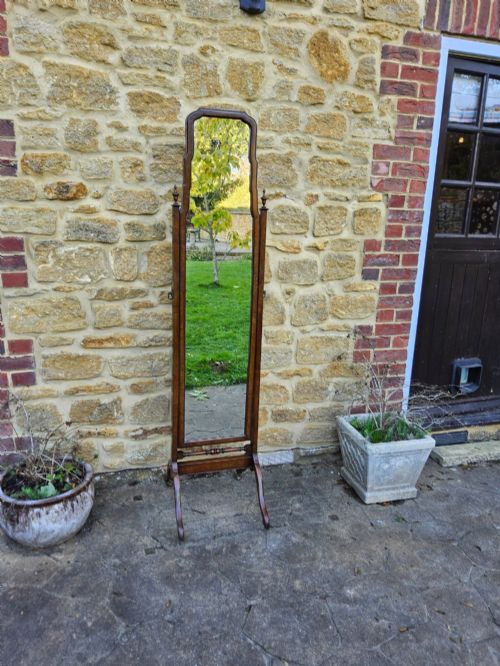
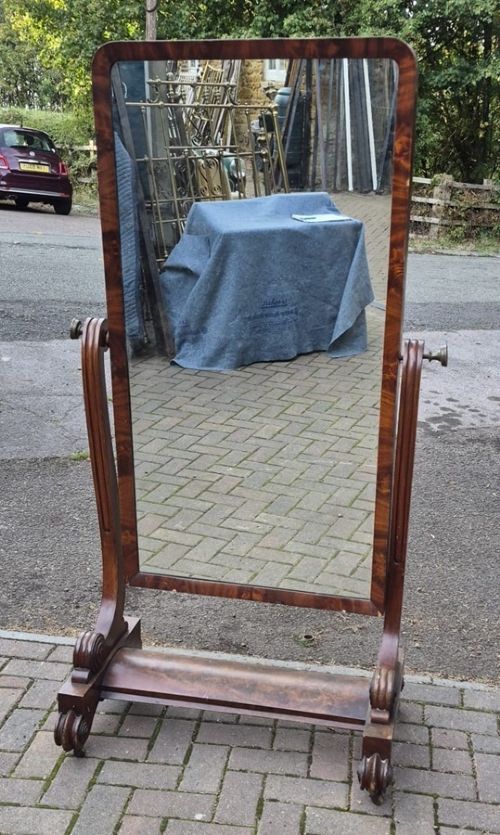
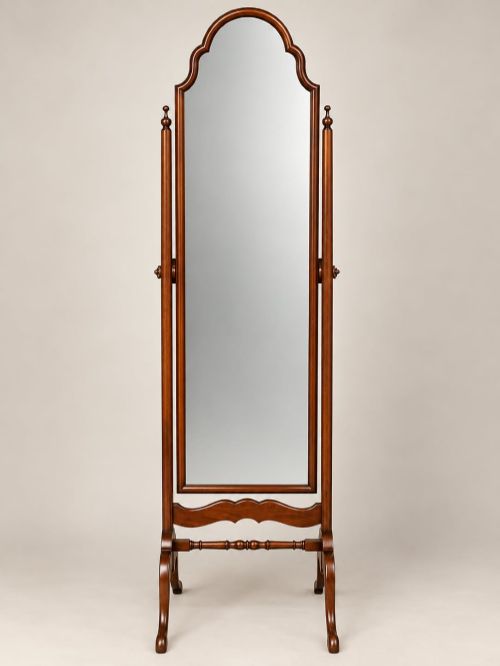
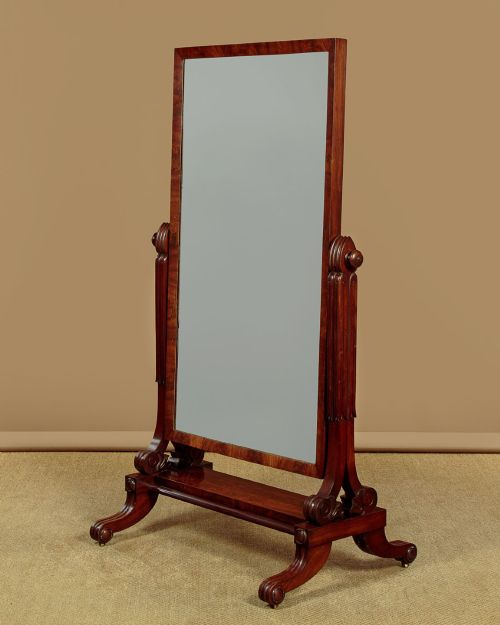
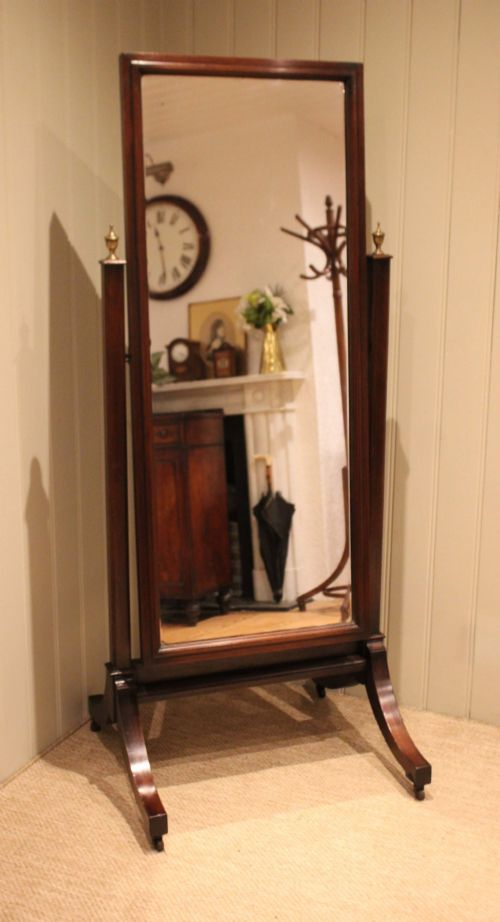
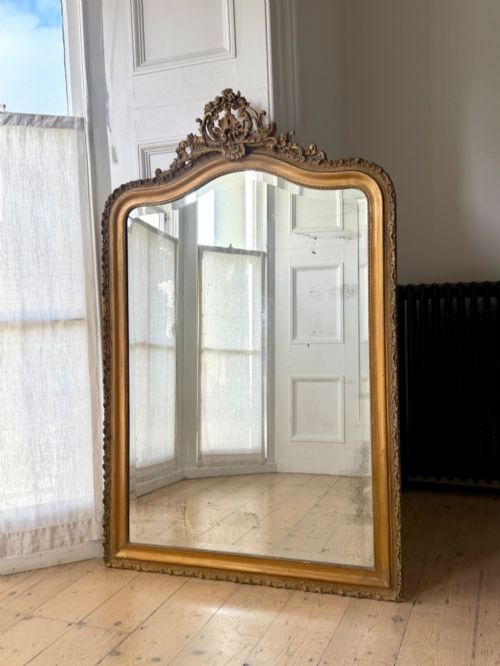
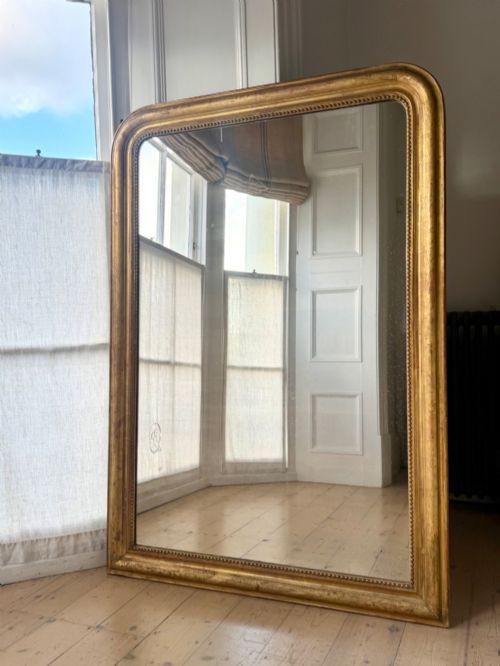
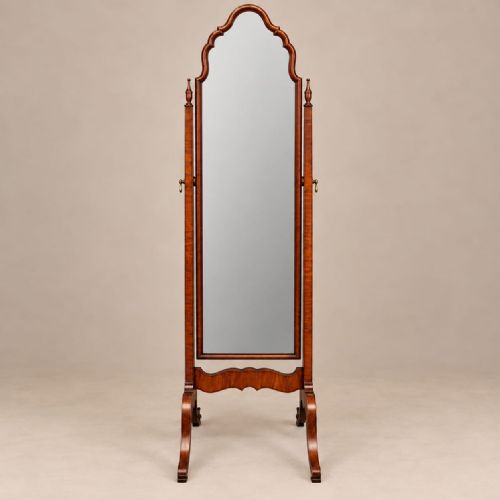
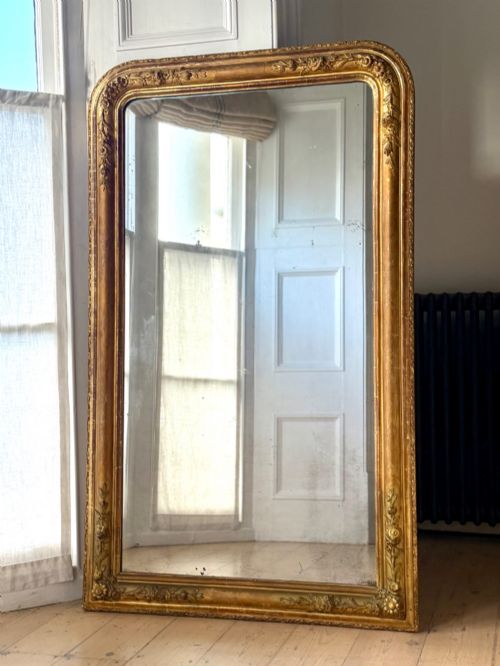
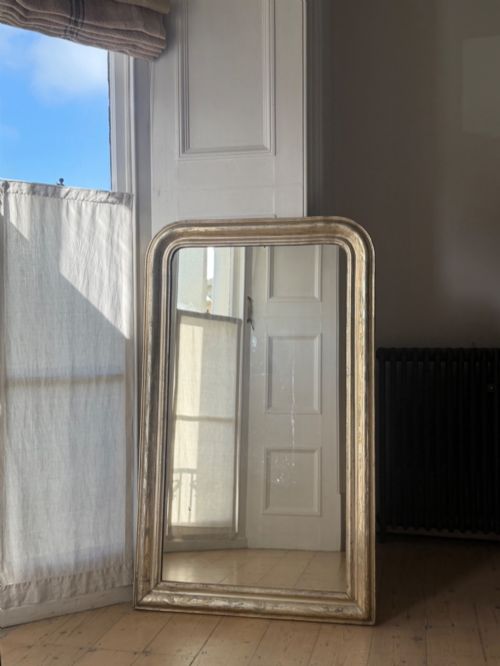
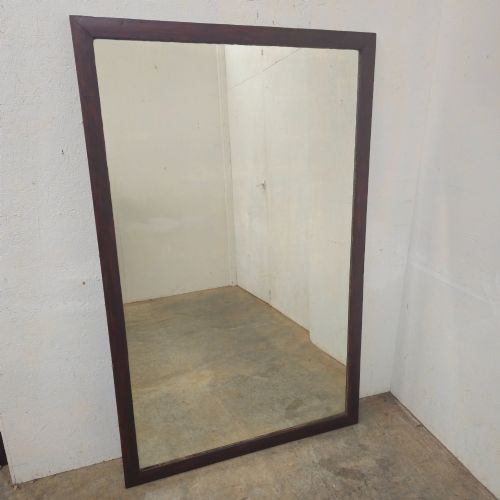
A vintage floor mirror brings scale and reflection to a room, most often appearing here as a freestanding cheval mirror in mahogany or a large gilt leaner.
Vintage Floor Mirror
When you search for a vintage floor mirror, you encounter tall looking glasses designed to stand directly on the floor or tilt within a freestanding frame. The selection relies heavily on nineteenth-century and early twentieth-century examples, spanning the Victorian and Edwardian eras alongside later interpretations.
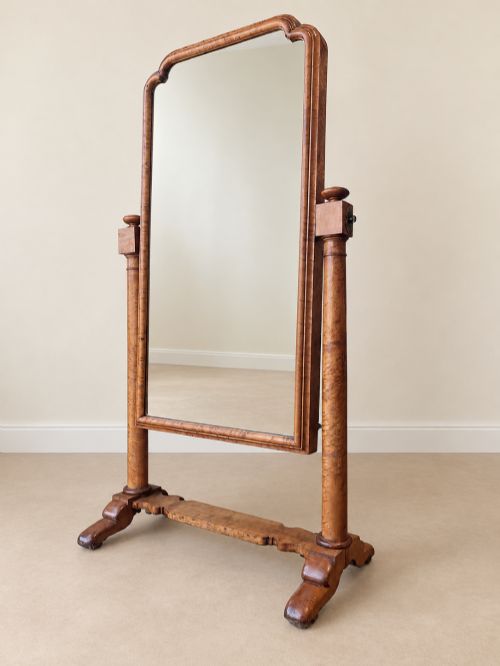
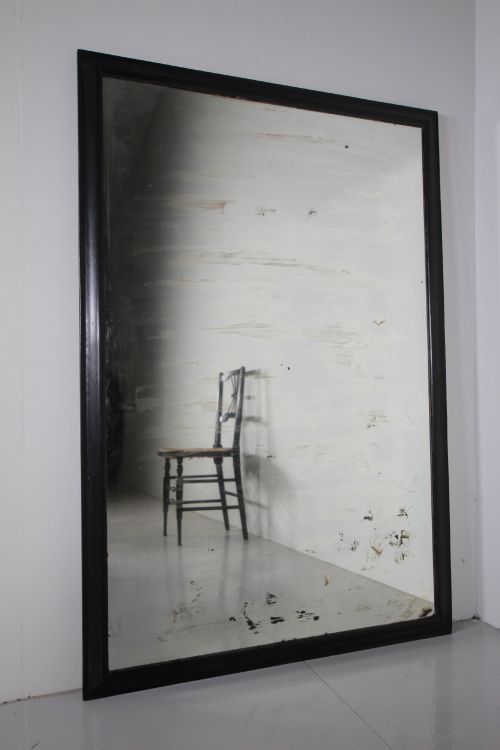
The dominant form is the cheval mirror, a pivoting plate suspended between upright pillars on a stable base. Alongside these freestanding dressing glasses, the records include tall leaner mirrors and architectural frames intended to rest against a wall.
Origin points range from English workshops to French chateau styles, encompassing Louis Philippe designs and elaborately carved Rococo frames. These objects served practical dressing purposes in bedrooms and dressing rooms before finding new roles in modern living spaces.
How they were made
Cabinetmakers built the foundational frames using dense timbers like mahogany and walnut, frequently incorporating burr veneers or inlaid details for visual depth. Structural supports often utilised turned uprights, such as barley twist columns, anchored by robust feet.
Gilded and painted frames relied on carved wood and gesso layers applied to a timber base before receiving gold leaf, silver leaf, or pigment finishes. Glass plates were cast or silvered by hand, fitting securely within rebated wooden mouldings or heavy decorative borders.
Vintage Floor Mirror Retail Price Guide 2026
Typical asking prices for vintage floor mirror among the pieces listed under this phrase on Sellingantiques today, from the lower quarter to the upper quarter. They describe what is for sale here now, not the wider market.
Listings feature woods including mahogany, walnut, and gesso alongside mirror glass.
What varies in quality
Quality reveals itself in the weight and proportion of the timber frame, where dense mahogany and figured walnut indicate superior material selection by the maker. Joinery methods, such as pegged joints and well-formed turning on upright supports, separate utilitarian items from finer cabinetwork.
The treatment of surface ornament marks the distinction between standard production and master craftsmanship. Crisp carving in the wood and gesso, deep hand-applied gilding, and the original mercury or early silvered glass plate elevate the standing of the piece.
Charles Nosotti
The Vintage Floor Mirror Glossary
- Cheval mirror
- A freestanding full-length mirror suspended on pivots within a vertical frame. This design allows the glass to tilt at various angles for dressing.
- Gesso
- A plaster-like mixture applied to wood frames to create a smooth surface for gilding or painting. Artisans mould and carve this compound to form elaborate decorative reliefs.
- Giltwood
- Timber coated with gold leaf or gold paint to simulate solid gold. This finish defines many formal nineteenth-century decorative frames.
- Leaner mirror
- A large tall mirror designed to rest directly against a wall rather than hang from brackets. These pieces often feature substantial weight and broad decorative mouldings.
- Trumeau
- An architectural mirror incorporating a painted panel or artwork above the glass plate. These French decorative panels frequently integrated into wall panelling.
Vintage Floor Mirror: Frequently Asked Questions
How do I secure a freestanding mirror safely?
Freestanding cheval mirrors rely on their sturdy base and properly tightened pivot screws to maintain balance during daily tilt adjustments.
Heavier floor-standing models benefit from discreet wall tethers or anti-tip brackets to prevent accidental movement in busy rooms.
What is the difference between a cheval and leaner mirror?
A cheval mirror operates as a self-contained unit supported by a dedicated wooden frame and pivoting pins that allow the glass to tilt.
A leaner mirror simply rests against a vertical wall surface at a fixed angle without mechanical pivots or integrated legs.
How do I identify a Victorian mirror?
Victorian examples frequently utilise dark solid mahogany or walnut timbers, often featuring hand-turned structural elements like barley twist columns.
Construction traits from this era include traditional joinery, heavy timber backboards, and proportion suited to nineteenth-century domestic dressing rooms.
Where should I place a large floor mirror?
Positioning a tall glass opposite a window maximises natural light distribution and creates an intentional sense of expanded room depth.
Placing the frame in a bedroom or hallway provides full-length reflection while serving as a prominent architectural focal point.