


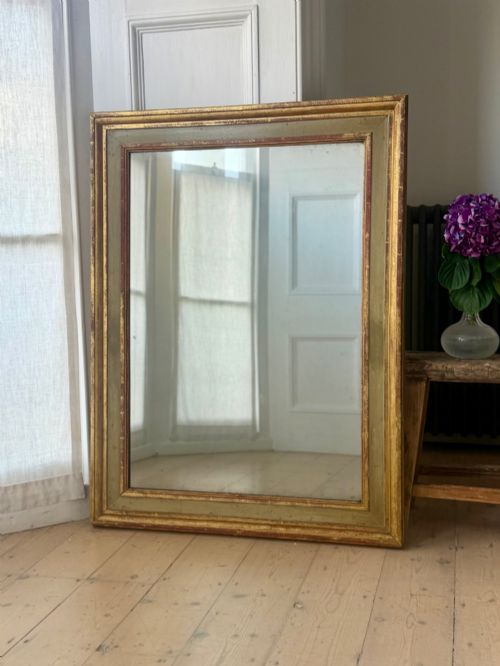
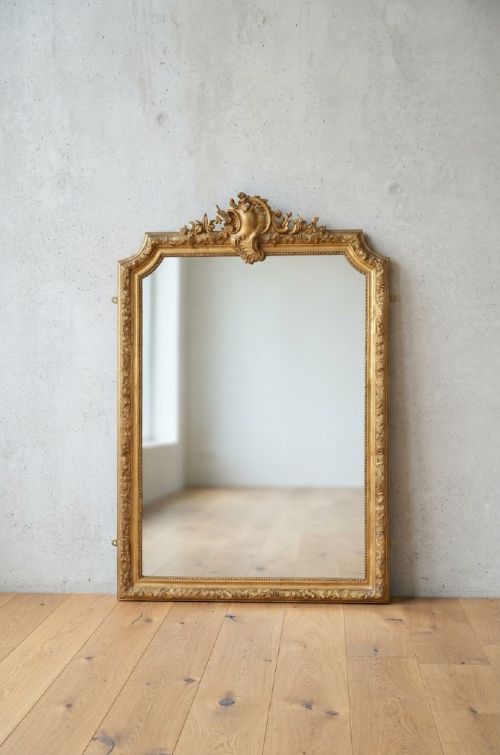
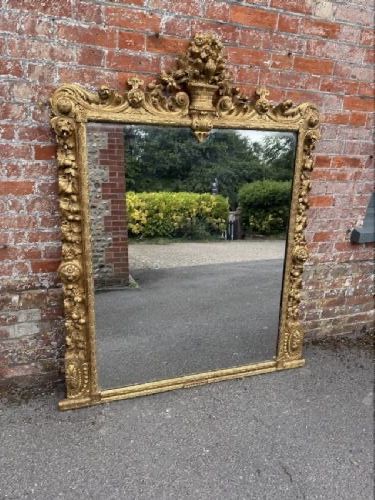
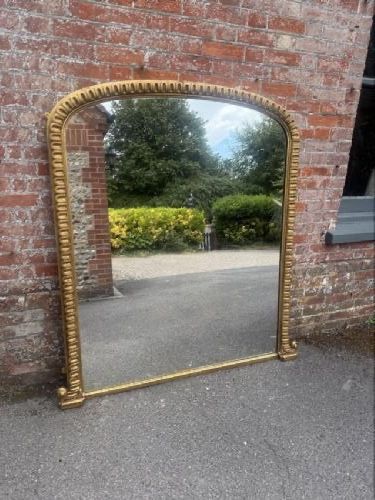
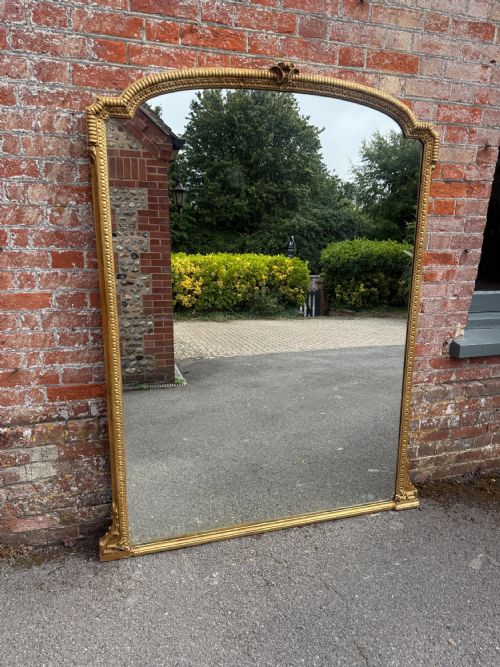
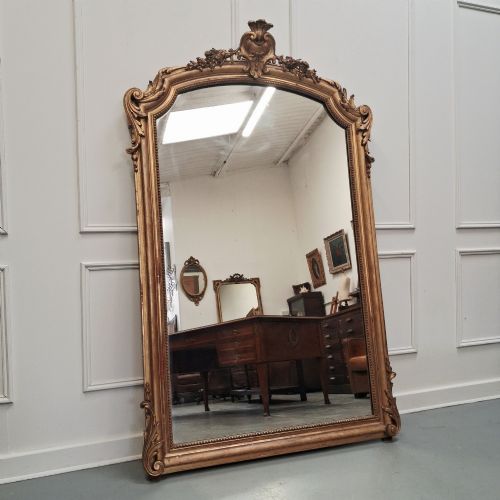
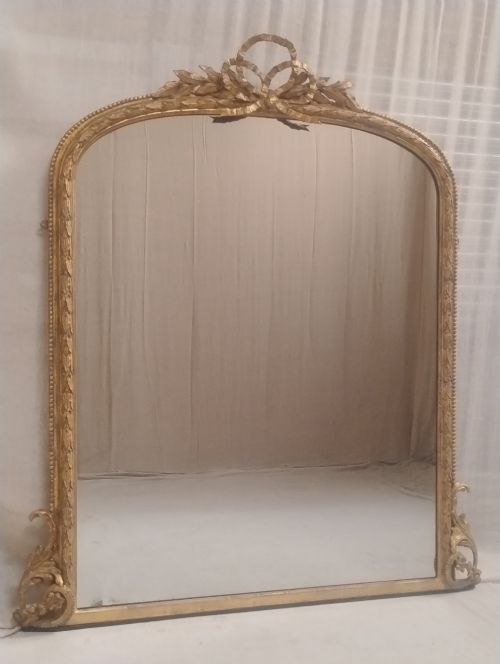
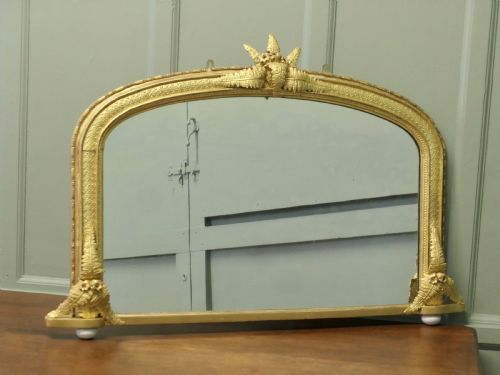
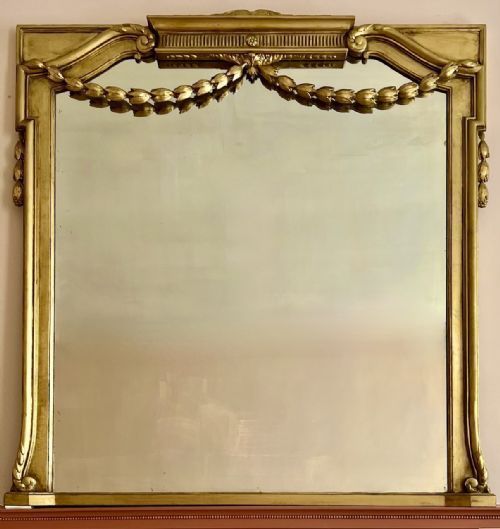
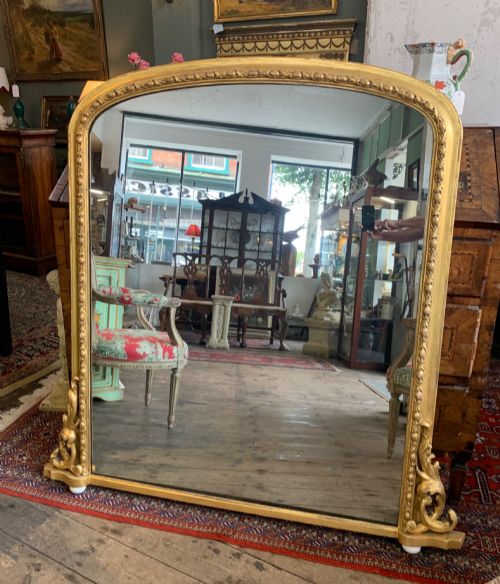
French Mantel Mirror
A french mantel mirror brings light and scale to a room, framing reflections in heavy giltwood and ornate gesso.
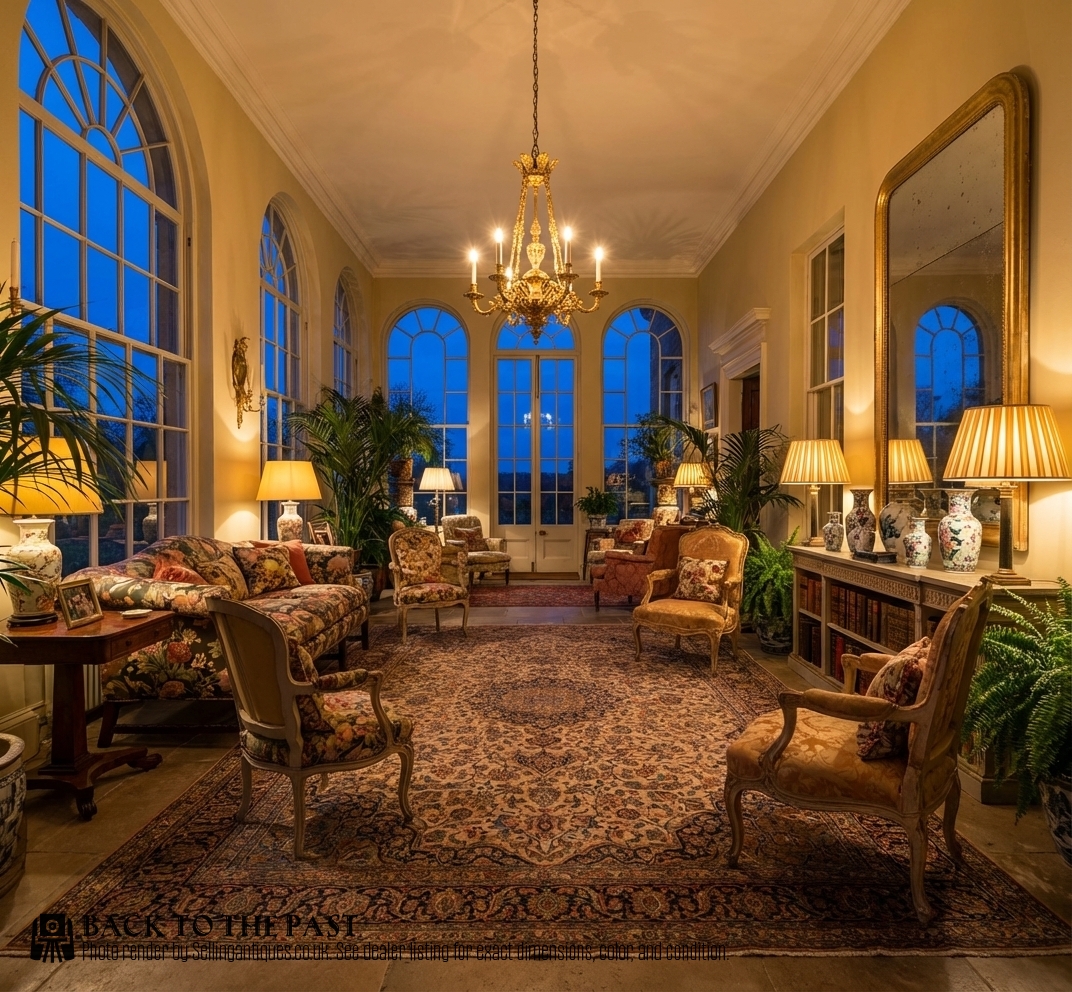
Defining the French Mantel Mirror
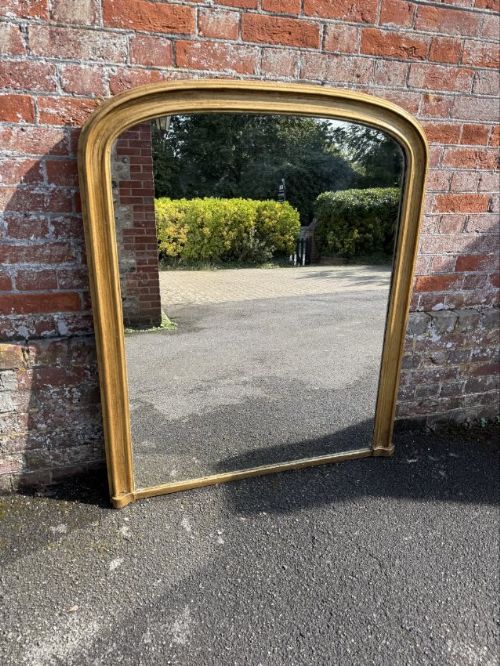
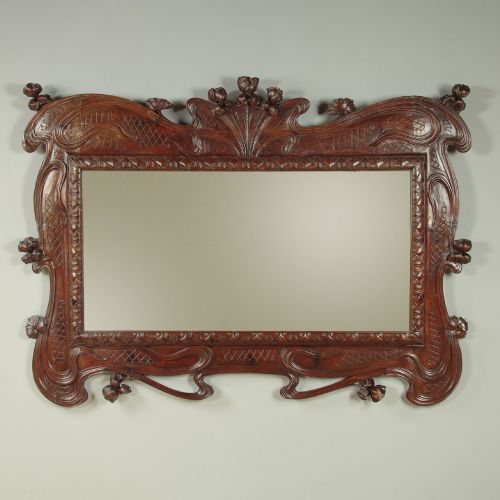
A french mantel mirror sits above a fireplace or hangs as a large wall piece, commanding attention through sheer scale and presence. Most examples found here date from the nineteenth century, capturing the understated elegance of the Louis Philippe style alongside bolder Second Empire statements.
These items function primarily as overmantel or leaner mirrors designed to anchor high-ceilinged rooms. The listings show a heavy concentration of large formats, often spanning over a metre in height, built to reflect natural light across interior spaces.
Construction and Materials
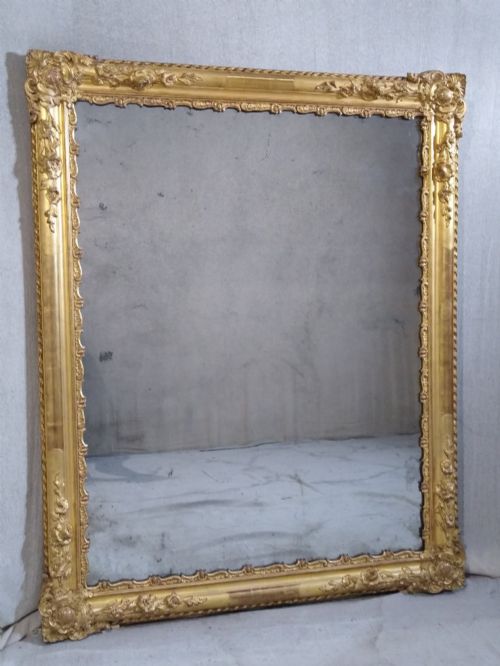
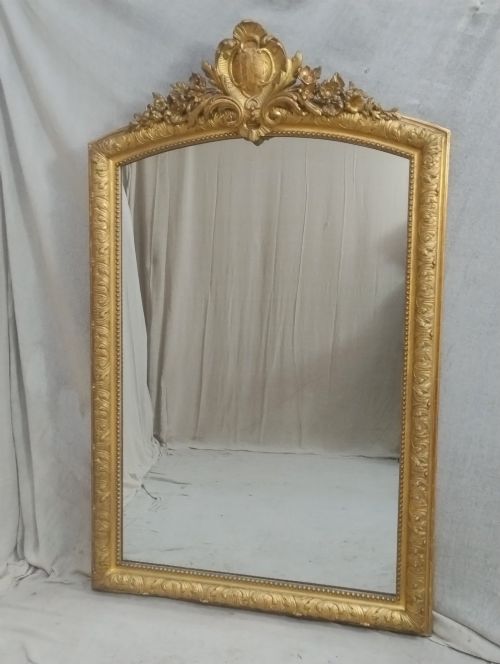
Carpenters formed the primary frames using timber, applying layers of plaster and gesso to build up intricate surface detail before final finishing. Artisans then gilded these surfaces using gold leaf, silver leaf, or applied paint to achieve the characteristic metallic sheen.
Mirrors from this period frequently utilise mercury glass within the heavy wooden framework. The silvering process behind the glass produces a distinctive mottled appearance that separates older plates from modern replacements.
Retail Price Guide 2026
Typical UK retail prices for french mantel mirror, calculated from the Sellingantiques database of over a million retail prices indexed since 2003. This retail price guide relies exclusively on Sellingantiques data; no external sources or auction records are used, so the figures do not describe the wider market.
Some nineteenth century mirrors double as stealth art, hiding centuries of London fireplace soot behind their cloudy mercury glass.
Judging Quality and Finish
The finesse of the carved gesso and the depth of the gilding set superior examples apart from standard production. Crispness in the decorative mouldings indicates a skilled hand at the bench during the initial shaping of the plaster.
The condition of the original glass plate and the integrity of the wooden backing frame dictate the structural merit of each piece. Surviving mercury glass with authentic foxing commands greater interest among purists seeking untouched period character.
The French Mantel Mirror Glossary
- Overmantel mirror
- A large wall mirror specifically proportioned to hang on the chimney breast directly above a fireplace mantel.
- Louis Philippe
- A mid-nineteenth century French style defined by restrained neoclassical curves, gentle arched tops, and minimal ornamentation.
- Gesso
- A plaster mixture applied to wood frames and carved into detailed ornamental reliefs before gilding or painting.
- Mercury glass
- An early type of double-walled glass blown with a silvering mixture between the layers, creating a characteristic speckled reflection.
- Leaner mirror
- A tall heavy mirror designed to stand upright against a wall without being hung from brackets.
Frequently Asked Questions
How do I hang a heavy french mantel mirror?
These large frames require secure wall anchors fixed directly into masonry or heavy studwork to support the considerable weight of timber and glass.
Professional mirror fixings or heavy-duty brackets distributed across the base and top frame ensure the piece remains safe and stable.
What is mercury glass?
Mercury glass is an early reflective material created by pouring a silvering solution between two walls of blown glass.
Over time, this chemical backing deteriorates to form dark spots and foxing, which collectors value as proof of genuine age.
Can I lean the mirror instead of hanging it?
Leaner mirrors are specifically constructed to stand safely against a vertical surface while resting on the floor or mantel.
Floor-standing versions utilise the heavy base and subtle backward tilt to remain secure without wall fixings.