


Swivel Full Length Mirror
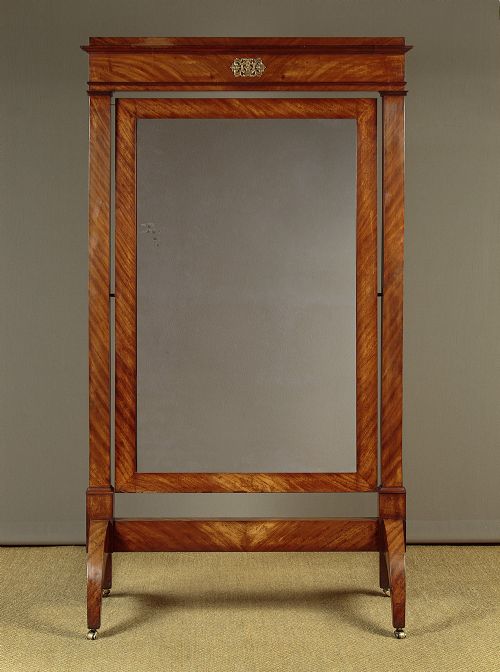
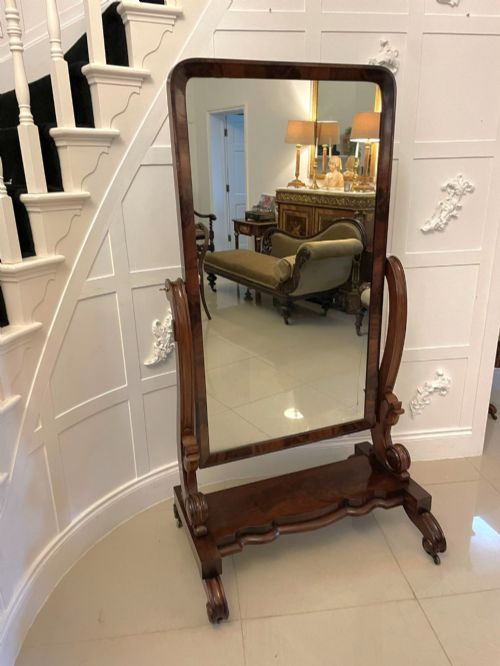
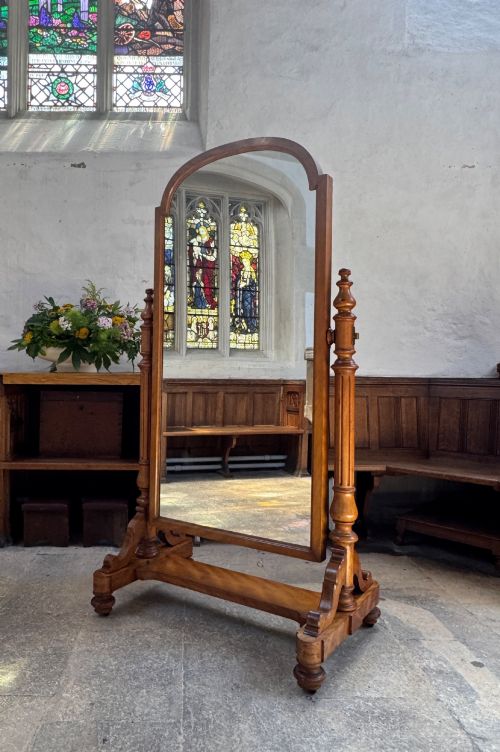
A swivel full length mirror is a freestanding dressing glass that tilts to give a complete view, and collectors prize these pieces for their practical scale and warm timber frames.
Swivel Full Length Mirror
When you search for a swivel full length mirror, you are looking at cheval mirrors designed to stand independently on the floor for full-height dressing. The pieces you are most likely to meet on this page date from the Georgian, Regency, and Victorian periods up through the Edwardian era and the 1920s.
These floor-standing glasses appear primarily in mahogany, walnut, and satinwood, constructed as swinging plates held within sturdy vertical uprights and a stable base. Formats range from plain, functional frames to decorative carved examples and inlaid satinwood or satin birch pieces.
Makers built these items for bedrooms and dressing rooms, often incorporating brass castors, sabots, or articulated candle holders to assist with daily grooming. Styles span from clean Regency lines and William IV sabre legs to elaborate Victorian Gothic framing and Georgian Revival revivals.
How they were made
Cabinetmakers constructed the frames using dense hardwoods like mahogany, walnut, oak, and satinwood, frequently highlighting the timber through polished veneers or marquetry inlay. The swinging mirror plate hung between vertical supports using pivot pins or brass hardware fixed to the side arms.
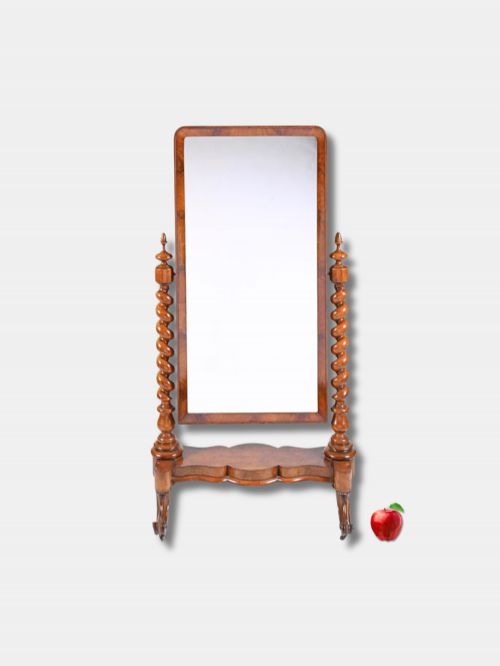
Bases relied on substantial footings such as sabre legs, curved trestles, or barley twist supports to bear the weight of the tall glass. Details such as brass sabots, castors, and articulated candle holders were incorporated to provide mobility and light during dressing.
Swivel Full Length Mirror Retail Price Guide 2026
Typical asking prices for swivel full length mirror among the pieces listed under this phrase on Sellingantiques today, from the lower quarter to the upper quarter. They describe what is for sale here now, not the wider market.
Some Victorian examples include tiny brass candle holders on jointed arms, ready to illuminate your cravat knot before dawn.
What varies in quality
The standard of timber selection and cabinetwork defines the distinction between pieces, where finely figured mahogany or burr walnut sits above simpler plain woods. Original mirror glass with authentic foxing contrasts with modern replacements, while crisp hand-carving and quality brass fittings elevate the overall execution.
Structural stability in the supporting frame and uprights dictates how well the swinging plate maintains its position over time. Refined proportions and well-executed joinery separate standard workshop output from grand country house examples.
The Swivel Full Length Mirror Glossary
- Cheval mirror
- A freestanding full-length dressing glass mounted on a frame with four legs or a solid base. The plate swings on pivots between two vertical uprights.
- Sabots
- Protective metal sleeves fitted over the feet of furniture legs. They are frequently cast in brass on Regency and William IV examples.
- Marquetry
- Decorative patterns created by fitting thin pieces of wood veneer onto a structural surface. Edwardian satinwood pieces often utilise this technique.
- Barley twist
- A turned wooden support carved in a helical spiral resembling a twisted rope. This detail appears on Victorian uprights.
- Articulated
- Jointed or hinged to allow movement. These fittings on brass candle holders let the user adjust the angle of the light.
Swivel Full Length Mirror: Frequently Asked Questions
What is a cheval mirror?
A cheval mirror is a full-length dressing glass designed to stand independently on the floor rather than hang on a wall or sit on a chest. The frame allows the mirror plate to tilt back and forth on pivots.
These pieces were essential bedroom and dressing room furnishings in the 19th and early 20th centuries. They take their name from the French word for horse, referring to the four-legged frame or trestle base.
How do I date a swivel mirror?
Dating relies on identifying the prevailing style, timber choices, and construction methods of the frame. Georgian and Regency pieces favour clean mahogany lines and sabre legs, while Victorian examples often feature heavy mahogany, barley twist supports, or Gothic ornamentation.
Later Edwardian and 1920s versions frequently introduce lighter satinwood, marquetry inlay, or burr walnut veneers. Hardware such as brass castors and pivot pins also provides clues to the period of manufacture.
Where should I place a freestanding mirror?
These mirrors require a stable floor space and sufficient clearance to allow the plate to swivel freely without striking nearby walls or furniture. Bedrooms and dressing rooms remain the natural home for full-height dressing glasses.
Positioning the glass near a natural light source helps maximise reflection in the room. Ensure the supporting base rests evenly on the floor to prevent strain on the side pivots.
Are the mirror plates original?
Many older mirrors retain their original glass, which may show light specking, oxidation, or foxing from age. Other pieces have received replacement glass over the decades to ensure a clear reflection.
Original plates often possess a slight waviness in the reflection compared to modern float glass. Both original and replaced glasses appear across the various periods represented here.