
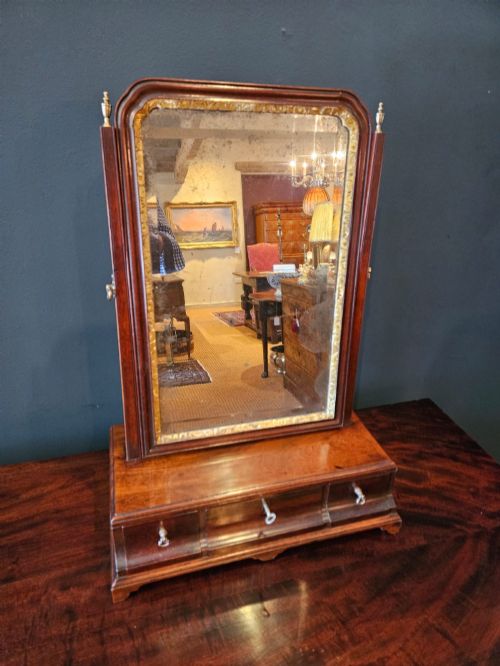
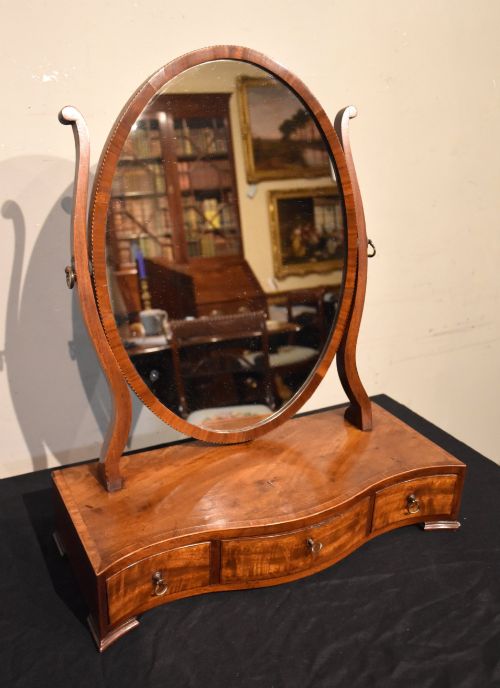
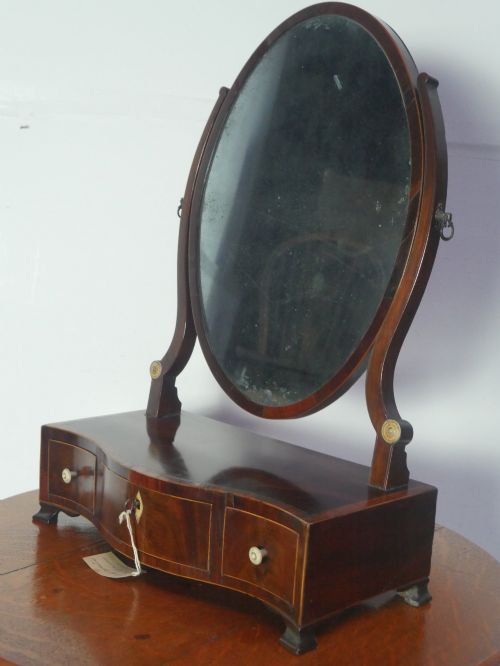
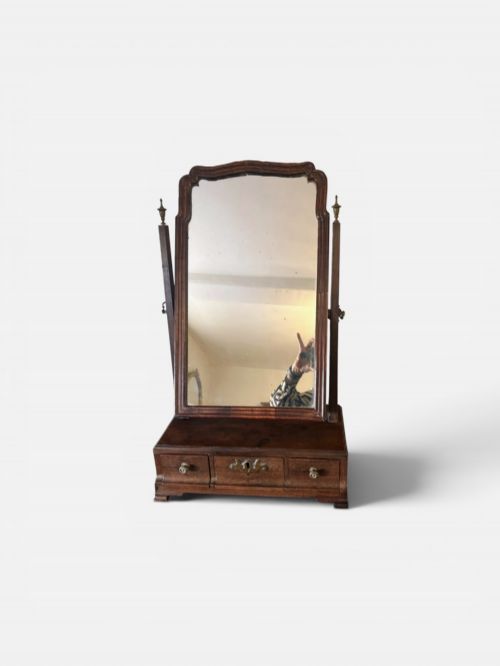
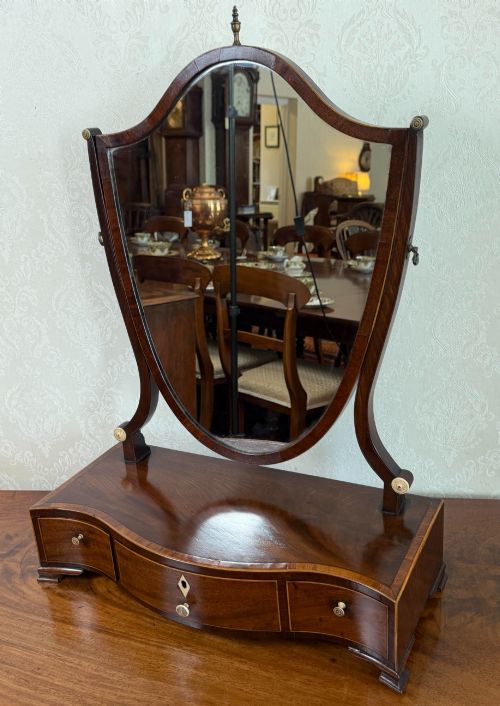
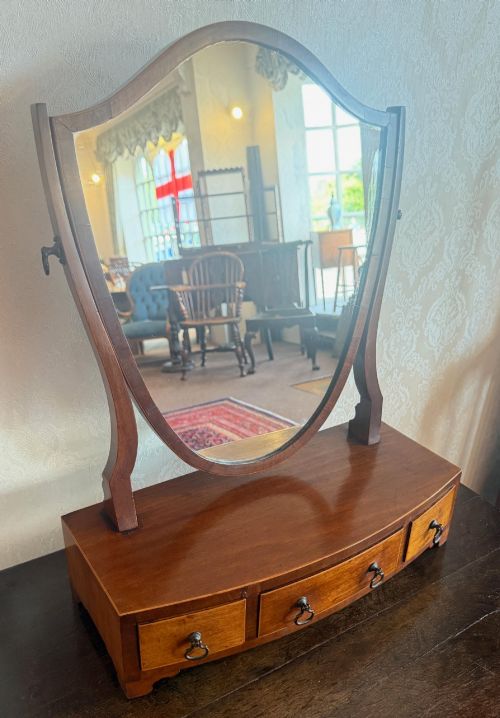
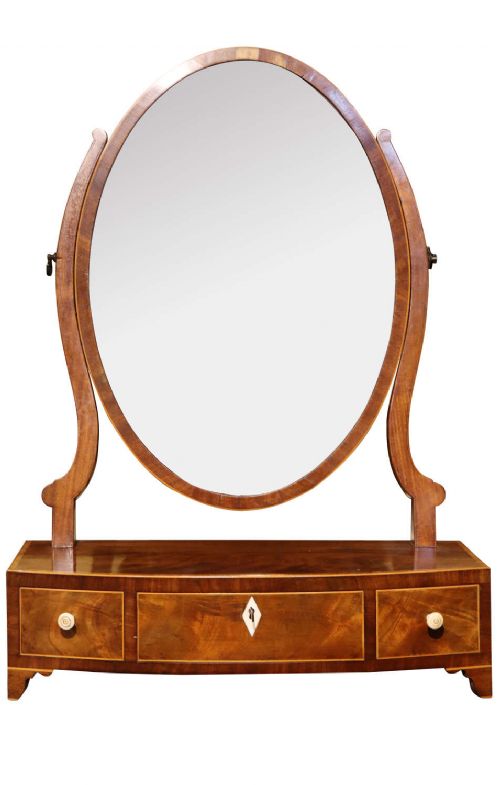
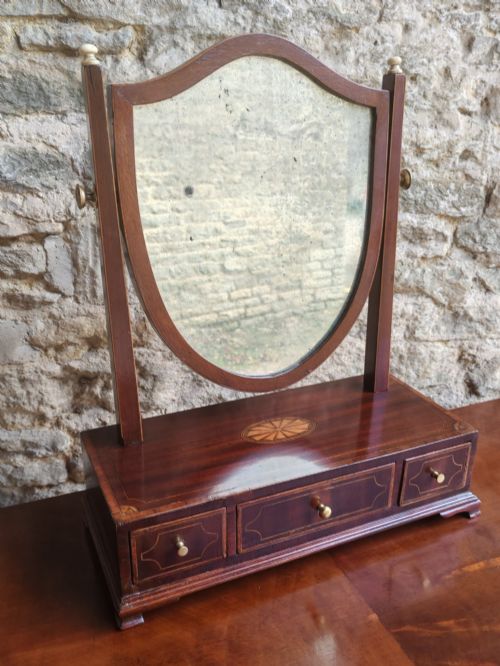


Georgian Mahogany Box Mirror
A Georgian mahogany box mirror brings rich timber and practical vanity together on a dressing table.
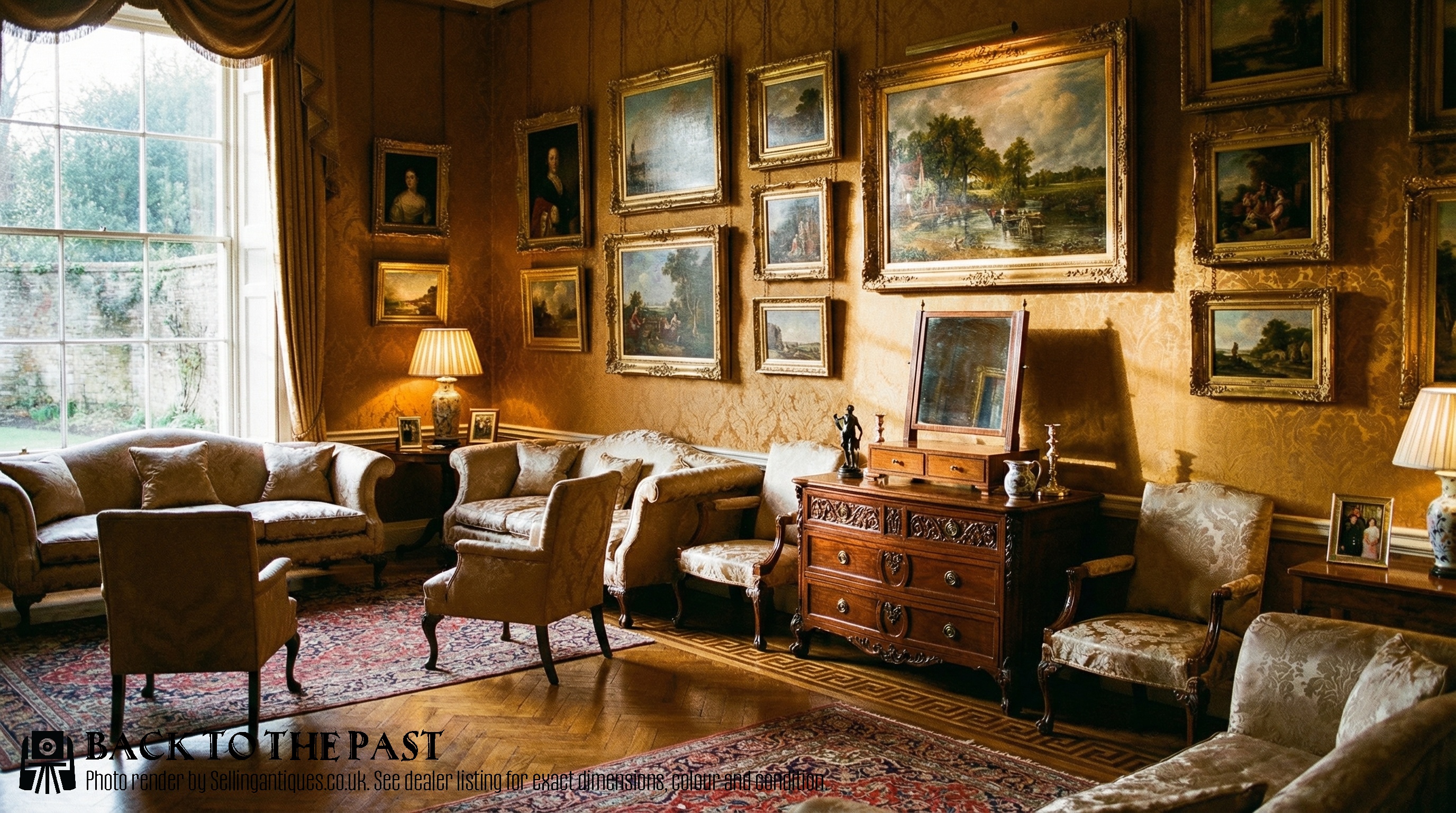
What these pieces are
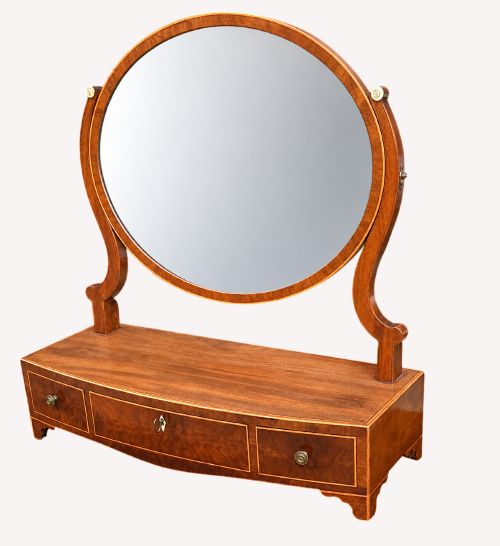
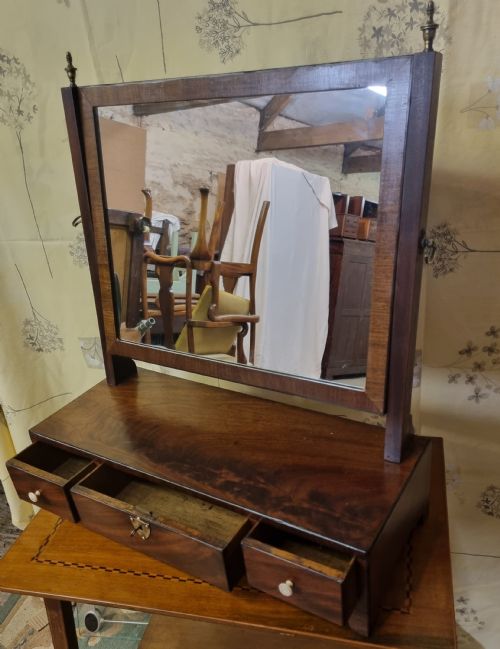
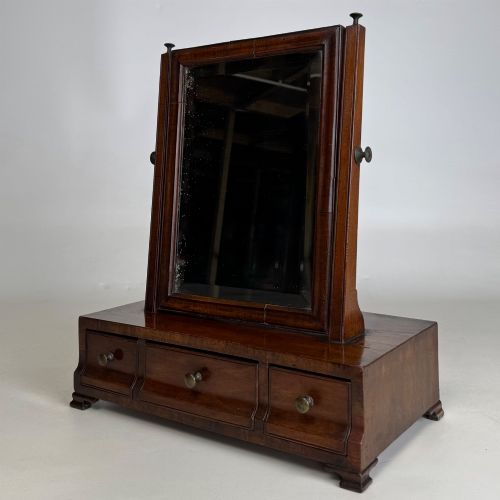
A georgian mahogany box mirror is a dressing mirror set upon a small cabinet or box base, designed for a table top. The pieces on this page span the georgian period, the eighteenth century, and the early nineteenth century.
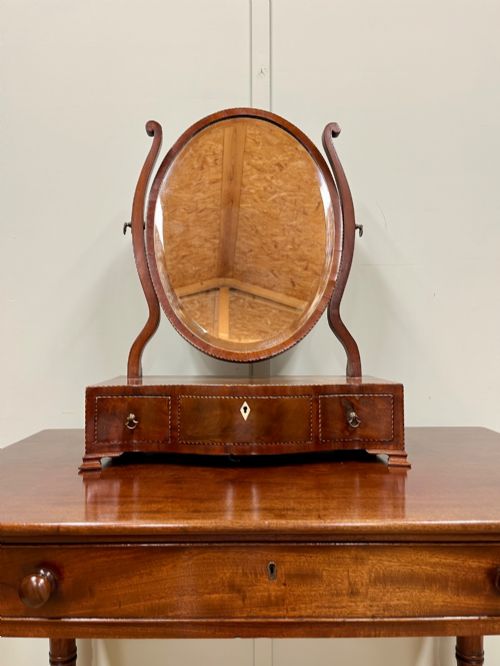
Forms include standard dressing table mirrors, serpentine front toilet mirrors, and campaign shaving table box mirrors. These items served for personal grooming in bedrooms and dressing rooms.
Origins represented in the evidence include pieces dated around seventeen fifty and the late eighteenth century, alongside early georgian and george ii styles.
How they were made
Cabinet makers utilised solid mahogany and mahogany veneers, frequently enhancing surfaces with crossbanding and boxwood inlay. Structural details incorporate brass hinges, handles, and small bone fittings.
Refinements on certain examples include parcel-gilt highlights upon the mahogany frame and internal compartments within the box base. Mirror glass is fitted into adjustable frames supported by upright arms.
Retail Price Guide 2026
Typical UK retail prices for georgian mahogany box mirror, calculated from the Sellingantiques database of over a million retail prices indexed since 2003. This retail price guide relies exclusively on Sellingantiques data; no external sources or auction records are used, so the figures do not describe the wider market.
Listings feature mahogany, brass, bone, and giltwood across the georgian and nineteenth-century periods.
What varies in quality
The sophistication of the timber grain and the precision of the crossbanding separate standard examples from finer works. Finer items display controlled proportions and thoughtful execution of serpentine fronts.
Secondary decorative elements, such as parcel-gilt touches and inlaid boxwood stringing, reveal the ambition of the original maker. The integration of brass hardware and the neatness of internal box fittings indicate the level of care taken.
The Georgian Mahogany Box Mirror Glossary
- Box mirror
- A small dressing mirror attached to a hollow box base fitted with drawers or compartments. This form sat upon a chest or dressing table for daily use.
- Crossbanding
- A narrow strip of veneer applied across the grain of the primary timber to frame a panel. It creates a neat border around drawer fronts and mirror surrounds.
- Serpentine front
- A shaped furniture front curving outward in the centre and inward at the sides. This contour demands skilled woodworking to achieve a smooth line.
- Parcel-gilt
- Partially gilded woodwork where gold leaf highlights specific carved details. It contrasts warm mahogany tones with bright metallic shine.
- Campaign mirror
- A portable mirror designed for travel, often housing folding elements or secure compartments. These pieces were built for officers on the move.
Frequently Asked Questions
What is a georgian mahogany box mirror?
A georgian mahogany box mirror is a tabletop dressing glass mounted on a small timber base containing drawers or compartments.
These pieces combine a functional mirror frame with storage for small personal items during the eighteenth and early nineteenth centuries.
How were these mirrors used?
They sat on dressing tables, washstands, or chests of drawers to assist with shaving, hairstyling, and grooming.
The adjustable mirror plate allowed the user to direct the angle of reflection as needed.
What materials are typical?
Mahogany is the primary timber, often selected for rich grain and deep colour.
Details may include brass hardware, boxwood inlay, bone escutcheons, and parcel-gilt highlights.
How do I spot early georgian styles?
Early georgian and george ii examples often feature specific carving conventions and proportions distinct from later decades.
Look for architectural cornices, heavy mahogany scantlings, and parcel-gilt decoration.