
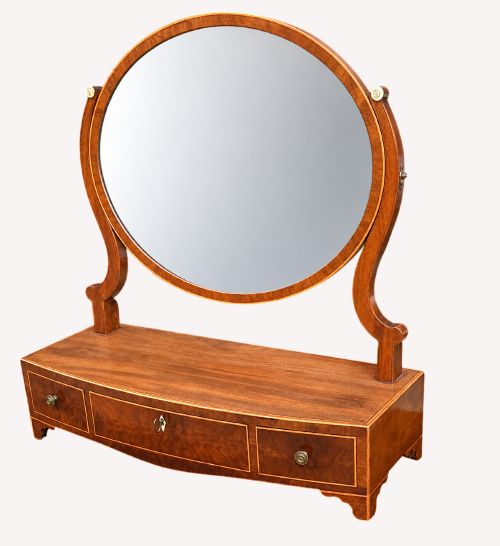
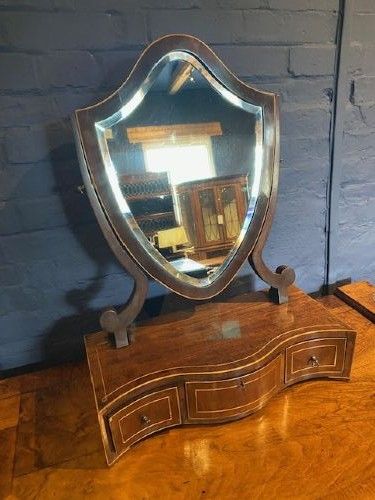
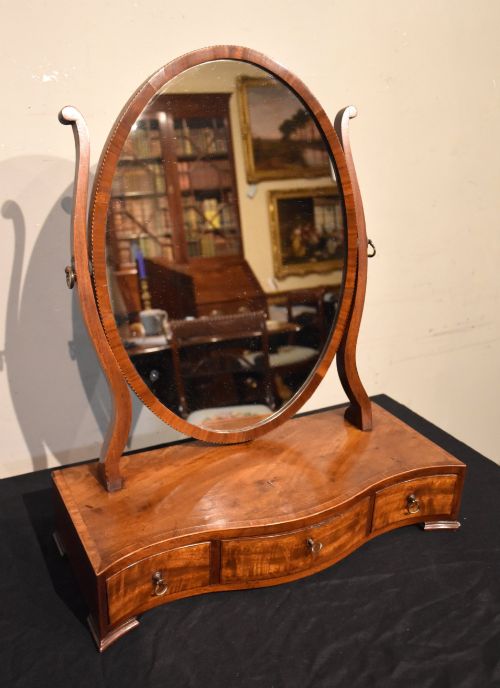
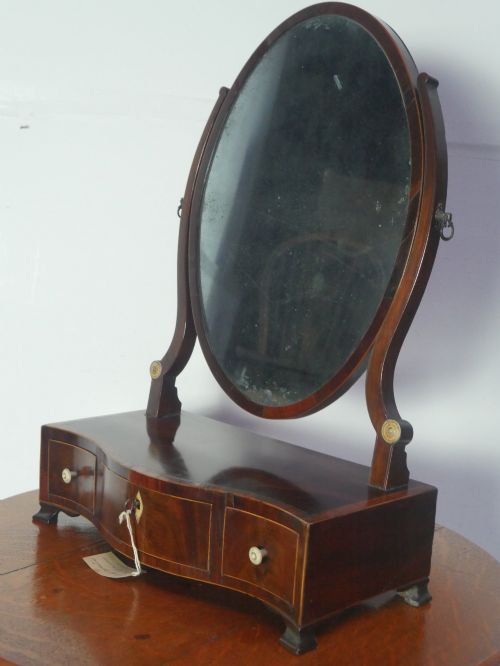




Serpentine Toilet Mirror
A serpentine toilet mirror brings sculptural warmth to a dressing surface through its rhythmic, undulating front.
What serpentine toilet mirrors are
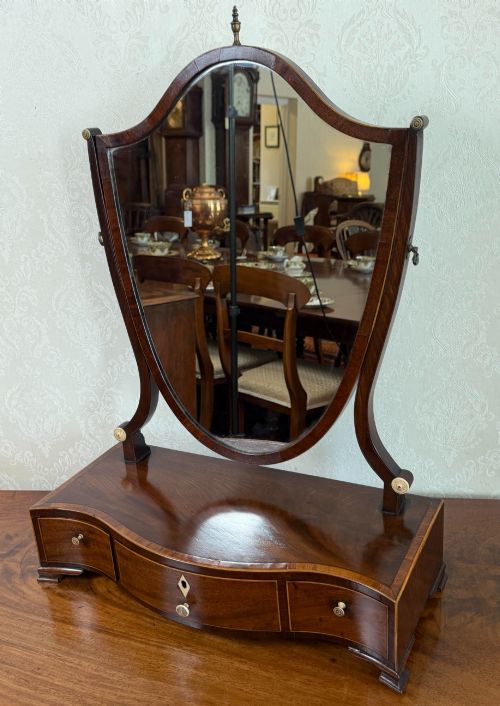
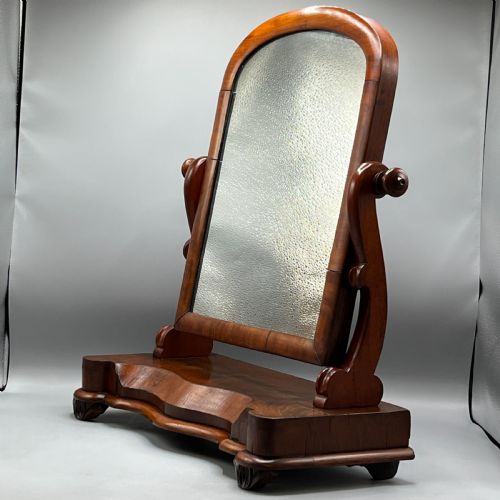
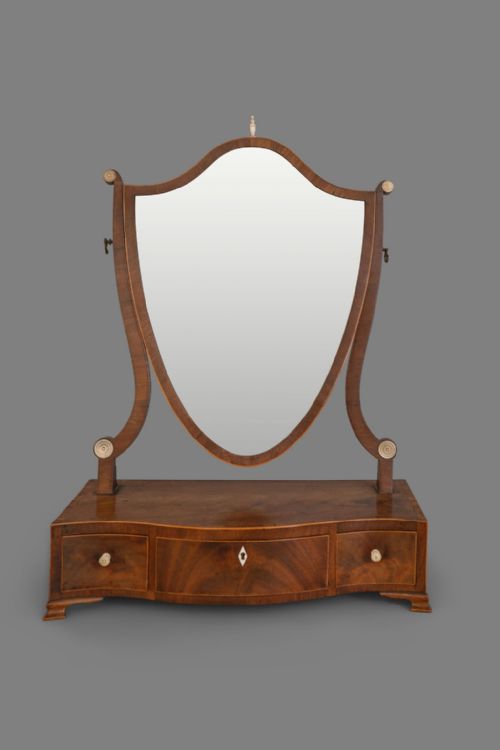
A serpentine toilet mirror is a compact dressing glass designed to sit upon a chest or table, following the distinct undulating curves of its serpentine base. These pieces belong predominantly to the Georgian and George III periods, though examples extend into the early nineteenth century.
The form encompasses dressing table mirrors and dressing mirrors with rectangular or oval glass plates suspended between upright horns. Walnut, mahogany, and boxwood inlay appear frequently across the surviving examples.
Buyers encounter versions ranging from austere early Georgian designs to crisper George III interpretations featuring shield glass plates or oval frames. The core function remains unchanged: a moveable looking glass atop a small drawer base.
How they were made
Cabinet makers constructed these mirrors primarily in solid mahogany and walnut, shaping the thick timber of the base into the characteristic serpentine profile. Brass fittings, including adjusting screws and small drawer knobs, secure the glass frame and accent the dark wood.
Boxwood inlay and bone details frequently articulate the drawer fronts and borders of the better examples, demonstrating precise joinery on a miniature scale. Glass plates are held within delicate frames hung between upright support arms.
Makers spent hours coaxing stubborn timber into gentle waves so that eighteenth-century gentlemen could admire their cravats in a proper curve.
What varies in quality
Quality rests in the fluency of the serpentine sweep across the timber base and the proportion of the upright horns to the glass frame. Finer examples display tight mahogany grains and crisp boxwood stringing that follow the complex curves without distortion.
The integration of the drawer box determines the structural success of the piece, as inferior versions show clumsy joins where the undulating front meets the side panels. Original brass hardware and well-proportioned shield or oval glass plates elevate the character of the object.
The Serpentine Toilet Mirror Glossary
- Serpentine front
- A curved furniture front featuring a convex centre flanked by two concave sweeps, creating a wave-like profile. This shape requires careful timber selection and skilled sawing.
- Toilet mirror
- A small dressing glass designed for placement on a table or chest rather than standing on the floor. These pieces typically incorporate small drawers in the base for personal items.
- Shield glass plate
- A mirror glass cut into the shape of a heraldic shield, popular during the George III period. The upper curves soften the rectangular geometry of earlier dressing glasses.
- Boxwood inlay
- Narrow strips of pale boxwood inserted into recesses within the darker mahogany base to create linear borders. This technique highlights the serpentine contours.
- Horns
- The upright wooden supports rising from the base that hold the pivoting mirror frame. They often terminate in decorative finials or brass adjustment caps.
Frequently Asked Questions
Where should I place a serpentine toilet mirror?
These mirrors suit dressing tables, chests of drawers, or sideboards where their undulating bases can be appreciated at eye level. They provide a functional surface reflection while adding period proportion to a room.
Ensure the supporting furniture is deep enough to accommodate the serpentine footprint safely without overhang.
How do I date a serpentine toilet mirror?
Dating relies on timber choice, edge mouldings, and the shape of the glass plate. Georgian and George III examples typically feature solid mahogany construction with boxwood stringing.
Later nineteenth-century pieces often show heavier proportions and different secondary woods inside the drawers.
Did these mirrors originally have drawers?
Most serpentine toilet mirrors incorporate a stepped or single-tier base containing one or more small drawers for trinkets and cosmetics. The curves of the base dictate the undulating fronts of these miniature drawers.
Simpler variants without drawers remain much less common in the historical record.
How do the mirror plates stay upright?
The glass frame hangs between two vertical wooden uprights attached to the base, secured by threaded brass screw pins or bolts. Tightening these side brasses holds the glass at the desired viewing angle.
Original hardware often includes winged brass thumbscrews that allow manual adjustment without tools.