

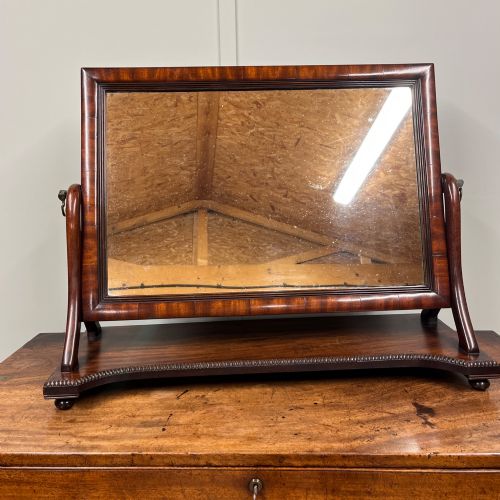
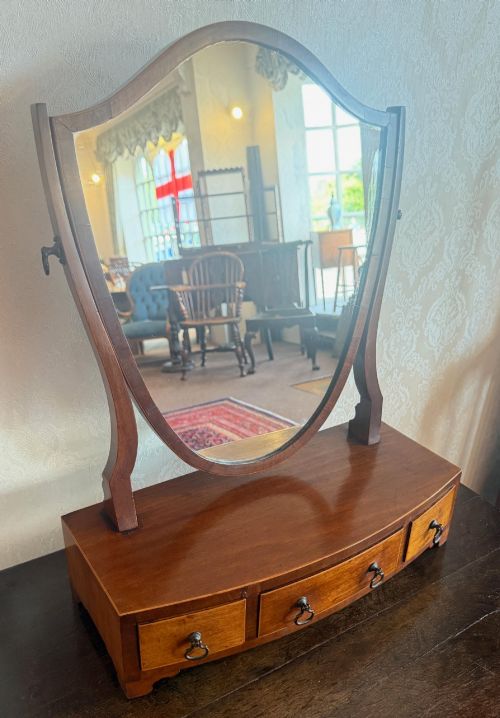
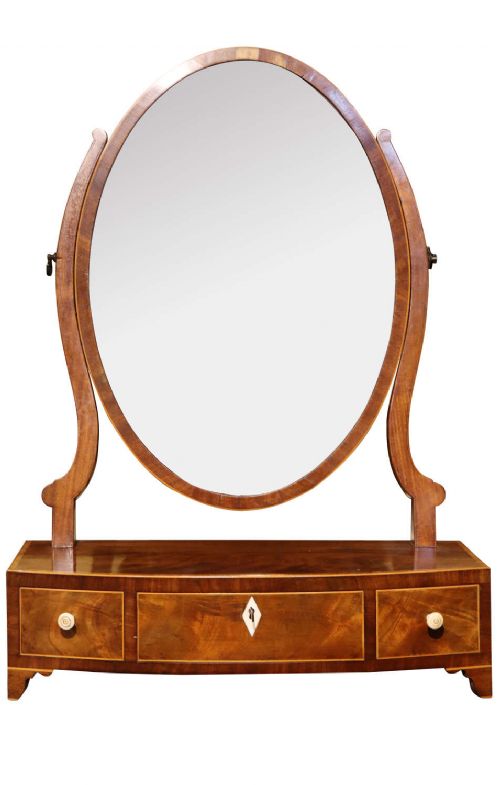
Brown Wood Toilet Mirror
These brown wood toilet mirror examples are practical dressing table pieces designed to sit on a chest or desk, bringing period warmth to a bedroom.
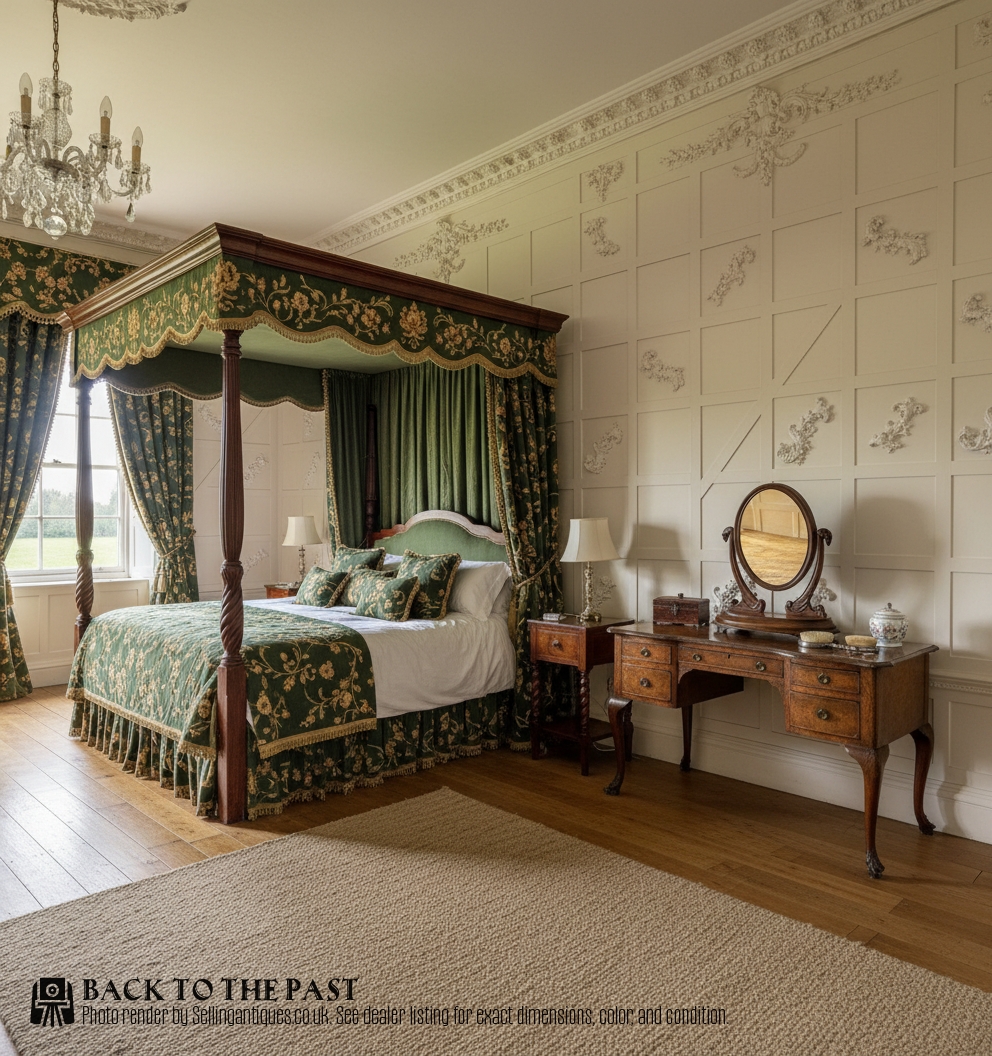
What these mirrors are
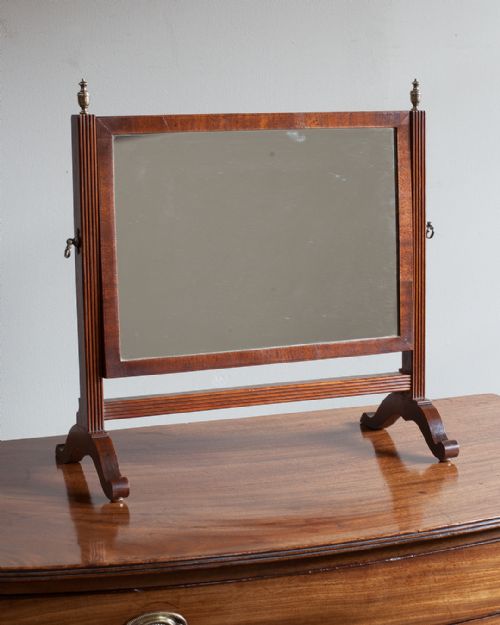
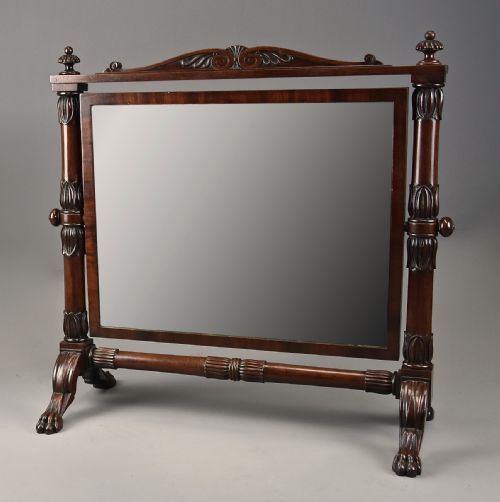
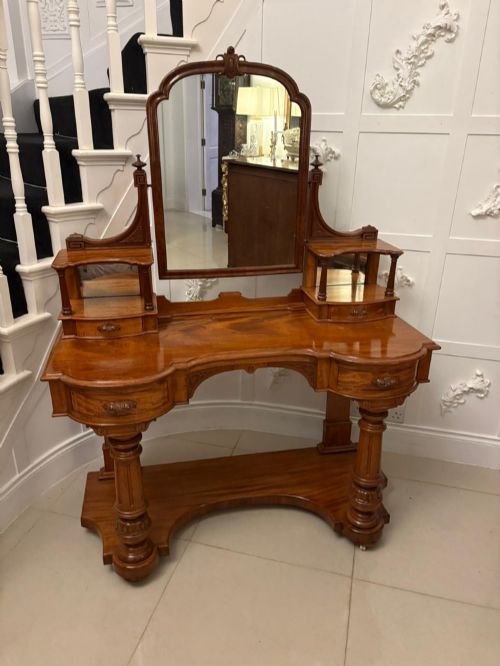
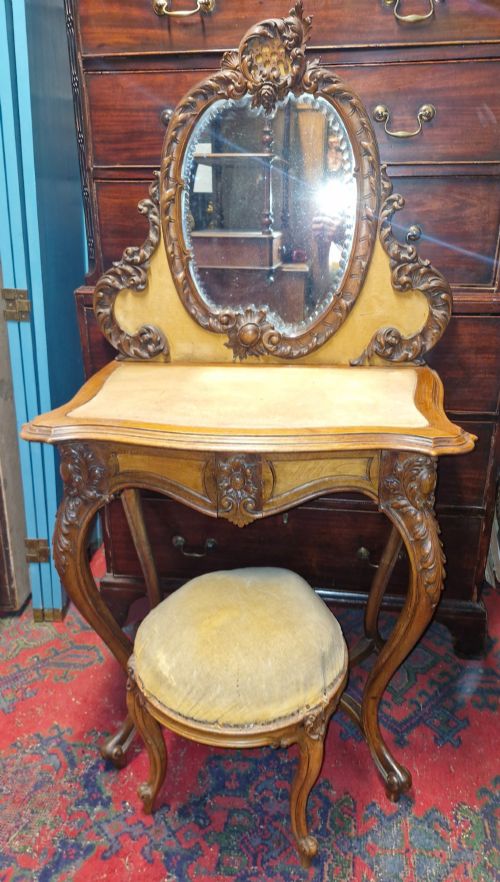
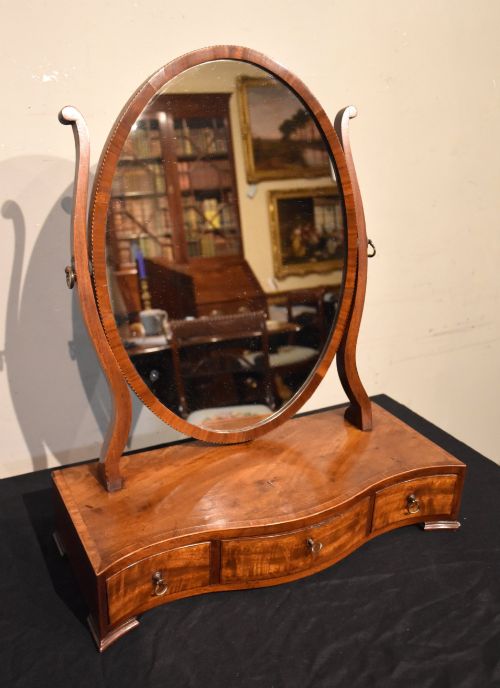
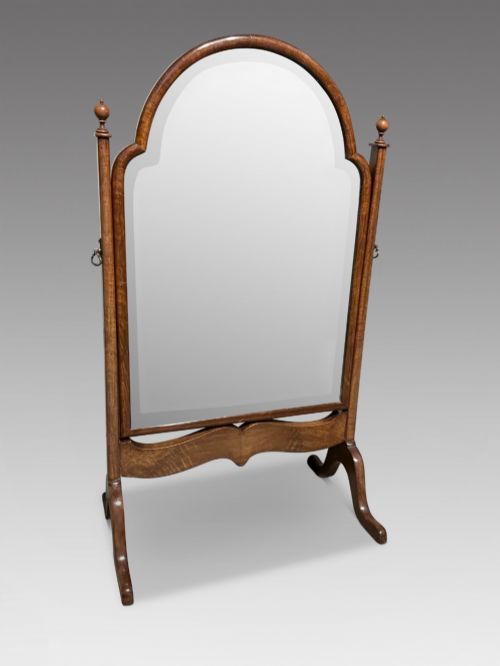
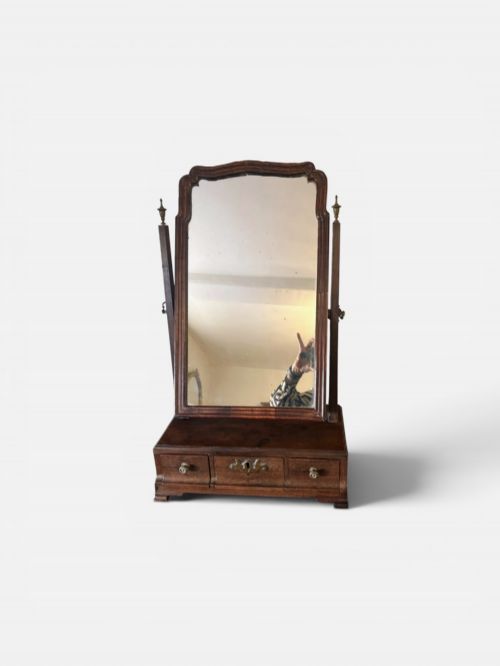
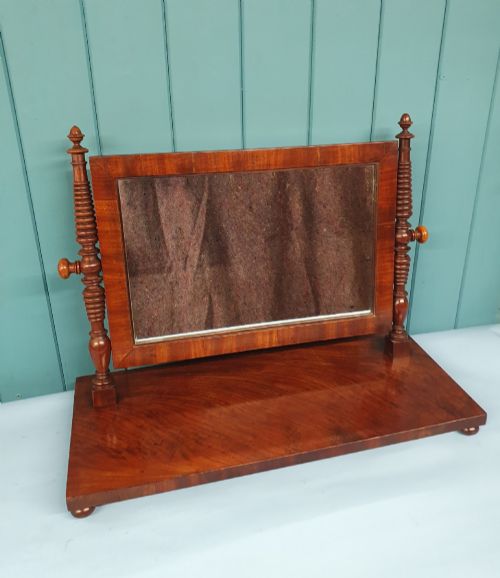
A brown wood toilet mirror sits upon a larger surface for personal grooming and dressing. The selection here spans the eighteenth century, the regency era, and the victorian period.
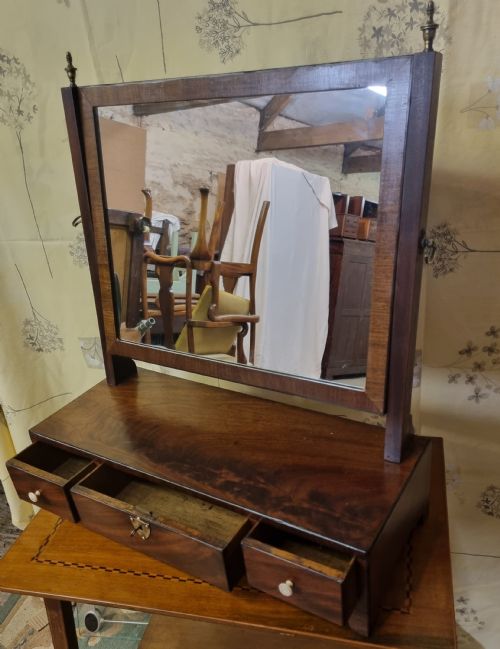
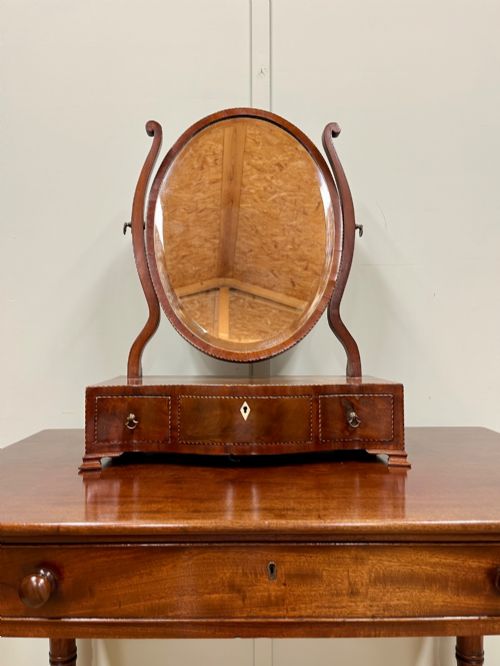
Most pieces take the form of dressing table mirrors or swing toilet mirrors. Makers constructed them in mahogany and walnut, occasionally incorporating boxwood inlay for decorative effect.
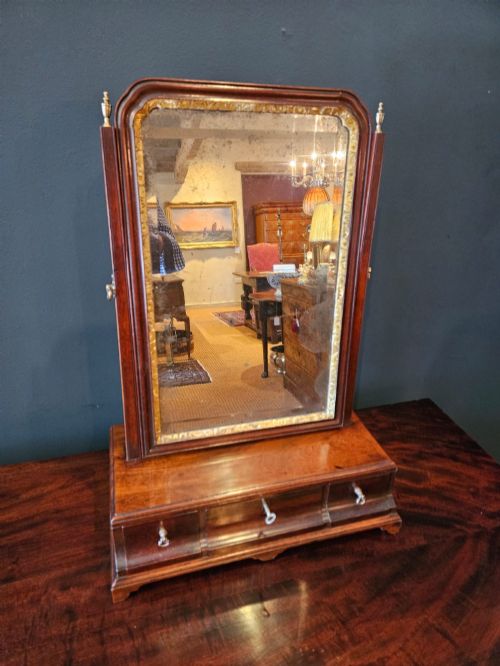
Georgian and regency examples sit alongside victorian and dutch neo-classical iterations. Buyers encounter georgian serpentine shapes and simple nineteenth-century swing frames.
How they were made
Cabinet makers utilised solid timbers and veneers, building frames in rich mahogany and figured walnut. Crossbanding and boxwood inlay added subtle contrast to the drawer fronts and borders.
Hardware typically included brass pivots, screw knobs, and small bone escutcheons around the keyholes. The tilting glass plate was secured within an adjustable frame resting on upright supports.
Retail Price Guide 2026
Typical UK retail prices for brown wood toilet mirror, calculated from the Sellingantiques database of over a million retail prices indexed since 2003. This retail price guide relies exclusively on Sellingantiques data; no external sources or auction records are used, so the figures do not describe the wider market.
The selection includes pieces from the eighteenth century, the regency era, and the victorian period, constructed mainly in mahogany and walnut.
What varies in quality
Superior examples display carefully selected wood grain, such as figured mahogany or rich dutch walnut, matched across the drawer fronts. Finer construction shows in the neatness of the dovetails joining the base boxes.
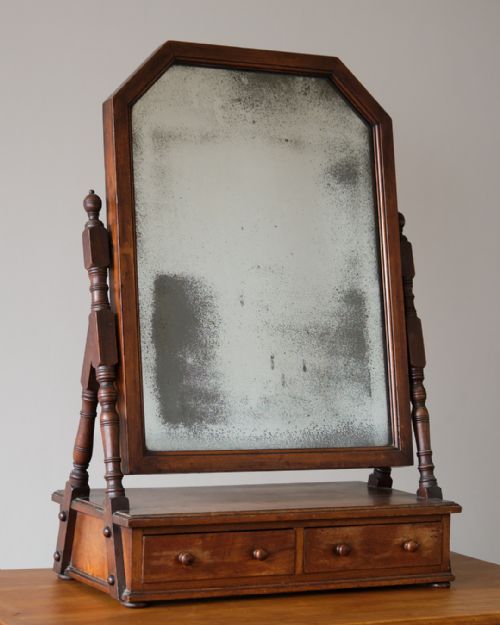
The sophistication of the silhouette defines the upper tier, seen in serpentine fronts and crisp crossbanding. Heavier, plainer victorian pieces offer utility while simpler georgian versions rely on elegant proportions.
The Brown Wood Toilet Mirror Glossary
- Toilet mirror
- A small mirror designed for a dressing table rather than the floor. These pieces usually feature a small box base fitted with one or more small drawers.
- Swing mirror
- A mirror glass mounted on pivots between two upright posts so it can tilt. This mechanism allows the user to adjust the angle for grooming.
- Crossbanding
- A strip of veneer laid around the border of a panel or drawer front with the grain running perpendicular to the centre. This technique creates a neat framed appearance on mahogany surfaces.
- Serpentine
- A curved line that undulates gently, curving outward in the centre and inward at the sides. Georgian mirror bases often employed this shape on the front elevation.
- Boxwood inlay
- Light-colored wood embedded into a darker background wood to form thin lines or geometric patterns. It provides sharp visual contrast on period case pieces.
Frequently Asked Questions
Where should I place a toilet mirror?
These mirrors sit comfortably on top of a chest of drawers, sideboard, or dedicated dressing table.
Because they were originally designed to give a clear view while sitting down, placing them on a surface of moderate height works best for daily use.
How do I adjust the mirror angle?
Most period pieces use brass screw knobs or threaded pins inserted through the upright support posts into the sides of the frame.
Turning these knobs tightens the grip on the frame to hold the glass at the desired tilt.
Are the mirror plates original?
Older mirrors frequently had their glass replaced during their long history because silvering degrades over time.
When examining a piece, look closely at the depth of the glass and the silver backing to judge its age relative to the wooden frame.
What is the difference between george and victorian styles?
Georgian and regency pieces tend to feature lighter proportions, finer mahogany veneers, and decorative elements like serpentine fronts or boxwood stringing.
Victorian versions are generally heavier and sturdier, focusing on robust utility with straightforward mahogany construction.