

Dark Mahogany Vanity Mirror
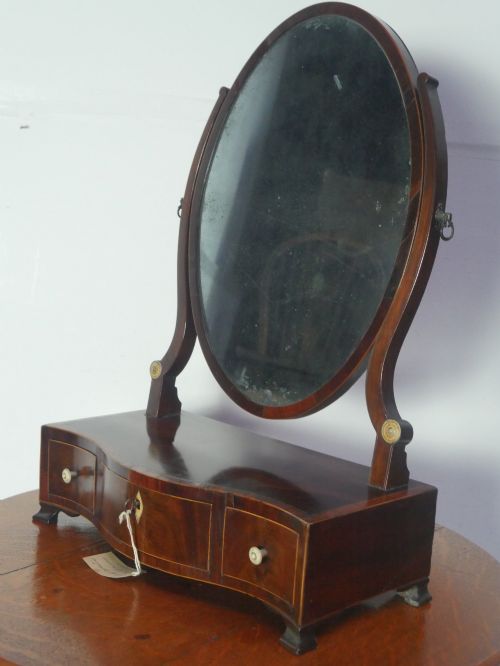
A dark mahogany vanity mirror is a reflective glass panel framed in rich timber, designed to sit upon a surface for personal grooming.
Dark Mahogany Vanity Mirror
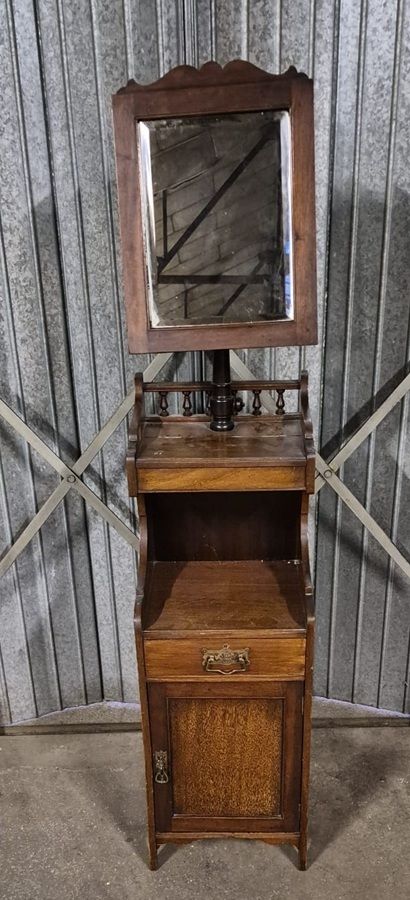
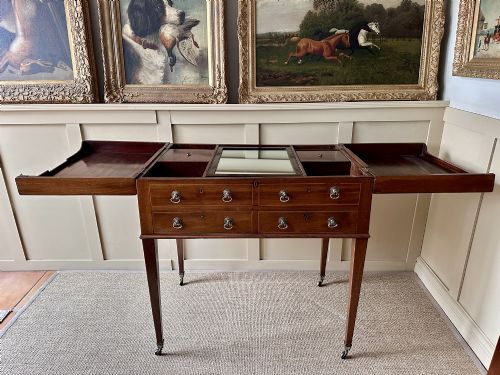
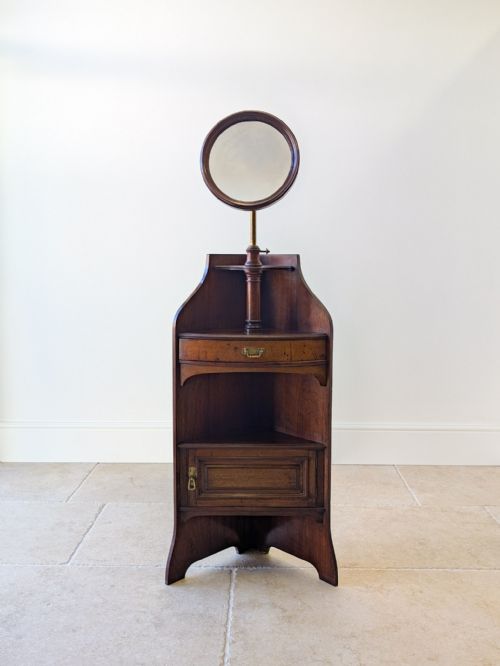
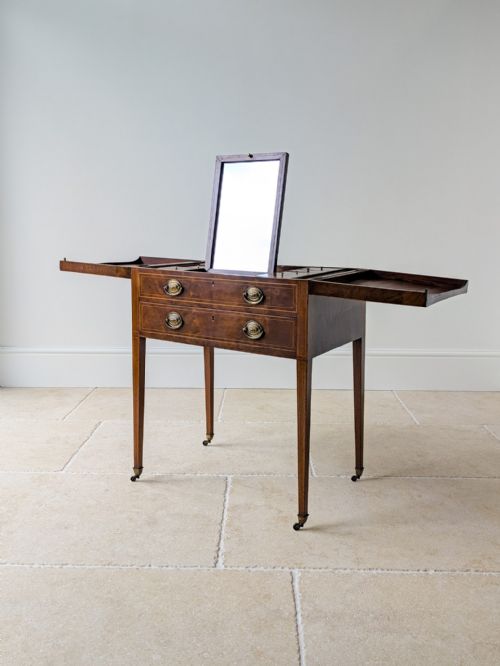
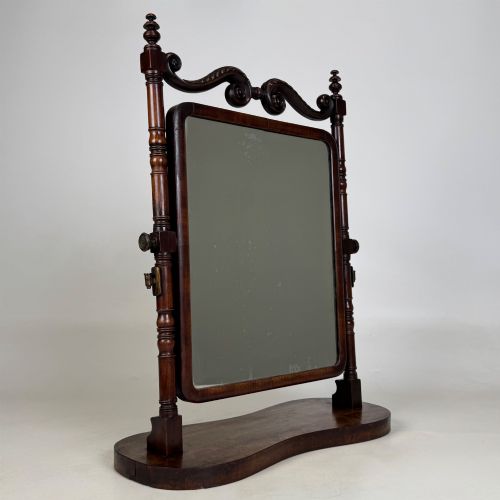
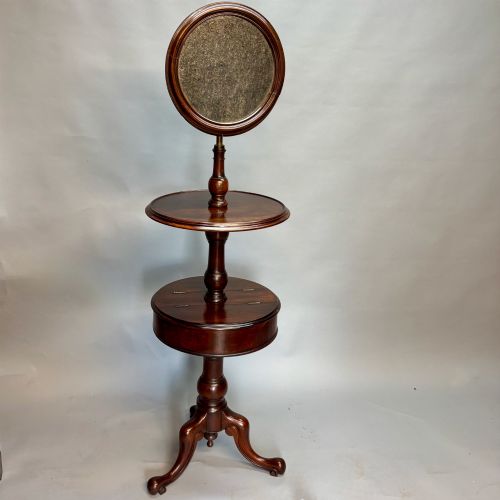
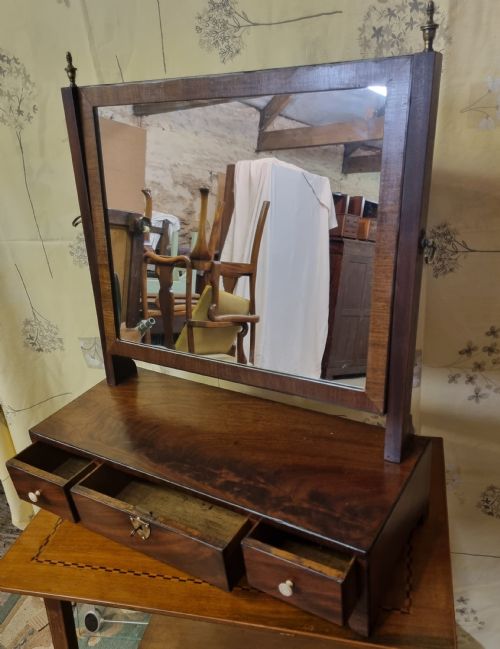
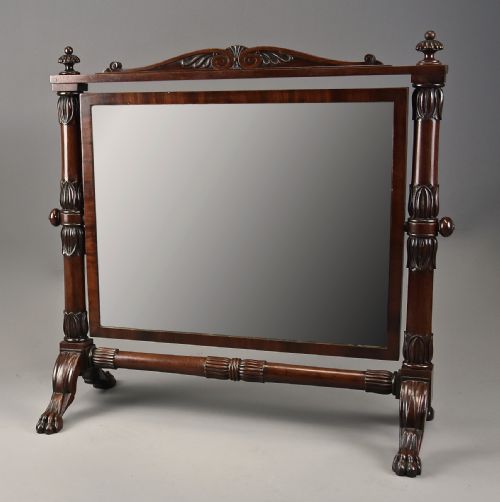
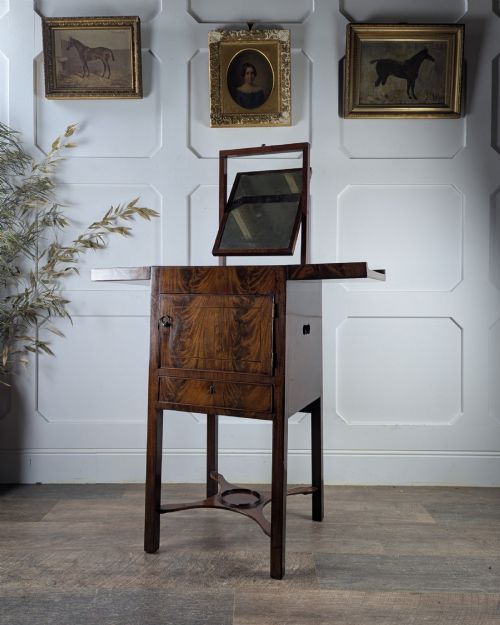
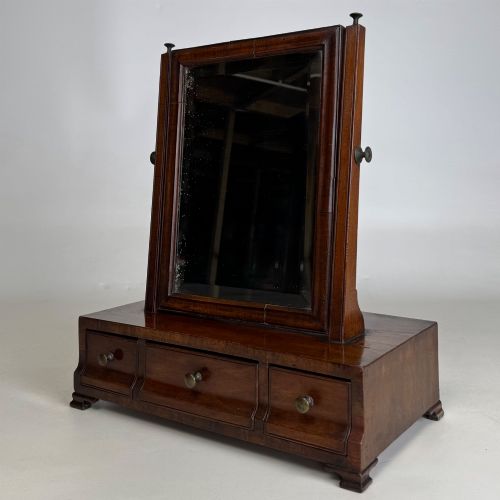
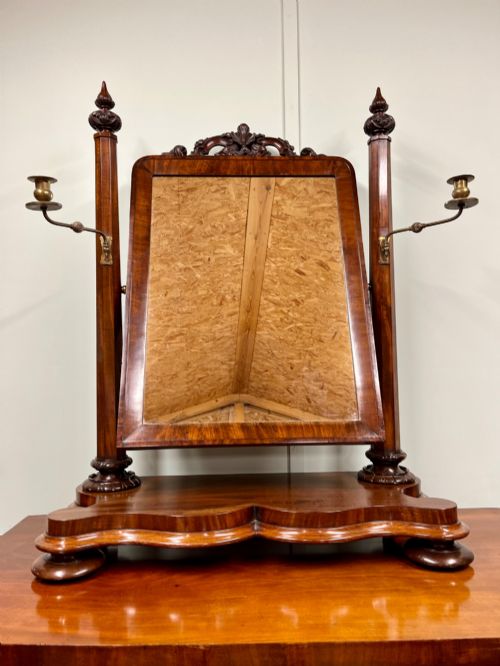
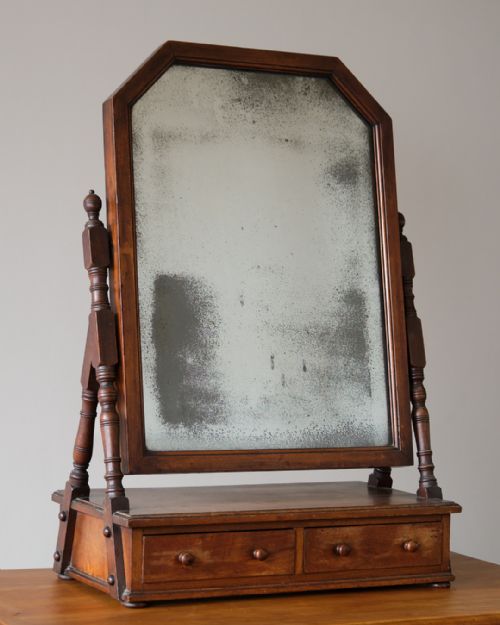
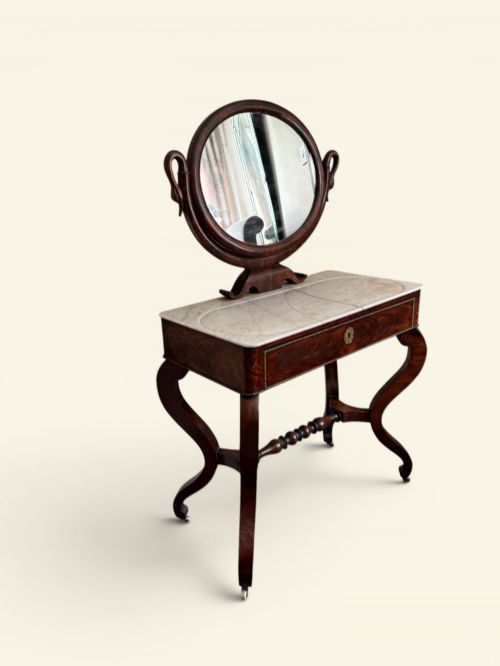
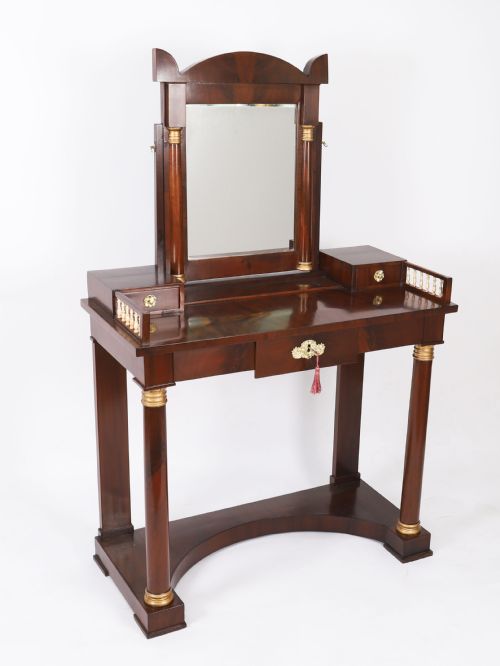
A dark mahogany vanity mirror takes several forms across the periods, appearing most frequently as a swing mirror mounted on a small box base fitted with drawers. Buyers searching for a dark mahogany vanity mirror will also encounter larger cheval mirrors designed to stand upon the floor, alongside simpler table-top toilet mirrors and compact shaving stands.
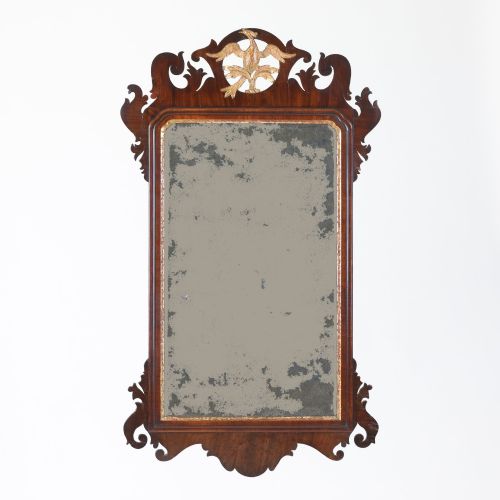
These pieces originate primarily from the eighteenth and nineteenth centuries, spanning the Georgian, Regency, and Victorian eras. Surviving examples include freestanding dressing mirrors, folding campaign models, and occasional wall-hanging pieces constructed from dense timber.
Materials and construction methods
Makers utilised solid timber and veneers, frequently selecting dense Cuban mahogany or flame mahogany to achieve a deep, dark surface grain. Workshops employed brass for adjustable brackets, candle arms, and drawer handles, while bone found use in subtle escutcheons and inlay work.
The glass panels are traditionally silvered mirror glass, often held within fretted or moulded frames. More ornate pieces incorporate satinwood inlay, parcel-gilt highlights, or marquetry details alongside traditional mortise and tenon joinery.
Dark Mahogany Vanity Mirror Retail Price Guide 2026
Typical asking prices for dark mahogany vanity mirror among the pieces listed under this phrase on Sellingantiques today, from the lower quarter to the upper quarter. They describe what is for sale here now, not the wider market.
Listings feature mahogany, brass, bone, and satinwood inlay across pieces built during the Georgian, Regency, and Victorian periods.
Assessing quality in construction and materials
The distinction between standard examples and finer pieces lies in the choice of wood and the crispness of the timber carving. Superior mirrors display carefully selected flame or Cuban mahogany grains that have aged to a deep colour, whereas simpler items utilise plain stock.
Hardware and secondary timbers reveal much about the origin of a piece, with high-grade items featuring heavy brass fittings and precise dovetailing on the base drawers. The retention of the original mirror plate and functional adjustment mechanisms further separates workshop-produced pieces from later reproductions.
Heal & Sons·P & MA Nicholson
The Dark Mahogany Vanity Mirror Glossary
- Cheval mirror
- A freestanding full-length mirror supported by a vertical frame and four legs. This design allows the glass to swing freely between the upright posts.
- Toilet mirror
- A smaller table-top dressing glass mounted on a miniature chest or box base. These pieces sat upon tables for personal grooming.
- Parcel-gilt
- Woodwork partially decorated with gold leaf applied over a prepared surface. This technique highlights carved details such as mouldings or applied ornaments.
- Fret-cut
- Timber pierced and shaped using a fine saw to create decorative geometric or floral patterns. It appears frequently on eighteenth-century pediments and mirror frames.
- Escutcheon
- A small protective plate surrounding a keyhole. Makers often fashioned these from bone or brass to contrast with the dark mahogany.
Dark Mahogany Vanity Mirror: Frequently Asked Questions
How do I date a mahogany mirror?
Dating relies on examining the construction methods of the base, the thickness of the frame mouldings, and the type of mirror glass fitted. Eighteenth-century examples often feature hand-cut dovetails and thinner backing boards compared to later Victorian items.
The choice of timber also offers clues, as dense Cuban mahogany appeared more frequently in earlier periods before stocks shifted. Secondary woods inside the drawers help confirm the regional origin and approximate age of the piece.
What is the difference between a toilet mirror and a dressing mirror?
A toilet mirror typically refers to a smaller glass mounted on a box base with small drawers for storing cosmetics or personal items. They were designed to sit on top of a larger table or chest.
A dressing mirror covers a broader category that includes both these table-top versions and larger freestanding cheval or swing mirrors. Both forms served the same grooming function in bedrooms and dressing rooms.
Are original mirror plates common?
Original glass plates do survive in some eighteenth and nineteenth-century pieces, often displaying subtle imperfections, slight foxing, or gentle distortion. These traits help confirm the age of the item.
Many pieces, however, received replacement glass over the centuries due to breakage or silver degradation. A replacement plate does not diminish the utility of the frame, though collectors generally prize untouched original glass.
How should I care for dark mahogany furniture?
Mahogany requires stable room conditions away from direct sunlight and strong heat sources, which can cause the timber to dry out or crack. Regular dusting with a dry, soft cloth maintains the finish without building up unwanted residues.
Avoid using silicone-based polishes or modern chemical sprays, as these can penetrate the aged surface and alter the colour. Traditional wax feeds the timber and preserves the rich depth of the grain.