



Large Mahogany Framed Mirror
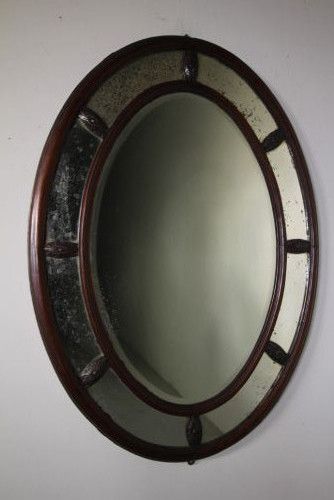
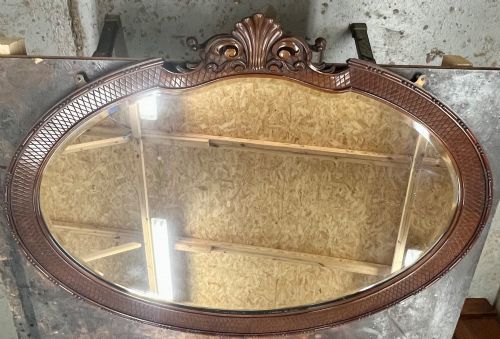
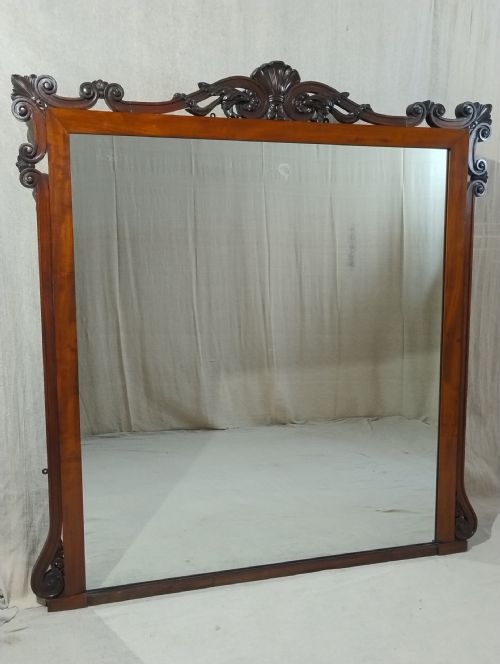
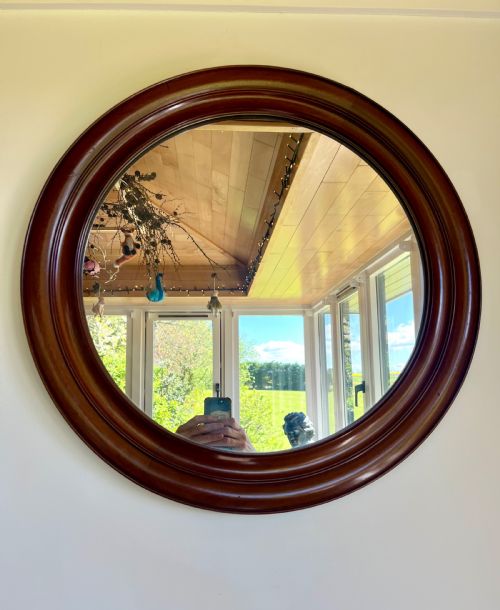
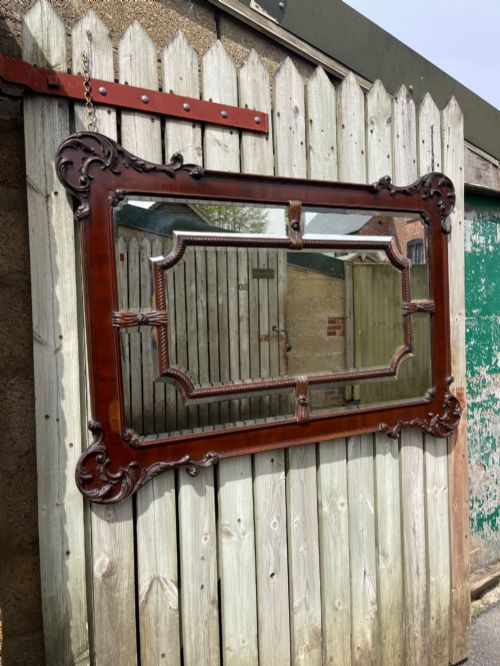
A large mahogany framed mirror anchors a room with deep timber grain and clear reflection, bringing depth and scale to a tall wall.
Large Mahogany Framed Mirror
A large mahogany framed mirror serves as a substantial focal point in a room, drawing the eye with its rich timber and impressive scale. When searching for a large mahogany framed mirror, buyers encounter formats ranging from overmantel glass to dressing table pieces.
The selection on this page draws heavily from Victorian and Edwardian decades, alongside Georgian originals and revival pieces. Wall mirrors and overmantel mirrors dominate the forms, frequently seen with shaped frames or gilded details.
Origin points stretch across English country house workshops and continental makers, incorporating satinwood inlays or parcel-gilt highlights. Buyers will find both rectangular wall hanging formats and tall cheval mirrors suited to domestic interiors.
Materials and construction
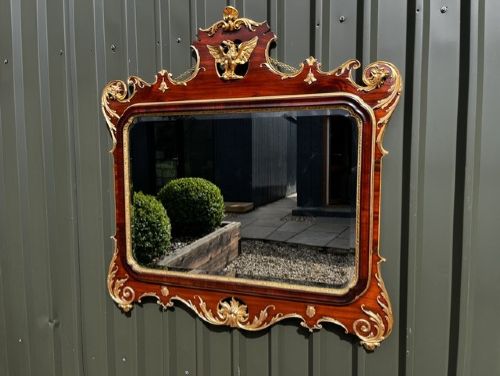
Makers built these frames using solid mahogany and mahogany veneers applied to secondary woods, often finished with hand-carved mouldings and fretted scrollwork. Giltwood and gold leaf accents frequently highlight carved crests, Ho-Ho birds, or innerbezels.
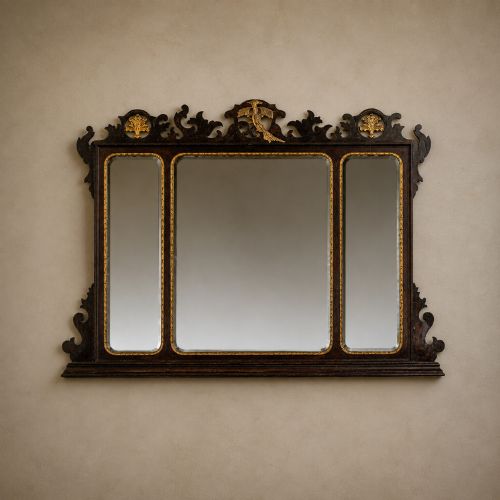
Mirror glass was bedded into the timber rebate, secured with wooden backs, and occasionally formed of multiple sections in triptych or sectional formats. Pier mirrors and overmantel designs combined structural joinery with applied parcel-gilt enrichment.
Listings feature pieces from the 18th century through to the 1920s, constructed in mahogany, giltwood, and satinwood.
Assessing quality
Quality rests in the depth of the mahogany timber and the crispness of the hand-carved details, such as gilded crestings or fretwork edges. Stronger examples show careful joinery at the frame corners and well-preserved original mirror glass with natural age oxidation.
Revival pieces and later adaptations vary according to the fidelity of the period style, with George II and Chippendale revivals demonstrating varying degrees of sculptural ambition in their carving.
The Large Mahogany Framed Mirror Glossary
- Overmantel mirror
- A large mirror designed to hang specifically above a fireplace mantelpiece. These pieces often span a considerable width to match the fireplace opening below.
- Chippendale style
- A decorative style characterised by ornate fretwork, scrolling leaves, and classical motifs inspired by the designs of Thomas Chippendale. It appears frequently in revival frames from later centuries.
- Parcel-gilt
- A method of partially gilding a wooden object where gold leaf highlights specific carved details against a dark mahogany or painted background. This technique draws attention to architectural mouldings.
- Cheval mirror
- A freestanding full-length mirror hung on a swivelling frame between four vertical pillars and supporting feet. These tall dressing pieces allow a complete view of attire.
- Fretted wall mirror
- A mirror featuring a flat wooden frame cut with intricate scroll patterns and pierced outlines, often using a fretsaw. Edwardian and Georgian examples utilise this technique for decorative silhouettes.
Large Mahogany Framed Mirror: Frequently Asked Questions
Where should I hang a large overmantel mirror?
An overmantel mirror traditionally hangs directly above a fireplace mantelpiece to reflect light and fill the vertical wall space. It can also anchor a main reception room wall opposite a window.
Ensure the wall fixings are secured firmly into solid masonry or studwork to support the considerable weight of the timber frame and glass.
How do I tell an original Georgian mirror from a revival piece?
Original Georgian pieces display authentic timber shrinkage, hand-cut joinery marks, and older silvering on the mirror plate. Revival pieces from the Edwardian era or the early twentieth century often use machine-prepared timbers and uniform construction.
Examining the backboards and fixings usually reveals the true age of the carpentry.
What is the difference between a pier mirror and an overmantel mirror?
A pier mirror is narrow and tall, designed to fit the wall space between two windows. An overmantel mirror is typically broader than it is tall, built to sit horizontally above a fireplace.
Both forms utilise mahogany framing but serve very different architectural positions in a room.
How do I care for antique mahogany frames and mirror glass?
Dust the mahogany frame regularly with a dry cloth and apply a quality wax sparingly to nourish the timber. Avoid using chemical sprays on the wood or getting moisture behind the old mirror plate.
Keep the mirror away from direct sunlight and damp walls to preserve the finish.