
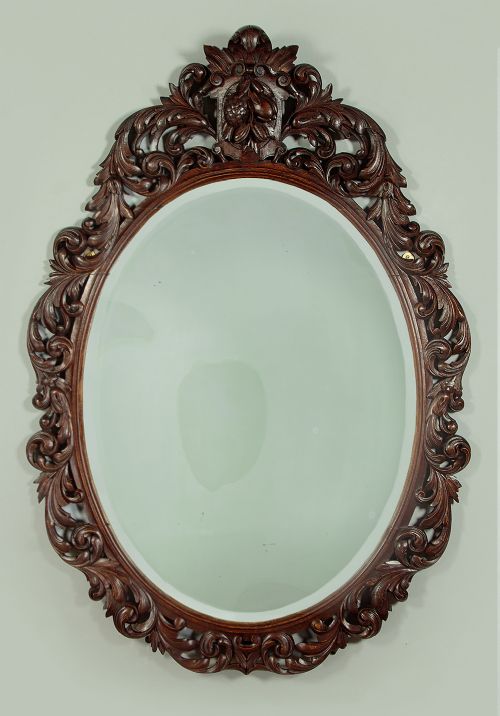
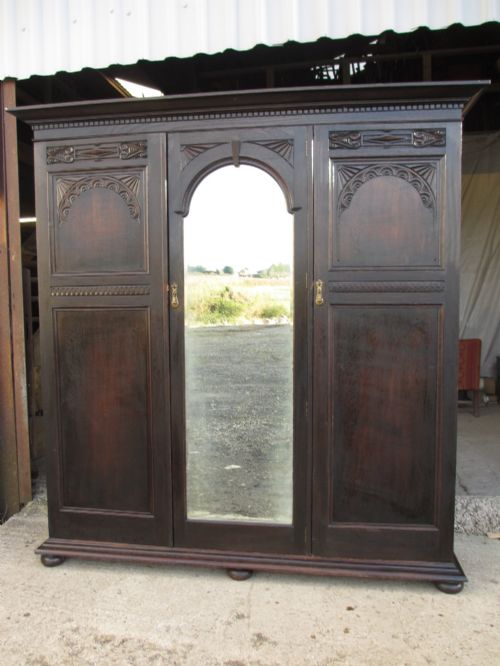
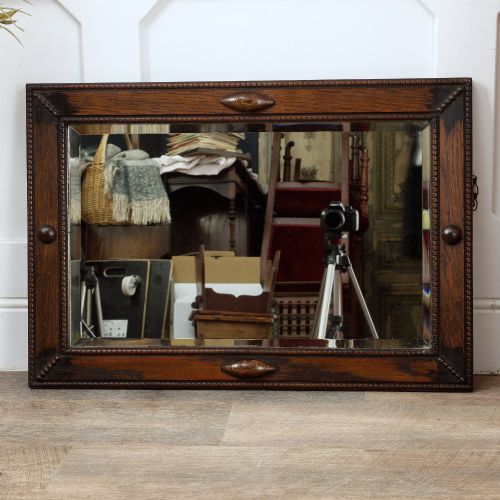
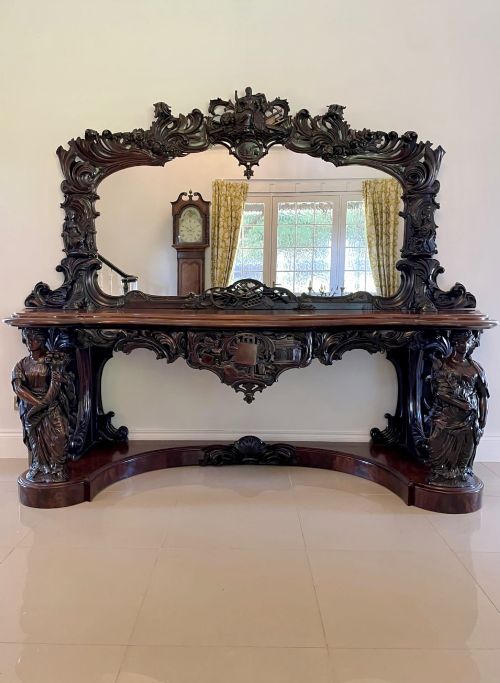
Large Dark Wood Mirror
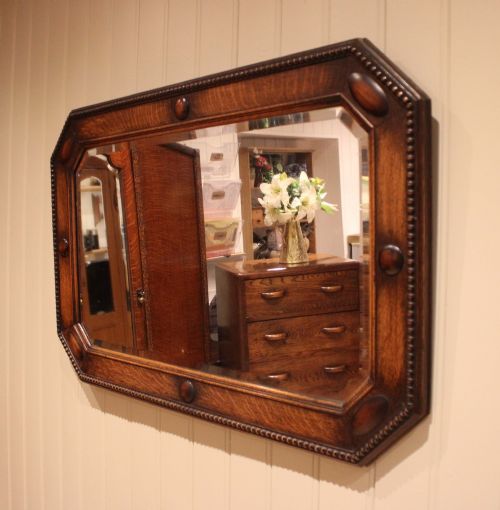
A large dark wood mirror brings depth and presence to a room, grounding the space with rich timber and generous proportions.
Large Dark Wood Mirror
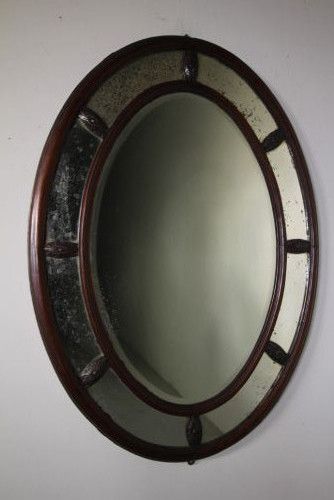
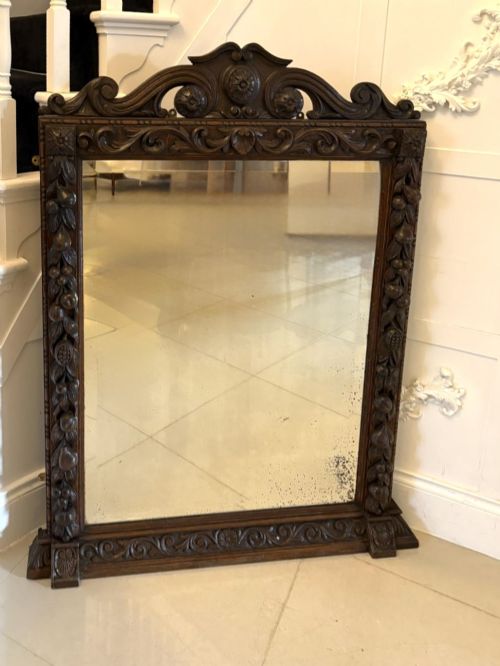
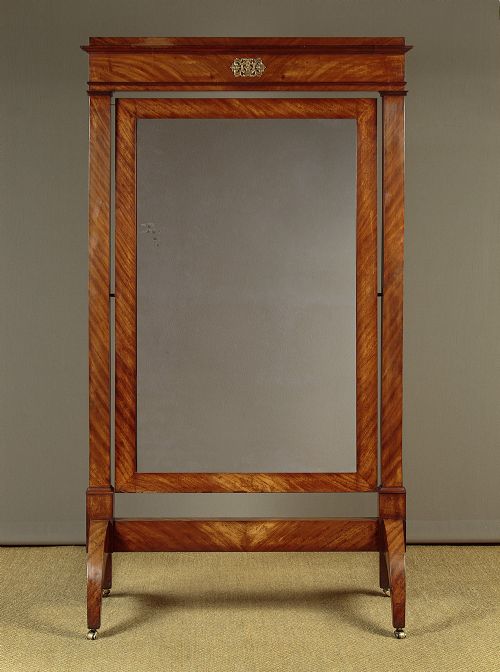
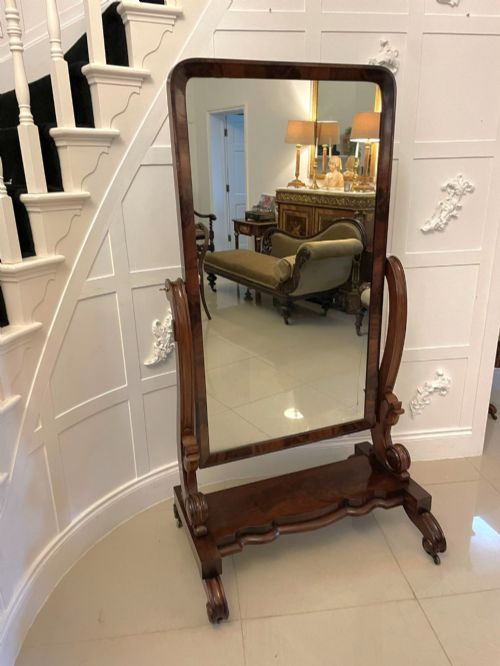
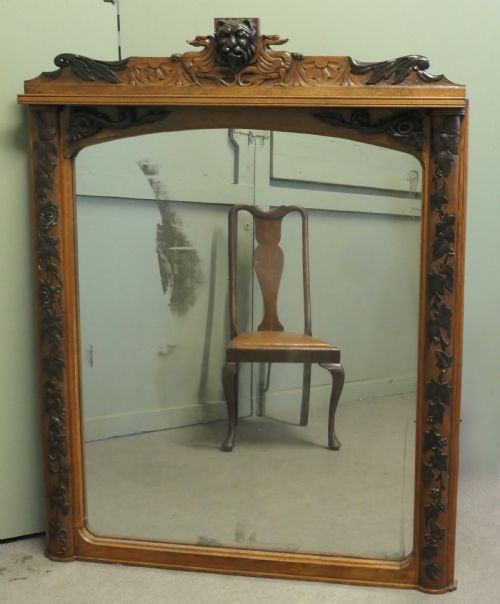
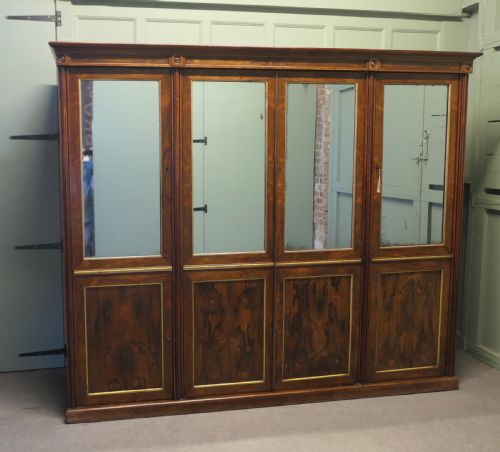
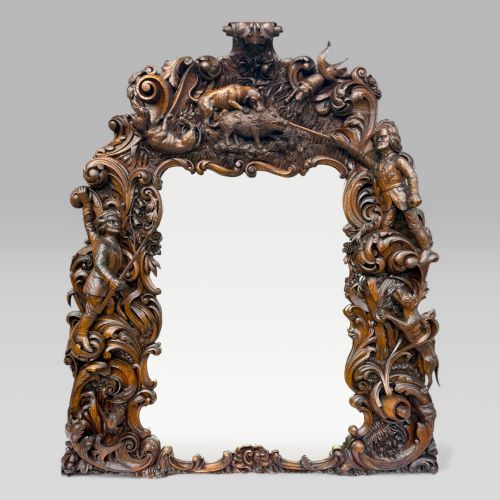
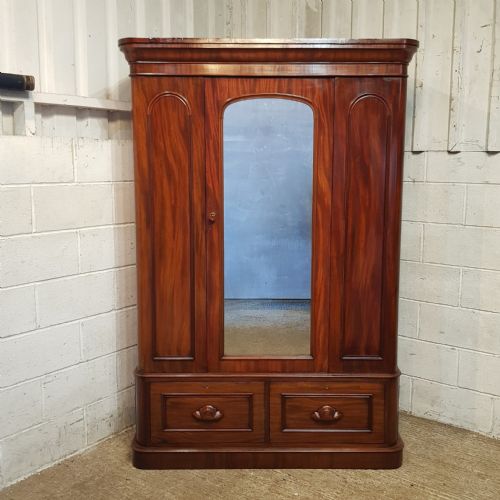
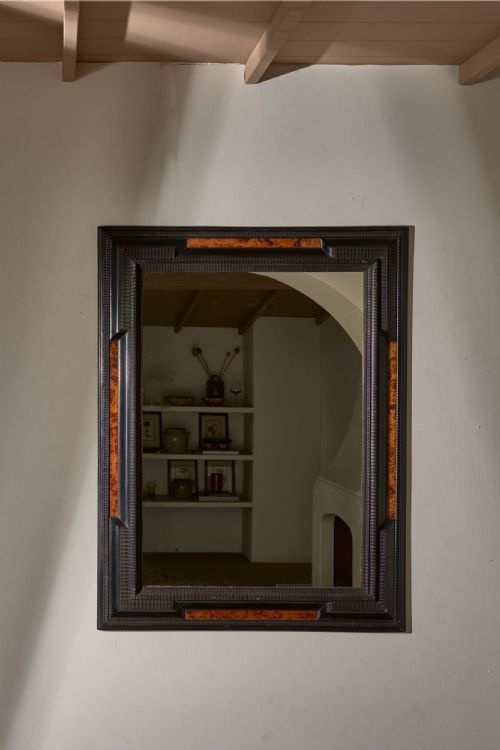
When searching for a large dark wood mirror, you encounter heavy timber frames spanning wall mirrors, overmantels, and cheval glasses. The selection leans heavily toward nineteenth-century Victorian and Edwardian examples fashioned from dense hardwoods.
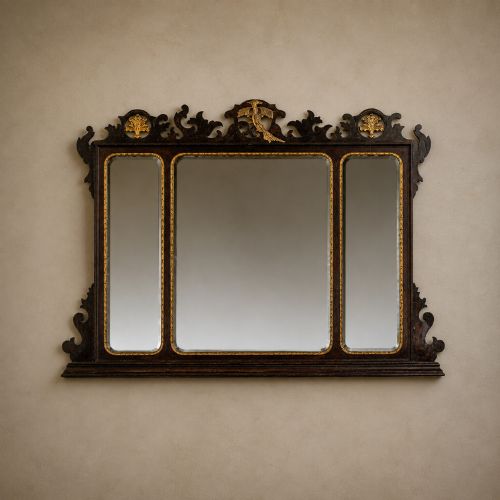
Most pieces function either as principal wall hangings in country houses and reception rooms or as architectural overmantels designed to sit above a fireplace. Oak, mahogany, and walnut dominate the forms, often shaped into rectangular, oval, or triptych configurations.
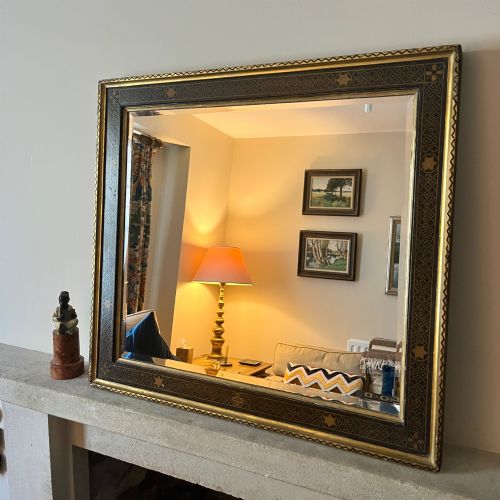
Regional variations span British country house furniture, French Gothic designs, and occasional inlaid pieces from workshops further afield. These objects served utilitarian and decorative roles in high-status interiors, reflecting light while displaying cabinet-making skills.
Materials and construction methods
Frames rely on solid timbers such as mahogany, oak, walnut, and rosewood, chosen for their grain and weight. Joinery typically involves traditional tenon and mortise framing or heavy backing boards to support the sheer mass of the glass.
Carving, fretting, and parcel-gilt highlights appear across Victorian, Edwardian, and revival pieces, alongside applied veneers and occasional brass or ivory inlay. Surface finishes range from polished French polish to waxed dark grain and ebonised treatments.
The listings show frames made from mahogany, oak, walnut, rosewood, and gilt wood spanning the Georgian, Victorian, and Edwardian eras.
Assessing quality in timber frames
Quality rests in the selection of the timber and the crispness of any carved ornamentation. Superior examples show deep, hand-carved detail in the wood itself rather than relying on heavy mouldings or applied composition ornaments.
The weight and clarity of the glass plate, the integrity of the original backing boards, and the stability of the frame joints distinguish fine exhibition or country house pieces from standard domestic production.
The Large Dark Wood Mirror Glossary
- Overmantel mirror
- A large mirror designed specifically to hang above a fireplace mantelpiece. These pieces often follow the horizontal sweep of the hearth.
- Cheval mirror
- A freestanding full-length mirror hung in a frame on pivots, allowing the glass to tilt. They appear frequently in mahogany during the nineteenth century.
- Parcel gilt
- Partially gilded timber work where gold leaf highlights specific carved details against a dark wood background. This technique adds depth to Victorian and Georgian style frames.
- Cushion frame
- A broad, rounded frame profile swelling outwards towards the outer edge. This form creates a strong volumetric presence on the wall.
- Fretted wall mirror
- A frame featuring intricate openwork patterns cut through thin sheets of wood. Edwardian and Georgian revival pieces utilise this fretwork for lighter decorative effect.
Large Dark Wood Mirror: Frequently Asked Questions
Where should I hang a large dark wood mirror?
These pieces suit principal reception rooms, hallways, or above a bedroom fireplace where their scale balances surrounding furniture.
Ensure the wall structure can support the substantial weight of dense hardwood and thick glass plate before mounting.
How do I identify a Victorian mirror?
Victorian examples often feature heavy carved oak, walnut, or mahogany, sometimes incorporating Gothic or Rococo revival motifs.
Look at the depth of the timber frame and the construction of the wooden backing boards for period indicators.
What is an overmantel mirror used for?
An overmantel mirror was built to anchor the space directly above a fireplace, bouncing firelight and daylight around the room.
Their proportions are typically wider than they are tall to match the horizontal span of the mantel below.
Are these mirrors heavy?
Due to dense timbers like oak, mahogany, and walnut combined with thick glass, these pieces possess considerable weight.
Professional wall fixings or secure floor stands for cheval mirrors are essential for safe placement.